
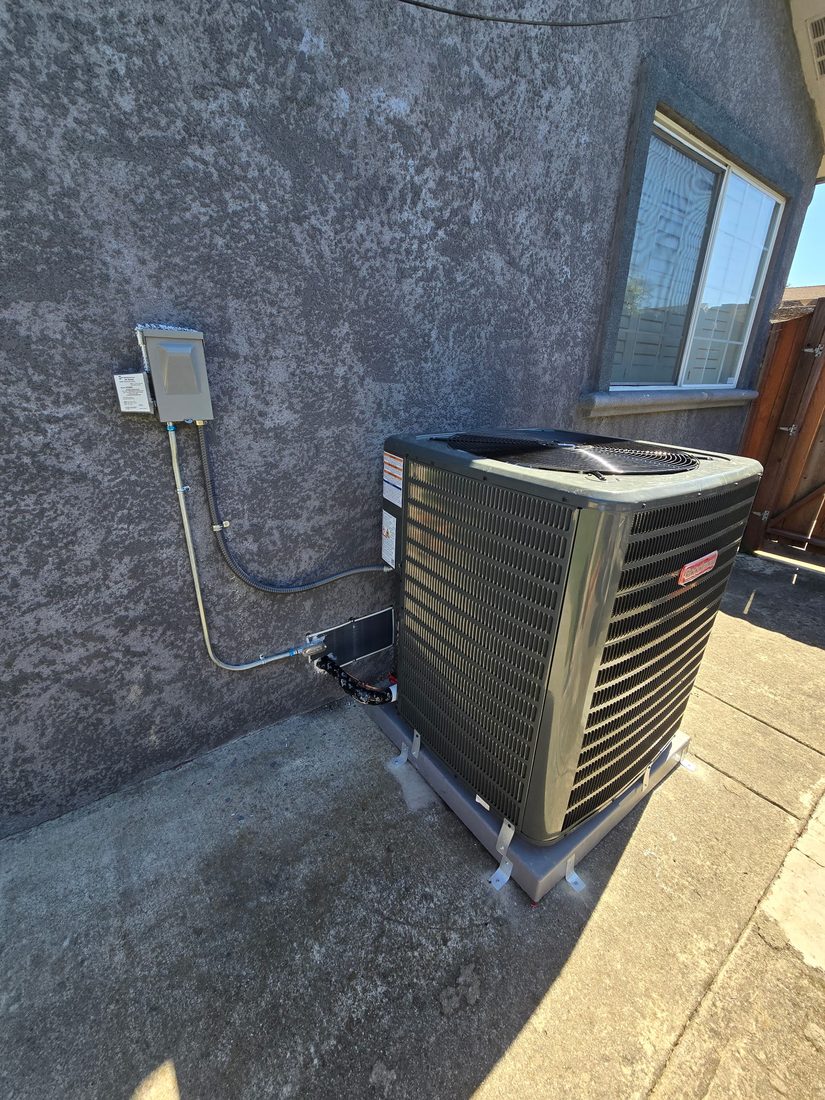
Homeowners ask me this almost every week. They have two quotes on the table, one for a Goodman system and one for a Carrier, and the Carrier costs noticeably more. They want to know if the premium is real or if they are paying for a name. I install and repair both, so I have no reason to push you toward one. Here is how I actually see them.
Goodman and Carrier sit at two different price tiers on purpose
Goodman is the value brand in American HVAC. It is owned by Daikin and built around one idea, which is solid, serviceable equipment without the premium badge or the premium markup. If you are weighing Goodman against Daikin itself, our dedicated HVAC division explains how Daikin and Goodman differ. Carrier is one of the oldest names in the business and sits at the premium tier for good reason. The equipment is well built and the engineering is sound.
One thing worth knowing before you sign anything. Carrier and Bryant are the same equipment under two badges. Bryant is the cheaper badge. So if you have a Carrier quote and a Bryant quote in front of you, you are often looking at the same machine at two prices. That kind of detail quietly saves people a few hundred dollars.
The engineering gap is real but smaller than the price gap
Carrier builds a durable, serviceable furnace. We did a Carrier furnace repair in Pleasanton on a unit that had run ten years with no service at all and still fired. The higher-end Infinity heat pumps and communicating controls are good hardware, and parts are widely available, which I cannot say about every premium label.
Goodman performs to its rating when it is sized and charged correctly. Where I am candid about Goodman is the budget-tier components, particularly older single-stage condenser-fan motors and some control boards. They are not built like the premium lines. The flip side matters though. The same low parts cost that makes a Goodman cheaper to buy makes it far cheaper to repair.
Parts and repair cost is where Goodman wins outright
This is the part most quotes never explain. When a control board or a condenser-fan motor fails, what you pay depends heavily on the brand. A board or motor that is a painful bill on a premium system is a routine, affordable fix on a Goodman. Goodman parts are everywhere and inexpensive, so a no-heat call rarely turns into a multi-day wait for a special-order board.
Carrier parts are also widely available, which is a real point in its favor versus brands like Lennox that run a dealer-restricted parts ecosystem with longer waits. But the Carrier Infinity boards and communicating controls cost real money when they fail, and those systems need a tech who reads fault codes rather than swapping the most expensive part on a hunch.
| Goodman | Carrier | |
|---|---|---|
| Engineering and build | Solid value tier, Daikin platform, budget components on older lines | Premium build, sound engineering, strong Infinity hardware |
| Parts availability | Excellent, widely stocked, low cost | Very good, shared with Bryant badge |
| Typical repair cost | Low. Boards and motors are affordable | Higher. Infinity boards and controls are pricey |
| Efficiency | Strong value lineup, high-SEER2 options available | Premium high-efficiency, Infinity variable-speed |
| Best for | Homeowners who want good value and cheap repairs | Homeowners who want premium hardware and will maintain it |
Efficiency is close enough that the install decides it
Both brands sell high-efficiency equipment. Carrier’s Infinity variable-speed systems sit at the top end and run quiet and steady. Goodman’s high-SEER2 lineup competes hard on value. The honest truth is that the efficiency rating on the box only shows up in your bill when the system is matched and installed right.
We installed a two-zone Carrier 19 SEER heat pump in San Ramon, and Goodman is the platform behind most of the dual-zone heat pump changeouts we do. In both cases the rule is the same. We size with a Manual J load calculation and weigh the charge to the nameplate. A unit that short-cycles from oversizing or limps on a low charge underdelivers no matter whose name is on it.
Reliability comes down to the install more than the badge
I will say this plainly because it is the single most important thing in this whole comparison. Install quality decides lifespan more than the brand does. A Goodman sized right and charged right outlasts a premium unit that a rushed crew oversized and left short on refrigerant. The equipment is rarely the reason a system dies early. The install usually is.
That is why every system we put in gets a load calculation, a weighed charge, and a written quote before we touch anything. HVAC at our shop runs through our division, Bay Area HVAC Service, where this is the standard on both brands.
Who each brand is best for
Buy Goodman if you want strong value and the lowest long-term repair cost, and you would rather put your money into a correct install than into a badge. For a lot of Bay Area homeowners that math favors Goodman, and I will tell you when it does and when it does not.
Buy Carrier if you want premium hardware, quieter variable-speed comfort, and you plan to maintain the system. Just price the Bryant badge too before you decide, since it is the same equipment for less.
Whichever way you lean, we install and repair both. Our installs carry a 10-year parts warranty; labor is 2 years standard, extended to 10 years with our maintenance plan. Repairs carry one year, and the $99 diagnostic is credited toward the repair. If you want help deciding, look at our Goodman and Carrier pages, read our Bay Area HVAC reliability report, or book an HVAC installation estimate and we confirm what is actually paying in rebates at estimate time. Written quote, both brands, no guesswork.
We run both brands out of San Ramon, so if you are closer to the Tri-Valley side of this decision see HVAC repair in San Ramon or HVAC repair in Pleasanton for what a service call actually looks like here.
Closer to the bay shoreline? Our Carrier repair in San Leandro page covers what a Carrier service call looks like on that side of the map.