
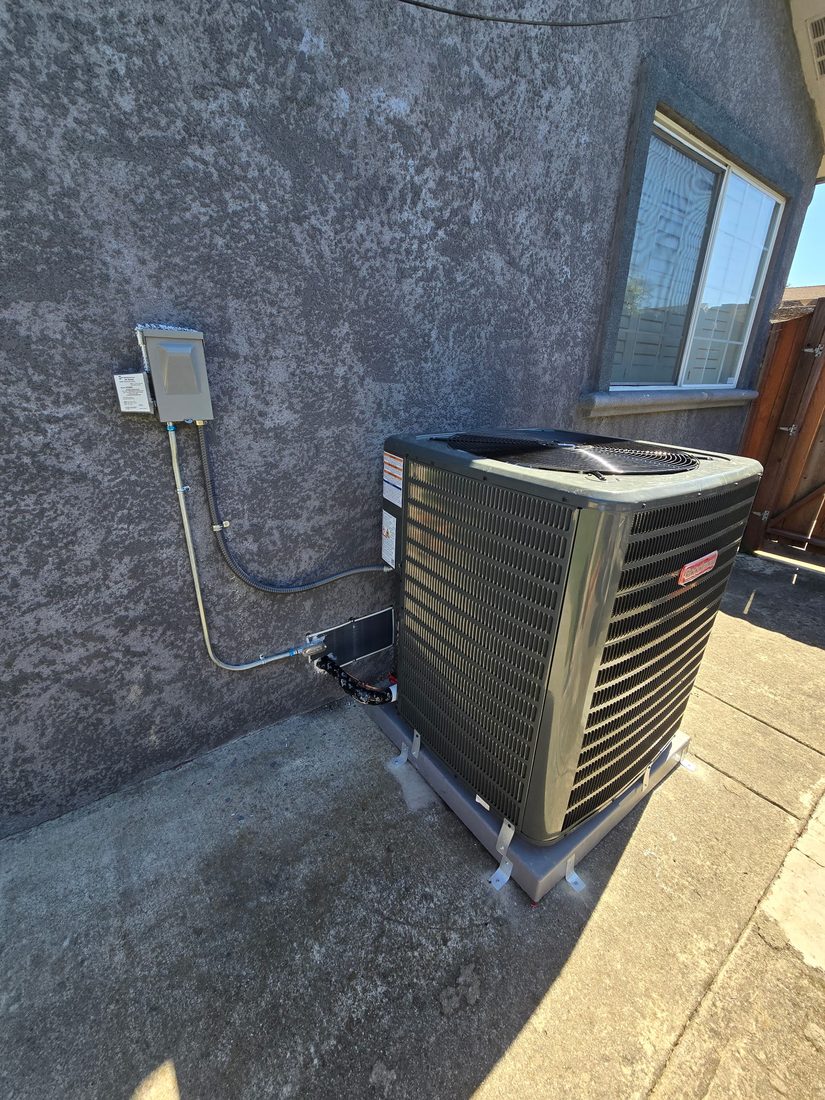
When a homeowner asks me which HVAC brand to buy or whether their system is worth fixing, they usually want a single name. I do not have one, and any contractor who gives you one without seeing the house is selling, not advising. What I can give you is the honest version: how each brand actually holds up, how easy it is to service, and what the common repairs really cost. This is built from what we see on the trucks across the Bay Area, brand by brand. It is field experience, not a member survey, and the difference matters because we are the ones opening the panels.
One rule sits above all of this. Install quality decides more about how long a system lasts than the badge on it does. A premium brand sized wrong or left short on refrigerant will short-cycle and wear out early. A value brand sized with a real load calculation and charged to the nameplate will run clean for fifteen years. Keep that in mind while you read the tiers below.
How the brands actually hold up
Here is how we group the HVAC brands we service, by build quality and by how serviceable they are when something fails.
| Tier | Brands | What it means |
|---|---|---|
| Premium, well-built, parts available | Carrier, Bryant, Trane, American Standard, Daikin | Heavy build, sound engineering, parts you can source. Worth repairing for the long run. Carrier and Bryant are the same equipment; so are Trane and American Standard. |
| Ductless specialists, worth keeping | Mitsubishi, Daikin, Fujitsu | The best inverter and multi-zone engineering, quiet, strong low-temperature heat. We are Daikin factory-trained and have completed Mitsubishi factory courses. |
| Value, cheap to buy and cheap to repair | Goodman, Rheem, Ruud, York | Solid when installed right. The low parts cost cuts both ways: affordable to fix, which often makes repair the easy call. Rheem and Ruud are the same equipment. |
| High-efficiency, proprietary-parts caveat | Lennox | Strong SEER numbers, but a dealer-restricted parts ecosystem means some repairs run longer and cost more than a comparable Carrier or Trane. |
| Budget ductless, install-dependent | Cooper&Hunter | A fair value when installed and charged right. Parts availability is the watch-item versus the premium ductless lines. |
What the common repairs cost
These common faults require different parts and access. We quote the repair after identifying the fault on your equipment. The $99 diagnostic is credited toward the repair.
| Common HVAC repair | Typical cost | What you see |
|---|---|---|
| Flame sensor | Quoted after diagnosis | Furnace lights, then shuts off after a few seconds |
| Hot-surface ignitor | Quoted after diagnosis | No ignition, furnace will not light |
| Run capacitor or contactor | Quoted after diagnosis | Outdoor unit silent, indoor fan running |
| Draft-inducer motor | Quoted after diagnosis | Furnace tries to start, locks out before ignition |
| Condenser-fan or blower motor | Quoted after diagnosis | Weak airflow, overheating, or a noisy outdoor unit |
| Control board | Quoted after diagnosis | Erratic operation, settings that do not stick |
| Heat-pump reversing valve | Quoted after diagnosis | Cools but will not heat, or the reverse |
| Sealed-system leak repair and recharge | Quoted after diagnosis | Slow loss of heating or cooling, low charge |
A weak run capacitor can be found during a maintenance check before the system loses cooling during a heat wave.
Repair or replace, by what failed
I work the repair-or-replace decision from the failed part backward, not from the birth year alone. The part that broke tells me where the system sits in its life.
| Situation | Usual answer |
|---|---|
| Cheap part (sensor, ignitor, capacitor) on a system under ~12 years | Repair, almost always |
| Mid-tier part (motor, board) under ~12 years | Repair |
| Mid-tier part on a 16-plus year system | Weigh against a replacement quote, because the next expensive part is close behind |
| Cracked heat exchanger | Replace, it is a carbon-monoxide safety failure |
| Compressor failure on a 15-plus year unit | Replace on lifetime cost |
| R-22 sealed-system leak | Usually replace, R-22 is phased out and costly to recharge into a system that already leaks |
Where the badge stops mattering
Two systems from the same brand, installed by two different crews, will not last the same number of years. The things that actually decide lifespan are the things you cannot see on the spec sheet: whether the system was sized to the house with a load calculation instead of a rule of thumb, whether the refrigerant charge was weighed to the nameplate instead of topped off until it felt right, and whether the ductwork moves the air the equipment was designed to push. We do those three things on every install, and we read the fault code before we replace a part on every repair. That is the part of reliability that is in our hands rather than the manufacturer’s.
How we can help
We repair, install, and maintain every brand in the tables above across the Bay Area. If you are replacing a system, we size it with a Manual J load calculation and put a written quote in your hands before anything is ordered. See HVAC installation for replacements, heat pump repair and furnace repair for fixes, ductless mini-split repair for the wall heads and cassettes, and our HVAC maintenance plan to catch the cheap failures before they become emergencies. The deep design work, Manual J and Title 24, is the focus of our dedicated division, Bay Area HVAC Service. Either way, the $99 diagnostic is credited toward the repair.