
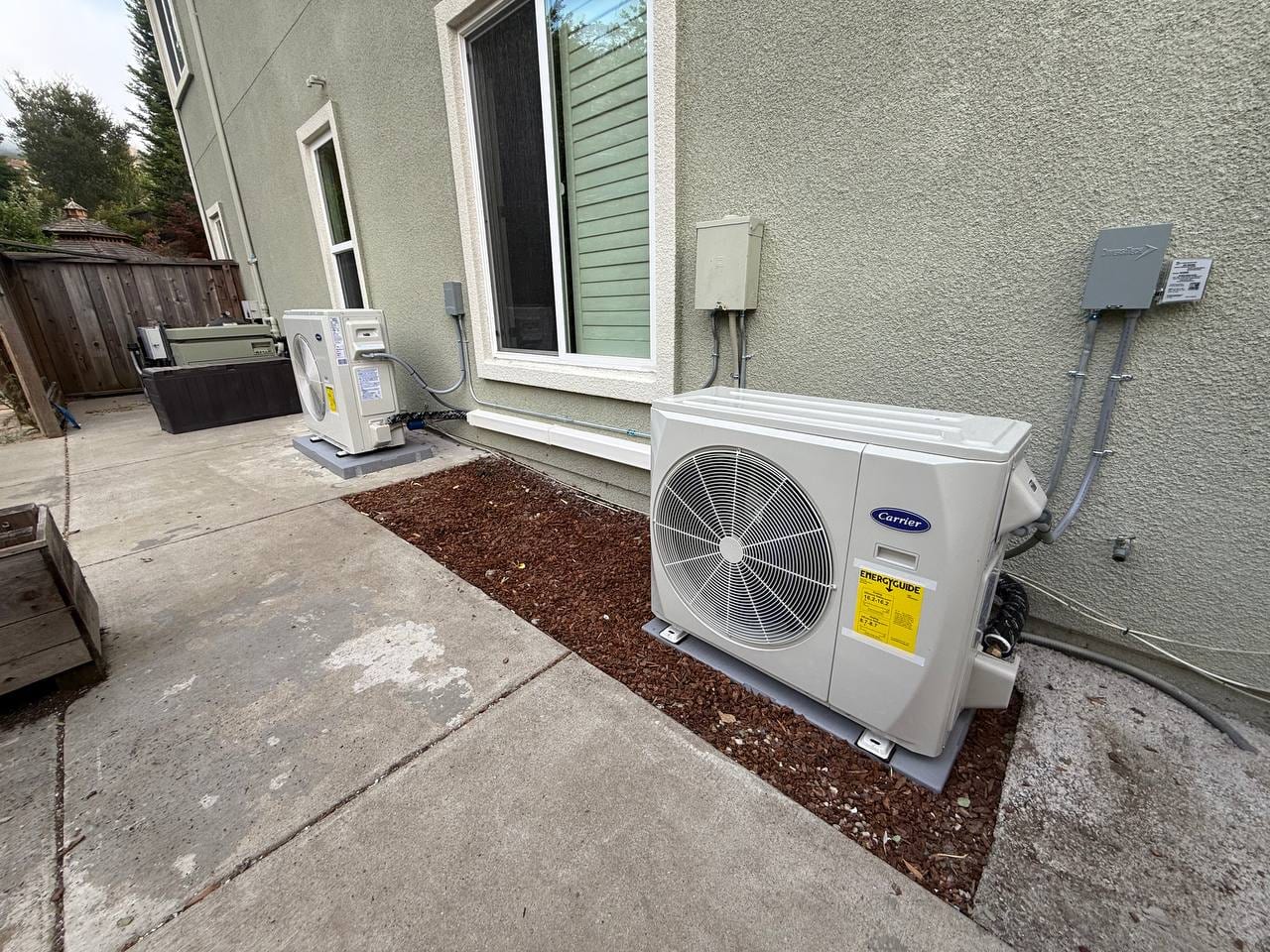
Carrier and Lennox both sit at the premium HVAC tier, but they split on parts. Carrier shares a catalog with Bryant, so common parts stay stocked and repairs are predictable. Lennox builds some of the highest-efficiency equipment on the market, but proprietary parts can mean longer waits on control-board repairs. For most Bay Area homes, Carrier is the easier ownership.
I am Andrew Kuznetsov. I run ADRIUM Service Solutions out of San Ramon, and we repair and install both of these brands every week across the Bay Area. Here is how I weigh them.
Carrier and Bryant are the same equipment under two badges
This is the first thing to understand about Carrier. Carrier and Bryant roll off the same engineering with two different name badges, and Bryant is the cheaper badge. When I diagnose a Carrier, I am diagnosing a Bryant, and they pull from a shared parts catalog. That shared catalog is a big part of why I am comfortable standing behind a Carrier. Common parts are stocked widely, so a failed ignitor or blower motor does not turn into a scavenger hunt.
The furnaces are durable and serviceable. We pulled a Carrier furnace in Pleasanton that had run ten years with zero service. It still fired. The problems were a weak-reading flame sensor, a hot-surface ignitor near the end of its life, and a blower wheel packed with dust. None of that was a Carrier defect. It was a maintenance gap, and the fixes were standard parts we carried on the truck.
Carrier does carry a real cost. It is priced at a premium, and the high-end Infinity communicating boards run into real money when they fail. A variable-speed Carrier needs a tech who reads fault codes instead of guessing, because swapping the most expensive part is an expensive way to be wrong.
Lennox builds high efficiency with a parts caveat
Lennox makes some of the highest-efficiency residential equipment on the market. The top heat pumps and condensers hit strong SEER numbers, and the variable-capacity systems run quiet and steady when they are sized and charged right. For a Bay Area home where summer cooling and shoulder-season efficiency both matter, a well-installed Lennox earns its rating. The furnaces are good machines, and the common no-heat calls are the standard ones: a failed ignitor, a flame sensor needing a clean, a pressure switch hung up on a blocked port. We diagnose the fault on site, then provide a written repair estimate and timeline.
Here is the caveat I tell every Lennox customer before we start. Lennox runs a more proprietary parts ecosystem than Carrier. Some control boards, communicating thermostats, and variable-speed components are dealer-restricted. A part that would be on the truck for another brand can mean a longer wait and a higher cost on a Lennox. That is not a reason to avoid the brand. It is a reason to know what you own, because when one of those restricted parts fails out of warranty, the repair bill and the lead time are both real. We tell you the wait before you commit.
Side by side
| Carrier | Lennox | |
|---|---|---|
| Engineering and build | Premium, durable, shares platform with Bryant (cheaper badge) | Premium, top-tier efficiency, quiet variable-capacity systems |
| Parts availability | Wide, shared catalog with Bryant, common parts stocked | Mixed, some control and variable-speed parts dealer-restricted |
| Typical repair cost | Predictable, except high-end Infinity boards | Standard parts fair, restricted parts higher and slower |
| Efficiency | Strong across the range | Among the highest on the market |
| Best for | Owners who want premium build with low repair friction | Owners chasing top efficiency who accept the parts tradeoff |
Install quality decides the lifespan, not the badge
I will say this plainly because it matters more than the brand argument. A heat pump performs to its rating when it is sized with a Manual J load calculation and the refrigerant charge is weighed to the nameplate. We installed a two-zone Carrier 19 SEER system in San Ramon, replacing two dead R-22 units, and it delivers because the load was calculated and the charge was weighed. Oversize either brand or leave it short on refrigerant, and even good equipment short-cycles and underdelivers. A correctly installed Lennox will outlast a sloppily installed Carrier, and the reverse is just as true. The badge is a smaller variable than most buyers think. For more on how brand reliability actually plays out in local homes, see our Bay Area HVAC reliability report.
Who each one is for
If you want premium build with the lowest repair friction over the life of the system, Carrier is the easy call. The shared Bryant catalog keeps parts available and repair costs predictable, and if budget is tight, the Bryant badge gets you the same equipment for less.
If you are chasing the highest efficiency numbers and you understand that a restricted part can mean a longer wait, Lennox is a genuinely strong machine. Just go in with eyes open on the parts ecosystem.
Our HVAC depth runs through our division, Bay Area HVAC Service. Whichever brand you own or are considering, we do the work straight. A $99 diagnostic credited toward the repair, written quotes before we touch anything, and the parts caveat told up front. We are EPA Section 608 Universal certified, CSLB #1136642, Daikin factory-trained, with Mitsubishi factory courses behind us. Installs carry a 10-year parts warranty; labor is 2 years standard, extended to 10 years with our maintenance plan. Repairs carry one year. On rebates, we confirm what is actually paying at estimate time.
We install and we repair both. If you want a Carrier or Lennox system put in right, or you already own one and need it fixed, our HVAC installation and repair crews handle both brands across the Bay Area.