A walk-in cooler that drifts warm is a fast way to lose a cooler full of inventory and fail a health inspection. The good news: most walk-in problems are not a blown compressor. They are coils, ice, drains, and door seals. Here is what actually goes wrong and what you can check before you call.
What temperature should it hold?
A walk-in cooler should sit between 35 and 38 degrees F. California health code requires cold-holding at or below 41 degrees F, so anything climbing toward that line is already a problem. A walk-in freezer should hold near 0 degrees F. If your box is creeping up, start with the checks below before you assume the worst.
The most common causes
Dirty condenser coil. The condenser sits on the warm side of the system, often above the box or on the roof. When the fins pack with grease, dust, and kitchen lint, the system cannot reject heat and the cooler slowly loses its ability to hold temperature. This is a common cause we find on restaurant walk-ins.
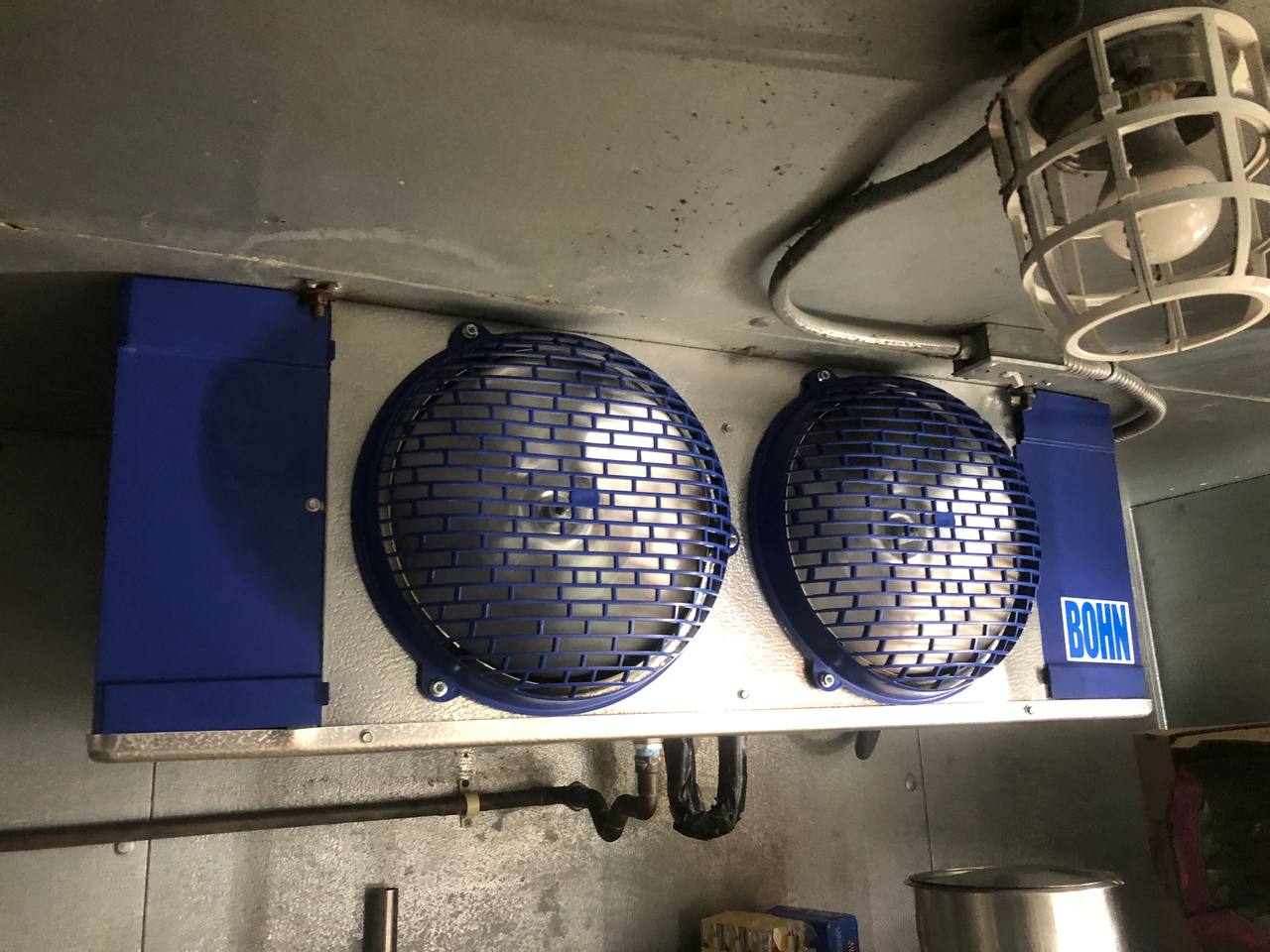
Iced-over evaporator coil. The evaporator is the coil inside the box. If the defrost cycle fails, frost builds into a solid block of ice, airflow stops, and the box warms even though the compressor is running hard. A coil buried in ice points to a defrost timer, defrost heater, or defrost thermostat fault.
Failed defrost cycle. Tied to the above. A bad defrost timer or a burned-out defrost heater lets ice accumulate every cycle until the coil is choked.
Door and gasket problems. A torn gasket, a door propped open during a rush, or a failed door closer lets warm humid air pour in. That extra moisture also overloads the evaporator and speeds up icing.
Clogged condensate drain. A blocked drain line backs up, freezes, and can mimic a defrost failure. Water pooling on the floor of the box is the tell.
Refrigerant leak. Less common, but a low charge means weak cooling and a compressor that runs nonstop. Refrigerant work requires EPA Section 608 certification. Do not let anyone “top it off” without finding the leak.
What you can check yourself
- Read the thermometer. Confirm the box is actually warm and the gauge is not simply reading wrong. Put a separate thermometer inside.
- Look at the condenser coil. If the fins are caked with grease or dust, that is very likely your problem. Don’t attempt to clean them yourself. The fins are fragile and bent fins restrict airflow worse than dirty ones. Note it for the tech.
- Inspect the evaporator inside the box. A light frost is normal. A solid wall of ice is not. If you see an ice block, the defrost system needs a tech.
- Check the door. Press the gasket all the way around for gaps and tears. Make sure the door fully closes and latches.
- Check the drain. Pooled water or a sheet of ice on the floor means the condensate drain is clogged or frozen.
- Listen. A compressor that never cycles off is straining against a dirty coil, a low charge, or an iced evaporator.
When to call a pro
Close any propped door. Everything else, including condenser coil cleaning, defrost components, refrigerant, compressors, and electrical controls, is tech work. Condenser fins are fragile and a wrong cleaning move bends them into a tighter restriction. Refrigerant is a federal-certification job. Defrost repairs mean working inside energized equipment. Do it wrong and the repair bill is bigger than the original service call would have been. If the box has been above 41 degrees F for more than a couple of hours, move perishables to a working unit and follow your food-safety plan while you wait.
If your problem is an aging system rather than a single failed part, it may be worth reading our commercial refrigeration repair guide, or, for low-volume florist and wine applications, our walk-in to mini-split + CoolBot conversion write-up. For the service itself, see commercial refrigeration repair, and if it is your ice machine that went down, commercial ice machine repair.
Get it back online
A down walk-in is a revenue and inventory emergency, and we treat it that way. ADRIUM has serviced Tri-Valley restaurants and markets since 2021. We take after-hours commercial calls and will get you on the schedule fast, often same or next day when we can. CSLB #1136642, EPA Section 608 certified, BEAR #50788, accredited with the BBB.
Call (925) 999-4095 or email welcome@adriumservice.com. The diagnostic fee is credited to the repair, and you get a written estimate before any work starts. Book a call on our contact page.