
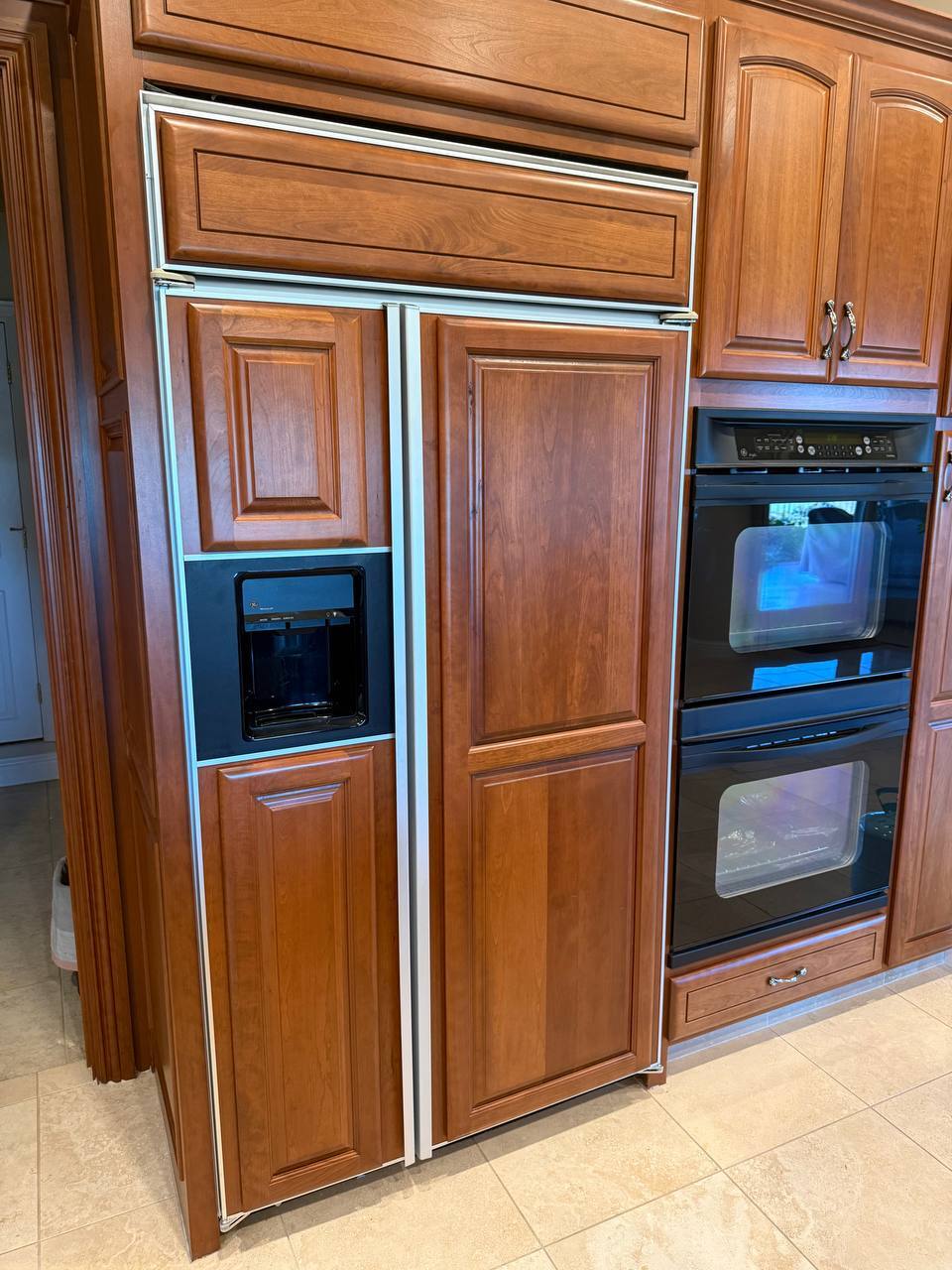
A refrigerator is the one appliance in the house that never gets a day off. Most of them die early for a boring reason: nobody ever cleaned the condenser coils. Dust packs onto the coils, the compressor can’t dump heat, it runs hotter and longer, and the sealed system wears out years ahead of schedule. Twenty minutes of maintenance twice a year heads off the expensive failure.
Here is the routine we walk customers through across the Bay Area.
Clean the condenser coils (the big one)
The coils are the metal grid that releases the heat your fridge pulls out of the food compartment. Find them behind the bottom front kick-plate, on a back-bottom panel, or across the rear of older cabinets.
- Unplug the refrigerator. Always.
- Pop off the kick-plate or pull the unit out from the wall.
- Vacuum the coils with a brush attachment, then run a coil brush through the fins to grab what the vacuum missed.
- Wipe the floor underneath and slide it back.
Do this every six months. With a shedding cat or dog, do it every three. This single task is the difference between a fridge that lasts 12 years and one that quits at 7.
Check the door gasket
Run your hand around the door seal while the unit runs. If you feel cold air leaking, the gasket is failing and the compressor is working overtime to compensate. The dollar-bill test still works: close the door on a bill, and if it slides out with no drag, the seal is weak. Clean the gasket with warm soapy water (gunk in the folds breaks the seal) and replace it if it stays loose.
Clear the defrost drain
Water pooling under the crisper drawers or ice building on the freezer floor usually means a clogged defrost drain. Find the drain hole at the back of the freezer floor and flush it with warm water and a turkey baster. A clear drain stops the leak and the smell that comes with standing water. If yours keeps clogging, our refrigerator leaking water diagnosis guide walks through the deeper causes.
Set the temperatures right
Fresh food should sit at 37°F, the freezer at 0°F. Colder isn’t better. It just makes the compressor run more for no benefit. A cheap appliance thermometer settles the argument if your dial has no numbers.
Replace the water filter
If you have a dispenser or ice maker, swap the filter every six months. A clogged filter slows water flow, strains the dispenser valve, and degrades ice quality. We cover the details in our water filter replacement guide.
Give it breathing room
A refrigerator needs air around the coils. Leave a couple of inches behind the unit and above it. Cabinets boxed in tight with no clearance trap heat and force the compressor to fight the same battle dirty coils cause.
When to stop and call a tech
Maintenance is yours to do. These are ours:
- The compressor runs nonstop but the fresh-food side stays warm after you’ve cleaned the coils
- You hear loud buzzing or clicking from the back (a failing relay or compressor)
- Frost builds up fast even with the drain clear (a defrost-system or sealed-system fault)
- The fridge cools, then quits, then cools again on its own
These point at the sealed system or the control electronics, which need gauges, refrigerant handling, and EPA 608-certified technicians. Every visit starts with a written estimate. If your unit has flat stopped cooling, start with our refrigerator not cooling causes and fixes.
Founded in 2021, ADRIUM services refrigerators across the Bay Area with a $99 diagnostic credited toward the repair. Call (925) 999-4095 or email welcome@adriumservice.com, or book a repair online.
FAQ
How often should I clean refrigerator condenser coils? Twice a year for most homes, every three months with shedding pets or a dusty location. Dusty coils are the top cause of early compressor wear.
How long should a refrigerator last? Ten to 13 years for mainstream brands, often 15 to 20 for built-in luxury units. Neglected coils and a clogged drain shave years off either.
Can dirty coils stop a fridge from cooling? Yes. The compressor can’t shed heat, overheats, and either runs nonstop or shuts off. Cleaning the coils fixes a surprising number of “fridge stopped cooling” calls.
Do you charge for a maintenance visit? The on-site diagnosis is $99 and is credited toward the repair. You get a written repair estimate after the visit and before any work starts. For a standalone maintenance visit, call (925) 999-4095 and we’ll explain the visit pricing before you schedule.