
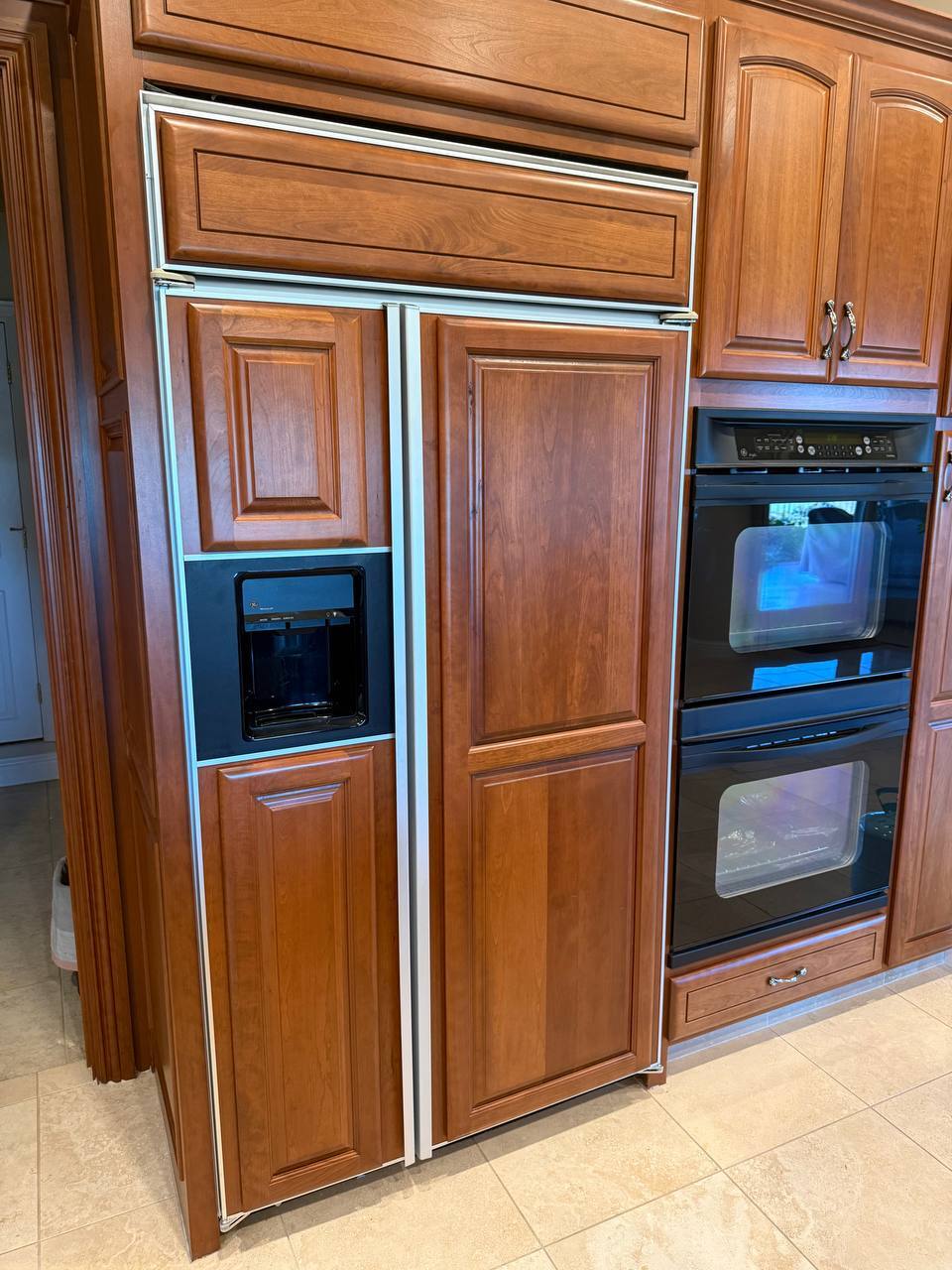
A leaking refrigerator is one of the easier appliance problems to diagnose, because the water tells you where to look. A puddle inside the fresh-food compartment has a different cause than a pool on your kitchen floor. Find the location first, then work the short list of suspects for that location.
Before anything else: if water is hitting the floor, pull the fridge out and shut off the water supply at the saddle valve or shutoff behind the unit. Dry the area so you can tell whether the leak is still active.
Water Inside the Fridge: Start With the Defrost Drain
If you’re finding water pooling at the bottom of the fresh-food section (usually under the crisper drawers), the cause is almost always a clogged or frozen defrost drain.
Here’s the mechanism. Your freezer coils frost up and the unit runs a defrost cycle several times a day. The melt water is supposed to run down a small drain tube to a pan under the fridge, where it evaporates. When that drain clogs with food debris or freezes solid, the water has nowhere to go. It backs up and spills out into the fridge compartment.
A technician flushes the drain, checks the drain heater that prevents refreezing, and inspects the small check valve at the drain outlet. If it’s just debris, the fix is quick. If the heater or valve has failed, it’s a parts-and-labor repair. Clearing the drain yourself means removing the freezer’s back panel and working around the coils. If an underlying part has failed, you’ll have the same puddle back in a day or two, plus the hassle of reassembly.
Water on the Floor: Three Suspects
A floor leak means water is escaping before it reaches the pan, or the pan itself is the problem.
The supply line. Most fridges with an ice maker or water dispenser connect to a braided or plastic line at the back. Look along the line and every fitting for moisture. A loose compression nut or a pinhole in a plastic line drips slow and steady. If you spot a wet fitting, you’ve found the source. Supply-line repairs involve shutting the water off and working at the back of the unit; worth having done properly so it doesn’t leak again.
The drain pan. The pan that catches defrost water sits underneath the unit. Pull the fridge out and check for visible cracks or standing water. A cracked pan needs replacement. An overflowing one usually means the defrost drain above is the real problem.
The filter housing. Refrigerators with an internal water filter have a housing and cap that can crack or seat poorly after a filter change. A cross-threaded or worn filter cap weeps water that runs down the inside wall and out onto the floor. Try reseating the filter and confirm you’re using the correct OEM filter for your model. If the housing itself is cracked, it needs a part.
A Water Inlet Valve, On Camera
Upstream of those supply fittings sits the water inlet valve, another frequent floor-leak source. Every refrigerator with a dispenser or an ice maker has one at the lower back of the cabinet. Here is what one looks like out of a fridge.
When to Call a Pro
Shutting off the supply and checking the filter are reasonable first steps. But most persistent refrigerator leaks (a failed drain heater, a bad water valve, a cracked filter housing, a leaking supply fitting) are parts-and-labor repairs that require accessing the back panel or the water supply connection. Getting it wrong means continued water damage to your floor and cabinets, or a voided warranty on a newer unit.
Call us when:
- The leak is still active after you’ve dried things out and done a visual check
- The fridge is leaking and also not cooling (two separate faults, both need attention)
- You looked at the fittings and nothing is obviously wrong but the floor keeps getting wet
A floor leak is worth handling quickly. Standing water damages flooring and cabinet bases faster than most people expect. For other fridge faults, see our refrigerator repair guide.
Get It Diagnosed
If you’ve checked the obvious and the leak is still there, we cover the Bay Area and surrounding cities. You get a written estimate before any work begins. Call (925) 999-4095 or email welcome@adriumservice.com, or read more about our refrigeration repair service.
ADRIUM Service Solutions has been fixing built-in and freestanding refrigerators since 2021. CSLB #1136642, EPA #1279674151528, BEAR #50788, A+ with the BBB.
FAQ
See the questions above for the most common leak scenarios: floor leaks, inside-the-fridge pooling, defrost drain diagnosis, whether a leak is an emergency, and what affects repair cost.