Oven & Range Problems We Fix
-
Burner won’t ignite or has weak flame
-
Igniter clicks but won’t light
-
Oven not heating or heating unevenly
-
Gas smell when oven is off (leave the house and call 911 and PG&E at 1-800-743-5000 first, then us)
-
Broiler not working
-
Burner element not heating
-
Oven temperature off (bakes too hot or too cool)
-
Control board error codes
-
Self-clean cycle failure
-
Touchpad not responding
-
Oven door won’t close or seal properly
-
Convection fan not working
-
Display not working
-
Temperature sensor failure
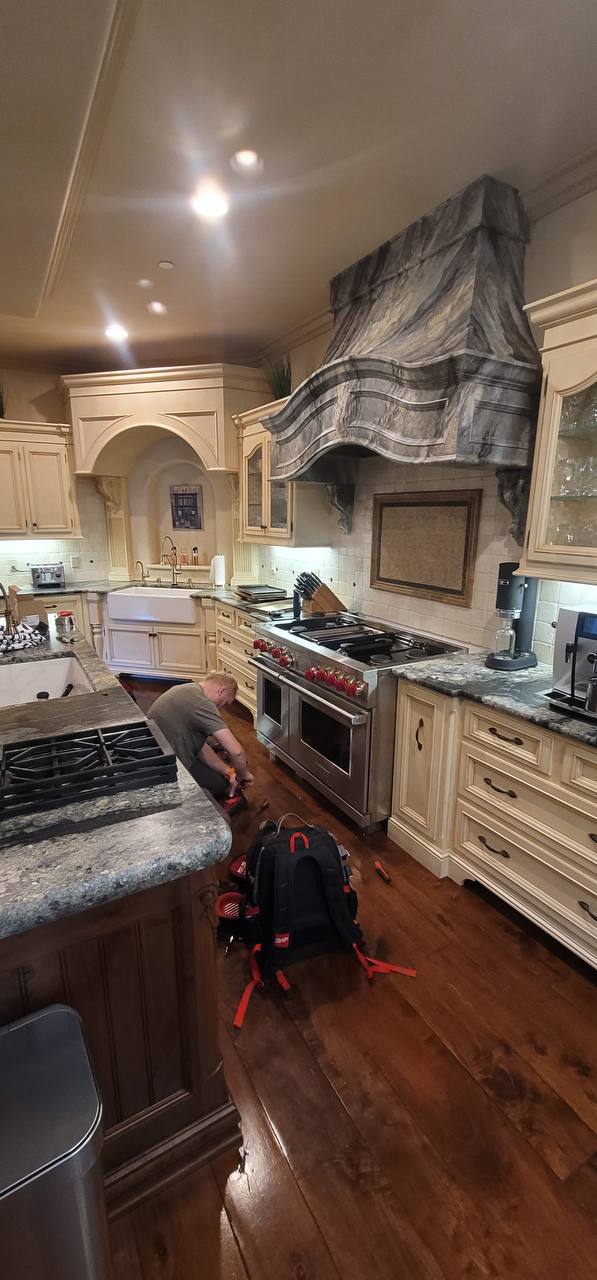
A Gas Oven Burner and Igniter, On Camera
What Actually Causes These Problems
Gas ranges. Most no-heat or no-ignition calls come down to the igniter or the gas valve. The glow-bar igniter (visible in the video) weakens over time and stops drawing enough current to open the valve, even though it still glows orange. It looks like it’s working. It isn’t. A clicking igniter that won’t light is usually a cracked spark igniter or a fouled igniter module. A burner that lights slowly or unevenly is often a partially clogged orifice or a weak valve coil.
Electric ranges. A dead bake or broil element sometimes shows a visible burn mark or crack, which is the easy case. More often the element tests fine but a thermal fuse, failing temperature sensor, or faulty control board is the real culprit. All three symptoms can look the same from the outside.
Induction. A dead cooking zone or random error code usually points to a failed IGBT board or a cracked coil. Parts pricing varies significantly between models; running a diagnosis first prevents paying for the expensive board when the problem is the cheaper coil.
Temperature issues. An oven that runs hot or cold, or bakes unevenly, is typically a temperature sensor drifting out of spec or a failing bake element that cycles correctly but does not deliver full power. Convection fan failure makes uneven baking worse and is worth checking during the on-site diagnosis.
What We Check During Diagnosis
We start with the basics: breaker, fuse, supply voltage. Then we test the igniter draw or element resistance depending on fuel type, check the temperature sensor reading against spec, and pull any stored error codes from the control board. On gas ranges we also test the valve coil and do a combustion check. We carry common parts, and we confirm repair timing after the on-site diagnosis.
Why These Repairs Belong to a Tech
Gas work means disconnecting and reconnecting fittings. A small leak you don’t catch is a real hazard, not a recoverable mistake. Electric range interiors run on 240V; the terminals stay live longer than most people expect after you cut power. Control board replacements require the exact part for your model revision, not just the same brand, and returning the wrong board is a hassle that costs time. We carry common parts, and we back the repair.
Gas Smell: Don’t Troubleshoot
If you smell gas with the oven off, stop. Don’t touch the shutoff valve or any switch. Get out, and call 911 and PG&E at 1-800-743-5000 from a safe distance. Call us once it’s been made safe. Don’t use the range until it’s been inspected.
Schedule a Diagnosis
We service gas, electric, and induction ranges across the Bay Area: Livermore, Pleasanton, Dublin, San Ramon, and Danville. Call us to schedule an on-site diagnosis and receive a written repair estimate.