
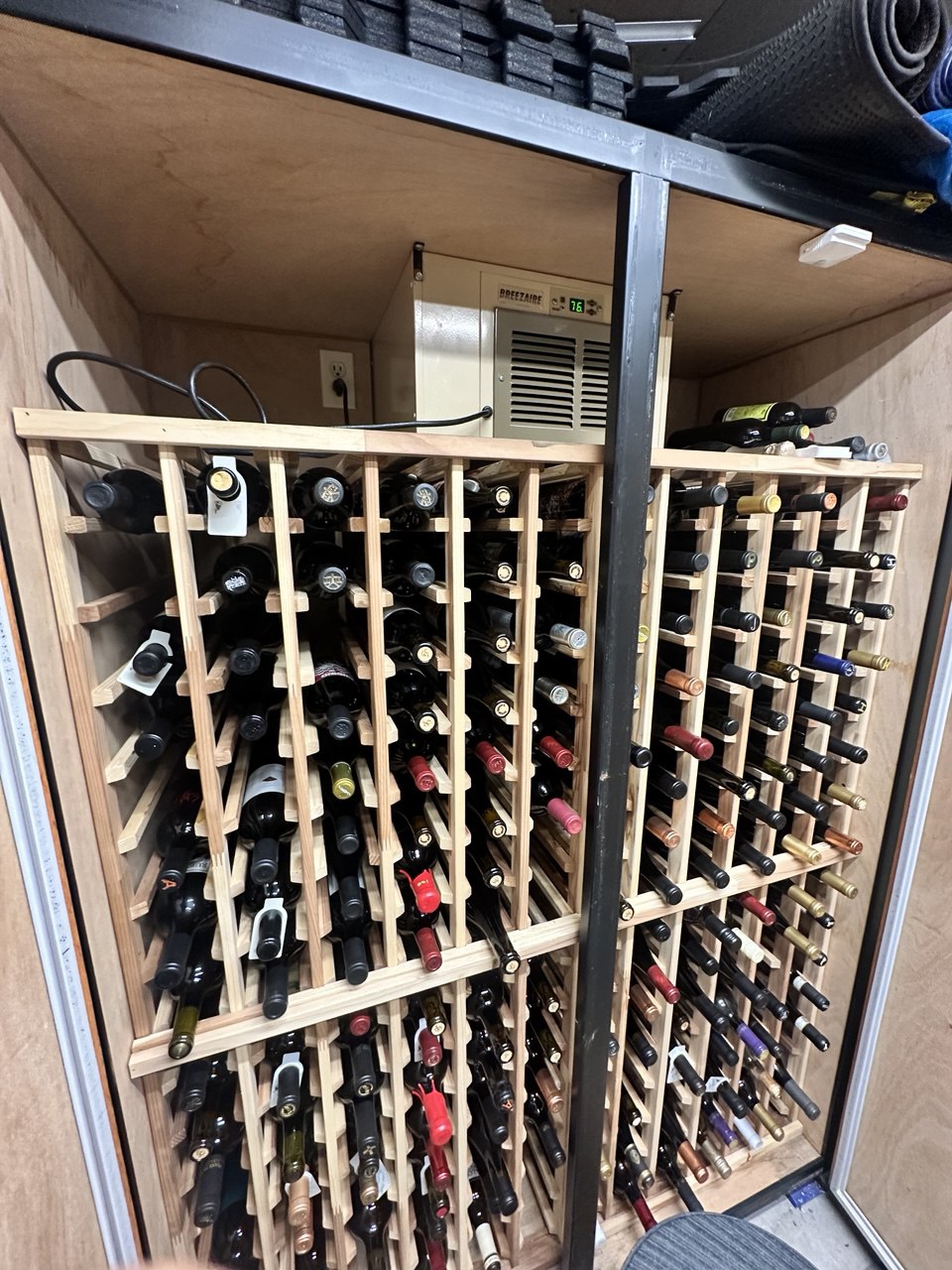
A built-in beverage center or kegerator is a small sealed refrigeration system packed into a tight cabinet. When it stops cooling or starts pouring foam, the cause is usually one of a handful of things. Here’s how to read the symptoms.
Beverage center not cooling
Start at the front grille. U-Line and Perlick built-ins pull air through a vent at the bottom of the door or kickplate, and that vent collects dust, pet hair, and kitchen grease. A choked condenser is a common reason a unit drifts warm. Unplug the unit or switch off its breaker, then pull the grille, vacuum it, and brush the condenser coil clean. Give it 24 hours and recheck.
If it’s still warm, check the door gasket. Close the door on a dollar bill and tug; if it slides out with no resistance, warm air is leaking in. Gasket replacement requires the correct part for your specific model, and the fit matters. A tech can source and swap it correctly.
Next, listen. Open the door and hold the light switch in. You should hear the evaporator fan running. Silence usually means a seized fan motor. If the fan runs, the gasket is tight, and the coil is clean but the box still won’t hold temperature, the problem is in the sealed system: low refrigerant from a leak, or a failing compressor. That’s EPA-certified territory and not a DIY job.
Kegerator pouring foam
Foam frustrates people because they blame the beer. It’s almost always temperature or pressure.
- Too warm. Above 38 degrees, CO2 comes out of solution and you pour foam. Set the unit to 36 to 38 and wait several hours for the keg itself to chill, not just the air.
- Wrong pressure. Most domestic kegs want 10 to 12 PSI. Check your regulator and adjust if it’s off.
- Warm or short lines. Lines that run outside the cold zone or aren’t the right length can’t slow the pour properly. A tech can evaluate the line setup during a service visit.
Dial in temperature and pressure first. If the kegerator can’t hold 38 degrees even with a clean coil and good gasket, you’re dealing with a cooling fault that needs a tech.
Icing up or freezing bottles
A beverage center that frosts over or freezes the back row is usually a thermistor or control board problem, not a refrigerant issue. The thermistor tells the board how cold the box is; if it drifts, the compressor runs too long. A stuck board does the same. Both are repairable parts, not a reason to replace the unit. A tech can identify which one failed and swap it.
What you can safely check
Clean the condenser grille, confirm the gasket seals (dollar bill test), verify the temperature setting is correct, and make sure the unit has a few inches of clearance for airflow. Those are the owner-level steps.
Everything beyond that, fan motors, control boards, thermistors, and anything inside the sealed refrigeration loop, needs a tech. Refrigerant handling requires EPA certification by law. ADRIUM holds EPA #1279674151528 and CSLB #1136642.
These built-ins are worth repairing. The cabinet and door are expensive and the install is integrated into your cabinetry, so a component repair beats a full replacement plus carpentry in most cases. We walk through the repair-versus-replace math with you on the call.
If you have a wine column rather than a beverage center, the diagnosis overlaps heavily. See our wine fridge and wine cooler repair guide and our refrigeration repair service for the broader sealed-system picture. We also keep brand pages for U-Line and Perlick.
Call us
Once you’ve cleaned the coil and checked the gasket, anything still wrong is a tech job. Call (925) 999-4095 or email welcome@adriumservice.com. The diagnostic is $99, credited to the repair if you move forward, and you get a written estimate before any work starts. ADRIUM has served the Bay Area since 2021. BEAR #50788, BBB A+.
FAQ
See the questions above for foam, no-cooling, icing, DIY limits, and pricing on U-Line and Perlick beverage centers.