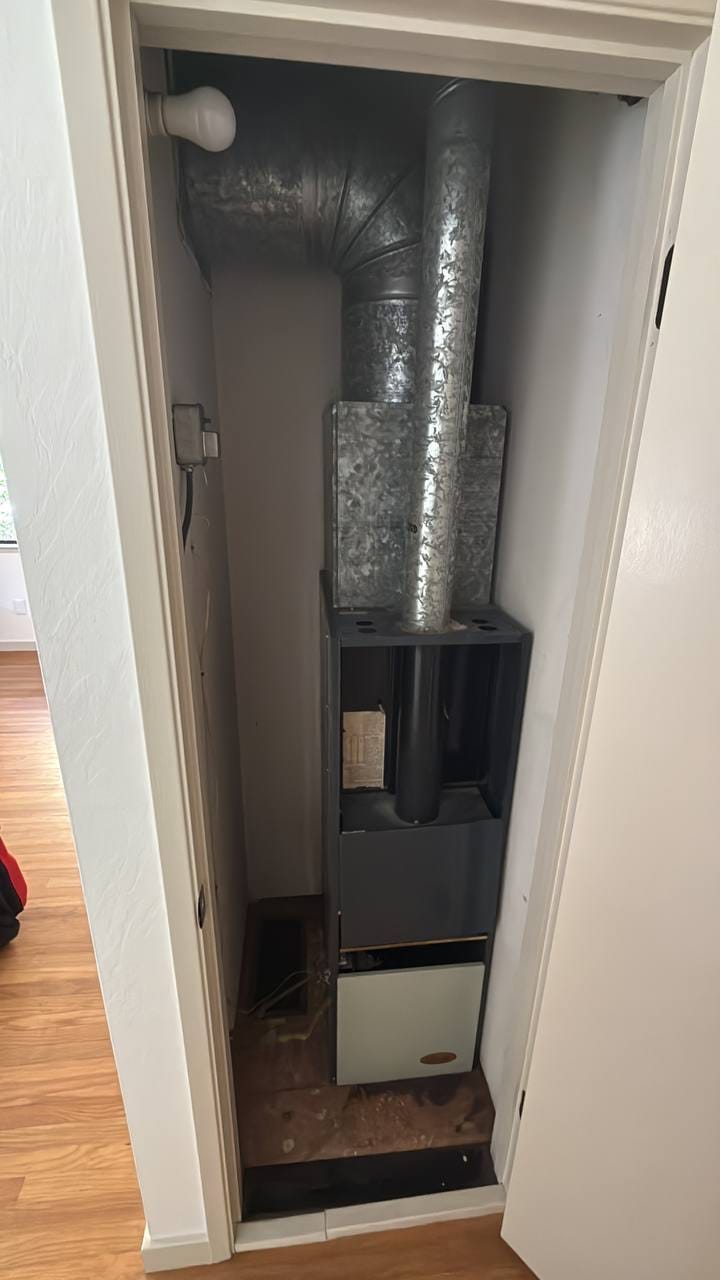
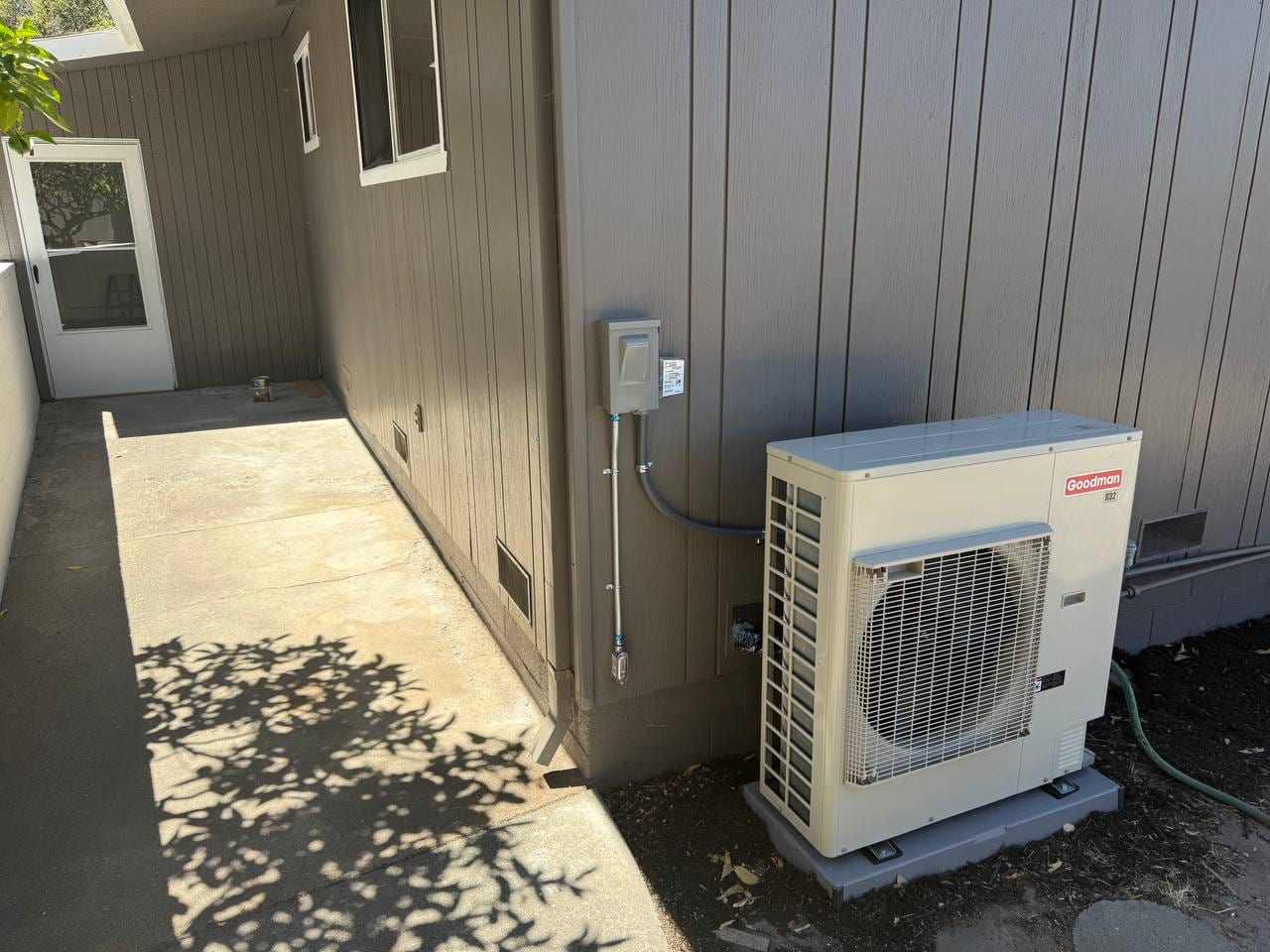
A Martinez homeowner on Pomona Avenue called us because the old HVAC system had stopped being a system and started being a recurring bill. It ran loud, leaned hard on the electric meter, and could not hold a setpoint. The service calls were stacking up. They wanted to know whether one more repair would settle it down.
What those symptoms usually mean
Loud operation, high electric bills, and a unit that can’t hold temperature are not separate problems. They tend to point to one aging system that is fighting to do a job it can no longer do reliably. A heat pump or AC that runs constantly but underperforms, or cycles short and shuts off, is telling you something is wrong at the mechanical level.
Before calling, it is worth checking the basics yourself: make sure the breaker is not tripped, the filter is not clogged (a blocked filter alone can kill airflow and trigger the symptoms above), the thermostat is set correctly, and nothing is blocking the outdoor unit. If all of that is fine and the system still cannot keep up, the diagnosis needs gauges and an amp clamp, and that is a technician’s job.
The compressor was the end of the line, not a fix
We put gauges and an amp clamp on the existing equipment, and the picture was plain. The compressor on the cooling side was failing, and the duct connections at the air handler had worn loose. We could have quoted a compressor swap. We did not. The rest of the equipment was old enough that a compressor today buys you a blower motor or a coil leak next season. When the repair cost starts chasing the replacement cost on tired equipment, the rule we use is to replace.
We priced both in writing, one total price for each, and replacement won on its own merits.
A 3-ton Goodman heat pump, sized to the house
The homeowner wanted heating and cooling on one platform instead of a furnace plus separate AC. A heat pump gives you that at better efficiency than the two-box approach. We ran a Manual J load calculation on the house and it landed at 3 tons, so a 3-ton Goodman high-efficiency heat pump matched the requirement without oversizing it into short, sloppy cycles.
The work:
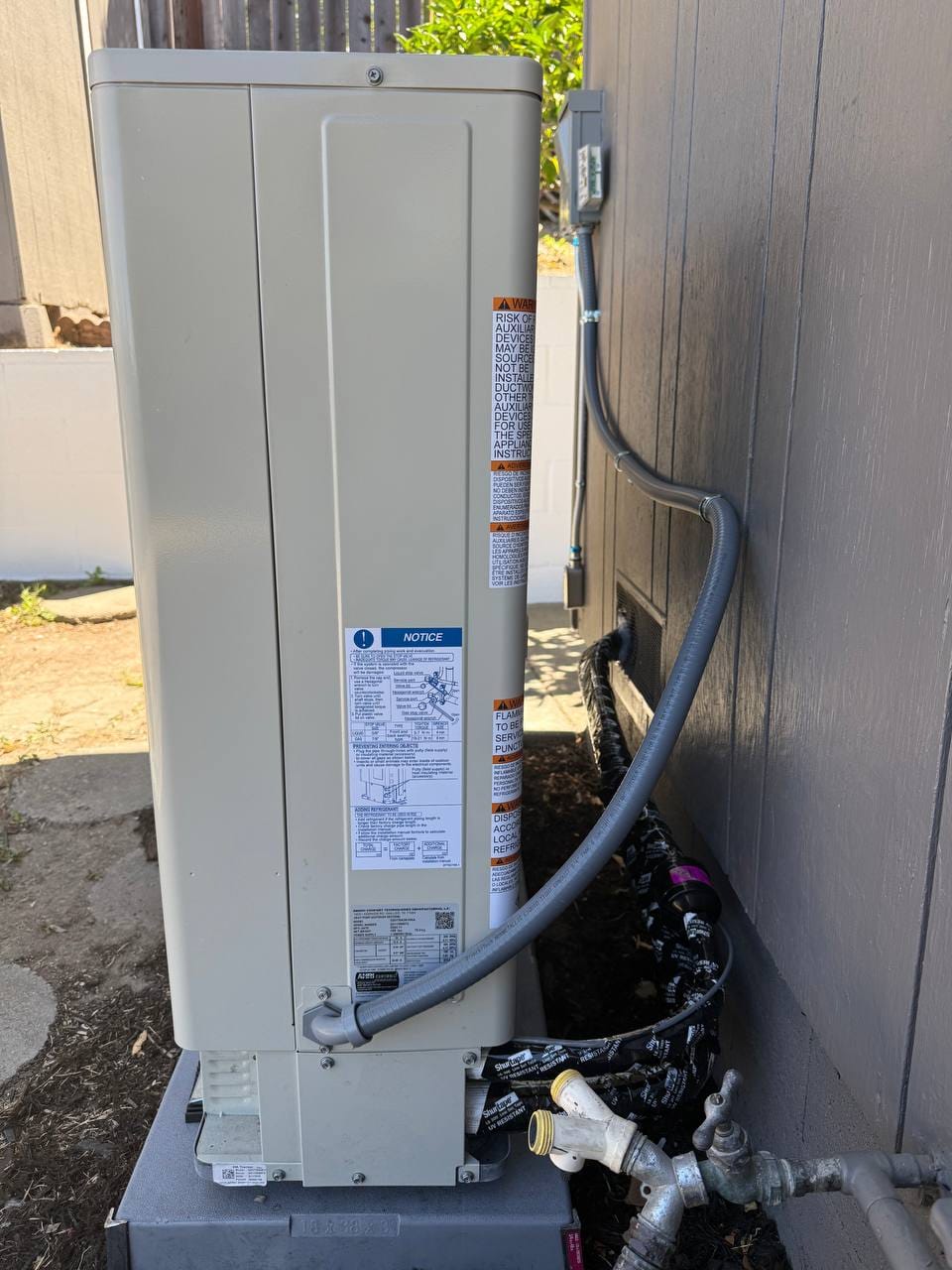
- Goodman 3-ton high-efficiency outdoor condenser, sized to the load calc
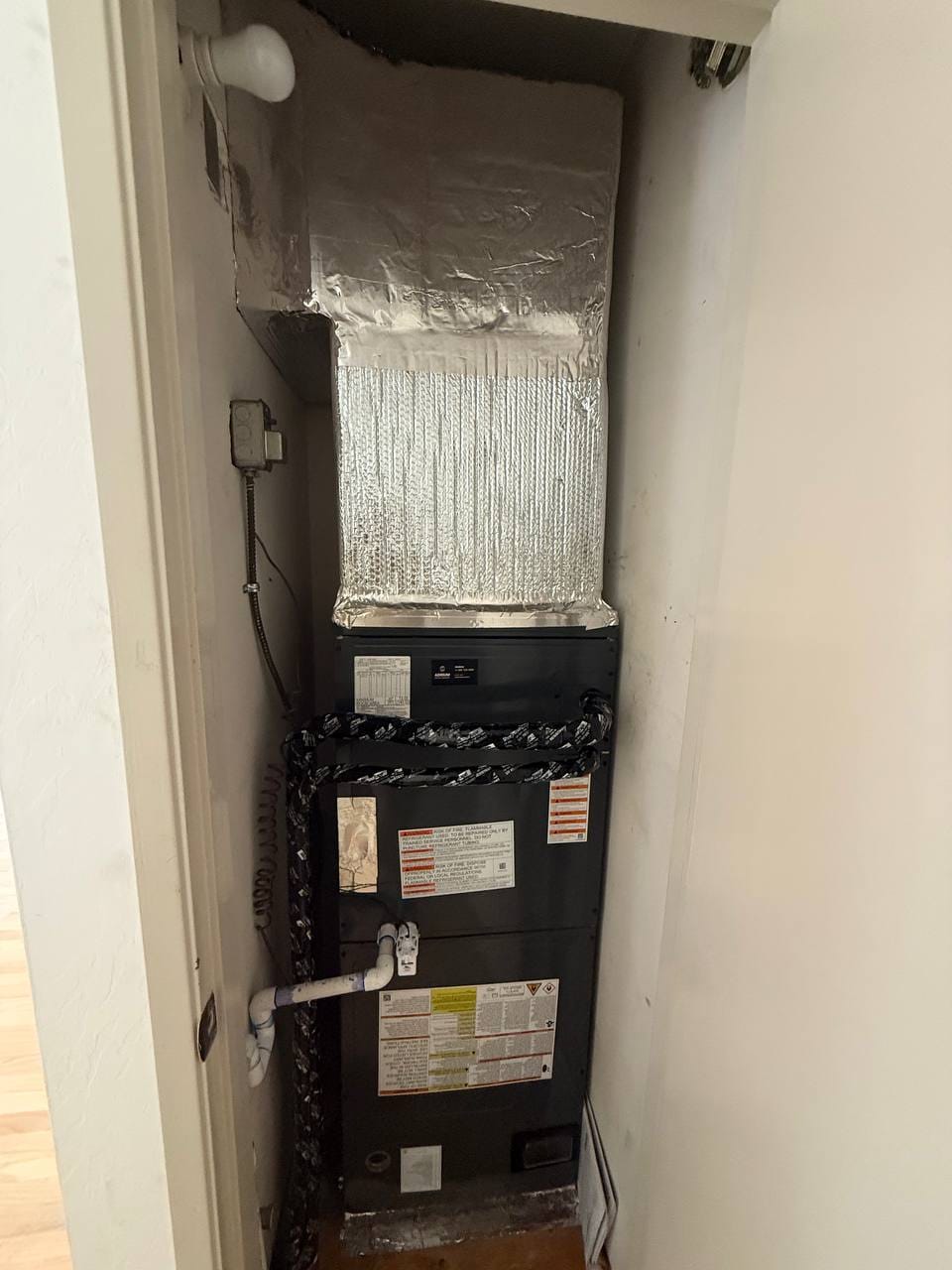
- Matched 3-ton indoor air handler, factory-charged for R-410A
- New copper ACR linesets
- Ductwork reconnected and resealed at the air handler, every joint sealed with HVAC-grade mastic
- Smart thermostat with heat-pump-aware staging
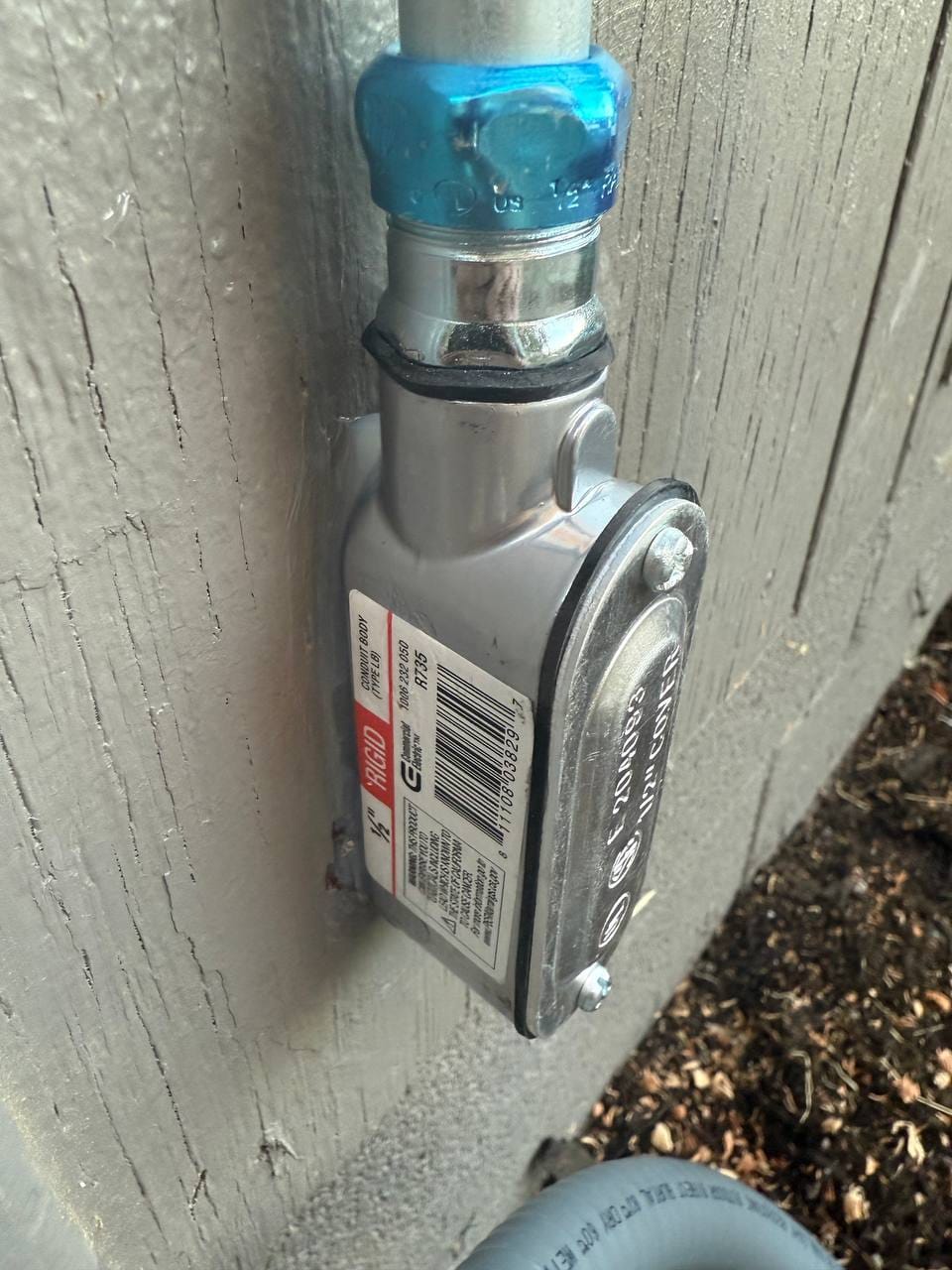
- New high-voltage disconnect, whip, and surge protector
Before any refrigerant went into the loop, we vacuum-pulled it and held a pressure test to confirm it was clean and tight. Refrigerant work requires an EPA 608 certification and the tools to do it right. There is no homeowner shortcut there.
The work you never see is what decides whether it works
The vacuum, the lineset brazing, the panel work, the duct sealing. Those are the spots a cut-rate crew shaves time, and two of them decide whether you actually get what you paid for.
The refrigerant charge was weighed to factory subcool spec, not topped off until it felt about right. That gap is the difference between rated efficiency and roughly 85 percent of it, every hour the unit runs. The duct joints got mastic instead of foil tape. Tape dries out and lets go in a couple of years. Mastic holds for the life of the system.
We ran the system under load, watched it for an hour to confirm steady-state operation, and walked the homeowner through the new thermostat before packing up.
If your system is behaving like this one was, call us
The house now heats and cools off a single quiet platform that pulls noticeably less power than the old setup. Sized correctly, it runs clean cycles. The equipment carries our 10-year parts warranty plus a labor warranty (2 years standard, extended to 10 years with our maintenance plan), plus the Goodman factory equipment warranty.
If your system is loud, struggling to keep up, or you are stacking service calls on old equipment, a diagnostic visit is the right first step. We will tell you in plain numbers what repair costs against replacement, and what actually makes sense given the equipment’s age. No pressure, just the numbers. Schedule at adriumservice.com or call us directly. Same or next-day appointments are usually available. You can also read more about how we approach heat pump installs.