
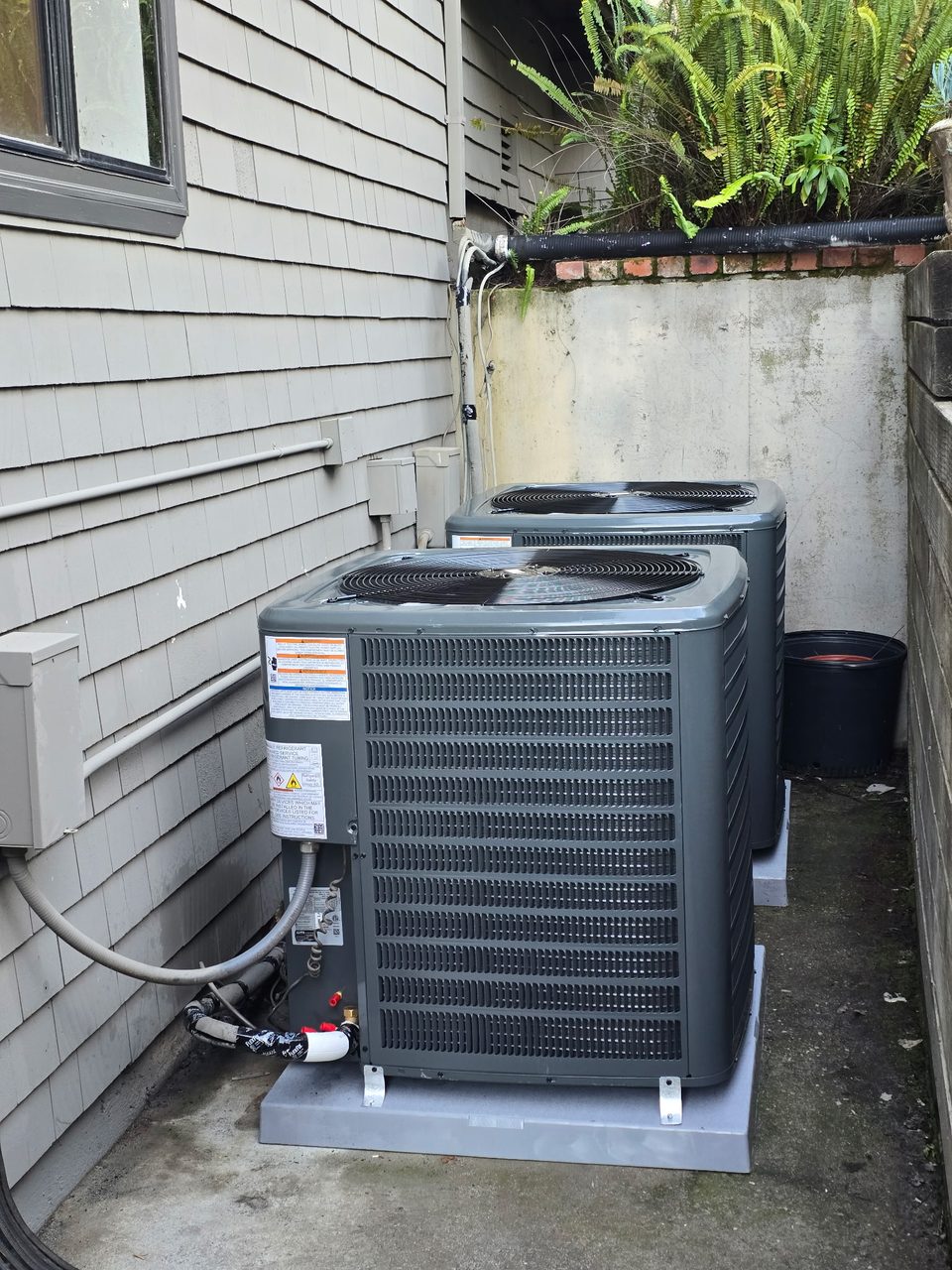
The money around heat pumps changed fast between 2024 and 2026, and most of the change went the wrong direction for homeowners. Two of the largest programs that contractors used to layer onto a quote are gone. At the same time, the equipment got better, and the install details that decide whether you stay happy with the system are exactly as important as they ever were. This guide covers both halves: what actually pays in 2026, and how to spend that money on a system that is sized right for your house.
The federal credit is gone and one big state program is closed
The federal Section 25C credit expired on December 31, 2025. Under the One Big Beautiful Bill Act, air-source heat pumps installed on or after January 1, 2026 receive no federal tax credit. There is no version of this you can still claim for a new install. If a quote you are reading still references a federal heat pump credit, that quote is working from old information.
Tech Clean California was, at its peak, the single largest incentive in the Bay Area for whole-home ducted heat pumps. It hit its funding cap in November 2025 and went to a full waitlist. It is not accepting new applications. It may come back if the state refunds it, but right now it is closed. I put both of these first because they are the two most common things I see written into competitor estimates that cannot actually be delivered.
What still pays in 2026 is local and conditional
The active stack today is smaller, and it depends almost entirely on your address and the current program cycle. We work with the programs that are still running, and the only straight answer to “how much will I get back” is “let me confirm before I quote.”
BayREN, the regional energy network, runs heat pump and electrification incentives in funded cycles with limited budgets. Some windows are open. Some are paused while the next cycle is funded. When applications are accepted, we file on your behalf. We will not write a BayREN figure onto your quote unless the cycle is open the day we write it.
For an MCE-served home, check the current heat pump program and contractor finder. Confirm equipment and household eligibility, contractor participation, funding, and application timing before approving the installation. We can help gather project details; program approval determines whether a rebate can be included in the estimate.
PG&E runs rebates that shift by quarter. The most dependable one lately has been a smart thermostat rebate when an eligible model goes in with the system. Manufacturer instant rebates from brands like Daikin come off the equipment cost at the distributor, with no paperwork on your side. Across all of these, the dollar amounts move, so we confirm what is paying at estimate time instead of printing a number that may already be stale.
Sizing decides whether you stay happy, not the rebate
Here is the part most rebate guides skip. The single biggest mistake I see on Bay Area heat pump installs is oversizing. A contractor swaps a 4-ton furnace-and-AC for a 4-ton heat pump because that is what came out, and never runs the numbers.
The Tri-Valley does not need a lot of heating capacity. Our winter design temperature sits around 35F, and summer design runs in the low to mid 90s in the inland valleys. A correctly run Manual J load calculation on a typical 1,800 to 2,400 square foot San Ramon or Danville house often lands at 2.5 to 3.5 tons, not the 4 or 5 tons people expect. When the unit is oversized, it reaches setpoint, shuts off, and restarts minutes later. That short-cycling never lets the system run long enough to pull humidity out in summer, it leaves back rooms uneven, and it adds start-stop wear that shortens compressor life.
Modern inverter heat pumps from Daikin and Mitsubishi modulate, which forgives a little oversizing. It does not fix a unit that is two tons too big. I would rather spend twenty minutes on the load calc than sell you a bigger box.
The failure modes that actually matter
A heat pump on a Bay Area house lives or dies on a few details. Refrigerant charge has to be set by weight and verified by superheat and subcooling, not by gauge feel. An undercharged system loses capacity on exactly the coldest mornings, when you need it most. Ductwork that leaked 20 percent on your old system will leak the same on the new one, so we check static pressure and seal what we find. Defrost matters in our damp winter mornings. A unit that frosts the outdoor coil and cannot defrost cleanly will fall back on the electric heat strips and spike your bill. And the condensate path on the indoor coil has to drain, because a clogged drain is the most common mid-summer no-cool call we get.
How install pricing gets written
Heat-pump pricing depends on tonnage, ductwork, electrical scope, equipment tier, and the measurements at the home. The installation assessment is free. After the site measurements and load review, we provide a written installation quote with one total price. Repair calls begin with a $99 on-site diagnosis, credited toward the repair, followed by a written estimate before work starts. New installations carry a 10-year parts warranty and a labor warranty that runs 2 years standard, extended to 10 years with our maintenance plan, subject to your contract terms. Repairs carry a 1-year warranty, subject to your contract terms.
This kind of deep design work, load calculations, duct redesign, and equipment selection, is the specialty of our dedicated HVAC division, Bay Area HVAC Service. If you want a longer technical conversation about sizing or staging a project, that is where it lives. Either way, when we write your estimate we confirm exactly which rebates are open for your address that week, and we never quote a program that is not paying.