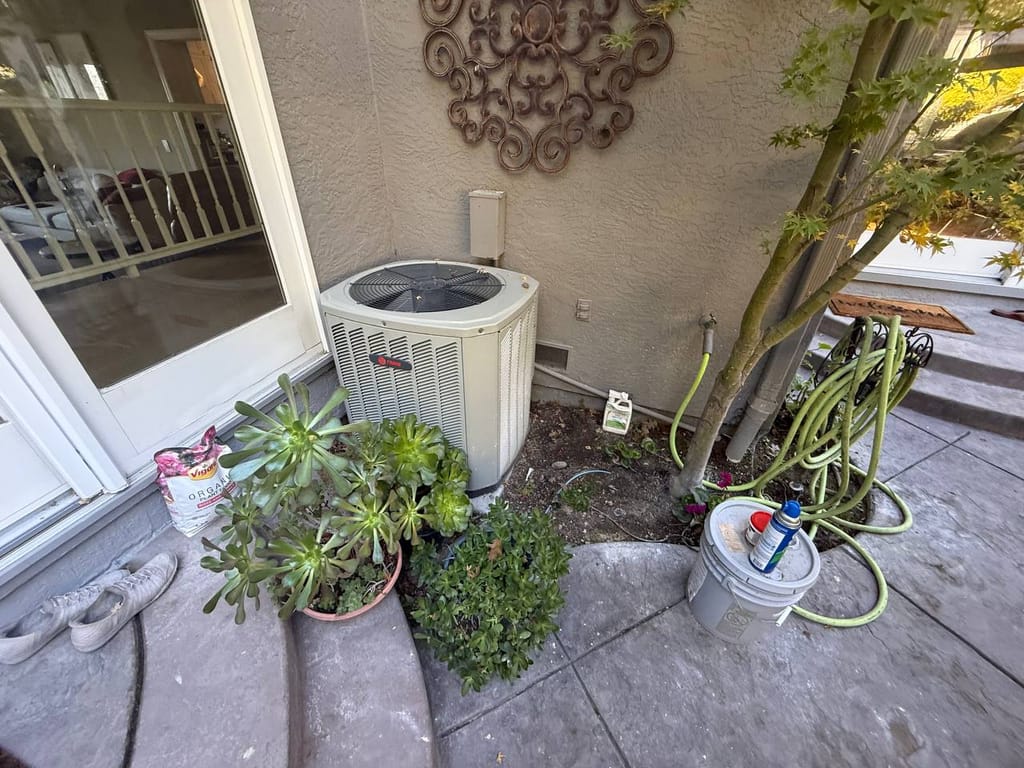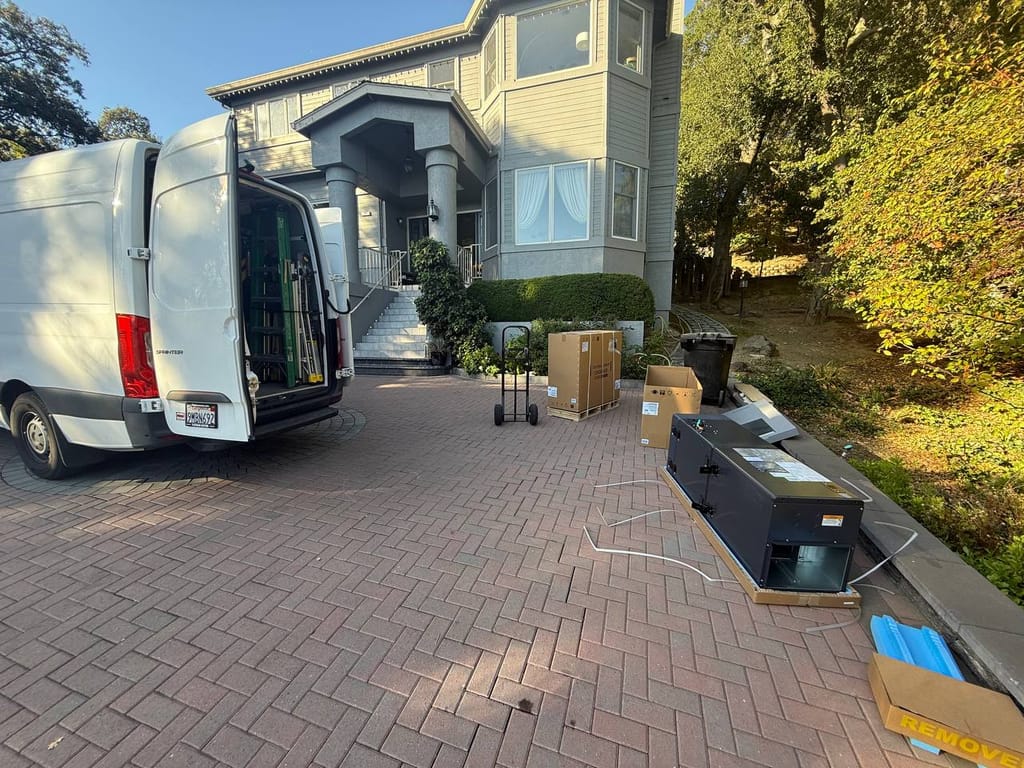
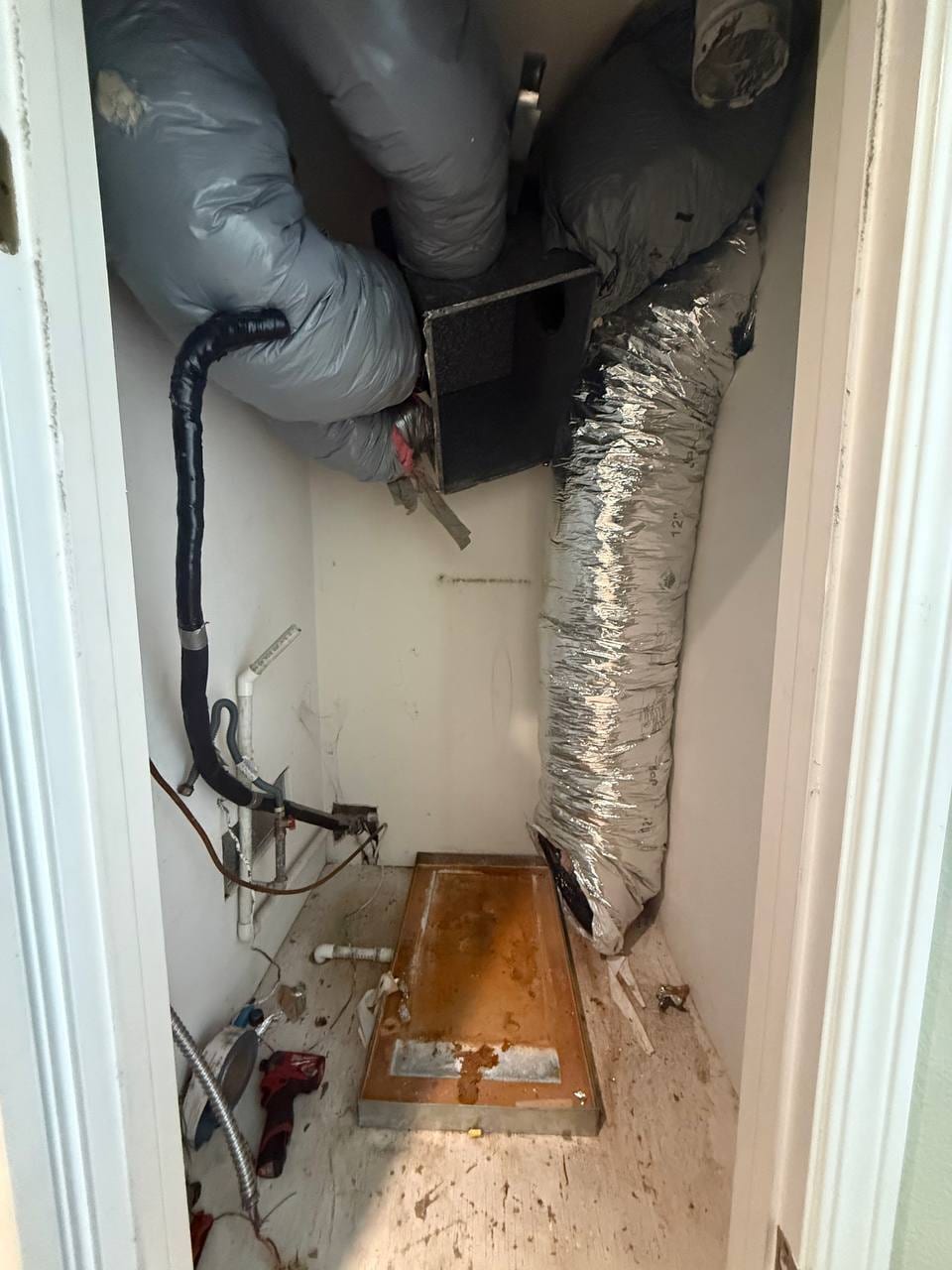
A Pleasanton homeowner on Castledown Road called with the setup a lot of older Tri-Valley houses still run: a split AC outside, a gas furnace inside, two systems aging on two different schedules. Two maintenance contracts, at least one seasonal breakdown a year, and a January gas bill that kept climbing. By the time I showed up they had already decided. One heat pump to do both jobs.
The equipment
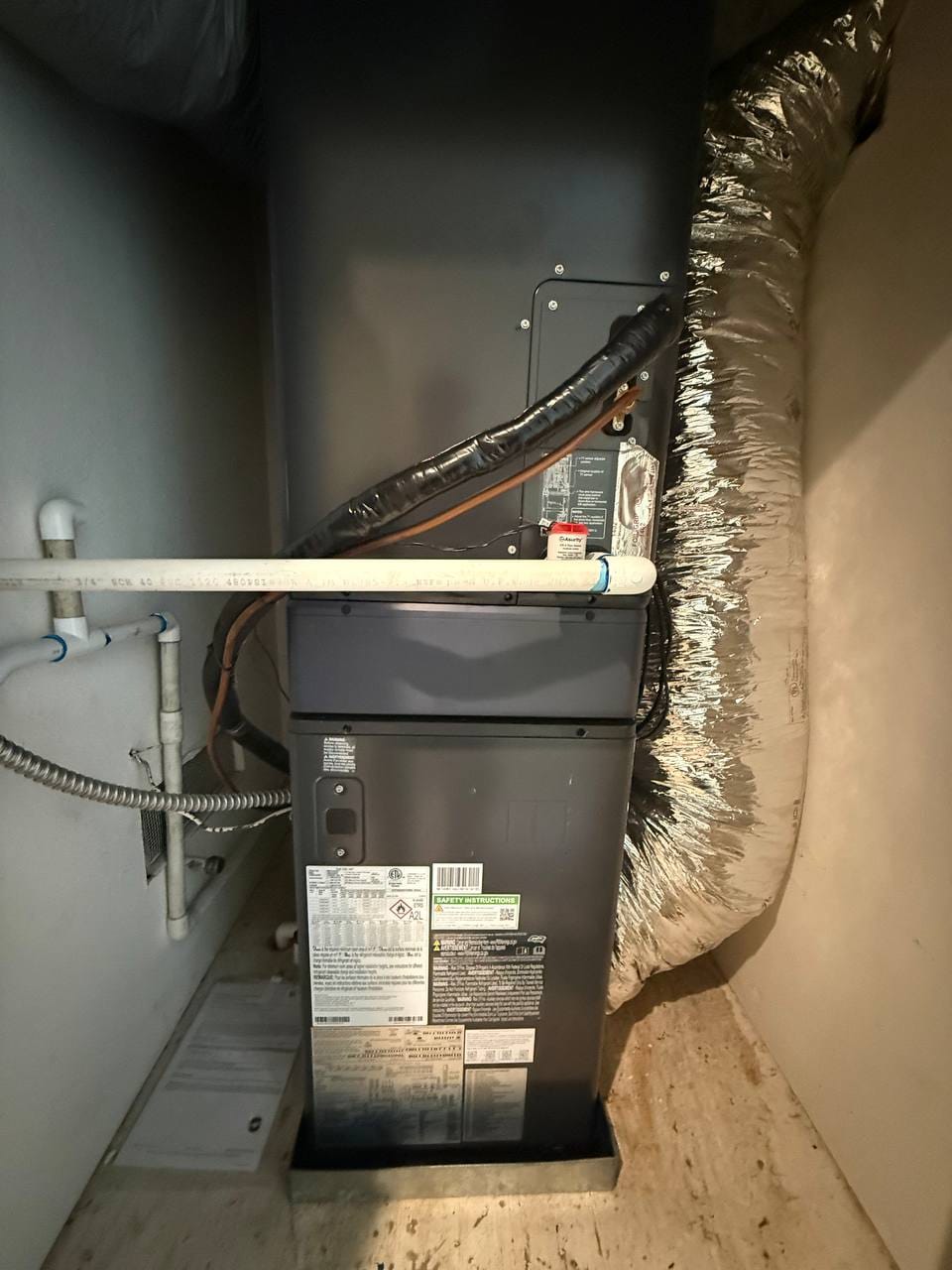
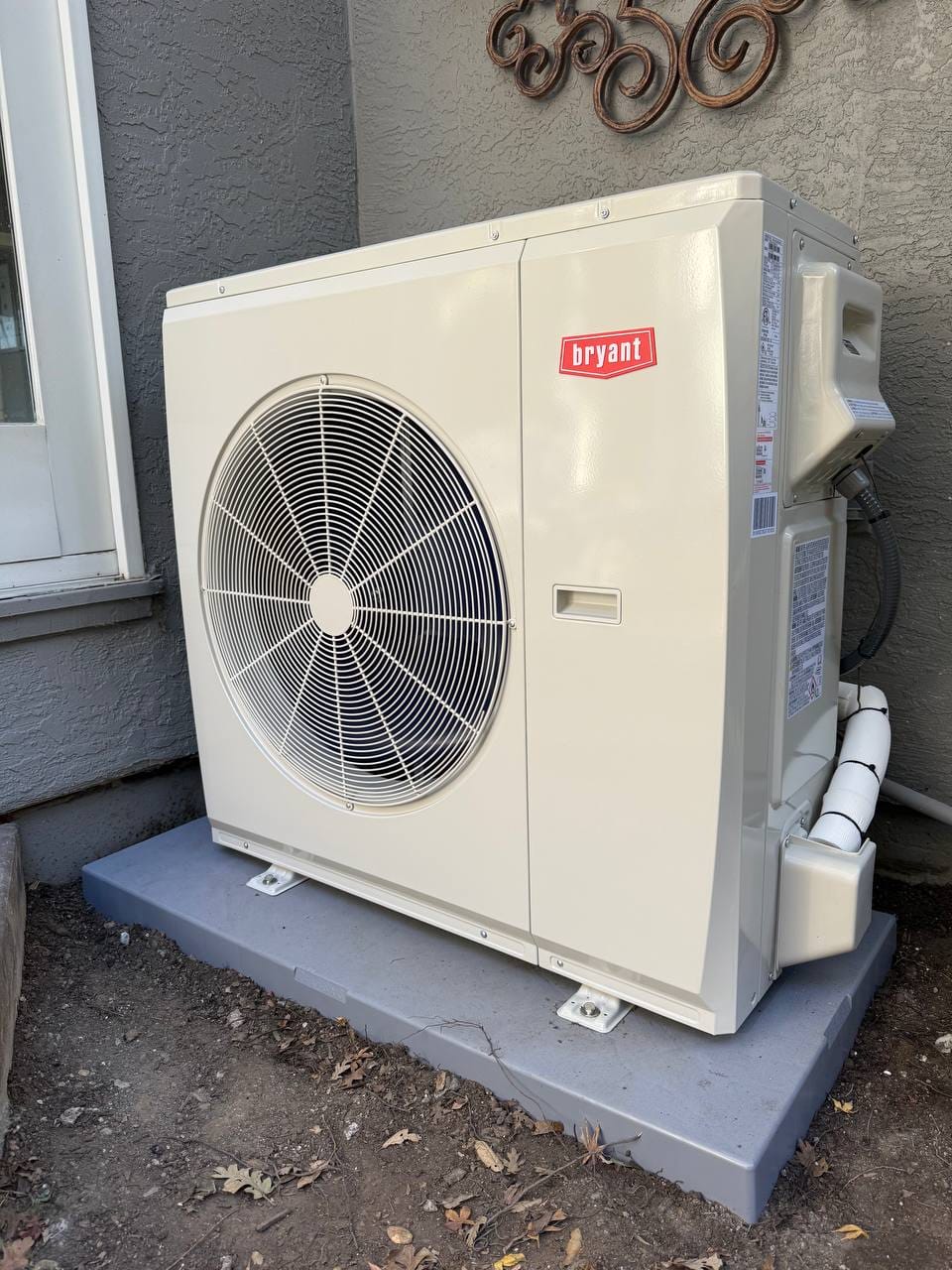
The outdoor unit is a Bryant 37MUHAQ36AA3, 3-ton at 18 SEER2 and 9.8 HSPF2, 208/230V single phase, charged with R-454B refrigerant. Indoors we matched it with the Bryant 45MUHAQ36XX3 air handler and an Ecobee configured for heat-pump staging.
A clean install is about more than dropping the equipment. We set a new condenser pad, ran line-set covers over the refrigerant lines, then rebuilt the duct connections and return-air run at the air handler so the new system was not breathing through the old one’s compromises. Electrical work included a new disconnect box, whip, fuses, and a surge protector. The old AC and furnace came out and were hauled off. The old refrigerant was recovered, not vented.
Why R-454B changes the install
R-454B is where the industry is heading as R-410A phases down under the EPA AIM Act. It carries roughly a third of the global-warming potential of R-410A, which is the point of the switch. The catch is that it sits in the A2L class, meaning mildly flammable, so leak-detection and ventilation requirements during install are different from what most techs grew up on. That is not complicated if you are trained for it. It becomes a liability if you are not. When you collect heat-pump bids right now, ask each contractor directly: are you A2L-certified? The answer tells you a lot about how the system will age.
If your heat pump is already in and something feels wrong
Before calling anyone, a few things are worth checking yourself.
Confirm the thermostat is set to the right mode and the set point is more than a degree or two off room temperature. Pull and inspect the air filter, since a clogged filter is the most common cause of reduced heating or cooling and costs nothing to fix. Walk outside and confirm the outdoor unit is not blocked by debris, overgrown shrubs, or ice buildup. Check your breaker panel for a tripped circuit on the HVAC disconnect.
If none of that resolves it, you are into territory that needs a technician.
A heat pump running constantly without reaching temperature usually means a refrigerant issue. A unit that starts and immediately shuts off often points to a pressure fault or failed electrical component. Ice on the outdoor coil that does not clear on its own indicates a defrost problem. These symptoms are diagnosable with the right meters and gauges. They are not fixable by opening the cabinet and guessing. The refrigerant circuit is pressurized and the capacitors and contactors carry enough voltage to be dangerous if mishandled. Getting it wrong also voids the warranty and usually costs more to sort out afterward.
What the Pleasanton homeowner walked away with
One system instead of two, year-round comfort off a single thermostat, no more juggling separate AC and furnace service cycles. On rebates: we work through BayREN, MCE, PG&E, and EBCE/Ava plus manufacturer instant rebates. Funding amounts shift by territory and cycle, so we confirm what is actually paying when we write the estimate.
The equipment is covered by our 10-year parts warranty plus a labor warranty (2 years standard, extended to 10 years with our maintenance plan), alongside the Bryant factory warranty.
When to call us
Call us to diagnose a Bryant system that is not performing or to weigh a full replacement like this Pleasanton job. We cover Pleasanton, Dublin, San Ramon, Danville, Livermore, and the surrounding Bay Area cities, with same-or-next-day scheduling in most cases. Our heat pump and HVAC installation and service runs through Bay Area HVAC Service. We will tell you what we are actually seeing on these systems and what it will take to fix or replace yours.