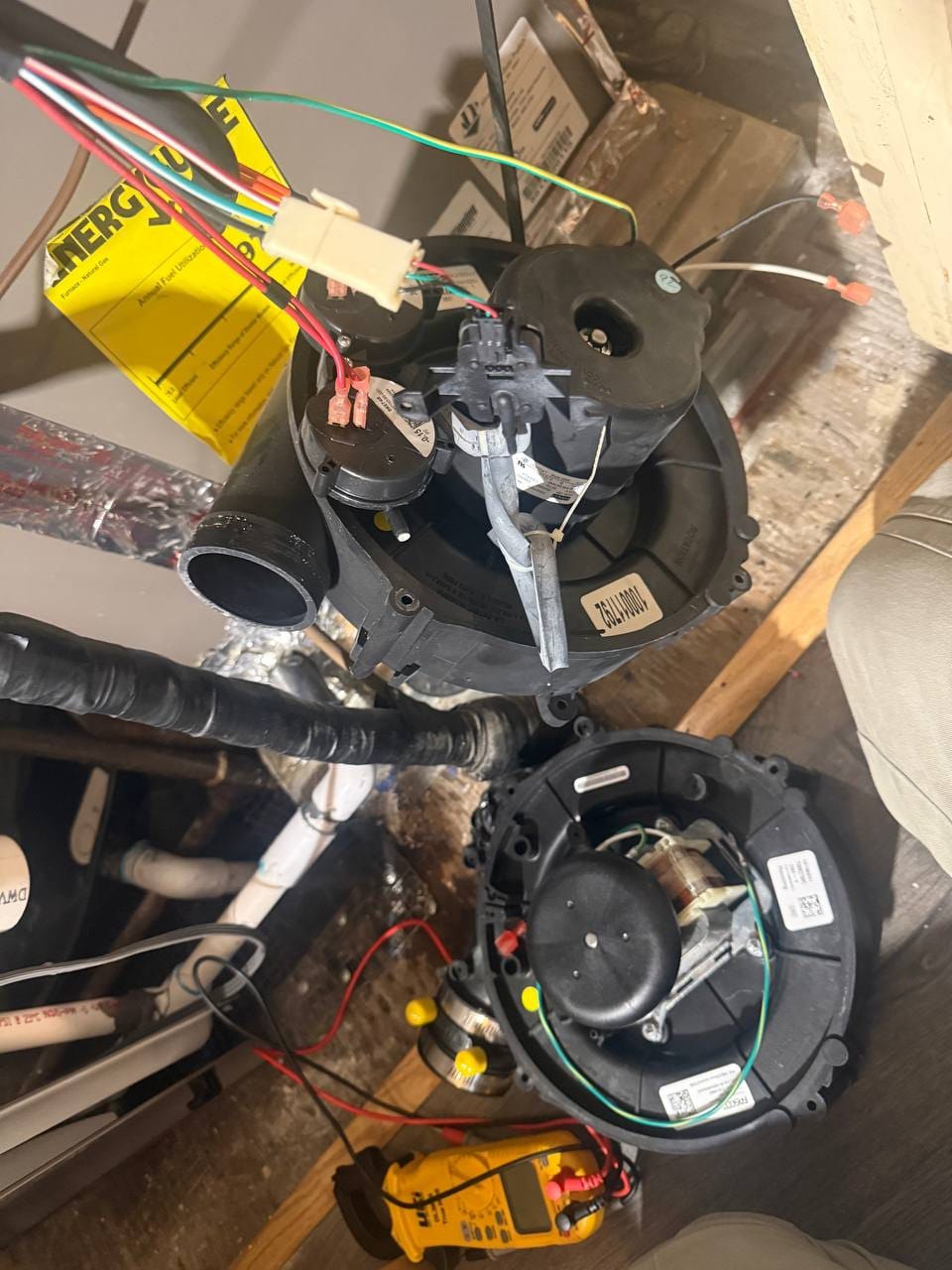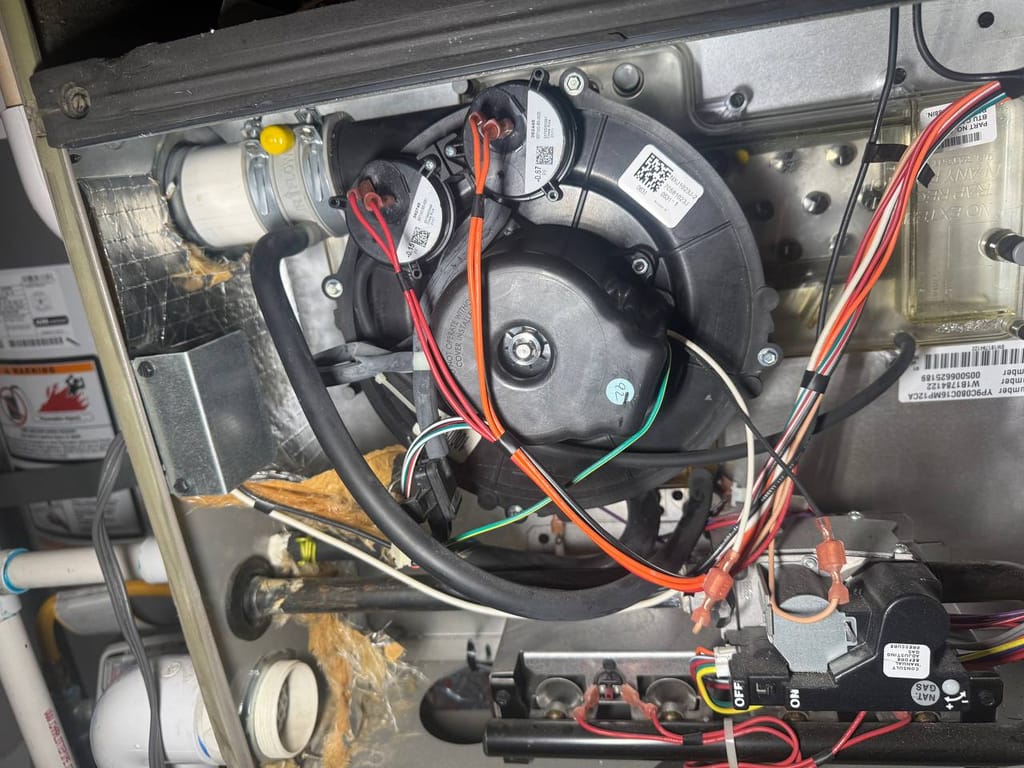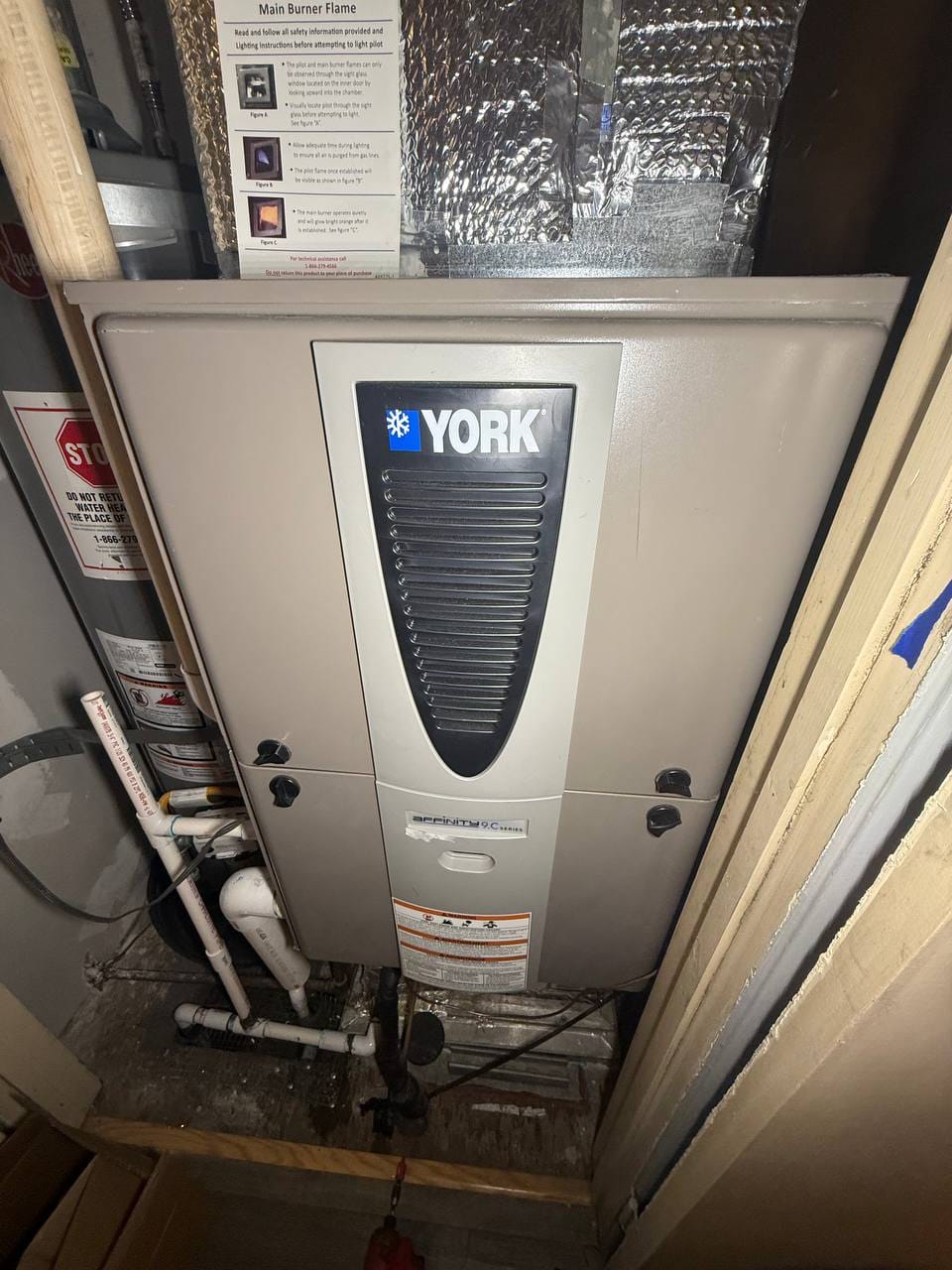
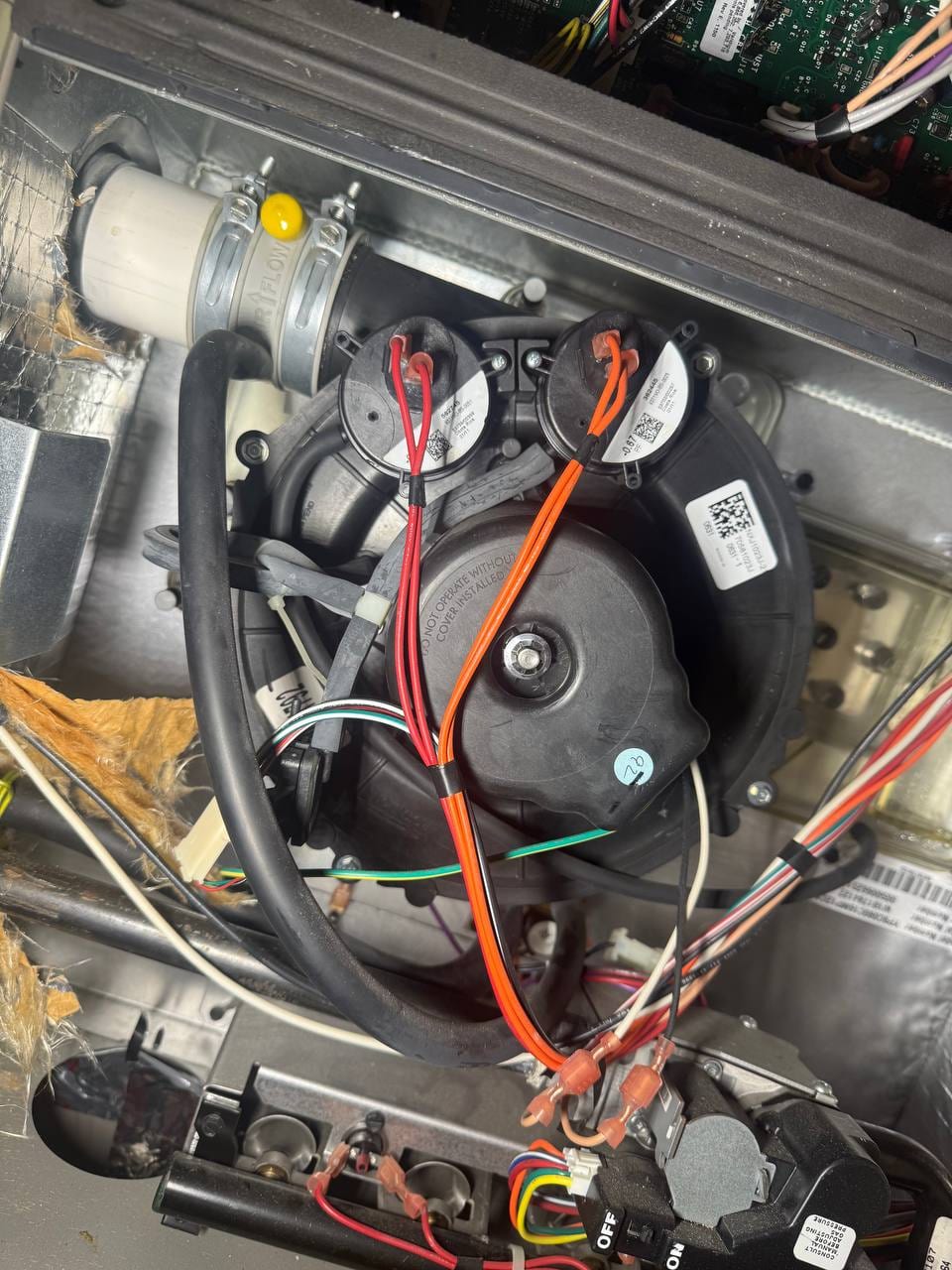
A York gas furnace in Dublin was heating in fits. It would fire, run for a few minutes, then drop out. The house never reached the thermostat setting, and the homeowner noticed it got worse on the coldest days when the furnace needed long runs. That symptom has a short list of likely causes, and not all of them cost the same to fix.
The lockout was happening at one specific step
A hot-surface furnace like this York starts up in a fixed order. The inducer motor starts, the pressure switch proves the draft, the igniter heats up, and only then does the gas valve open. The burner lights, and the flame sensor has to confirm there is actually flame before the control board lets the cycle continue. I walked that sequence step by step on this York. Igniter fine. Gas valve fine. Burner lighting fine. The failure landed on the flame-sensor step.
The sensor was sending an unreliable signal. Some cycles it confirmed flame, some cycles it did not. When the board does not see a clean flame-on signal inside its safety timeout, it closes the gas valve and locks out. That is exactly the “starts then shuts down” behavior the homeowner described. It is the board doing its job, not the board being broken.
Combustion residue is what pushes a sensor out of spec
A flame sensor works on flame rectification. The flame conducts a tiny microamp current, and the board reads that current to prove combustion. Over years of operation, combustion residue builds up on the sensor rod. That coating insulates the rod. The microamp reading falls below the board’s threshold, and the furnace starts shutting itself off. Cleaning the rod often brings the signal back. A tech will try that before ordering anything, since it’s the cheaper path when it holds. Replacement is the right call when the rod has degraded past what cleaning can recover.
Cleaning got it close, replacement got it right
I pulled the sensor and cleaned it back to baseline first, because that is the cheaper outcome if it holds. The cleaned sensor improved, but it did not return to spec. That told me the rod was degraded beyond what cleaning could recover, so I installed a new model-matched flame sensor. After that I verified gas flow at the valve and confirmed the burner was lighting in the right pattern. I tested the safety controls too: the pressure switch, the high-limit switch, and the rollout sensors. Then I ran several full heat cycles end to end.
This is the call that gets misdiagnosed
Flame-sensor failure is one of the common gas-furnace repairs and one of the easiest to read wrong. Short cycling and intermittent heat look identical to a failing gas valve, a bad control board, or a pressure-switch problem, and those are far more expensive parts. The rule I use is simple. Isolate the actual fault in the sequence before swapping anything. Replacing a gas valve on a hunch costs the homeowner real money and may not solve the problem at all.
The furnace now runs clean through full heat cycles, holds temperature, and no longer drops out mid-run. Each safety control was verified before I closed it up, and the repair carries a 1-year warranty. If yours is short cycling like this, get a tech out to walk the ignition sequence with actual diagnostic equipment. Parts-swapping on a hunch costs more in the end. Book a furnace repair with us and we’ll get you on the schedule fast, often same or next day when we can. The $99 on-site diagnosis is credited toward the repair.