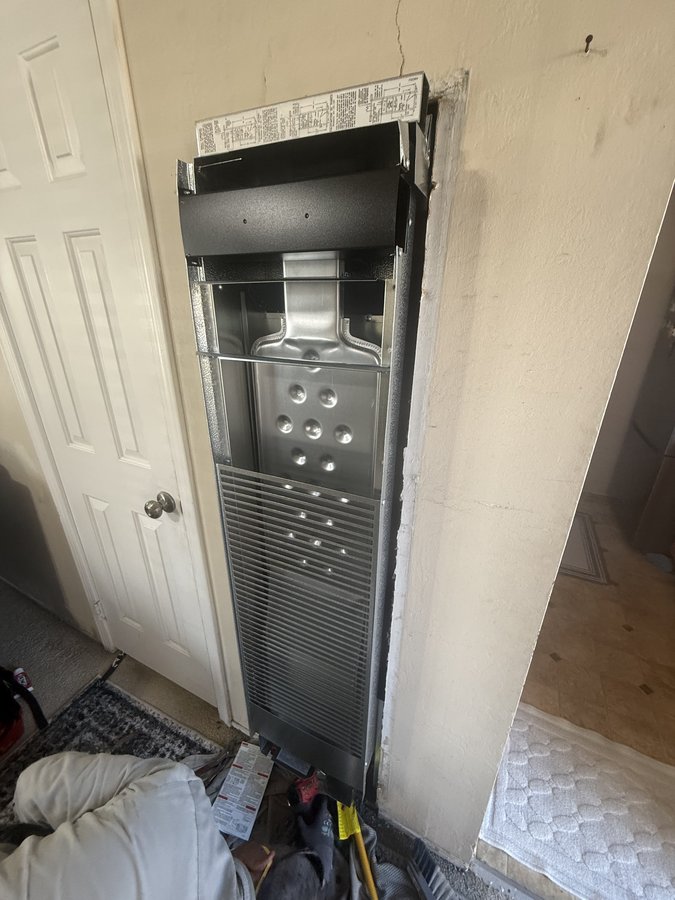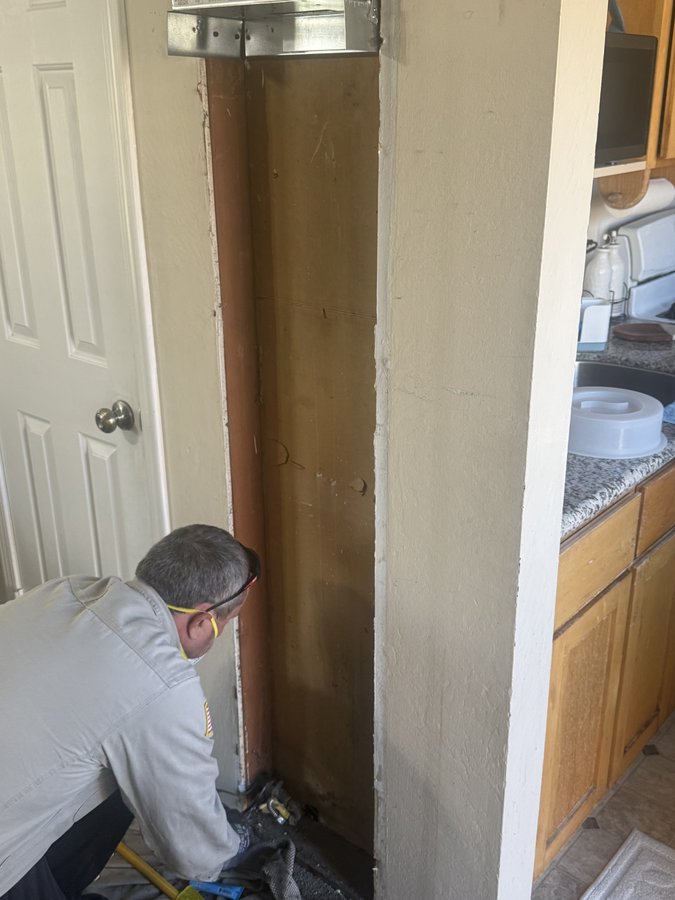
A homeowner in Newark called about a wall furnace that came with the house and had stopped doing its job. On cold mornings the room never really warmed up. Wall furnaces like this are everywhere in older Bay Area homes. They bolt into a stud bay, vent straight up through the roof, and pull combustion air from the room itself. Simple machines. But they age.
This one was past patching. The customer did not want another repair. He wanted the old unit gone and a new one in its place.
What you can check yourself first
A few things are safe to check before calling. Make sure the thermostat is set above room temperature and the batteries aren’t dead. On older standing-pilot units, look through the viewing window and confirm the pilot flame is lit. Check that the gas shutoff valve behind the unit is open (handle parallel to the pipe means open). Make sure nothing is blocking the vent grille at the front of the heater.
That’s the homeowner list. If the unit still won’t fire, fires and shuts off quickly, or the room just doesn’t warm up, stop there. The next steps involve the gas train, heat exchanger, or ignition system, and those need a licensed tech.
Why the old unit was done
When a wall furnace gets to thirty years, a few things go at once. The heat exchanger thins. The pilot and ignition system starts acting up. And the gas-side safety hardware on a unit that old won’t pass current code the moment anything needs replacing. So even a “small” repair on a heater like this tends to snowball into code-required upgrades. Replacement was the right call here, and the cheaper one over a few winters.
Our tech’s rule on these is straightforward. If the heat exchanger is suspect and the gas controls are obsolete, you’re not repairing a heater. You’re rebuilding it around a tired core. Better to start fresh.
What went in
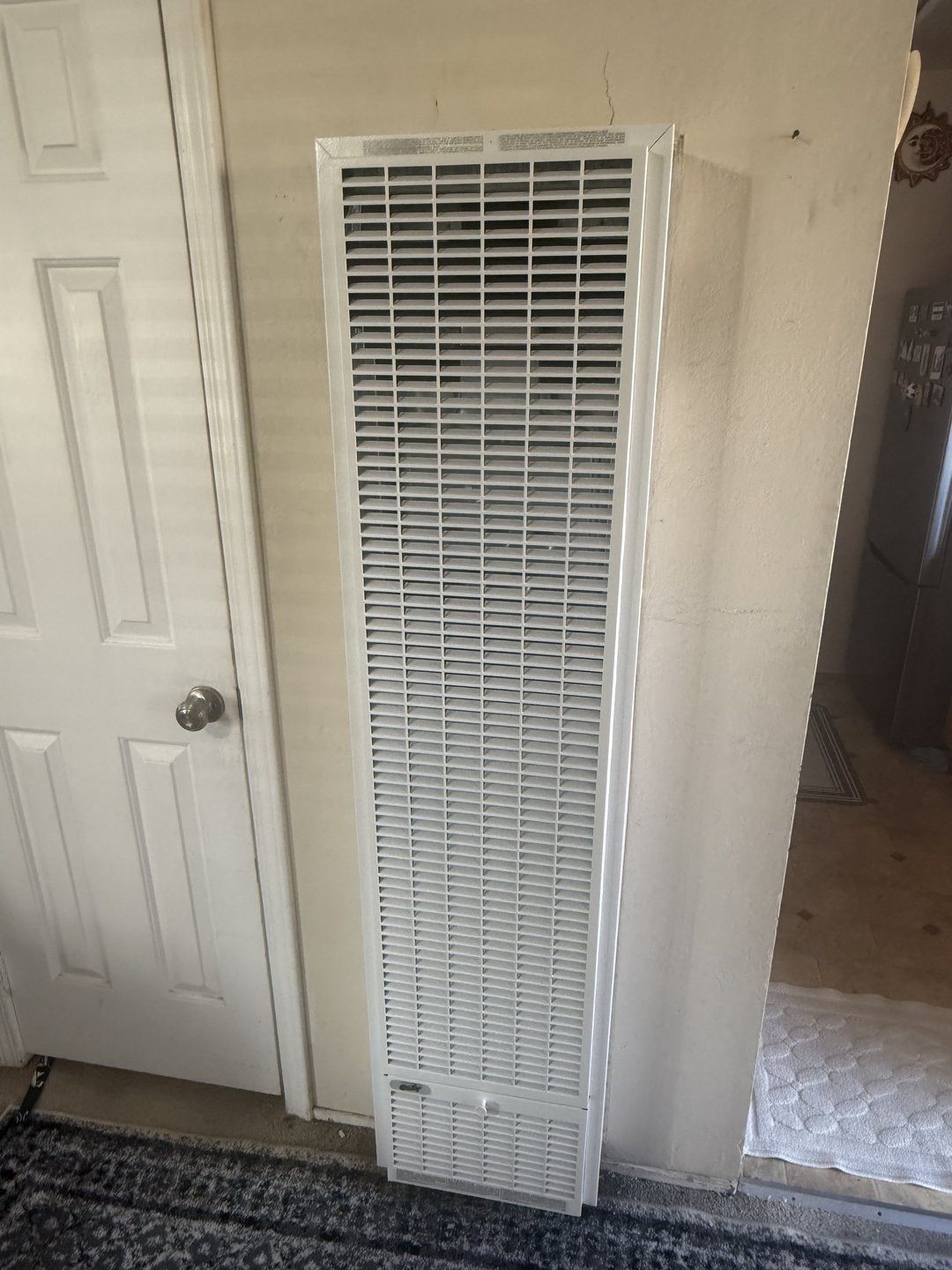
We installed a Williams Cosy wall furnace, 25,000 BTU, top-vent natural gas. The size was matched to the room volume the unit actually serves, not just bolted in because it fit the opening.
The gas and vent side is where the real work is. The original gas valve was an old globe-style, which code no longer accepts, so we set a new accessible quarter-turn ball valve at the unit. We refit the vent connector so the draft lined up with the new furnace’s spec. Then we calibrated the thermostat to the new ignition logic so it fires clean and holds temperature.
Why this isn’t a DIY swap
Pulling the old furnace out is the easy half. The gas connection is where these jobs are won or lost. We make the connection with the new shutoff valve, soap-test every joint, and confirm draft on the venting before anything gets closed up.
A missed leak doesn’t announce itself. It shows up months later as a carbon monoxide problem, or worse. That’s why a wall furnace replacement needs a licensed installer doing the gas work, not a drop-in swap with a YouTube video. The specialized tooling and the liability are both real.
What the homeowner ended up with
A new wall furnace that lights reliably on cold mornings and runs quiet, with the thermostat controlling it cleanly. Because we brought the gas shutoff up to current code as part of the swap, any future service on this unit won’t stall on a “the valve has to be replaced first” delay. The equipment is covered by our 1-year ADRIUM warranty (subject to your contract terms) plus the Williams Furnace Company factory warranty on the unit itself.
If your wall heater is the original that came with an older Newark or Tri-Valley home and it’s losing the cold mornings, call us. We do the diagnostic, the gas-side code work, and the install. We’ll get you on the schedule fast, often same or next day when we can. Contact us through the HVAC page or go straight to our furnace repair page to book.