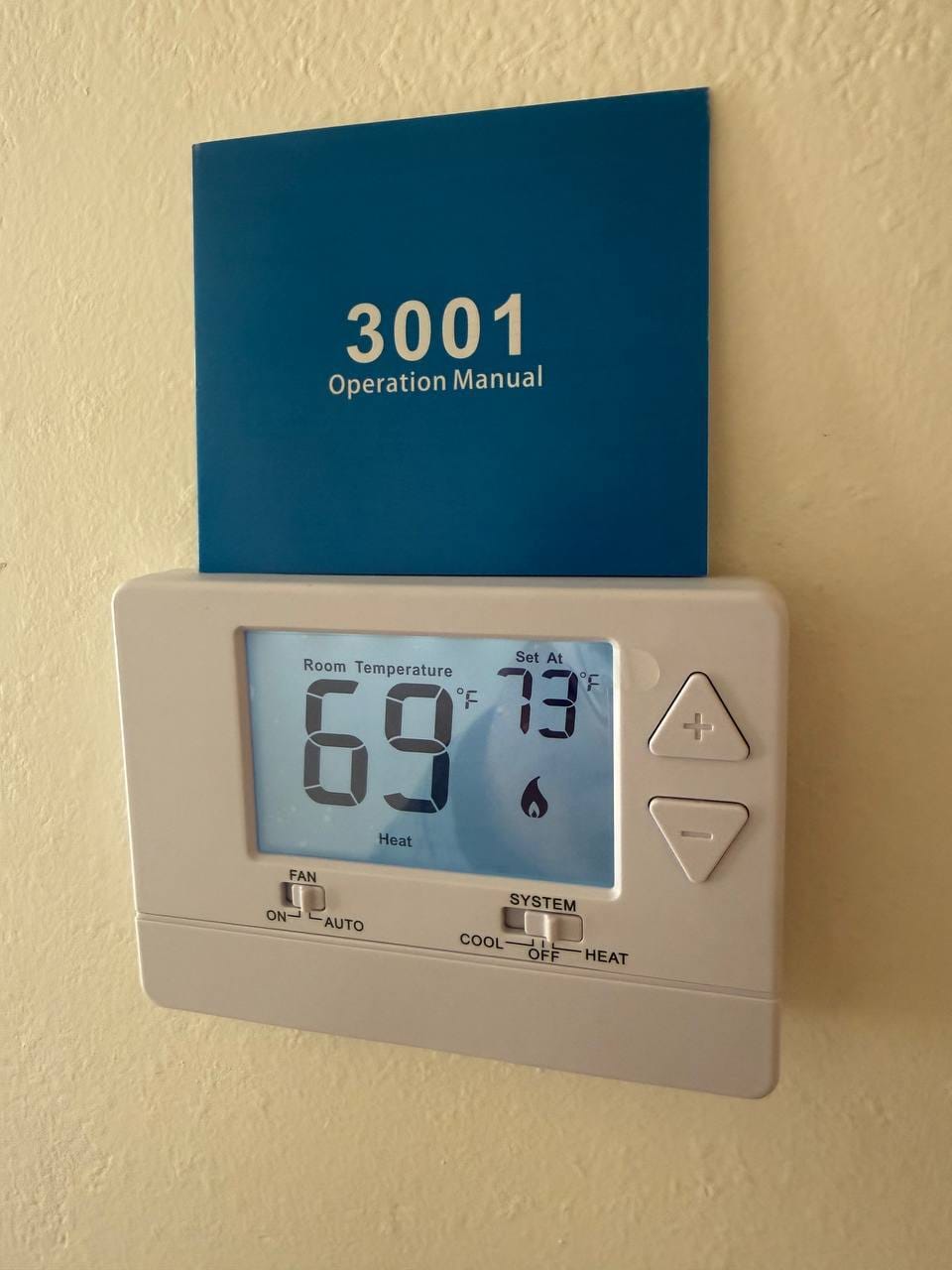
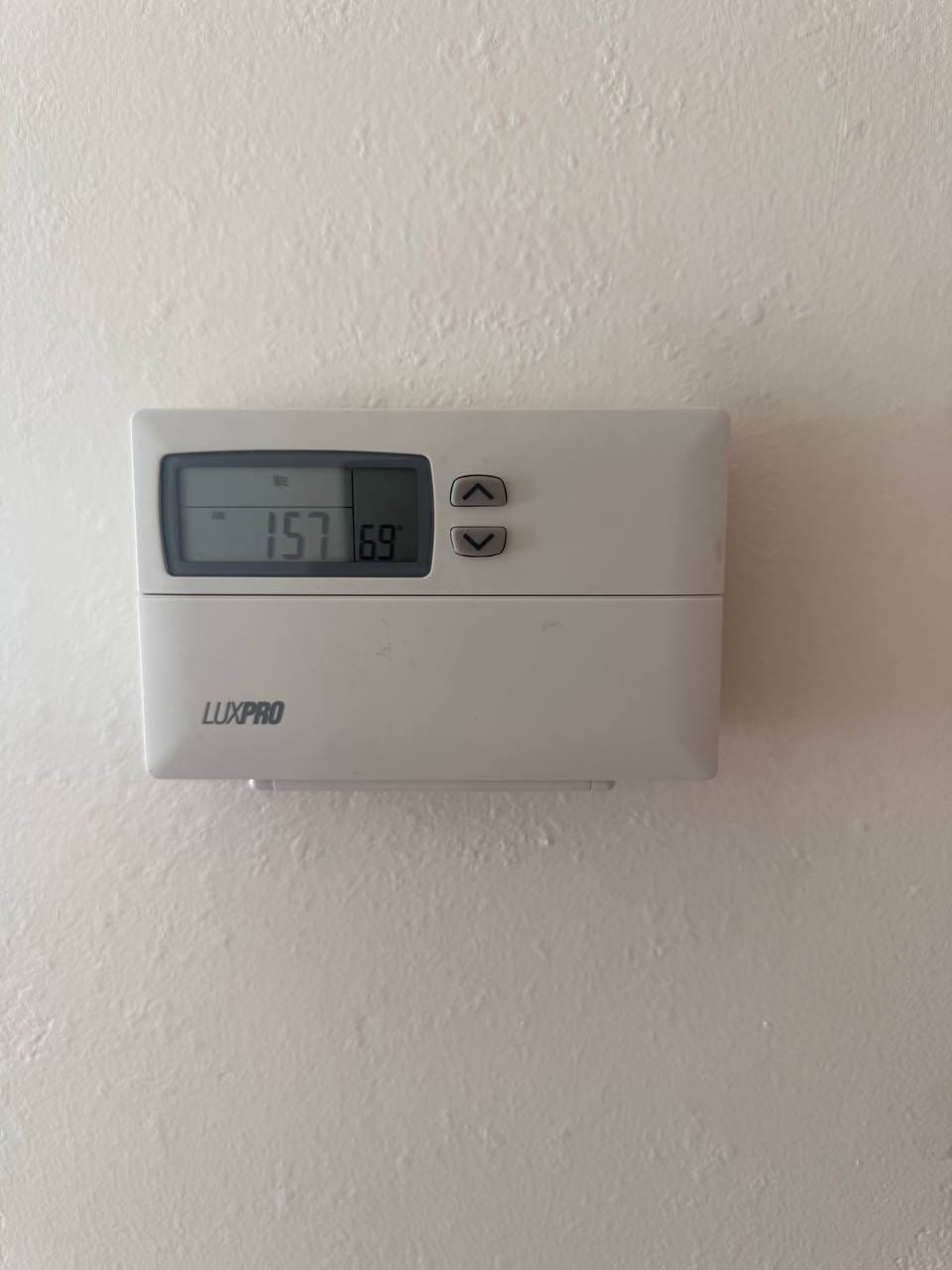
A real estate agent called about a house in Walnut Creek that was about to go up for showing. The thermostat kept wiping its programmed settings. Not at random. On a clock, roughly every three hours.
For a listing, that matters more than it would for a homeowner. A buyer who walks into a house running heat in July, or air conditioning in January, forms an opinion about the HVAC in about four seconds, and it’s rarely a fair one. The agent wanted the control fixed and behaving before the open house.
The equipment was never the problem
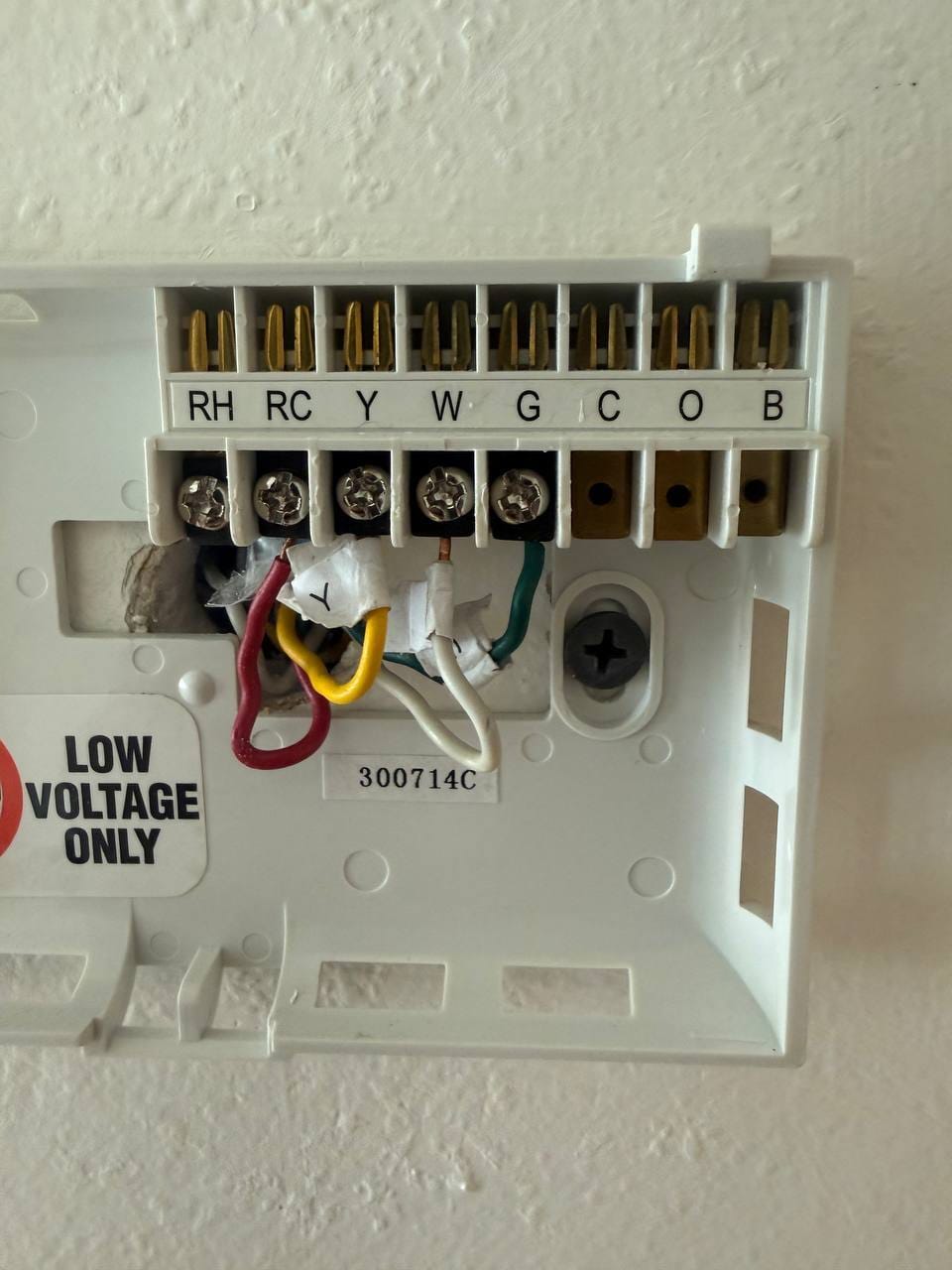
Our tech starts a control complaint the same way every time. Rule the equipment out before touching the thermostat. So we went through the control wiring at the wall plate, the power feed, the HVAC control side, and the thermostat itself. All of it came back clean. Power was reaching the thermostat correctly. The wiring was solid.
The failure was inside the thermostat. Its main control board had gone bad, and that’s what produced the reset loop. The board couldn’t hold its stored program, so every few hours it dropped back to nothing and the system ran on whatever default it landed on.
When a thermostat’s main board fails, there’s no repair path inside the unit. Nothing to swap behind the faceplate. You replace the thermostat. We confirmed that diagnosis inside the first hour, which let the agent plan the rest of the day around a known answer instead of a guess.
Removed the old unit, installed and configured a new one
The technician pulled the failed thermostat and installed a new programmable unit in its place. Configuration matters more than people expect, because a thermostat has to be set up for the specific HVAC equipment it controls. Wire the stages wrong or pick the wrong system type and you trade one problem for another.
After the install we ran the system through a full diagnostic cycle. The point was not just to see it turn on. We wanted to watch it hold its settings through multiple state changes, because the original complaint was about losing the program, not about heating or cooling. The new thermostat held steady through every change we put it through.
The fix that made it stick
Timing was the whole thing on this one. Real estate timelines don’t flex. The property went on the market with a showing date already set, so a slow diagnosis or a return trip for a second part would have blown the window. The listing went into its showing weekend with the HVAC running consistently.
The replacement thermostat comes with a 1-year manufacturer warranty, and our labor is covered under our standard service warranty (subject to your contract terms). For a property changing hands, that’s worth more than the warranty itself, because it puts a recent, documented service event on record. A paper trail like that makes the transaction smoother for the agent and the eventual buyer.
If a thermostat in your home is doing something on a fixed cycle, resetting, dropping its schedule, or losing its display, the first job is figuring out whether the trouble is the thermostat or the equipment behind it. That distinction matters before anyone orders parts or touches anything. Give us a call and we can usually get out same or next day, confirm the diagnosis, and give you a written quote with one total price before any work starts. Same process we follow on any furnace repair or AC repair call.