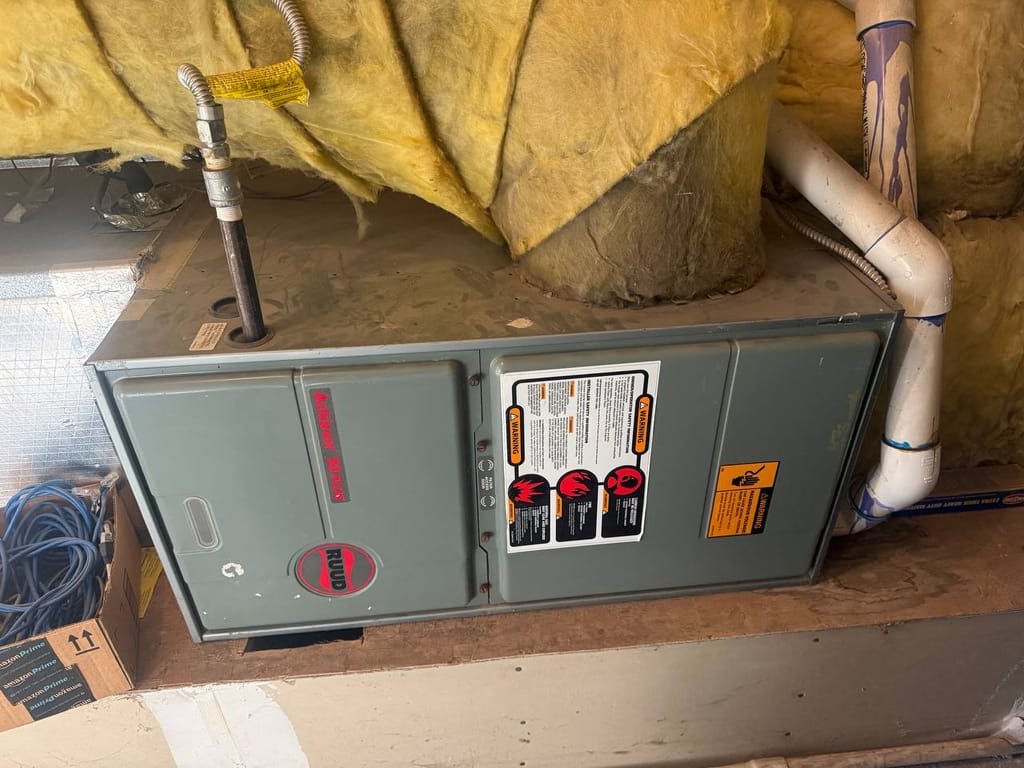
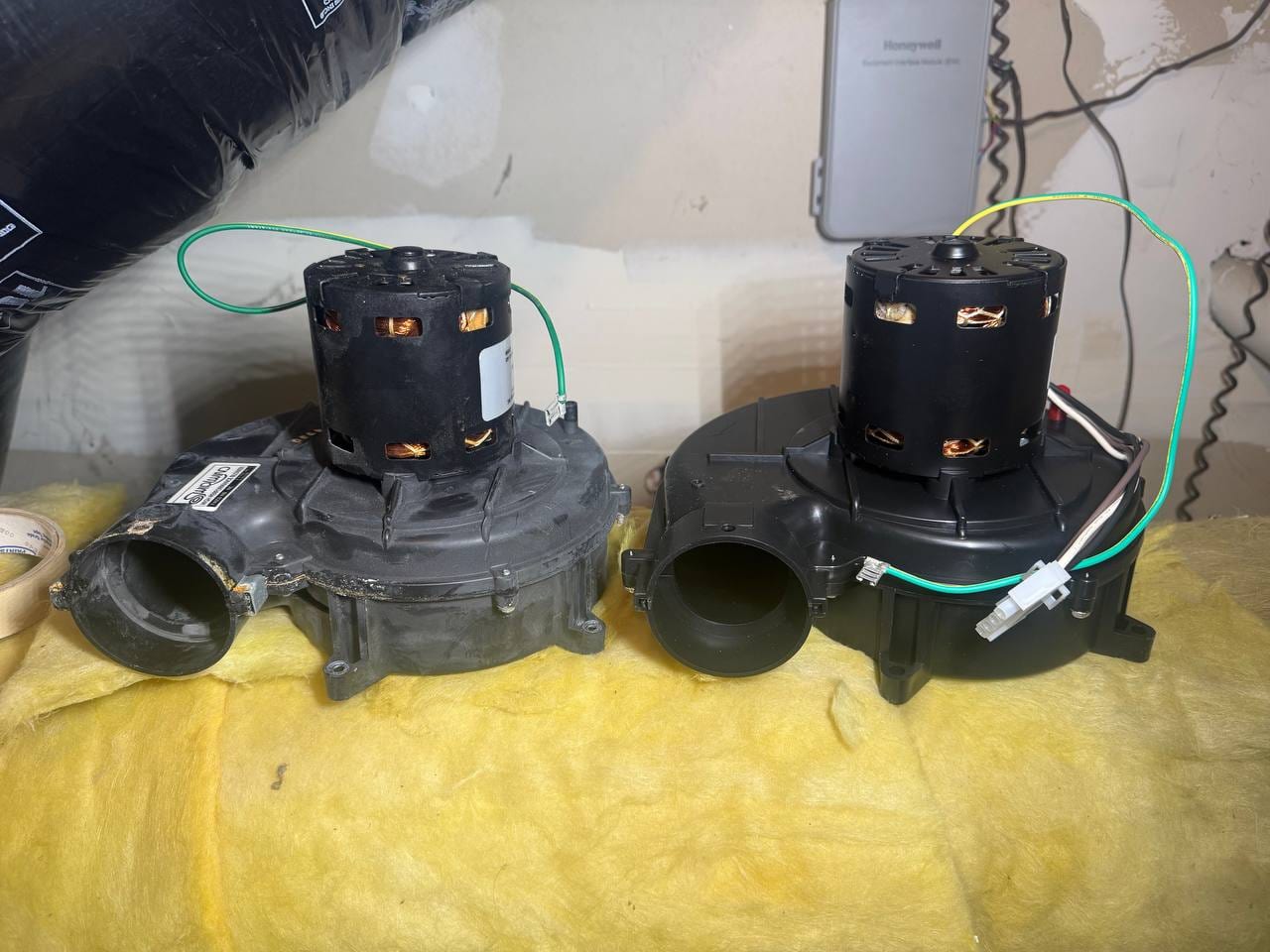
A homeowner near Castle Crest Road in Alamo called about a Ruud gas furnace that kept running but never settled the house. Some rooms hit setpoint. Others stayed cool regardless of how long the system ran. The heating bill had crept up over the season even though the furnace was clearly firing. That gap, between a furnace that looks like it works and a house that never feels evenly warm, usually has a real cause. And it’s almost never the one thing people swap first.
Check these before scheduling anyone
Two minutes, no tools. If any of these are the culprit you won’t need a tech call.
Check the filter. A completely choked filter cuts airflow enough to trip the furnace’s high-limit control, causing exactly the kind of intermittent shutdown this Alamo homeowner was seeing. Hold it up to a light. If no light comes through, change it.
Check the thermostat. Confirm it’s set to HEAT (not just AUTO or FAN) and that the setpoint is actually above the current room reading. Battery-operated thermostats misbehave on low batteries.
Check the breaker. A tripped furnace breaker will prevent a complete heat cycle even if the unit seems to have power.
If all three check out and the furnace is still cutting out, the problem is inside the unit.
What the diagnosis found on this Ruud
When a furnace runs but can’t hold temperature, the fault is somewhere in the firing sequence. Our tech checked ignition, the flame sensor, the gas valve, the blower motor, and the control board in order. Any one of them can produce the same “runs but quits” behavior, and the cheap fix and the expensive fix look identical from the thermostat.
Two faults had stacked on this unit.
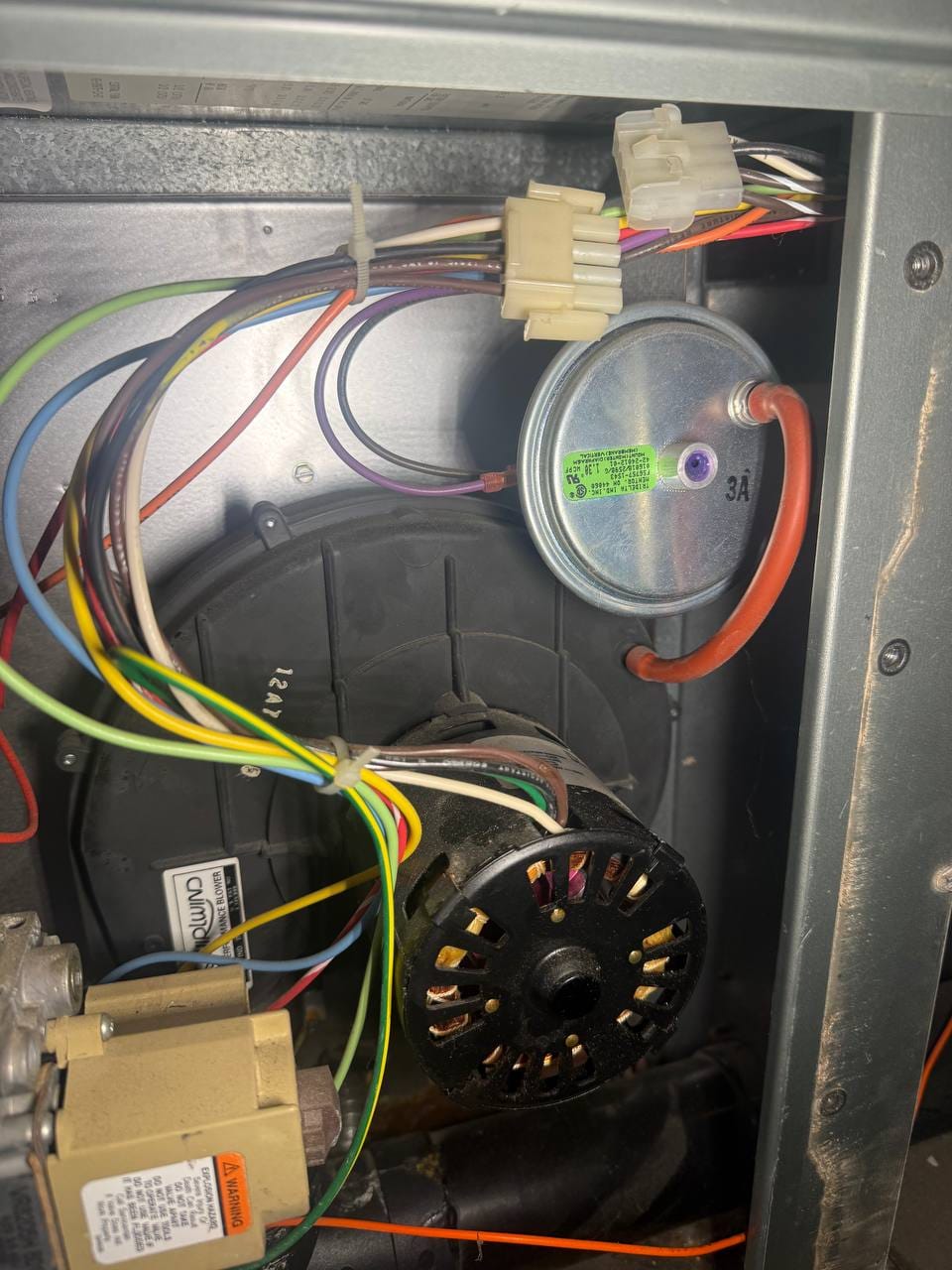
The primary fault was the flame sensor. That’s the thin metal rod that tells the control board the burner is actually lit. After a few seasons it picks up a film of combustion residue, and a coated sensor sends a weak signal the board reads as no flame. The board shuts the burner down as a safety response. From the living room that reads as a furnace that keeps cutting out.
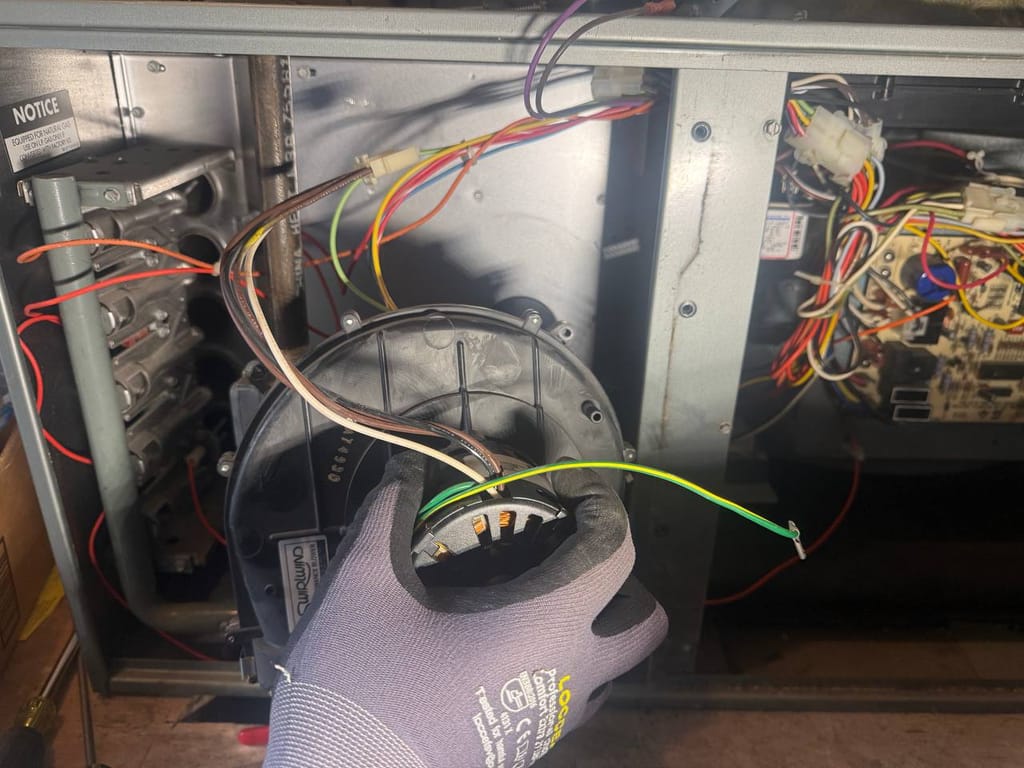
The blower assembly was also choked with dust, enough to restrict airflow and let the heat exchanger run hotter than it should. When it overheats it trips the high-limit control, a second, separate reason the unit kept dropping out. The airflow restriction was quietly making the sensor problem worse.
Why this is a pro repair
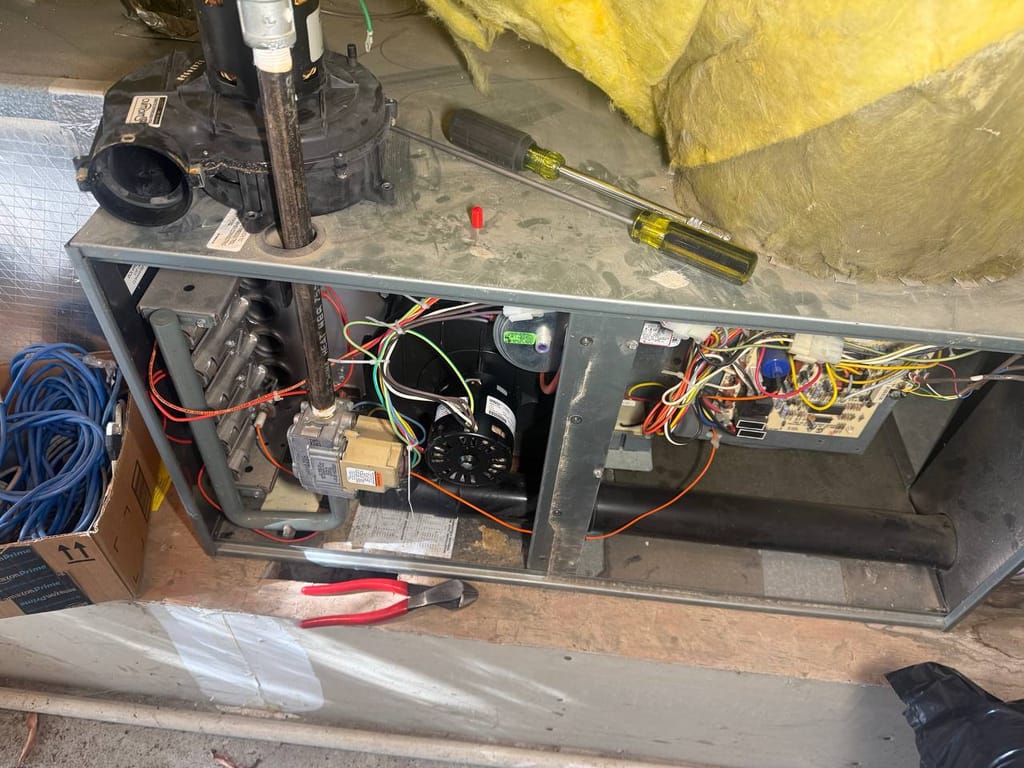
Flame sensors look simple online. The part is inexpensive, and videos make the job look easy. What those videos skip: accessing the sensor on most Ruud furnaces means removing panels and working near the heat exchanger and gas manifold. Getting it out without breaking the mount bracket or damaging the igniter takes the right tools and some hands-on familiarity with the layout. More importantly, a coated sensor is a symptom. Replace it without running the full firing sequence, and you may fix the symptom while leaving the real cause in place.
Blower cleaning carries the same caveat. Disassembling the wheel, cleaning it properly, and reassembling without throwing the balance off requires specific tools and some experience. An off-balance wheel wears the motor out faster than the original dust would have.
Both jobs are live-gas work inside a combustion system. That’s not the place to figure it out as you go.
What the repair covered and what it bought
Our tech replaced the flame sensor with the correct Ruud part, cleaned the blower wheel and housing, and cycled the burner several times to verify the gas valve and ignition were behaving across repeat starts, not just the first light. Then we rebalanced airflow and confirmed heat was reaching the rooms that had been staying cold.
The furnace went back to steady, even operation. The cleaning also extended the blower motor’s life. A motor spinning a debris-packed wheel wears out well ahead of schedule. The repair carries our 1-year warranty, and the $99 diagnostic fee is credited toward the repair. You get a written quote with one total price before anything starts.
When to call us
If your Ruud (or any gas furnace) is running but not holding temperature and the filter, thermostat, and breaker all check out, that’s a furnace repair call. ADRIUM covers Alamo and the wider Bay Area seven days a week. We’ll get you on the schedule fast, often same or next day when we can. We diagnose in sequence and replace what the test actually points to, not a list of probable parts. Call or book online and we’ll sort it out.