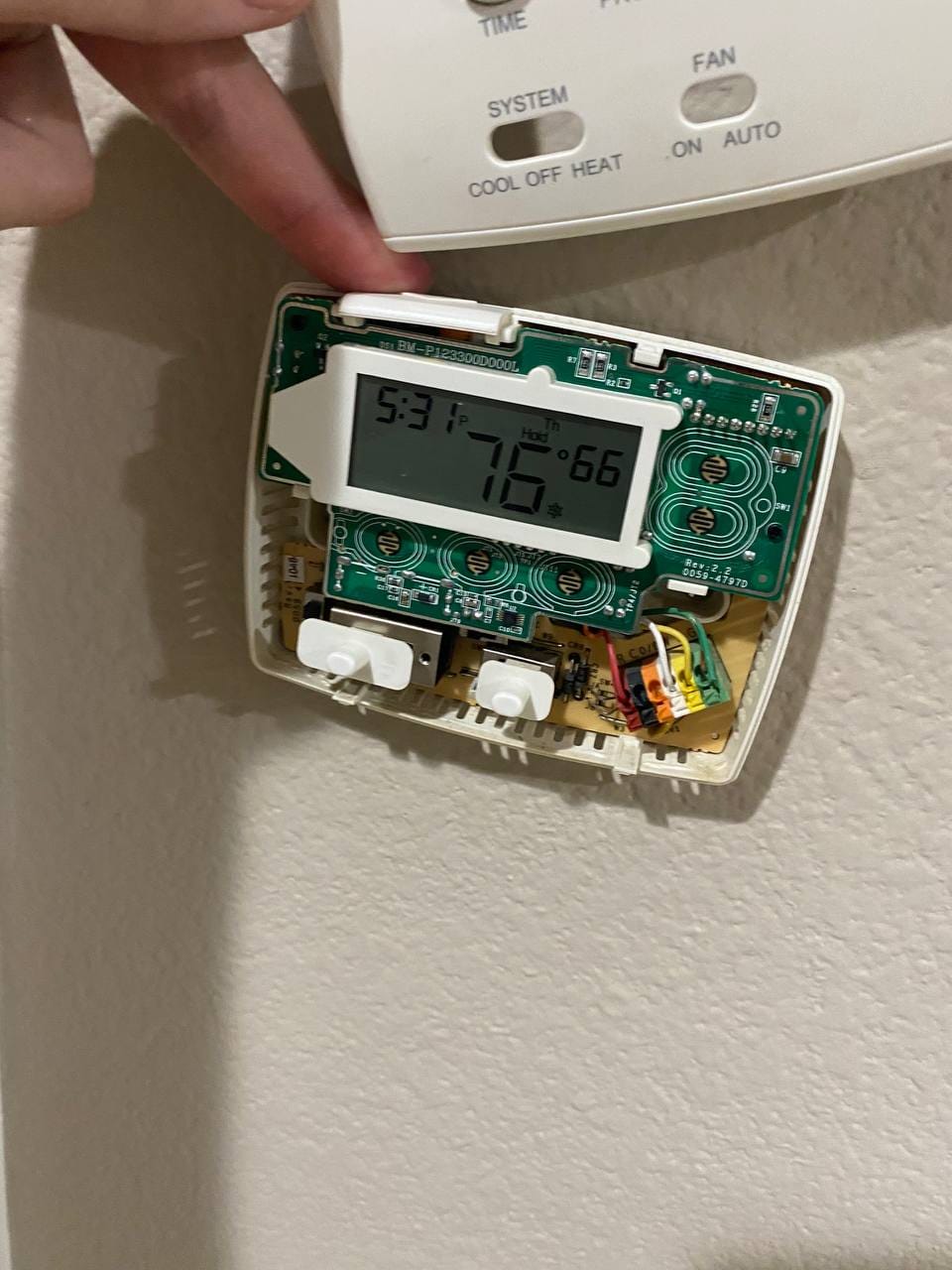
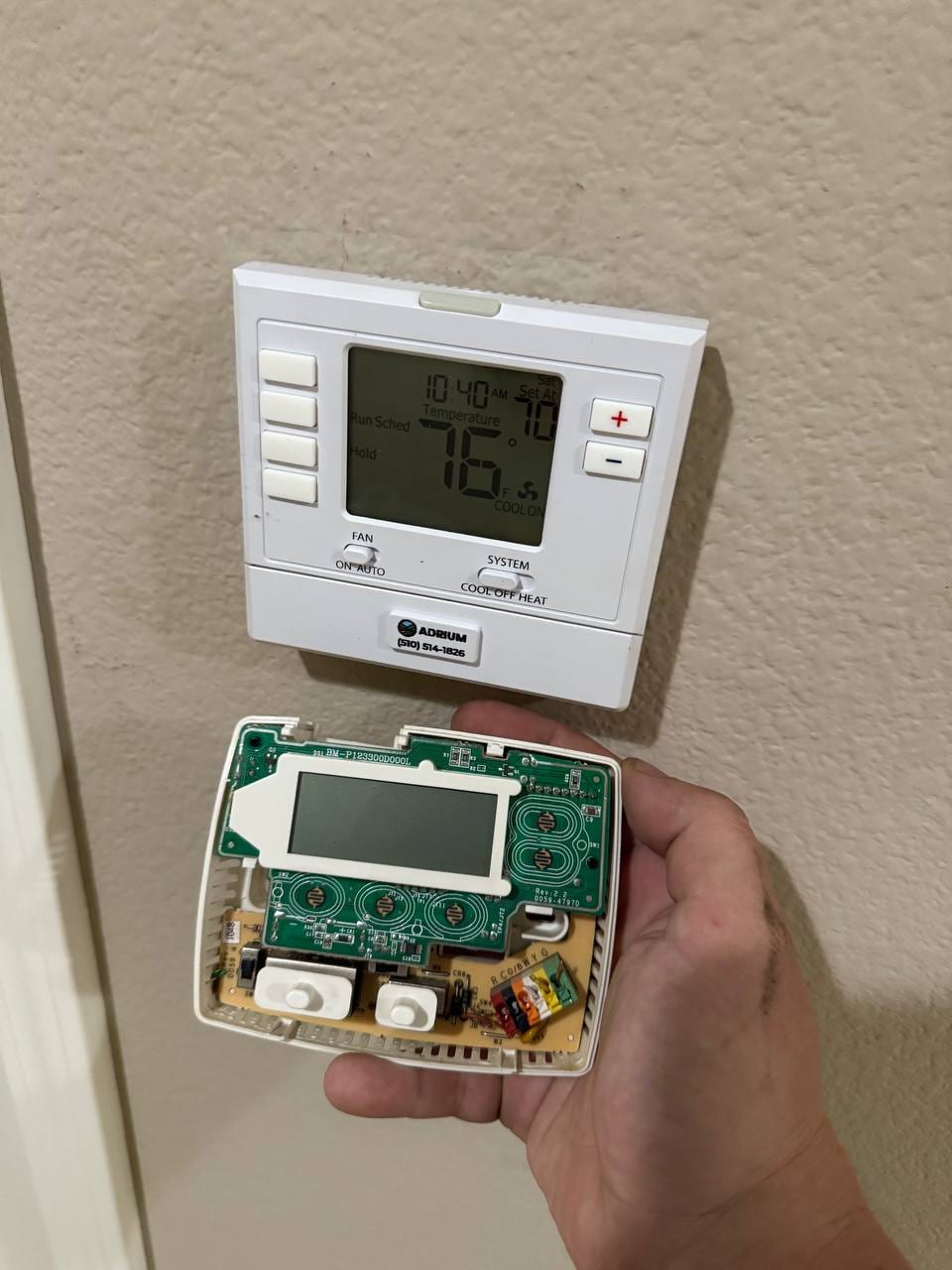
A homeowner near W Middlefield Road in Mountain View called because the HVAC system had stopped behaving. Heat and cool were turning on at random times, and other times nothing came on at all when the system was called. The thermostat screen went blank on its own every so often. The number on the display did not match how the rooms actually felt. From where the homeowner stood, the whole system looked like it was failing.
What you can check yourself first
A few things don’t need a technician. Confirm the thermostat mode is correct (heat or cool, not “off” or “fan only”) and the set temperature is actually above or below the current room reading. Check that neither the furnace nor the air handler breaker has tripped. If the thermostat uses batteries, swap them. Pull the filter and look at it. A completely blocked filter can trip a safety shutoff on its own. That whole checklist takes ten minutes.
If everything above checks out and the system is still erratic, the fault is in the wiring or equipment and you need a professional diagnostic.
The equipment was never the problem
Before quoting anyone on a furnace or an air handler, we check the control side first. We pulled the thermostat off the wall and bypass-tested the terminals at the wall plate. The system started clean and ran a full heat cycle, then a full cool cycle, with no hesitation. That one test settles a lot. If the equipment runs correctly with the thermostat removed from the loop, the equipment is fine and the fault lives upstream. (Getting the bypass right requires knowing the control wiring; it is not a safe homeowner step.)
So we moved to the thermostat itself. Two things were wrong with it. The internal temperature sensor had failed, which explains the display reading that did not match the room. On top of that, the 24V control feed to the thermostat was intermittent, dropping and recovering on its own. That is the blank-screen behavior, and it is also why calls for heat and cool were firing at random. A sensor fault stacked on a flickering power feed produces exactly the chaos the homeowner described. The unit was past repair.
What the replacement involved
We removed the dead thermostat and verified every conductor at the wall plate before touching anything new. Then we mounted a new programmable smart thermostat and mapped the terminals to match the home’s actual wiring.
The part that makes this stick is the staging configuration. A smart thermostat does not know what equipment it is bolted to. Heat-pump control and a separate furnace-and-AC setup need different logic, and if you skip that configuration the thermostat falls back to a default that fights the system instead of running it. We configured the staging to match this home’s equipment, then tested both heat and cool end to end with full cycles. Last step, we checked the displayed room temperature against a calibrated reference so the number on the wall means something again.
Wiring a terminal wrong or skipping the staging step can cause short-cycling, a lockout fault, or equipment damage. It is worth having a tech do the configuration once and verify it end to end.
Why the bypass test saved this customer money
When HVAC equipment looks broken, the thermostat deserves the first look. A bad thermostat throws every symptom of a bad furnace or compressor, at a fraction of the cost. Had we assumed the equipment was at fault and started there, this homeowner would have been staring at a much larger quote for a repair pointed in the wrong direction. The bypass test took a few minutes and pointed us straight at the real fault.
The result is a system that runs the way it should because the control finally controls it correctly. The new thermostat holds a schedule, reads temperature accurately, and stays in contact with the equipment without dropping out. The work is covered under our 1-year warranty, subject to your contract terms.
If your system is behaving erratically, call us. We start with the diagnostic that points at the actual fault before touching anything expensive. The diagnostic fee is credited toward the repair, and you get a written quote with one total price before we start. See our furnace repair and HVAC service pages, or call and we will start with the cheap test first.