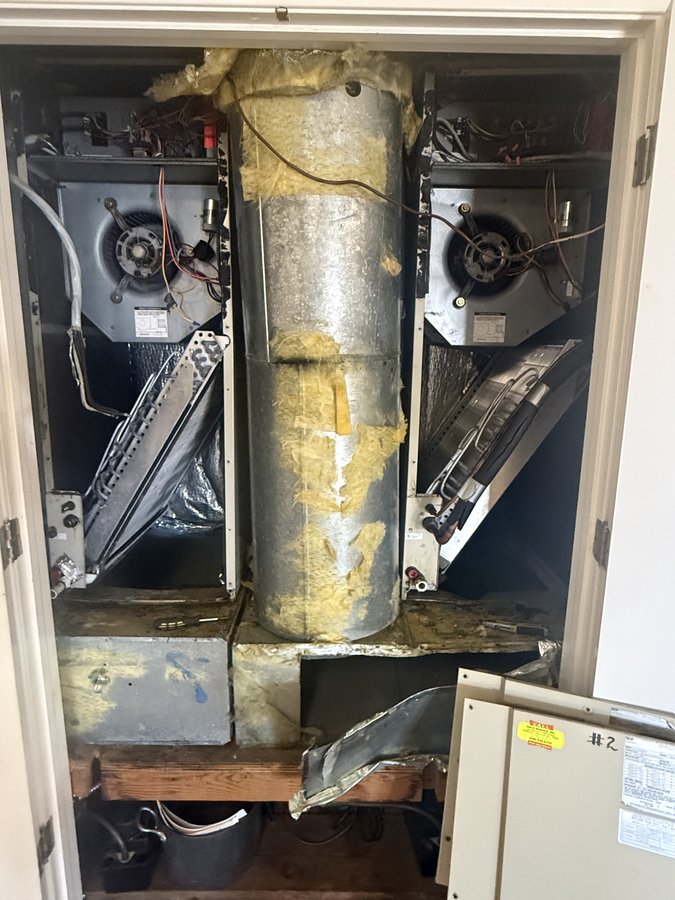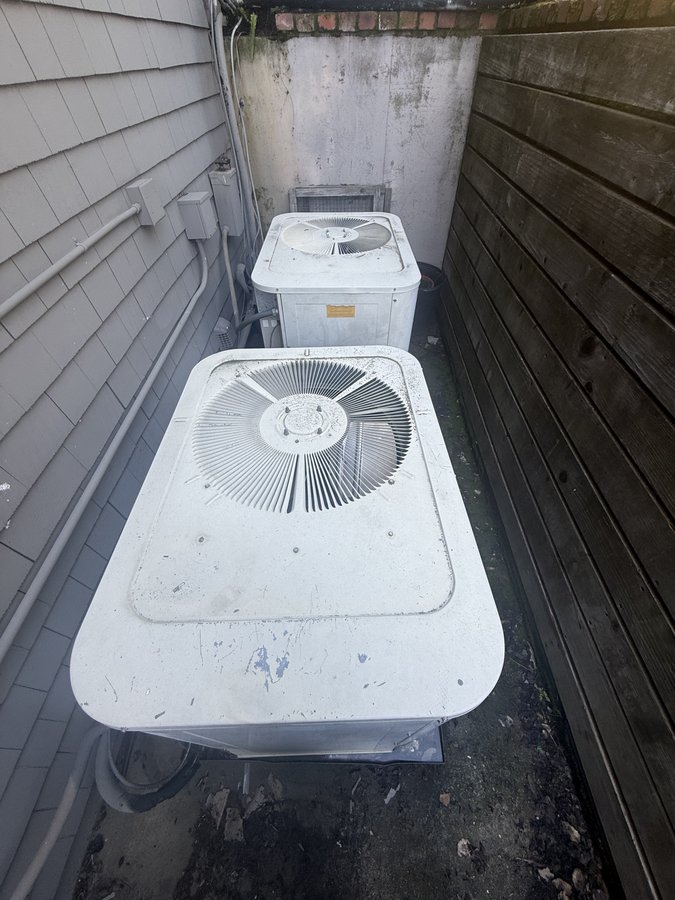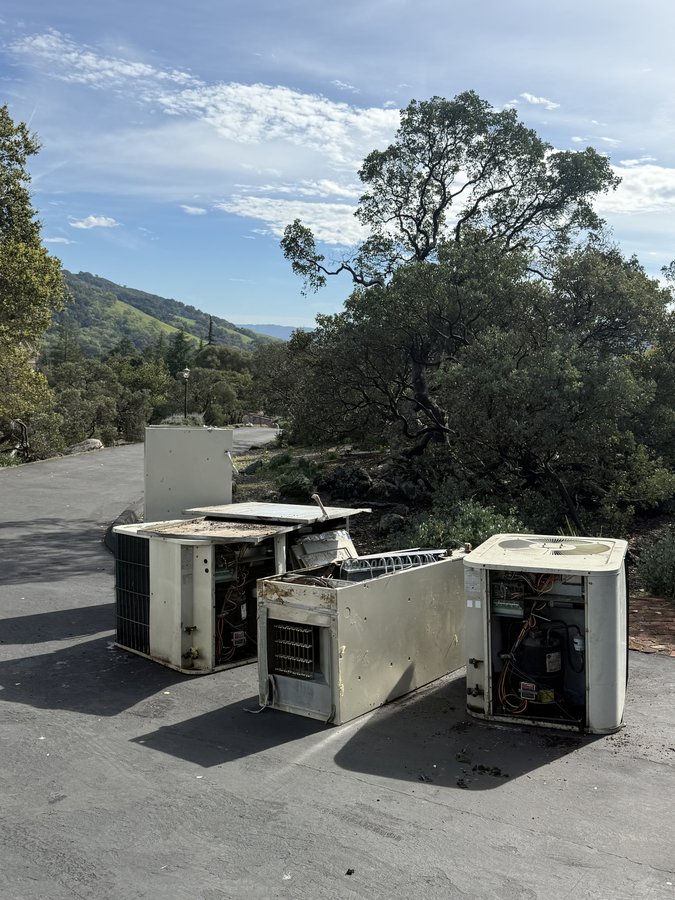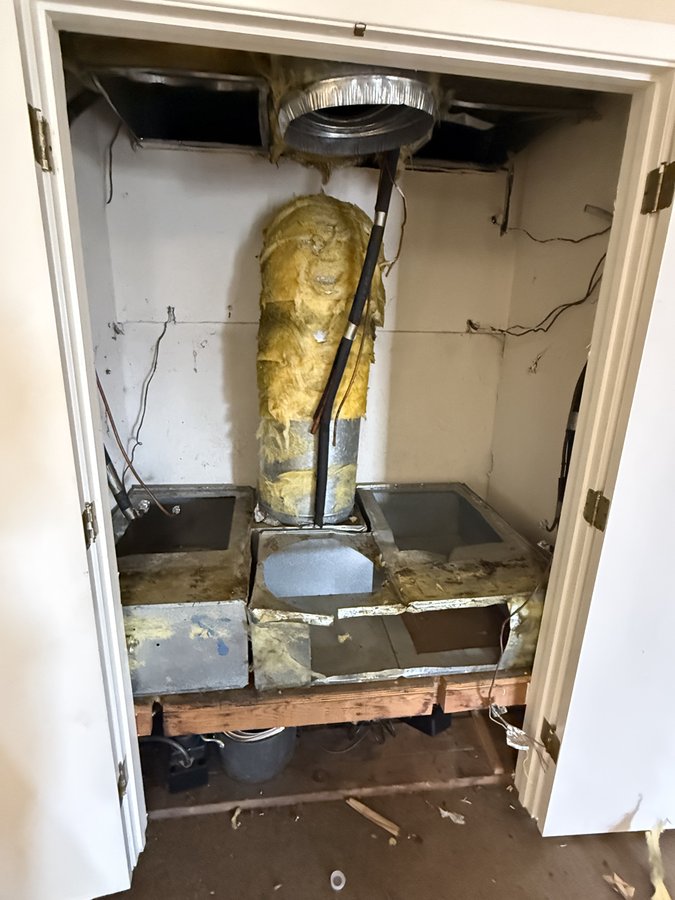
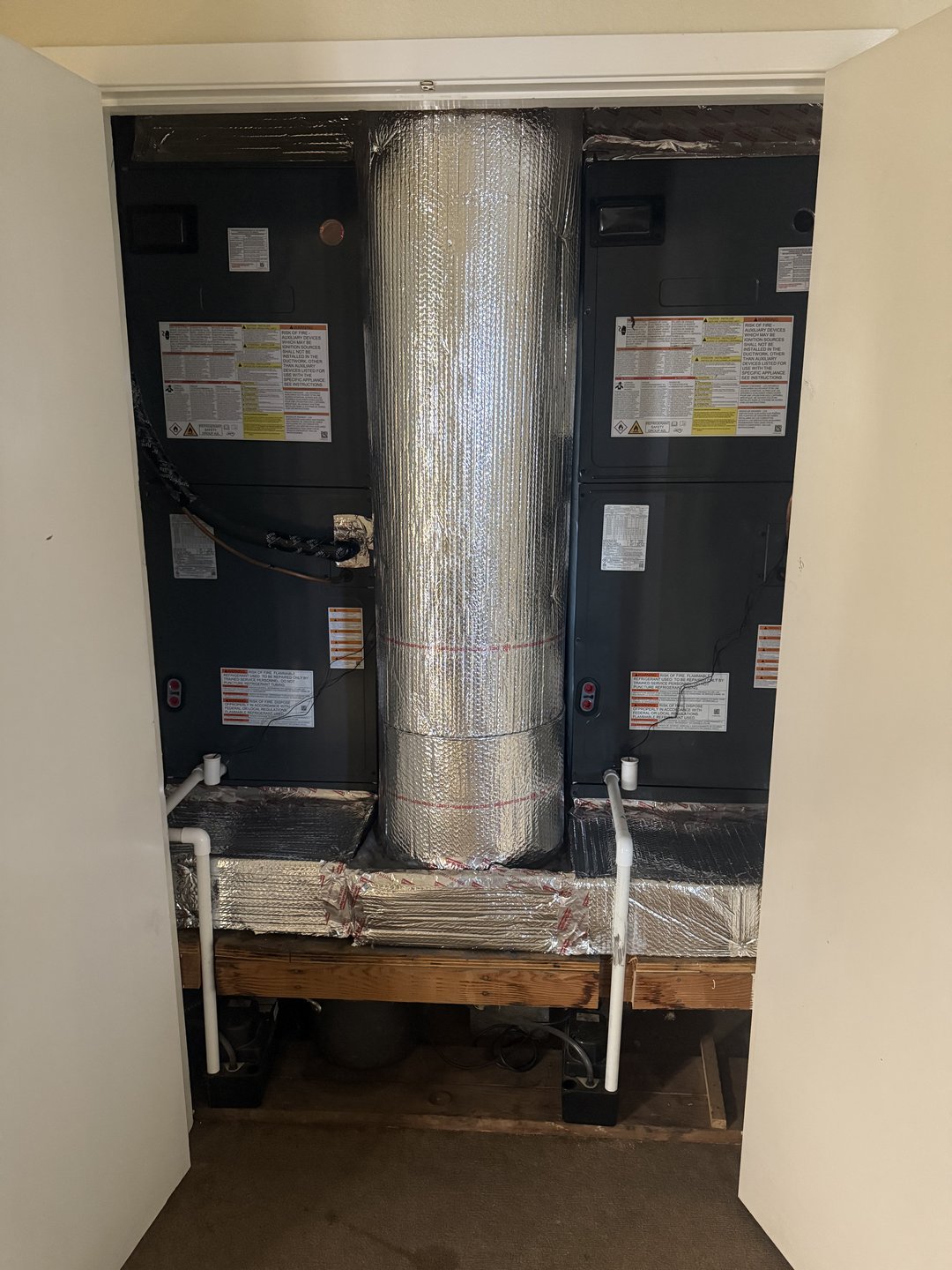
A Morgan Hill homeowner on Castle Hill Drive inherited a two-system setup that came with the house. Two outdoor condensers, two indoor air handlers, all of it single-stage and original. The complaint was the kind I hear a lot on older dual systems. It ran loud, rooms never matched each other, and the summer electric bill climbed a little more every year. The owner was done paying for one-off repairs on equipment that had already reached the end of its life.
How to tell if you have the same problem
Pull the air filter first. A clogged filter is the most common cause of poor airflow, and it can make a marginal system feel like it’s failing. Walk the house and note which rooms run consistently hotter or colder than the thermostat. Look at your outdoor unit: if it’s running almost constantly in mild weather, or you see ice forming on the copper refrigerant lines, the system is working harder than it should. Pull up last summer’s electric bills and compare them year over year. A steady 10–15% increase on the same usage pattern means something is slipping.
If those checks don’t turn up anything obvious, what’s left needs a tech. Load calculations, duct leak testing, refrigerant pressures, and electrical work require specialized equipment and licensed work. Getting it wrong voids warranties and costs more to sort out than the original repair would have.
The bills were pointing at a sizing problem
I ran a load calculation before quoting anything, and the numbers lined up with the symptoms. The existing equipment was roughly 15 percent undersized for the actual cooling load of the house. That shortfall was baked in from the original install, so the system had been short on capacity from day one. Swap in the same tonnage and you copy the original mistake forward another fifteen years. The rule I use here is simple. We size to the Manual J load, not to whatever happened to be sitting there.
Both systems came out and went in the same day
We replaced the whole setup with two Goodman high-efficiency heat pumps, each sized to the calculated zone load. Each one paired with a matched indoor air handler, factory charged. New refrigerant linesets went in on both systems, and both outdoor units landed on fresh condenser pads. For controls we set a smart thermostat with heat-pump-aware staging, so the heat and cool changeover happens on its own without anyone touching it.
On a dual install the easy path is to treat it as two separate jobs on two separate days. I staged this one as a single coordinated swap instead, which gave us the window to do the work that actually decides whether the upgrade performs.
The duct sealing is what made it stick
While the systems were apart and the connections were open, we went after the ductwork. The existing ducts had measurable leaks at several joints. That was conditioned air going straight into the attic. We sealed those joints before connecting any new equipment. No homeowner ever sees this part, and it’s the first thing a rushed crew skips. It’s also the difference between a heat pump that hits its rated efficiency and one that leaks half the benefit you paid for.
If you’re collecting bids on a multi-system replacement and nobody brings up the ducts, ask the question. Bolting new equipment onto old leaks is one of the common reasons people feel let down by an efficiency upgrade. This is the kind of full system work our HVAC division at Bay Area HVAC Service handles day in and day out.
How it ran on the first cycle
Both systems powered up balanced on the first run, no rebalancing needed. The room-to-room temperature spread collapsed because airflow finally matched the load instead of fighting it. Staging is handled at the thermostat with no input from anyone. The install carries our 10-year parts warranty plus a labor warranty (2 years standard, extended to 10 years with our maintenance plan), and the equipment sits under Goodman’s factory warranty on top of that.
If your system is running loud, failing to keep rooms even, or costing more to run every summer, don’t sit on it. Undersized or failing equipment shortens the life of everything around it. Start with a load calculation and a written quote with one total price. We’ll get you on the schedule fast, often same or next day when we can. See our heat pump repair and installation page or call us to get on the schedule.