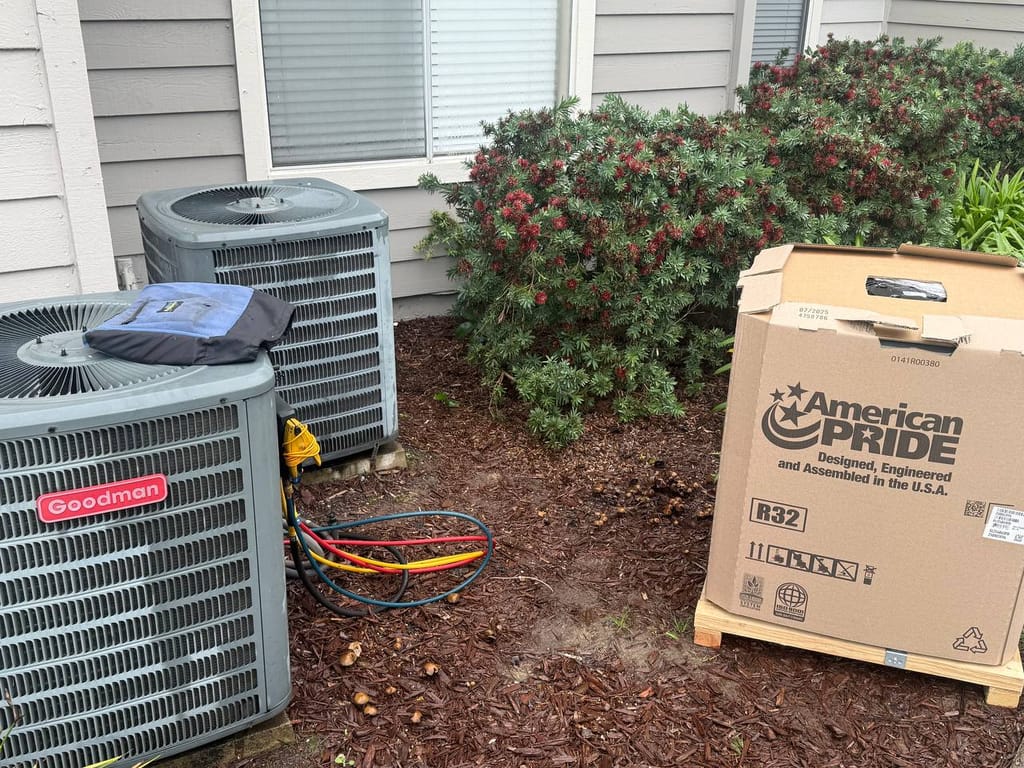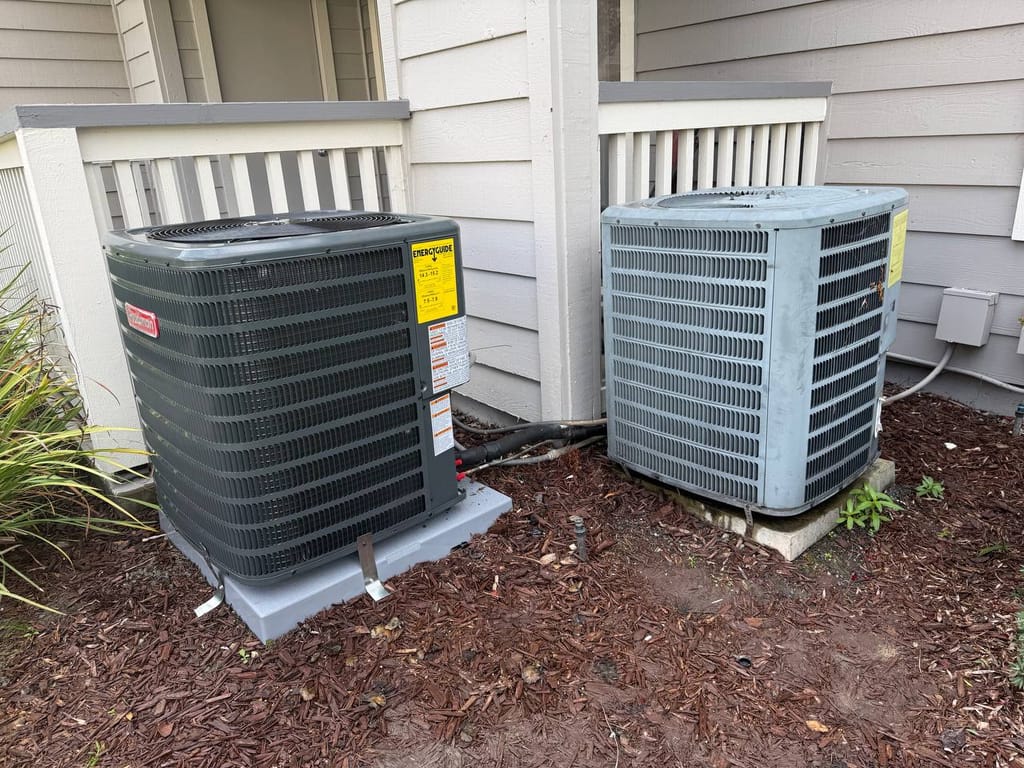
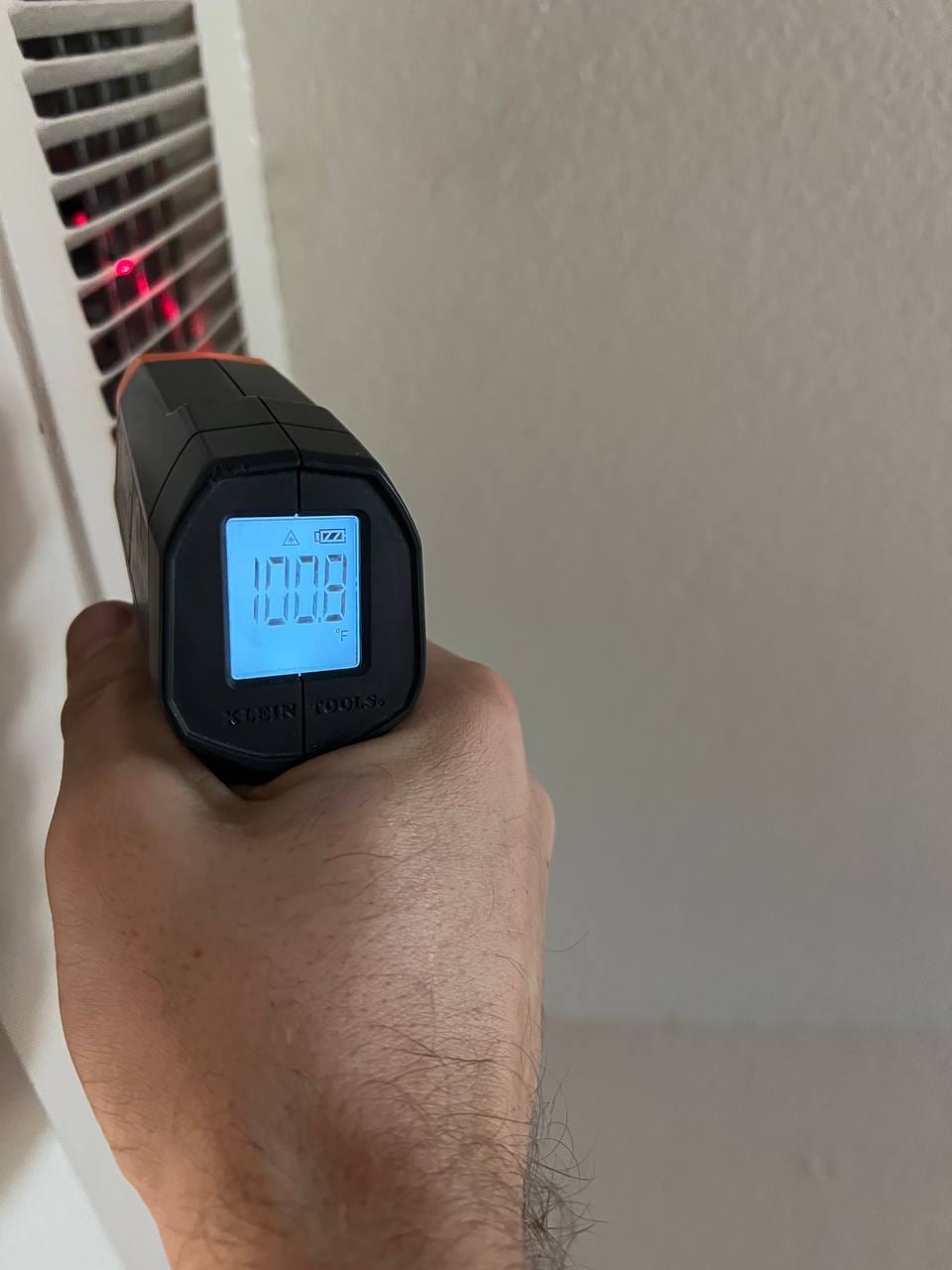
A homeowner off Reflections Circle in San Ramon called about an old HVAC system that ran loud and never settled on a temperature. Single-story house. The request was something I rarely hear on the first call: a heat pump sized to the house, not the biggest unit that would fit in the side yard.
That request almost always points toward a better install. People tend to assume bigger is the safe choice. It isn’t. Oversizing is the most reliable way to land a system that short-cycles and leaves some rooms warm while others stay cool.
The load math came back at 1.5 tons
Our technician ran the load calculation against the square footage and building envelope. The result was 18,000 BTU (1.5 tons). By Bay Area standards that reads small; for this house it was the right answer. Drop a 3-ton in here and the compressor cycles its way to an early failure.
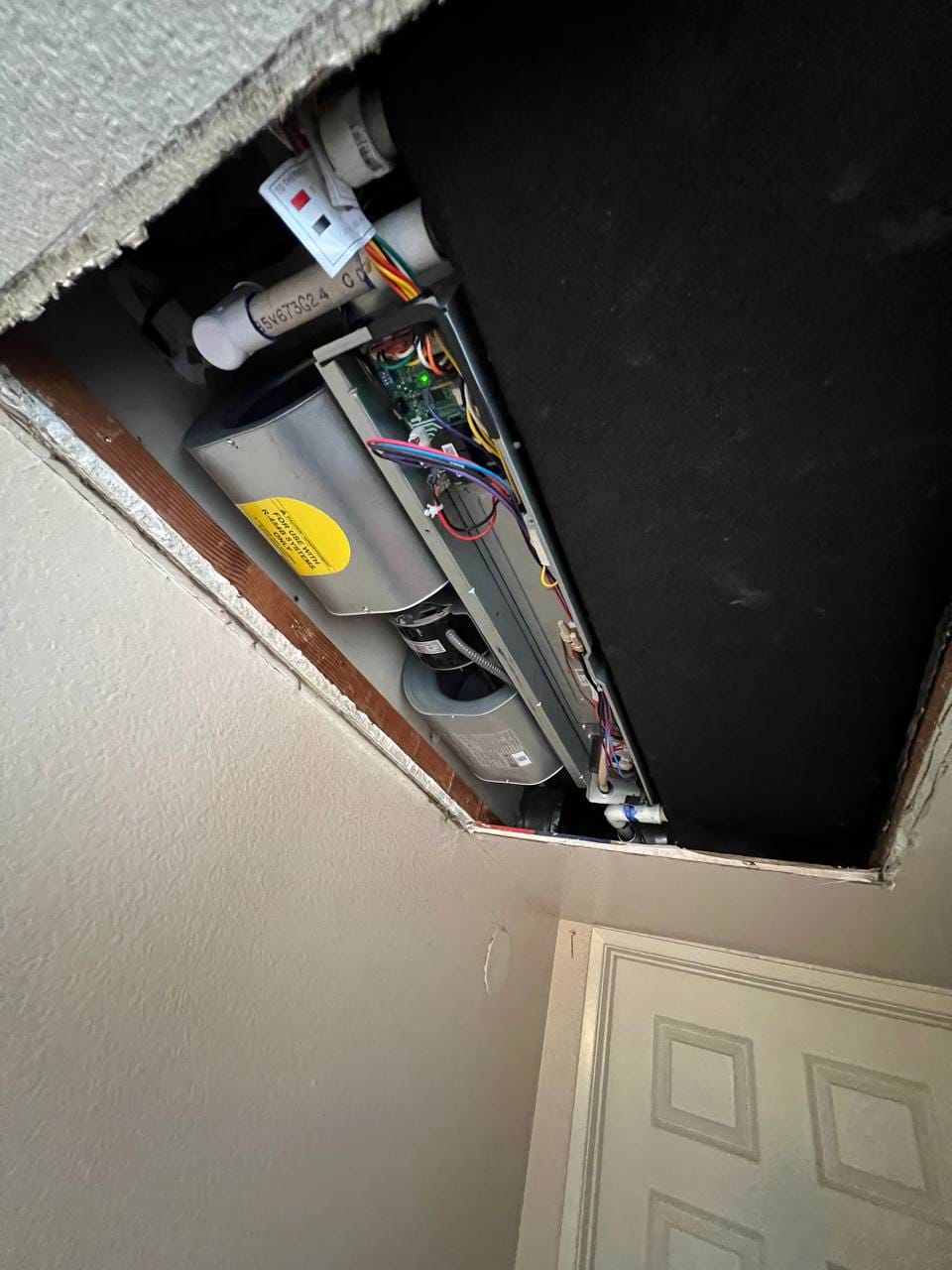
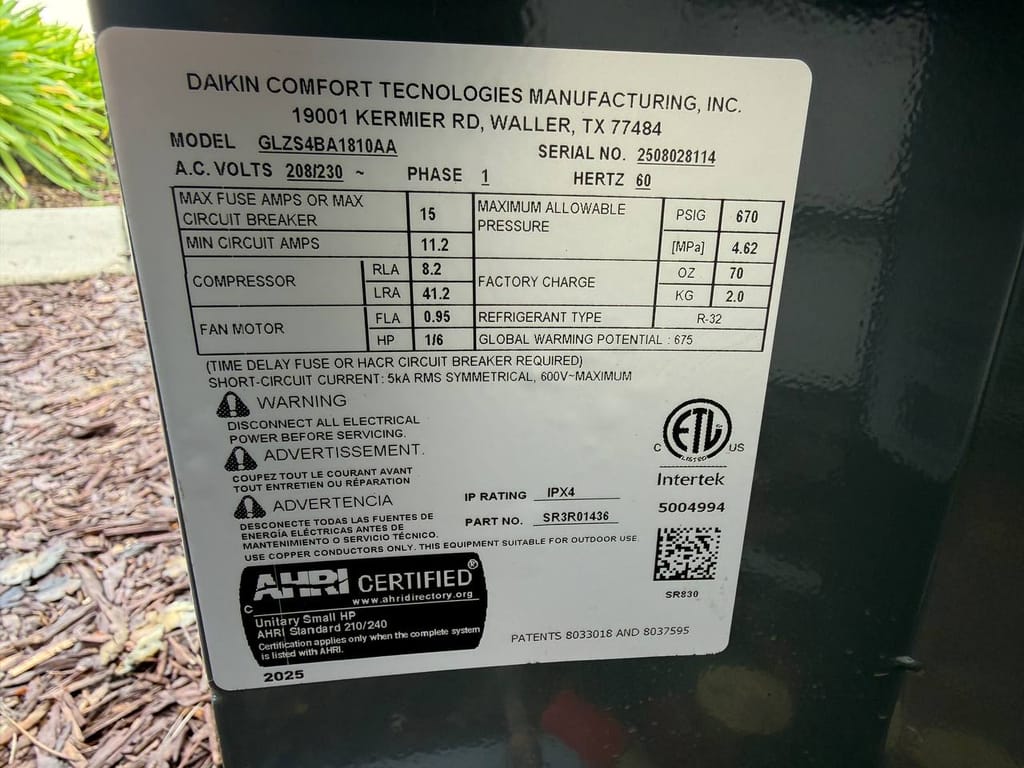
The job called for a Goodman 18,000 BTU high-efficiency heat pump paired with a matched indoor air handler. The outdoor condenser was sized to the calculated load, not a square-foot rule of thumb. Controls run off a smart thermostat with heat-pump-aware staging.
The duct seals decided whether it would hold
New refrigerant linesets ran from the outdoor unit to the air handler. On the electrical side, a licensed electrician added a disconnect, a whip, and a surge protector to the high-voltage feed.
When we pulled the old air handler, the original seal-tape at the duct connections had already let go. Leave those in place and conditioned air bleeds straight into the attic, quietly draining the efficiency the customer just paid for. We re-mastic-sealed every joint at the air handler during the swap. That step is what separates a right-sized system on paper from one that actually holds temperature on a hot afternoon.
Before sign-off we pressure-tested the system, pulled it to a proper vacuum, and charged it to the manufacturer-specified subcool. Charged correctly, a heat pump settles into long cycles at lower compressor speed. That is how these units are built to run.
What the homeowner got out of it
The house is quiet now. Temperatures stay flat through the day, and the bills track the real load instead of paying for capacity nobody asked for. A 3-ton would have hit setpoint in eight minutes, shut off, drifted, and fired again all day, with the thermostat swinging four to five degrees and the compressor taking the abuse.
Our install carries a 10-year parts warranty plus a labor warranty (2 years standard, extended to 10 years with our maintenance plan), subject to your contract terms, with the Goodman factory warranty on top of that.
If your heat pump is behaving like the old one did
Short-cycling, loud operation, rooms that won’t stay at setpoint, ice on the outdoor unit, or a system that just runs nonstop: these symptoms don’t fix themselves. Before calling, check the basics first: clean air filter, correct thermostat settings, breaker hasn’t tripped. If those are fine, the problem is inside the equipment and needs a technician.
Refrigerant work, electrical repairs, and duct diagnosis each require tools and certifications that make them pro-only jobs. Getting any of them wrong costs more to correct than the original repair would have. We diagnose, do the repair right, and stand behind it.
Request a quote or call us. We serve San Ramon and the wider Bay Area area, work on Goodman and most major brands, and give you a written estimate before any work starts.