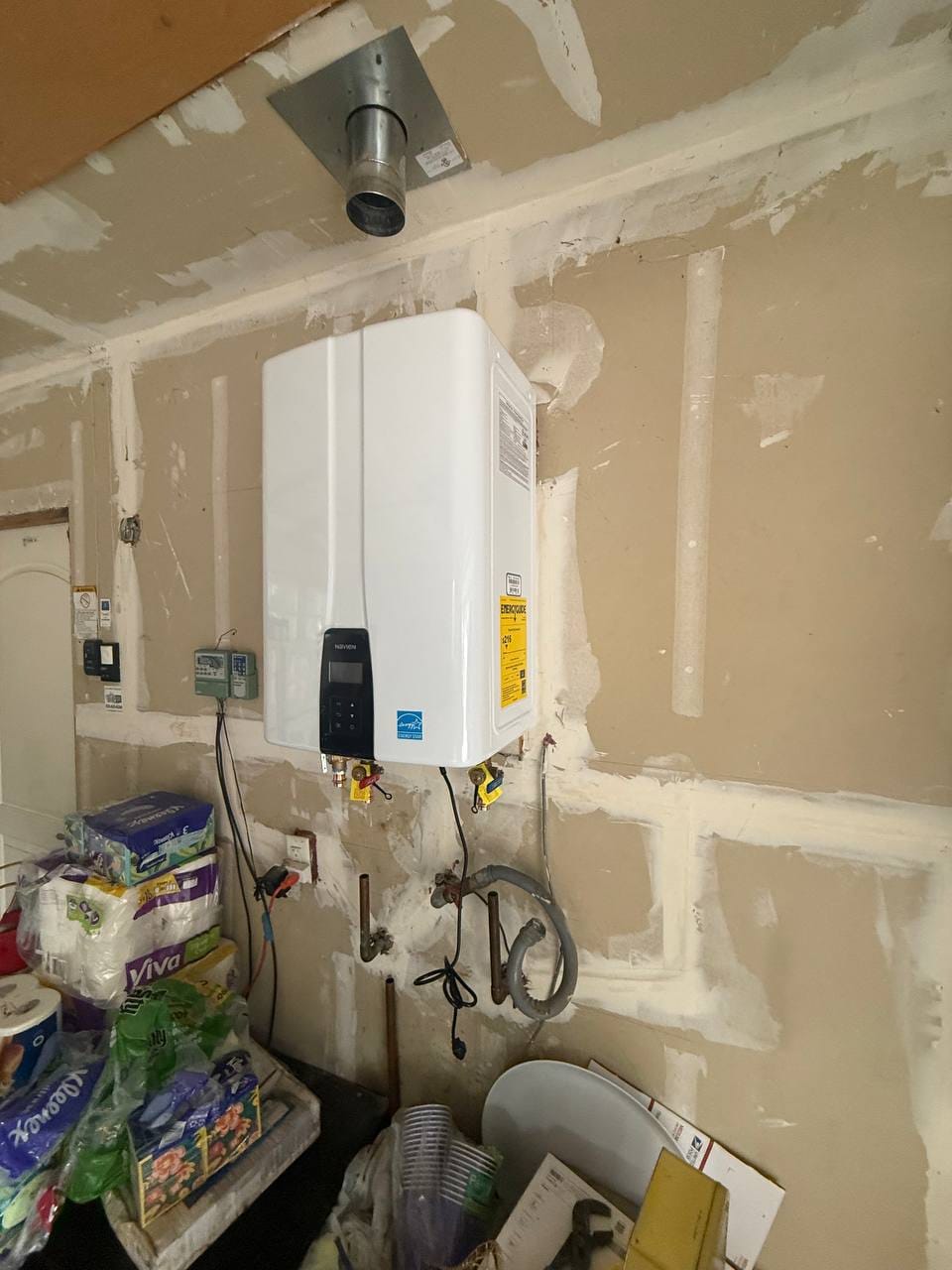
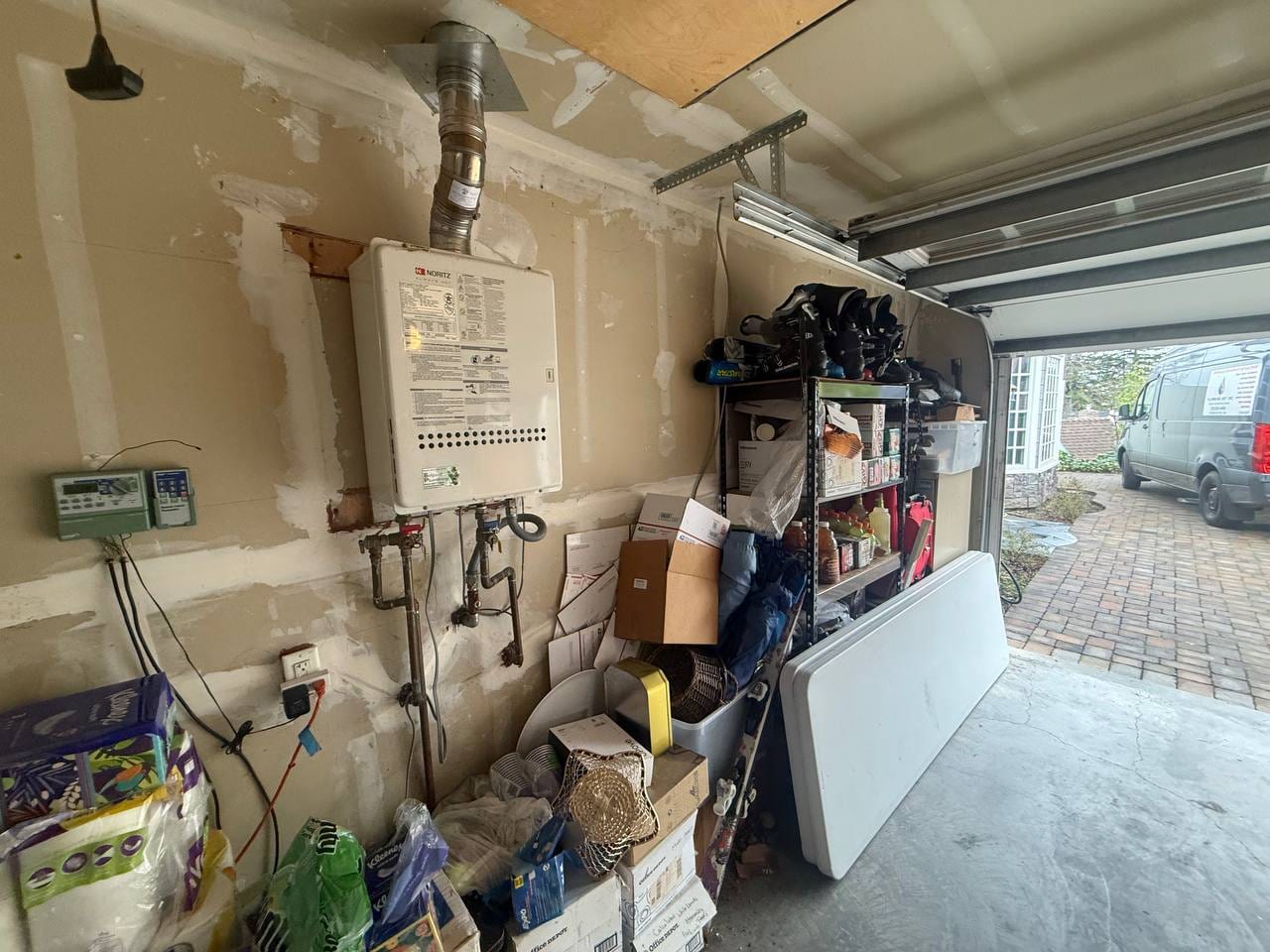
A Walnut Creek homeowner over on Midvale Court was done with the 50-gallon tank in their utility room. It recovered slowly after a long shower, ate up floor space, and was old enough that a replacement was coming no matter what. They had already picked the platform they wanted. A Navien NPE-series condensing tankless, wall-mounted, on-demand hot water, and they wanted their floor back.
This was a planned swap, not an emergency, so we walked the existing setup before quoting anything.
What the old setup left us to work with
Three things on a tankless conversion decide whether the job lasts twenty years or eighteen months. Gas supply, venting, condensate. None of them carry over cleanly from a tank heater.
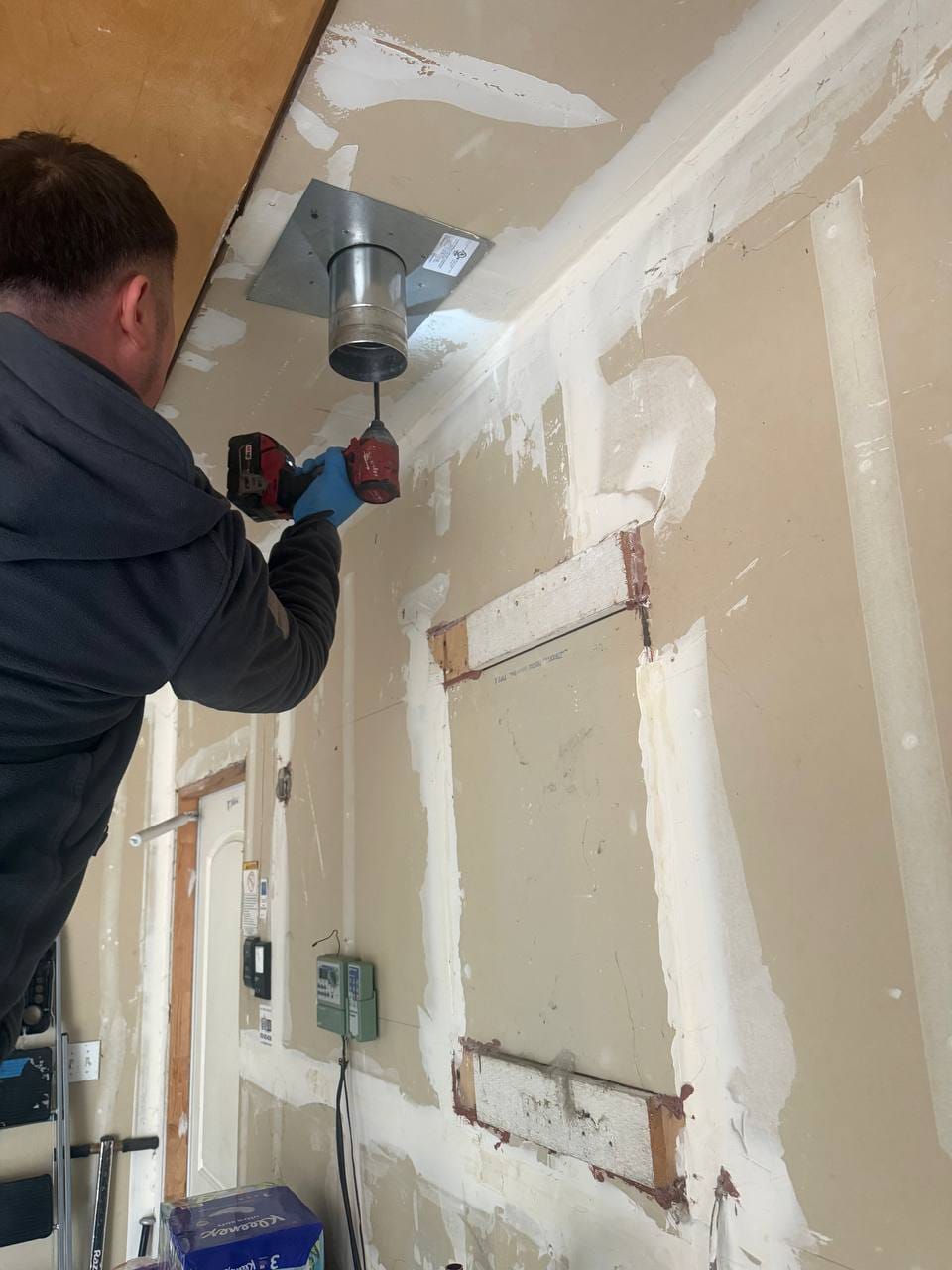
The existing gas line had enough capacity for the Navien’s burner, which is not always the case, so we did not have to run new pipe. It still needed a new quarter-turn shutoff valve and a minor reroute to land in the configuration Navien specifies. The old vent was a non-starter. A natural-draft tank vents nothing like a condensing tankless, which wants a concentric vent with the right slope to drain and hard length limits. And the old tank had no condensate drain at all, because it never produced any. Gas, venting, and plumbing connections on this job were performed by a licensed subcontractor; ADRIUM coordinated and managed the installation.
The work we actually did
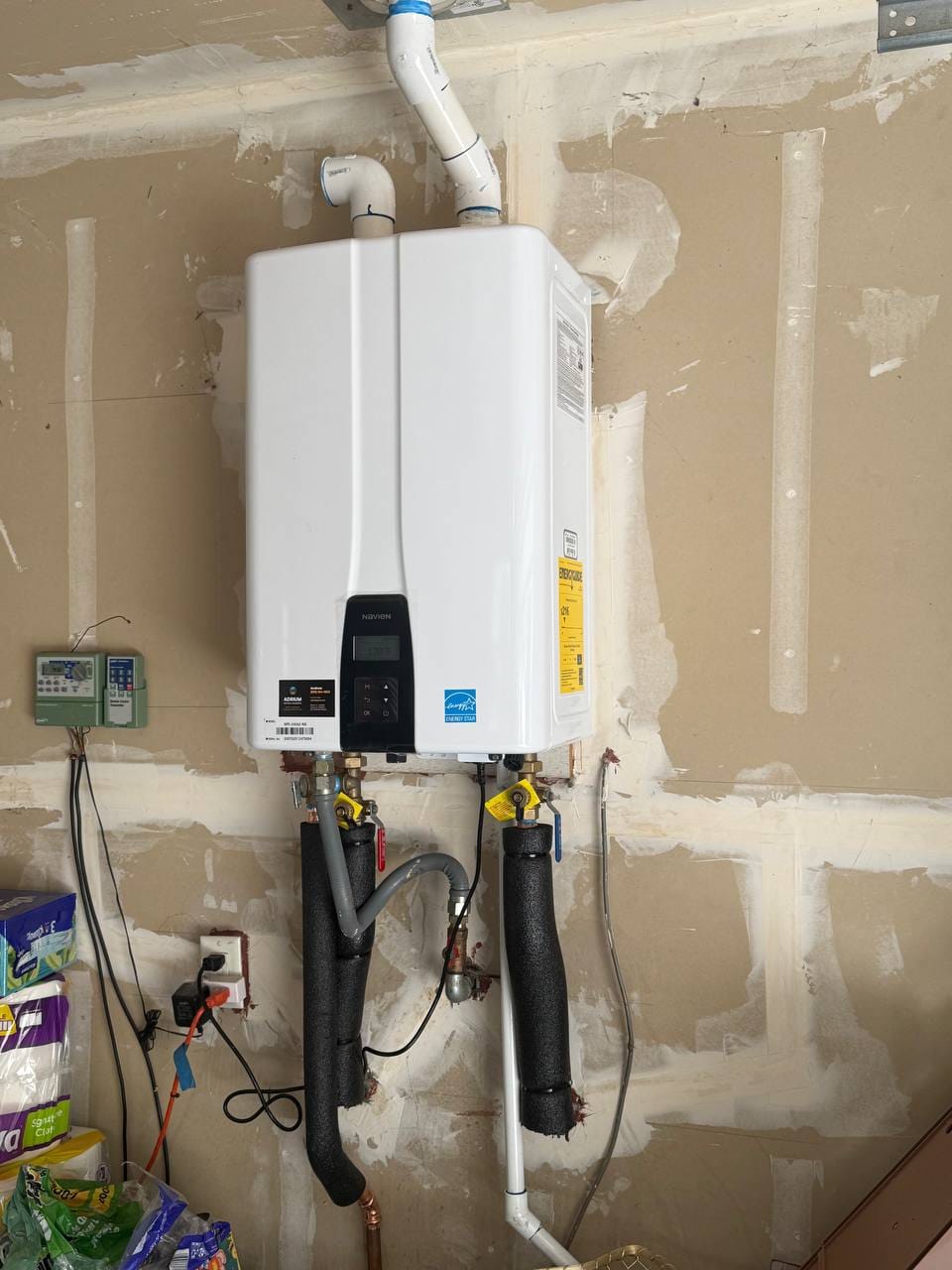
We mounted the Navien NPE-series unit on the wall and tied it into the repurposed gas line with the new shutoff. New venting went in per Navien spec, sloped to drain and inside the allowed run length. We ran a dedicated condensate drain line, because a condensing unit pulls extra efficiency out of the flue gas and the byproduct is acidic water that has to go somewhere on purpose. On the water side we set a new pressure relief valve and new shutoff valves. Then we flushed the system, ran a startup test, and calibrated the output temperature.
The condensate is the part people skip
The marketing line on a tankless is unlimited hot water. True, but only when the gas, the vent, and the condensate are all sized right. I see plenty of installs where someone bolted a tankless to the wall on the old tank’s gas line, reused the old tank’s vent, and left the condensate dripping onto the floor or into a nearby drain with no plan.
That unit runs fine for about a year. Then on a long draw the modulating burner starves because the gas supply can’t feed it. The vent flags at the next home inspection. And the acidic condensate quietly corrodes whatever it has been landing on.
A tankless conversion isn’t a DIY project. The gas connections require a licensed plumber or gas fitter. The vent penetration has to meet Navien’s specs and local code. The condensate needs a proper drain path, not a bucket or a floor drain with no trap. Getting any of these wrong voids the factory warranty and creates a safety problem. It is cheaper to do once than to chase later.
What the homeowner ended up with
A compact wall-mount unit and the utility-room floor back. On-demand hot water with no waiting for the tank to recover between showers, and better efficiency than the old 50-gallon. The Navien carries its factory warranty on the unit, and ADRIUM backs the installation labor for one year.
Ready to make the switch?
If you’re weighing a tankless conversion in the Tri-Valley, call us. The diagnostic visit is $99, credited toward the repair. We check your gas supply, confirm what venting you need, and hand you a written quote with one total price before anything starts. Heat pump water heaters are worth comparing depending on your utility room and panel, and we can confirm what rebates are paying through BayREN, MCE, PG&E, and EBCE/Ava at estimate time since amounts shift by territory and cycle.
Reach us through the contact form at adriumservice.com.