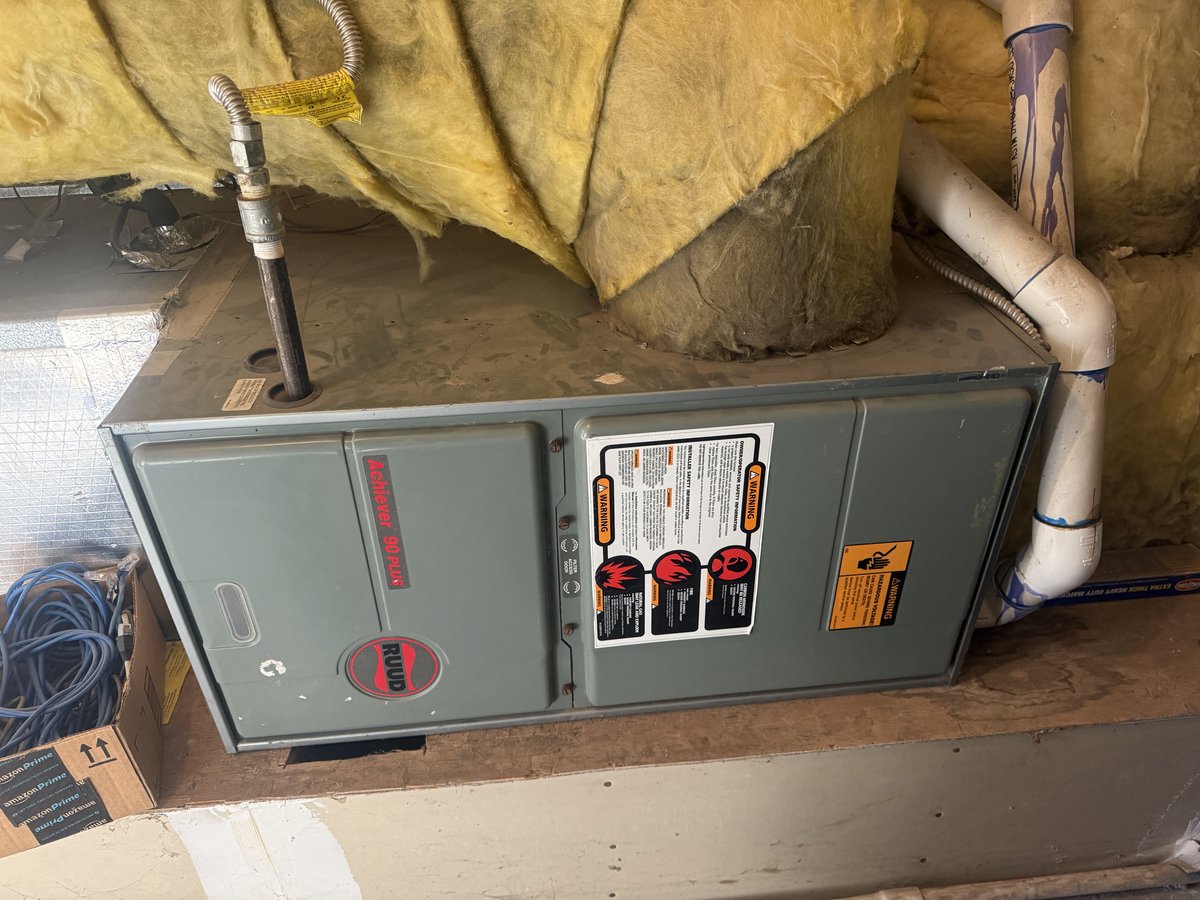
A homeowner on Castle Crest Road in Alamo called about a Ruud gas furnace making noise loud enough to scare the family. The unit still ran. But it kept short cycling, kicking on and dropping out before it could warm the house. Nobody wanted it running overnight with that sound coming from the cabinet. Friends had used us before, so they called.
The noise and the short cycling pointed the same direction
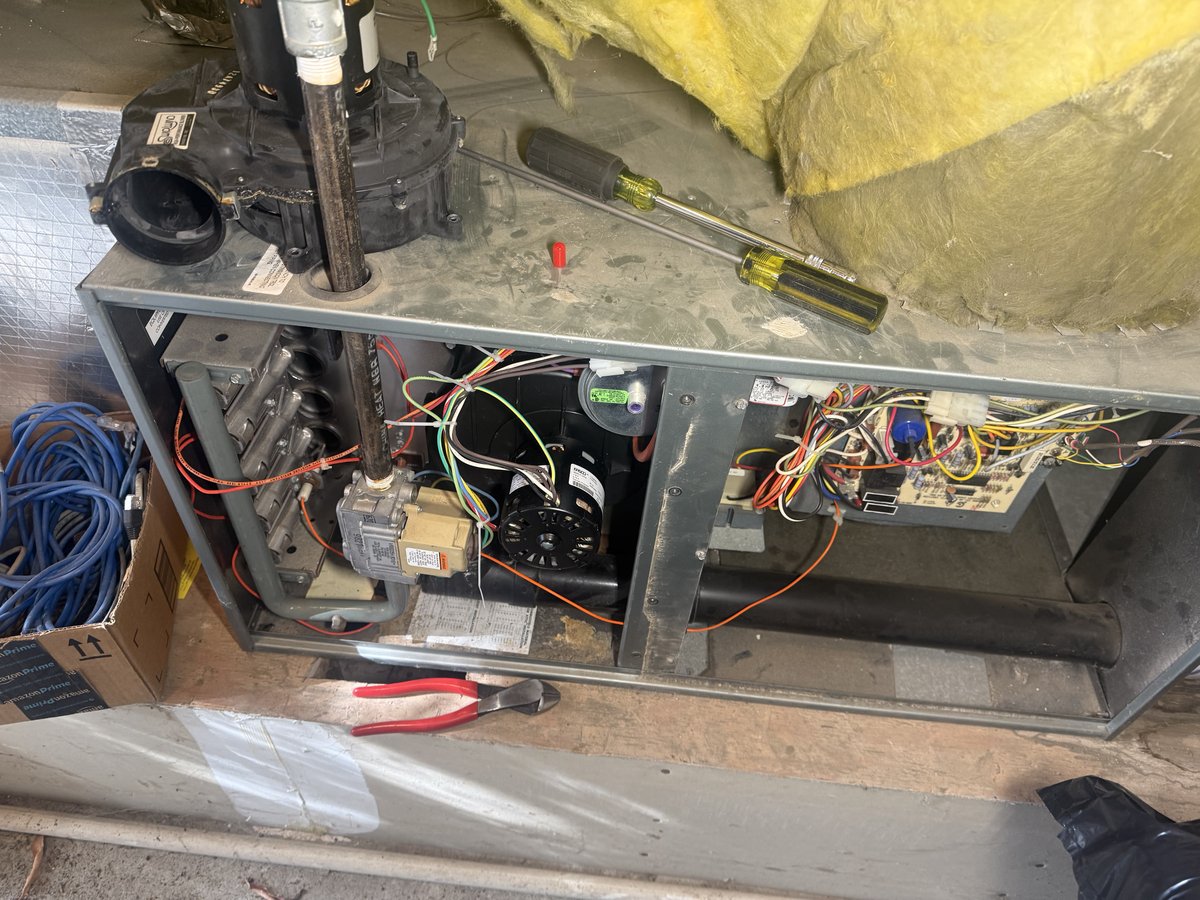
Two symptoms came in together, and they told one story. The grinding came from inside the cabinet near the burner section. The heat never finished a cycle. Both trace back to the draft inducer, the small fan that pulls combustion exhaust through the heat exchanger and pushes it out the flue.
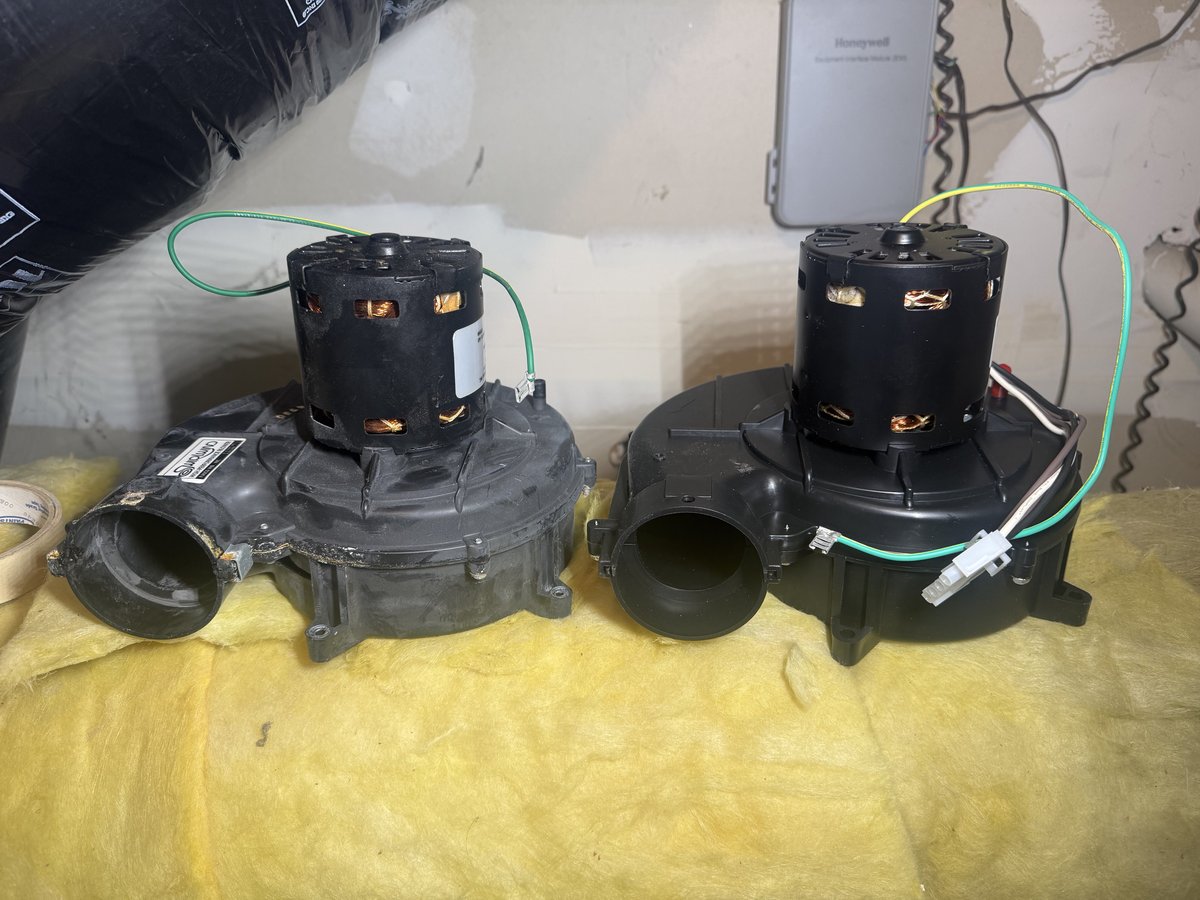
When that motor weakens, the pressure switch downstream stops seeing enough draft. The switch is a safety device, so it does its job and shuts the burner down before the cycle completes. That is the on-off-on-off pattern the homeowner described. The grinding was the second clue, and it gave the whole thing away. Inducer motors die one of two ways. Either the windings fail electrically, which happens suddenly with no warning, or the bearings wear out, which is mechanical and gets louder over days. This one was the bearing kind. You could hear the diagnosis before opening the panel.
Why the replacement part matters as much as the labor
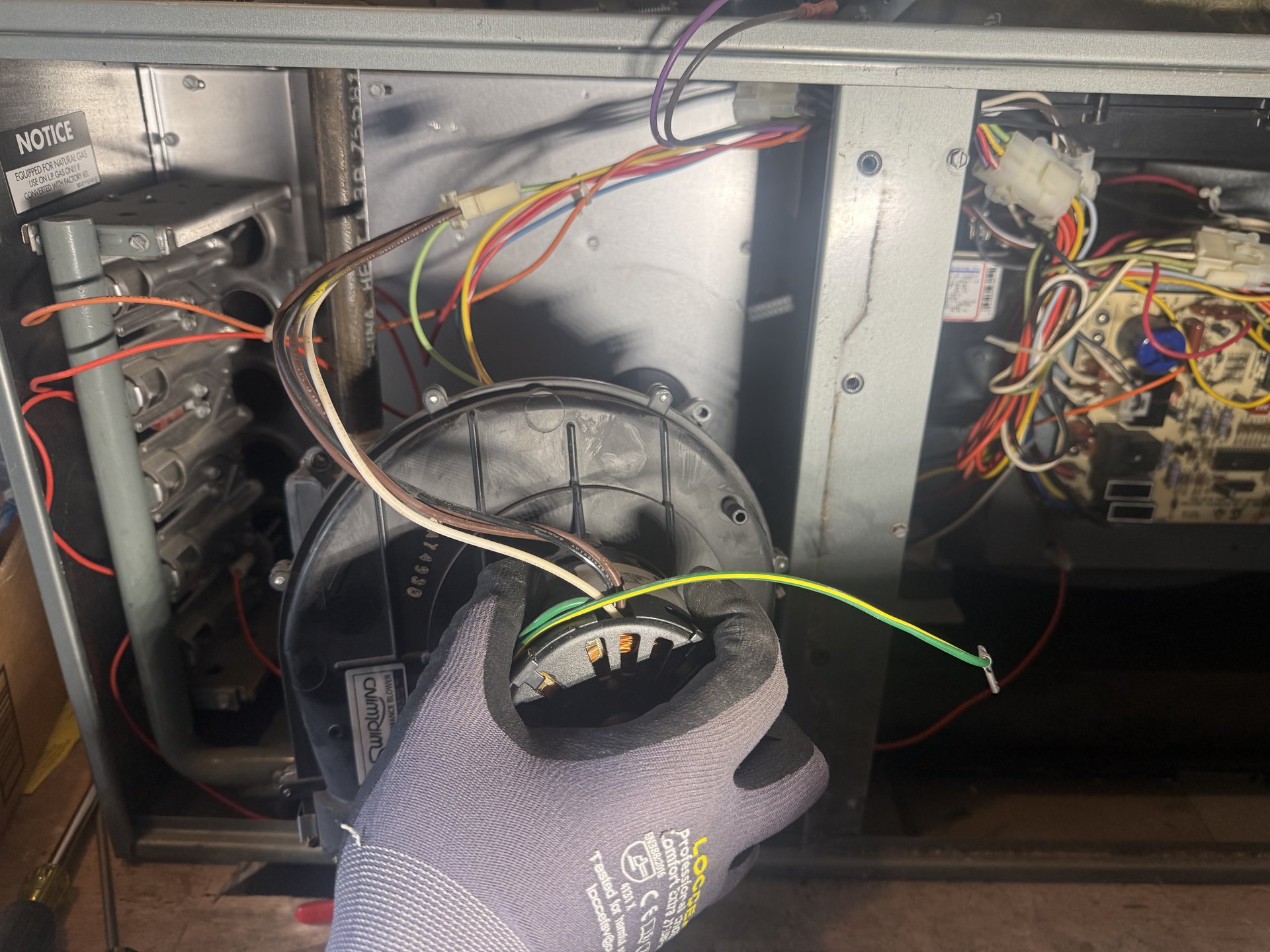
Replacing a draft inducer means accessing the blower compartment, disconnecting wiring and the flue collar, pulling the motor assembly, and fitting a model-matched replacement before anything goes back together. The last part is where a lot of cheaper repairs go wrong.
A generic universal inducer can bolt into the same spot and look correct. The problem is airflow. The heat exchanger on a given furnace is rated for a specific draft. A motor that moves the wrong CFM either keeps tripping the pressure switch or runs combustion outside the unit’s design range. Getting it wrong doesn’t always throw a fault code; it just degrades quietly until something upstream fails. After installation a tech confirms the pressure switch reads correct draft on startup and runs the furnace through full heat cycles to verify clean ignition and normal cycling before leaving the job.
This is also a gas appliance with combustion and electrical connections involved. It’s not a job where a close-enough part and a few YouTube videos are a reasonable path.
Calling it early kept this to one part
A new mechanical noise from a furnace usually means the failure is closer than the homeowner expects. Waiting it out turns a part you can replace into a job you cannot. A grinding inducer that gets ignored can chew into the heat exchanger or trip the high-limit safety repeatedly, and that wears on the burner controls. None of that had happened here yet. Catching it while it was still just the inducer is the reason this stayed a single-part fix and not a furnace replacement conversation.
The furnace went back to quiet operation with full heat cycles and verified safety controls. The repair carries our standard 1-year warranty on parts and labor. If your furnace is grinding, short cycling, or making any noise it didn’t make before, call us for a diagnostic. You get a written quote with one total price before any work starts, and we credit the diagnostic fee toward the repair.