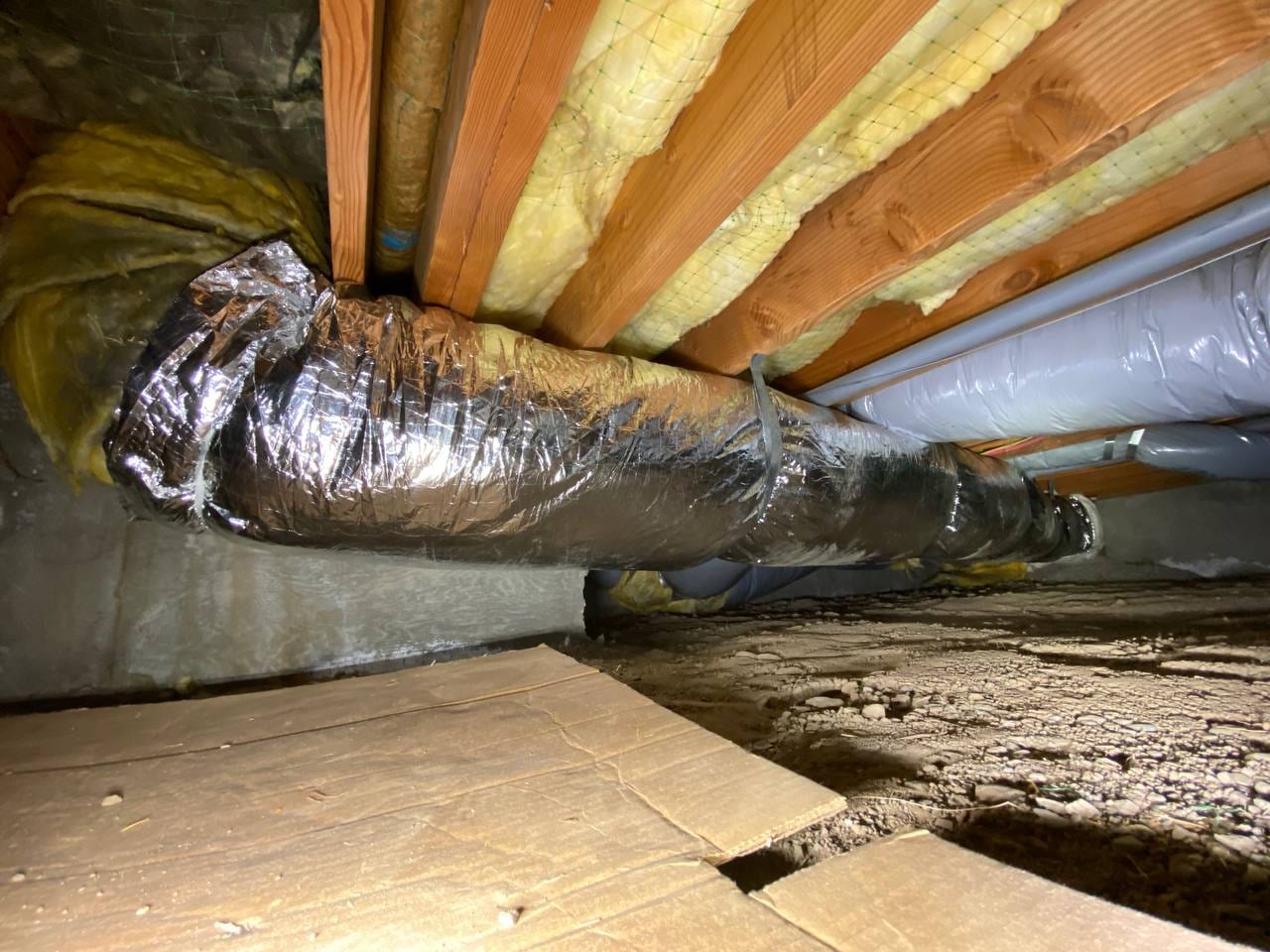
A Walnut Creek homeowner called about uneven comfort. Front rooms felt right. The back rooms stayed cold in winter and warm in summer, and moving the thermostat did nothing. The equipment was fairly new and ran the way it should, so I did not suspect the furnace or the condenser. The complaint had the signature of a delivery problem, not a production problem.
Check these before you call anyone
Two minutes of checking can sometimes save a service call. Confirm the air filter isn’t clogged (a choked filter alone can starve the far rooms of airflow). Make sure the registers in the cold rooms are open and nothing is blocking them. Check that the thermostat is actually set to heating or cooling mode, not just “fan on.” If all that looks fine and the rooms are still uneven, the problem is likely in the duct system, not the equipment.
Crawl-space ductwork is where it gets past the easy stuff. It’s also where you stop and call us, because diagnosing and repairing what’s under the house requires tools, confined-space access, and airflow measurement equipment that isn’t worth owning as a homeowner.
The crawl space told the real story
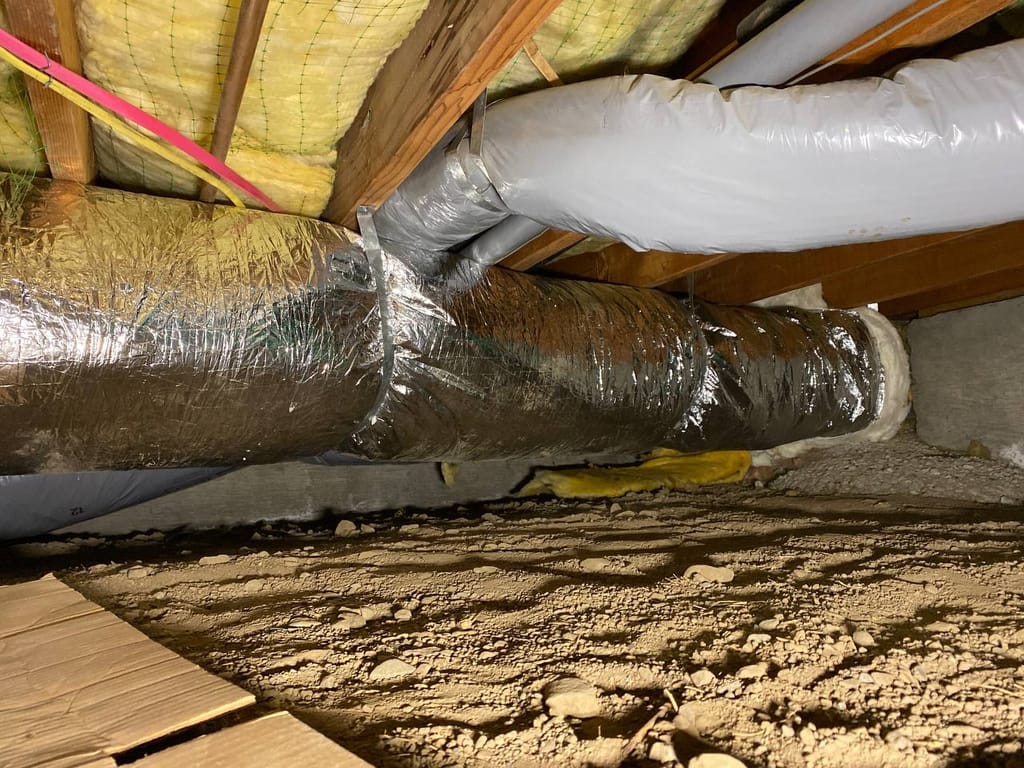
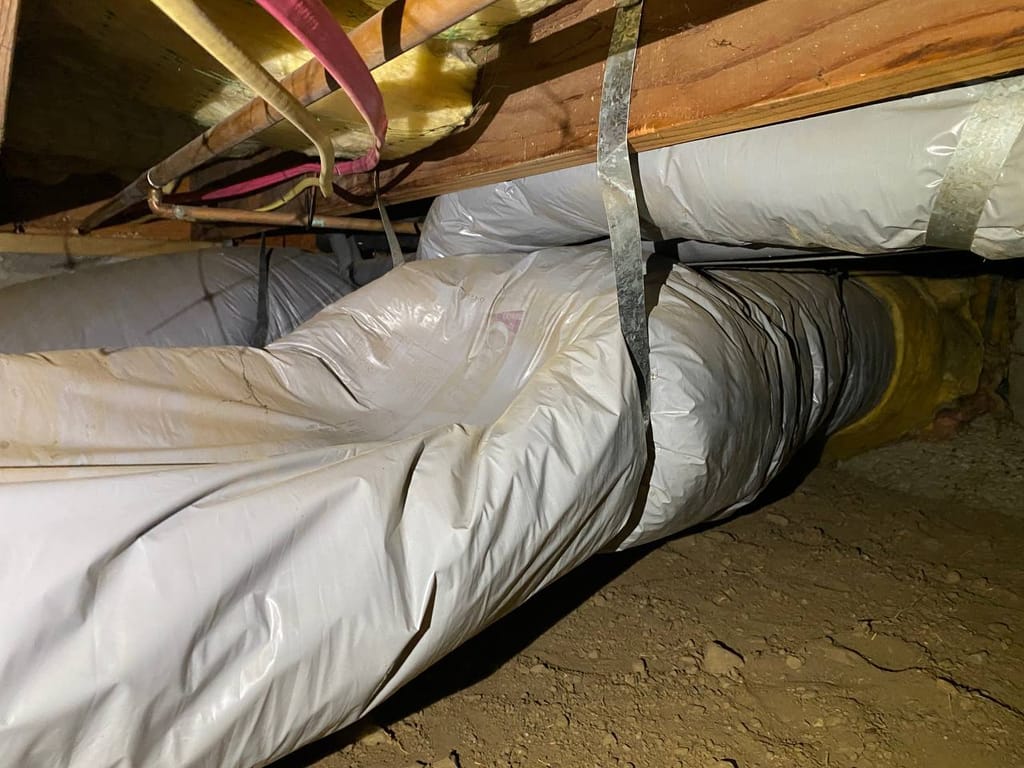
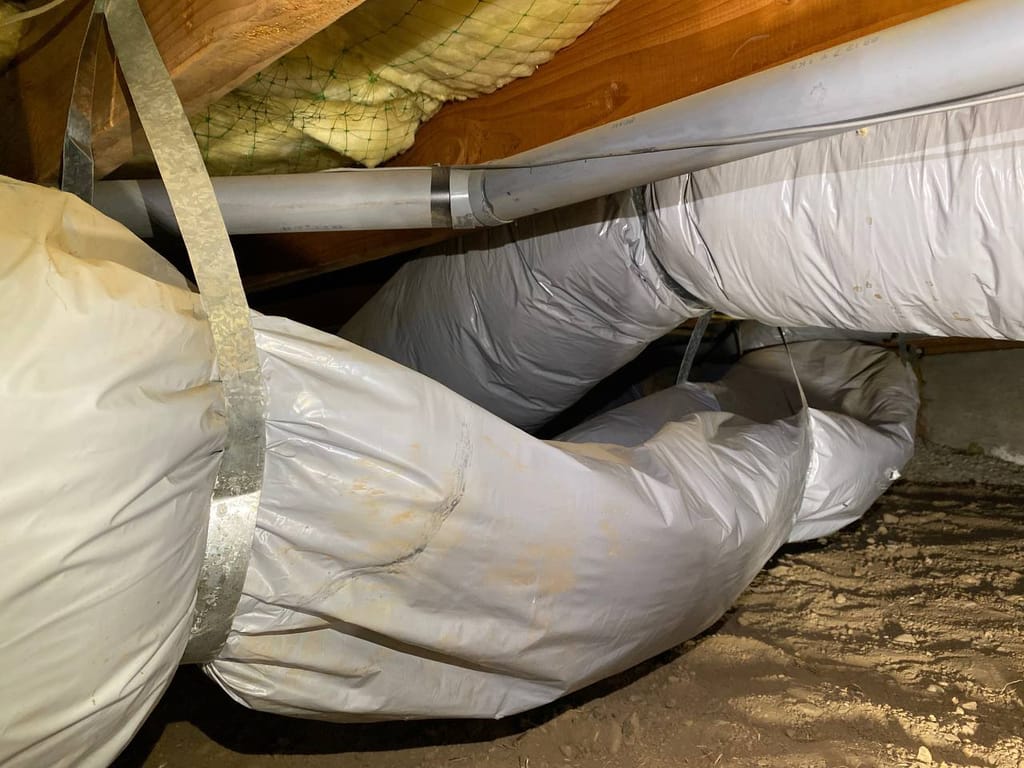
We checked the unit first and confirmed it was working. Then our tech went under the house with a flashlight. That is where the job actually was.
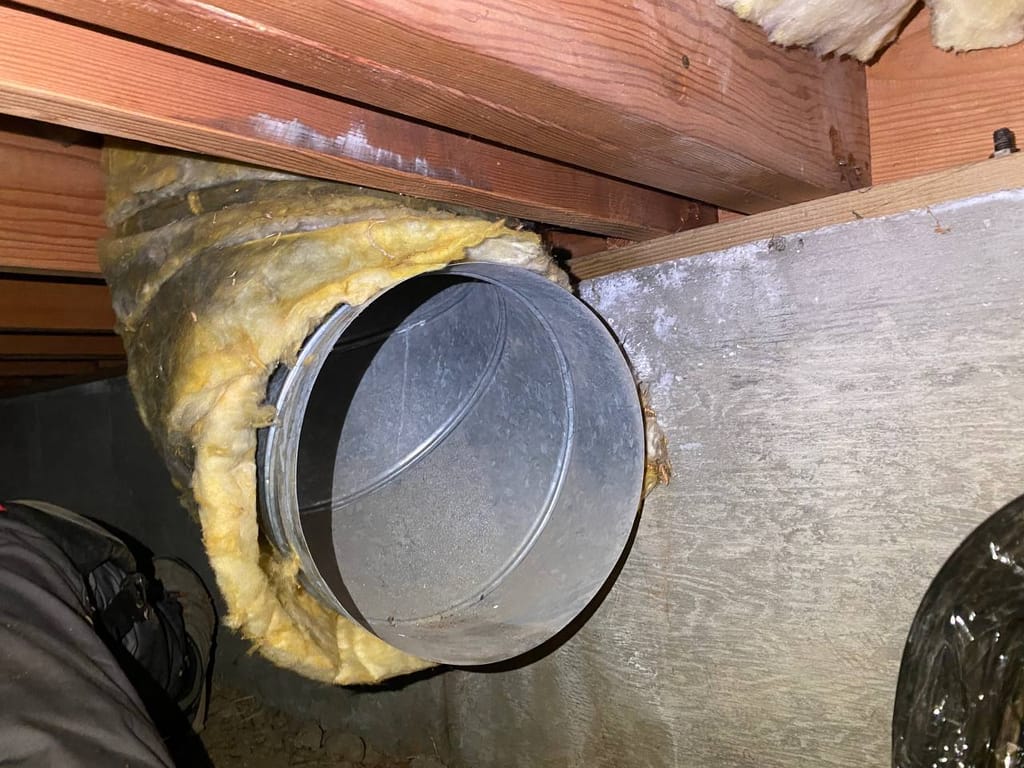
Several duct sections had pulled apart at the joints. Others sagged far enough to pinch the airflow down to a trickle. In at least two spots the flex duct had torn open completely. The system was moving air, but a good share of that conditioned air emptied into the crawl space before it reached the back of the house. Static pressure was off. Airflow was unbalanced. The homeowner had been paying PG&E to heat the dirt under the floor.
This is the most common “the HVAC isn’t working” call that turns out to have nothing to do with the HVAC. Crawl-space ductwork is the part of the system nobody looks at, because you cannot see it without crawling under there.
What the repair actually involves
Once we map each duct run against the equipment outputs and find where the air is escaping, the fix involves re-supporting disconnected and sagging sections, resealing joints with HVAC-grade mastic (not duct tape, which lets go in 18 months), and replacing any sections that are too degraded to patch. On this job we also installed fresh R-8 insulation on the repaired runs. Every step requires getting under the house, which means confined-space work, proper support hangers, and knowing which sections to replace versus repair.
We finish with a pressure test and airflow readings at every register. Nothing is signed off by feel.
Why duct work before equipment replacement
A lot of contractors quote a new system before they quote a duct repair, because the new system is the bigger ticket. The rule I use runs the other way. If the ducts leak 30 percent, a new high-efficiency system leaks 30 percent too, and the homeowner spends (varies, but easily $15,000 or more) to keep the exact comfort problem they started with. The duct repair on this job cost a fraction of that and fixed the cause. We give a written quote with one total price before anything starts.
What this homeowner ended up with
Consistent airflow at every register. Even temperatures room to room. A duct system that should last the rest of the equipment’s service life. The homeowner reported a noticeable drop on the following month’s PG&E statement, and the repair is covered by our 1-year warranty, subject to your contract terms.
If you’ve checked the filter and the registers and the rooms are still off, the ductwork is where to look next. Call us and we’ll go under the house, map the runs, and tell you exactly what’s failing before we quote anything. We’ll get you on the schedule fast, often same or next day when we can, in Walnut Creek and across the Bay Area. Contact our HVAC team here.