
A walk-in is one thing. A reach-in or chest freezer that quits is a different headache, because the failure is usually quiet until product is already soft. Here’s what actually goes wrong on commercial freezers, what a tech checks first, and the point where you stop and call.
What “Not Freezing” Usually Means
A freezer has one job: pull heat out and hold the box well below 0 degrees F. When it stops doing that, the symptom points to a small set of causes.
- Iced-over evaporator coil. The most common reason a freezer runs hard but stays warm. Frost insulates the coil so it can’t absorb heat. Behind it is almost always a defrost-system failure.
- Failed defrost components. The defrost heater, defrost thermostat, or timer/control board lets frost build until the coil is a solid block. Reach-ins ice up at the back panel; airflow chokes off and the upper shelves warm first.
- Condenser airflow blocked. A clogged condenser coil or a dead condenser fan makes the compressor work against a hot box. Common in kitchens where grease and dust cake the coil fast.
- Bad evaporator fan motor. No air moving across a cold coil means no cold air reaching the product. You’ll hear silence where a fan hum should be.
- Door or lid gasket gone. On chest freezers especially, a torn gasket invites warm humid air, which freezes, frosts the box, and runs the compressor nonstop.
- Low refrigerant from a leak. Compressor runs warm, suction line isn’t cold, and the box never recovers. This is sealed-system work and is not a DIY item.
Checks You Can Do Right Now
Before you call, run these. They take ten minutes and often pin the problem for the tech.
- Read a real temperature. Put a thermometer in the center of the load and wait. Don’t trust the door dial.
- Check the door or lid seal. Close it on a dollar bill and tug. If it slides out with no drag, the gasket is failing. Wipe the gasket and the mating surface clean, then recheck.
- Note visible frost at the interior back wall. If you can see heavy frost or a solid white sheet through the product, the defrost system has failed. Don’t try to chip or scrape it.
- Clean the condenser coil. On the back or bottom exterior, vacuum and brush out grease and dust. A choked condenser is a frequent maintenance fix that takes five minutes.
- Listen for the fans. Condenser fan and evaporator fan should both run. Silence from either is useful information to give the tech when you call.
- Check load and placement. A freezer packed past its airflow line or sitting next to a hot fryer will struggle regardless of what else is wrong.
Those checks cost nothing and tell you a lot. They don’t replace a diagnosis, though. If any of the signs below are present, the unit needs a tech, not more troubleshooting.
When to Call
Call if any of these are true:
- Heavy frost at the interior back wall, and it comes back fast after clearing. The defrost heater, thermostat, or control board has failed and it won’t fix itself.
- The compressor runs but the box stays warm and the suction line isn’t cold. That’s a refrigerant leak or compressor failure, which requires sealed-system work.
- You smell anything chemical, or see oily residue near the coils. That’s a refrigerant leak; stop running the unit.
- The compressor clicks, hums, and shuts off, or won’t start. Cycling it isn’t helping.
These repairs involve disassembly, refrigerant recovery, brazing, or electrical work. Done wrong, they cost more to fix a second time. ADRIUM holds EPA #1279674151528 for refrigerant handling and CSLB #1136642, BEAR #50788, with an A+ BBB rating. We diagnose the unit, give you a written estimate with one total price, and only then do the work.
For the broader commercial picture, see our commercial refrigeration repair guide and our commercial refrigeration service page. If your problem is a home unit, the freezer not freezing guide walks through residential models.
Call ADRIUM
We service reach-in and chest commercial freezers across the Bay Area and surrounding cities. Tell us the make, model, and symptom and we’ll give you a real arrival window. The $99 diagnostic is credited to your repair.
Call (925) 999-4095 or email welcome@adriumservice.com. You can also book through our contact page.
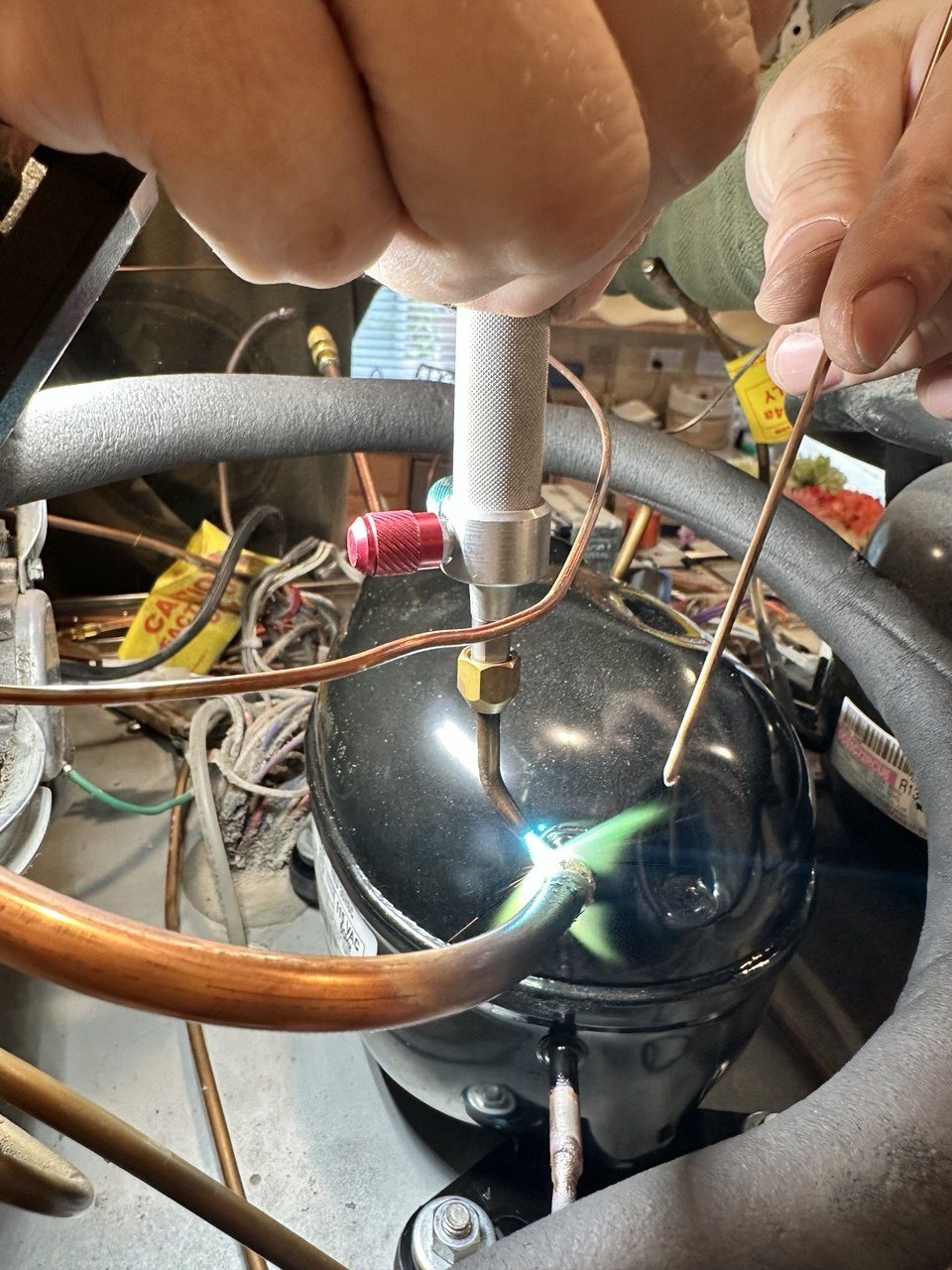
What Sealed-System Work Looks Like
FAQ
Short answers to the questions we hear most on commercial freezer calls are in the structured section above: why a freezer runs but stays warm, how cold it should hold, repair-versus-replace, chest-freezer icing, and our Tri-Valley response time.