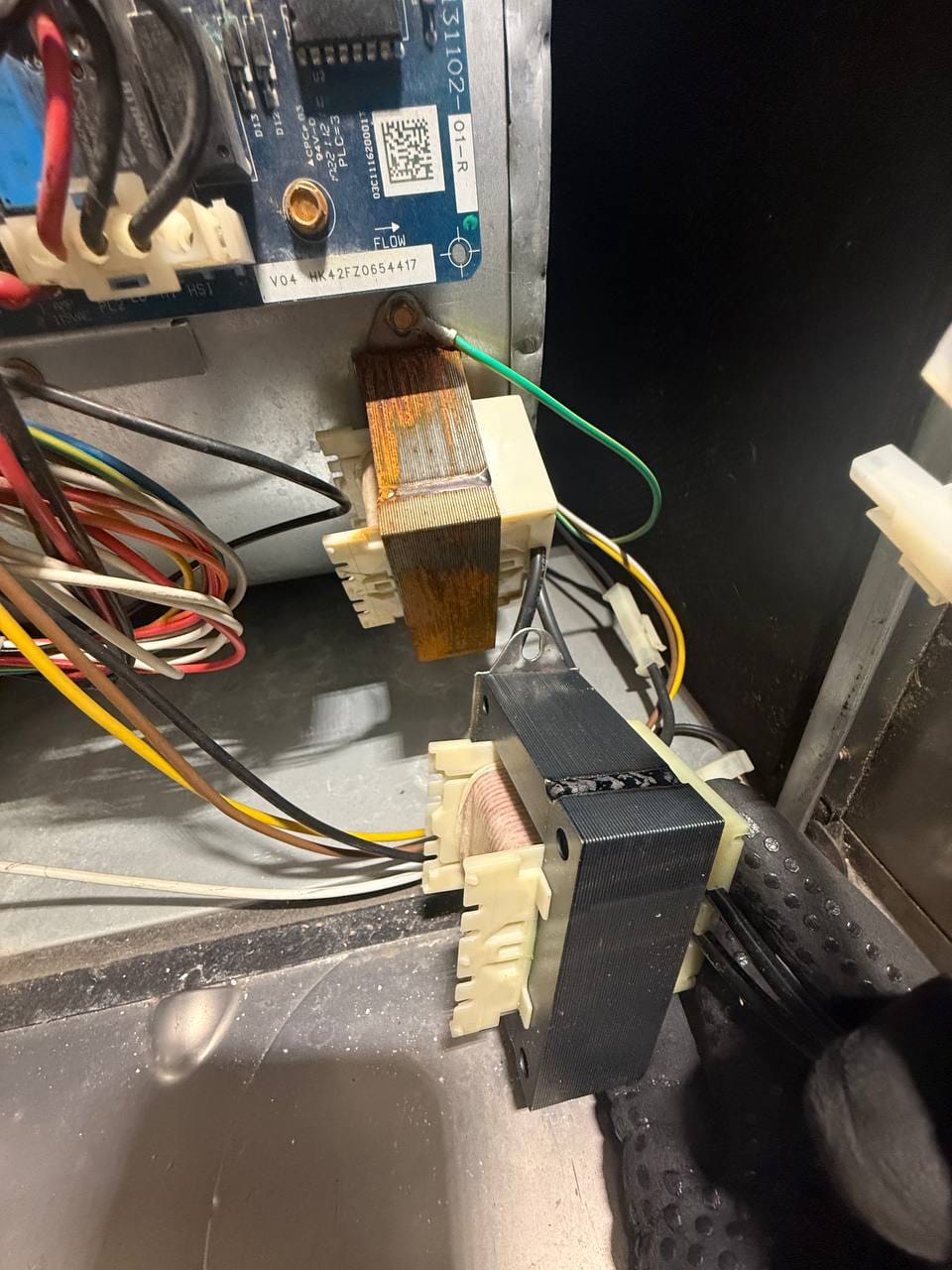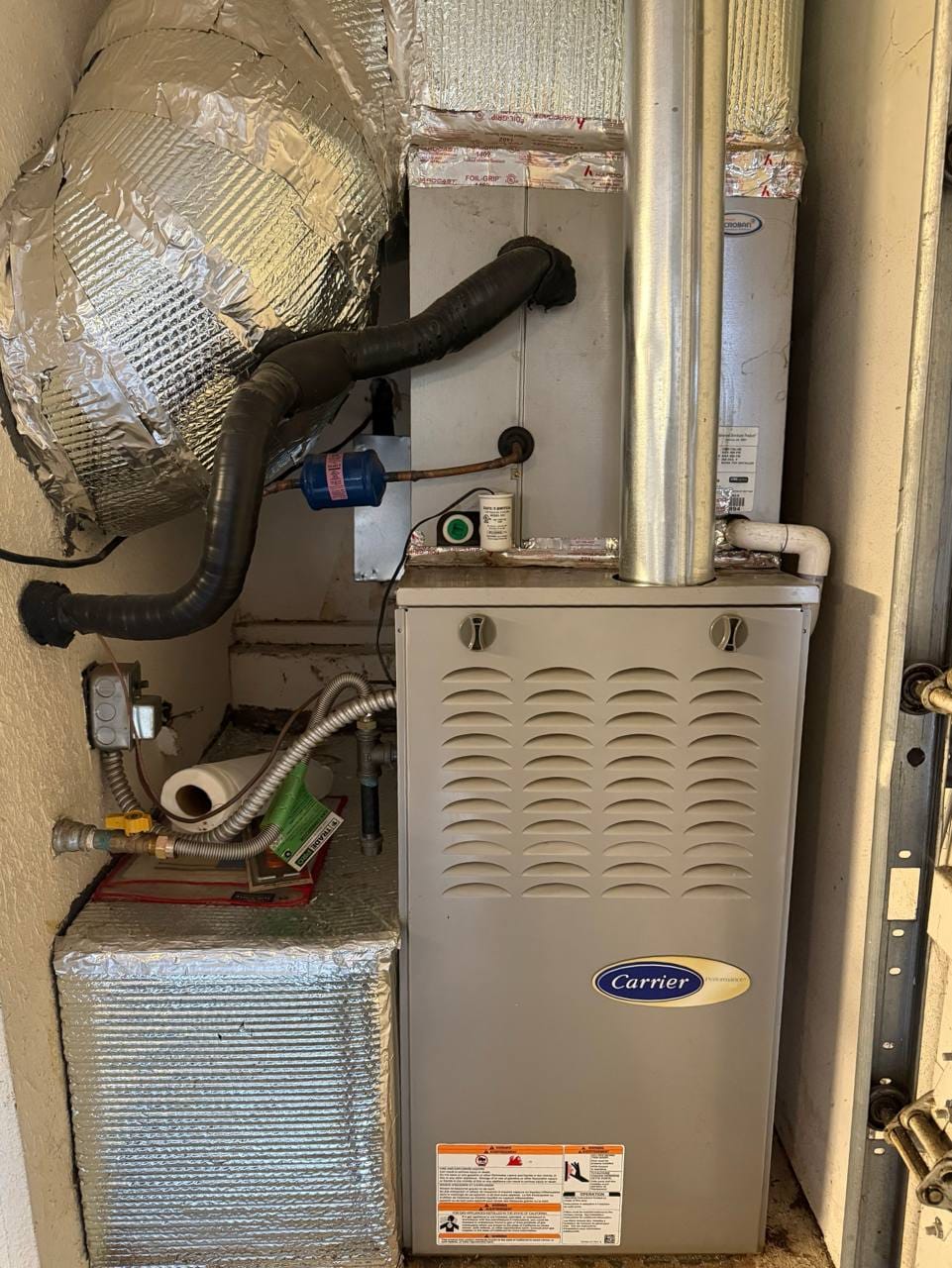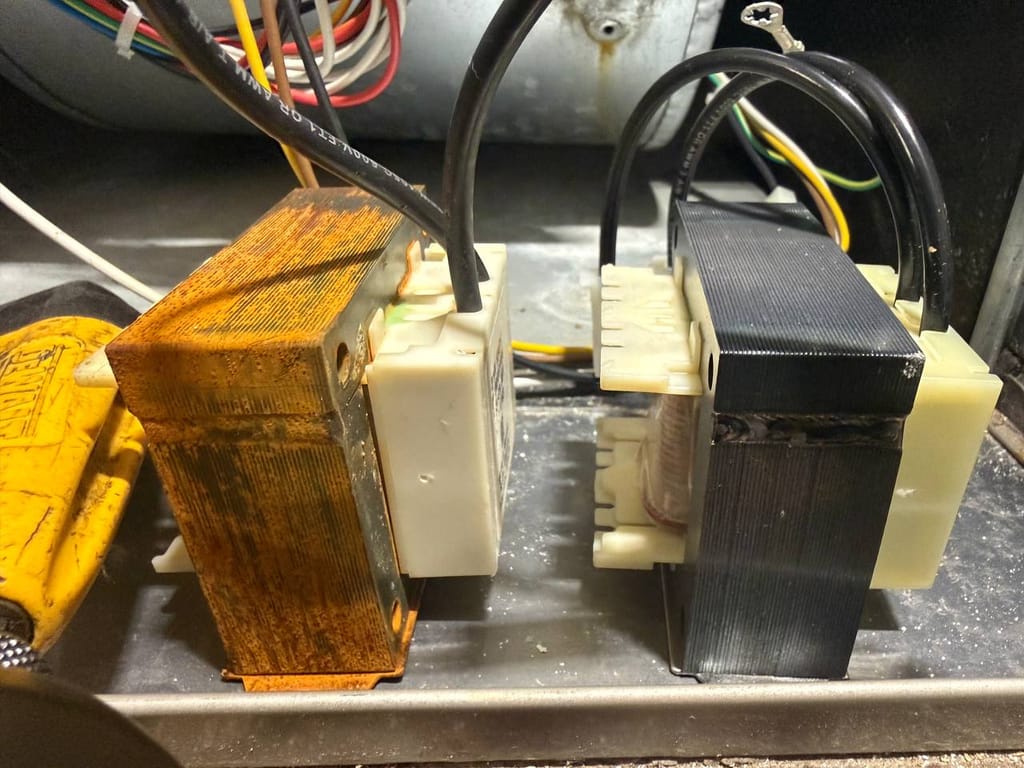
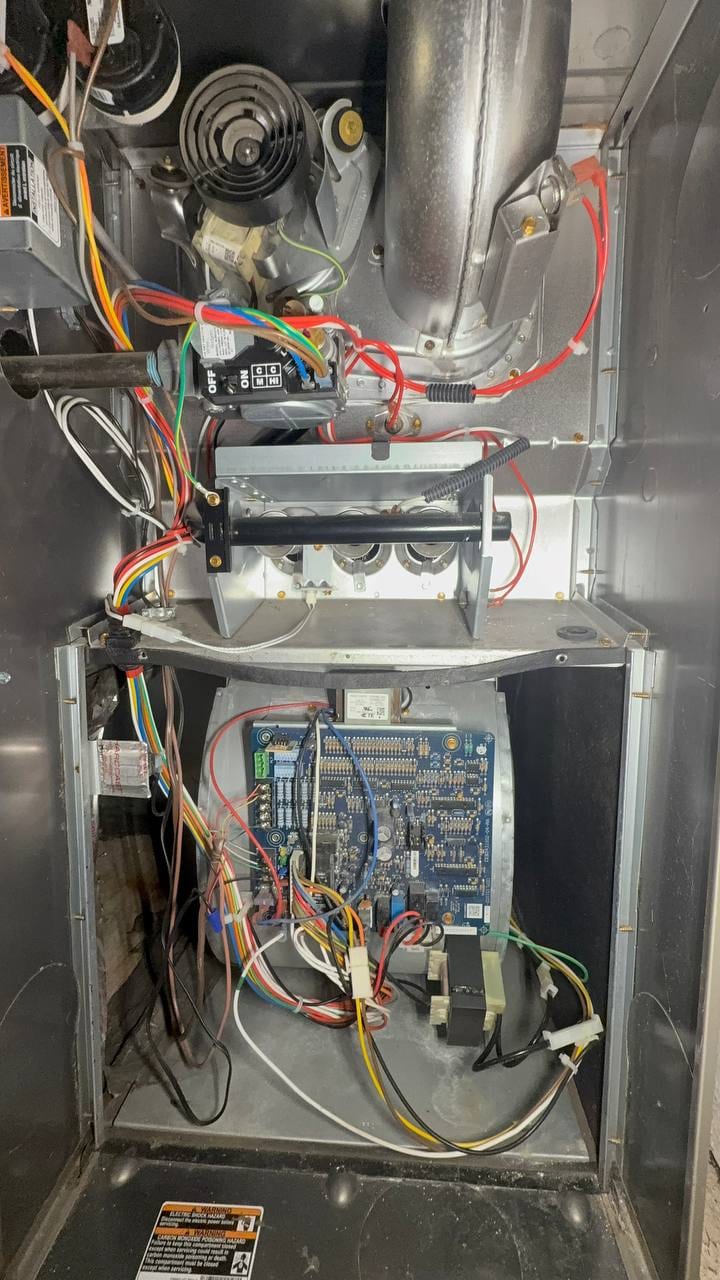
A homeowner off Castledown Road in Pleasanton called about a Carrier gas furnace that would not start cleanly. Some cycles it caught. Others it sat there and did nothing, and when it did fire it ran rough. They had owned the house ten years and told me straight the furnace had never once been serviced in that time. That is a long stretch to skip. Not rare, though, and I had a fair idea what I would find before I opened the cabinet.
Check these yourself first
Before calling anyone, run through these. They cost nothing and occasionally solve it.
- The furnace has its own wall switch nearby, and it looks like a light switch. Make sure it’s on.
- Check the breaker panel. A tripped breaker is common after a power flicker.
- Pull the filter and hold it up to the light. If you can’t see through it, replace it. A filter that far gone chokes airflow enough to trip a limit switch and shut the furnace down.
- Thermostat on Heat, not Cool, with the setpoint above room temperature.
If none of that gets it going, you are past the homeowner checklist. The rest of the diagnosis is inside the cabinet, in the venting, or in the control board.
Two faults had stacked on top of each other
The first was the ignition assembly. The contacts that handle ignition timing had rusted enough that the spark no longer fired reliably. That explains the random misses where one cycle lights and the next does nothing.
The second was in the exhaust. A decade of dust and an old insect nest had narrowed the flue and choked the draft. A furnace needs adequate draft before it will allow the burners to run, so on cycles where draft fell short, the pressure switch tripped and blocked ignition. Either fault alone would have produced the no-start the homeowner described. With both present, a clean light was nearly impossible.
Why these repairs are not a DIY job
Replacing the ignition component means working inside the furnace cabinet near the gas valve and installing a part with model-specific timing specs. A generic substitute runs out of spec and fails quickly, so a genuine Carrier part is the only sensible choice here. Clearing a blocked flue requires inspecting and cleaning the full vent run on the combustion gas side, which carries real safety risk if done incorrectly. Beyond that, a furnace that has gone ten years untouched rarely has just one thing aging, so a full system check (burner assembly, heat exchanger, blower, safety controls) is part of the work, not optional.
Getting the ignition timing wrong or leaving a partial blockage in the flue costs more to fix a second time than calling a tech costs the first time.
Why I ran it through several full cycles
A furnace that lights once for the tech proves nothing. I watched the draft, the pressure switch action, and the full ignition sequence across several complete heat cycles, cold start included, until I was satisfied the new part and the cleared flue were holding under real load. That is the difference between a furnace that lights for me and one that lights for the family at 6 AM in January.
On the maintenance question, since the homeowner asked: a ten-year gap on a modern gas furnace is not a death sentence. Most tolerate it. What changes is what a small repair can do for you. Caught at an annual tune-up, a rusted contact gets cleaned and a flue gets cleared as routine work. Caught at year ten with the furnace down, both get diagnosed cold at repair rates. Our HVAC maintenance plan keeps these failures from stacking.
Result
The Carrier is back to reliable startup and clean operation. Draft is restored, ignition timing is back to spec, and every safety control has been checked. The repair carries our 1-year parts and 1-year labor warranty. The homeowner had a written quote before I touched anything, and we credited the diagnostic fee toward the repair.
If your furnace in Pleasanton or the Tri-Valley is missing starts, short-cycling, or has not been serviced in years, call us. We’ll get you on the schedule fast, often same or next day when we can, and you will know the price before work begins. Schedule a furnace repair or call the number at the top of the page.