What the homeowner walked into
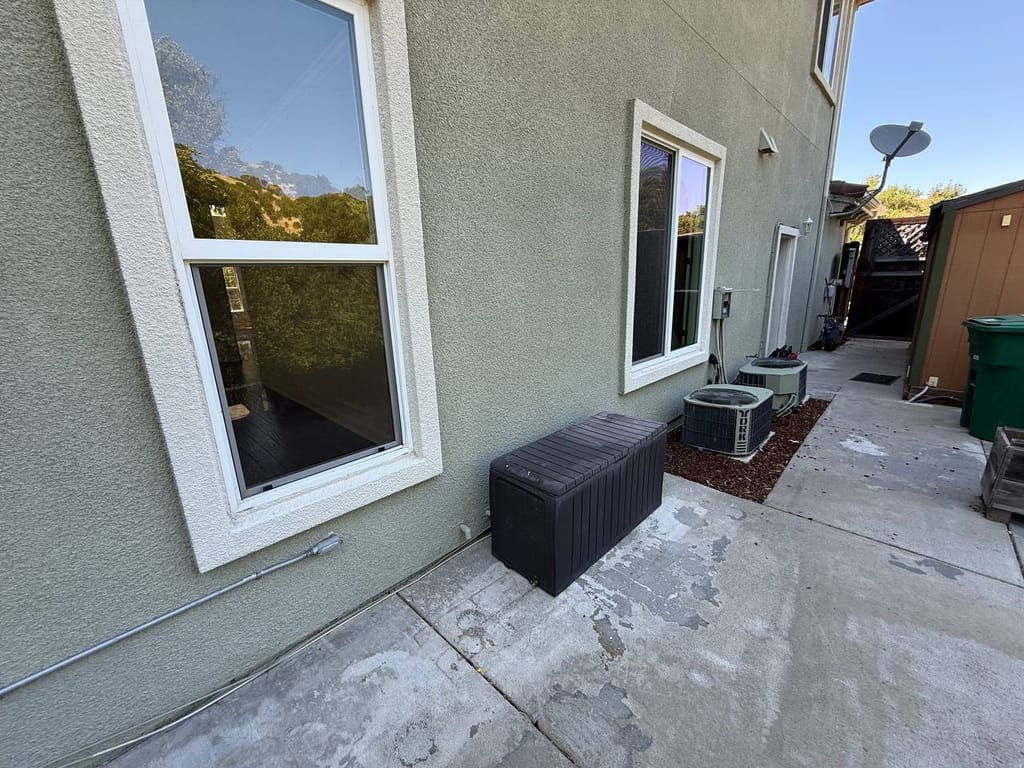
They had just bought the place in San Ramon and inherited two central air conditioners, one for downstairs and a second for upstairs. Both units were single-stage and both ran on R-22. They were also old enough that throwing parts at them no longer made sense. PG&E summer bills had been climbing year over year. On hot afternoons the upstairs unit had started short-cycling, which is the kind of thing that gets worse, not better.
The call came in as a quote to replace the AC. They also asked whether it was worth going further than a like-for-like swap.
Why heat pumps were the cheaper answer here
Our tech walked them through the math. The two-zone layout was already built for parallel equipment, so we did not have to touch the duct design. A right-sized heat pump also covers both heating and cooling off one system, which drops the operating cost against running two aging single-stage condensers and a separate furnace. Where utility rebates apply, we confirm what is actually paying when we write the estimate.
That is the part people miss. The efficient option and the cheaper option are not always the same equipment, and you only know which is which after you run the numbers for that house.
The equipment that went in
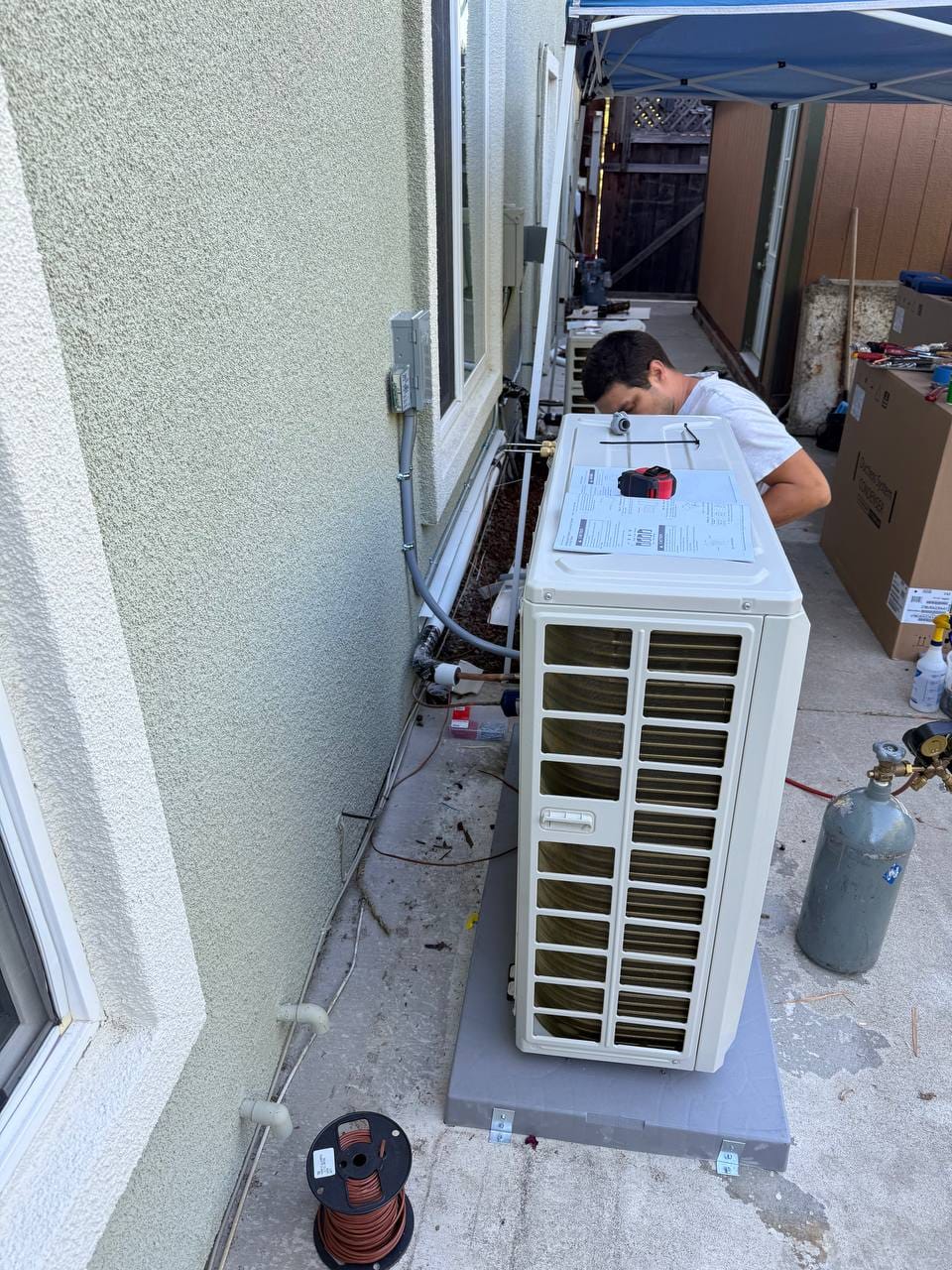
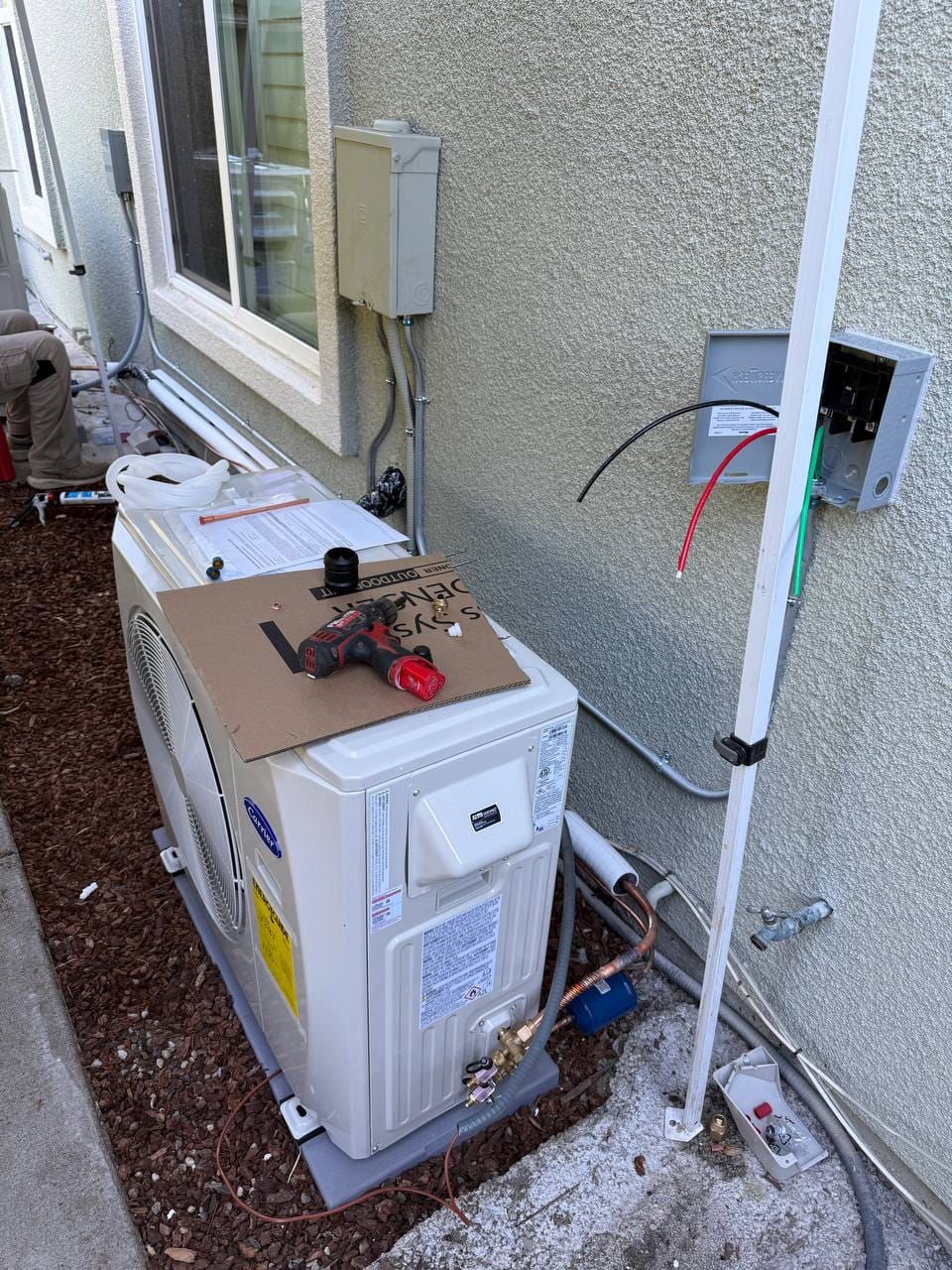
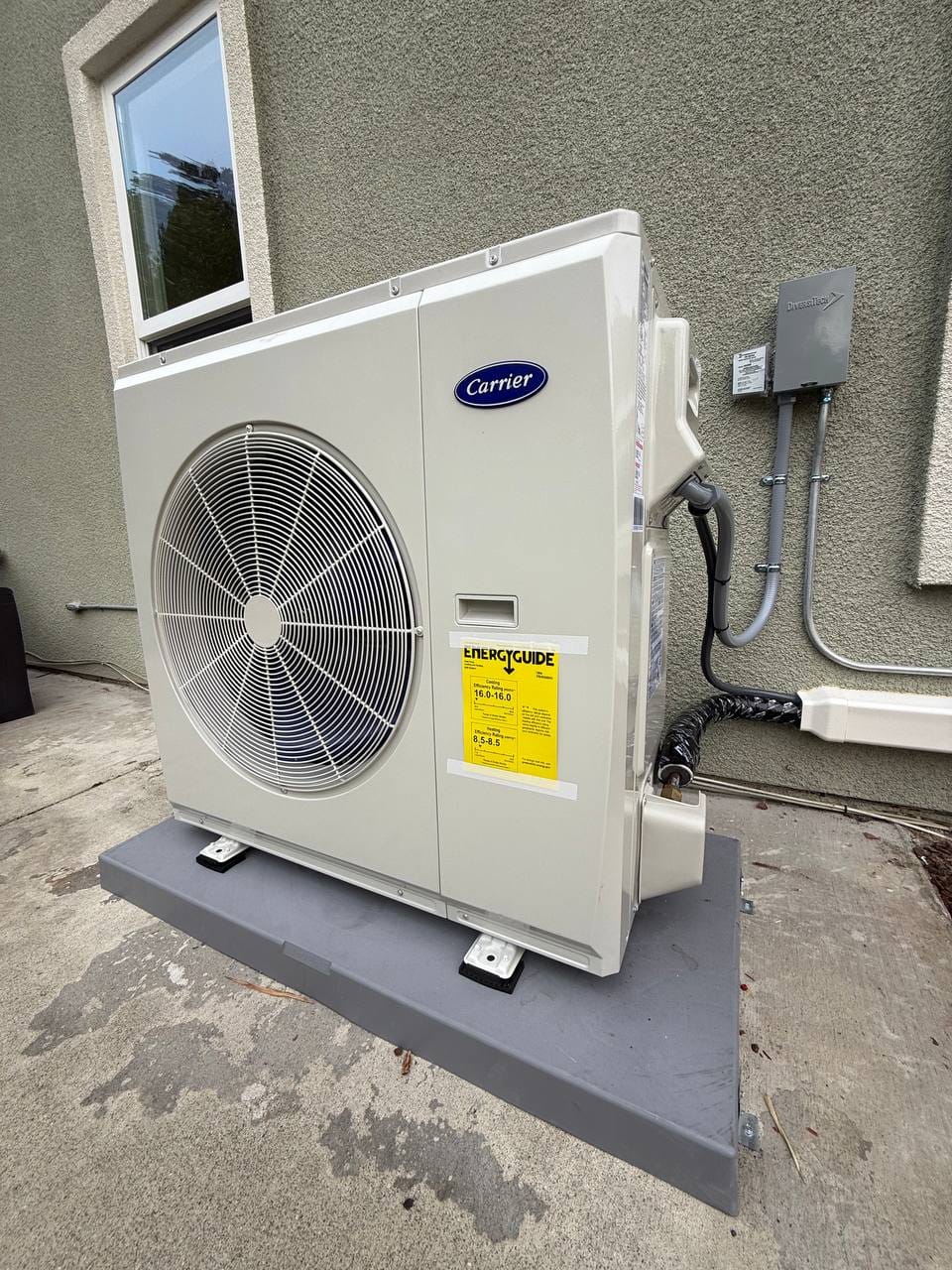
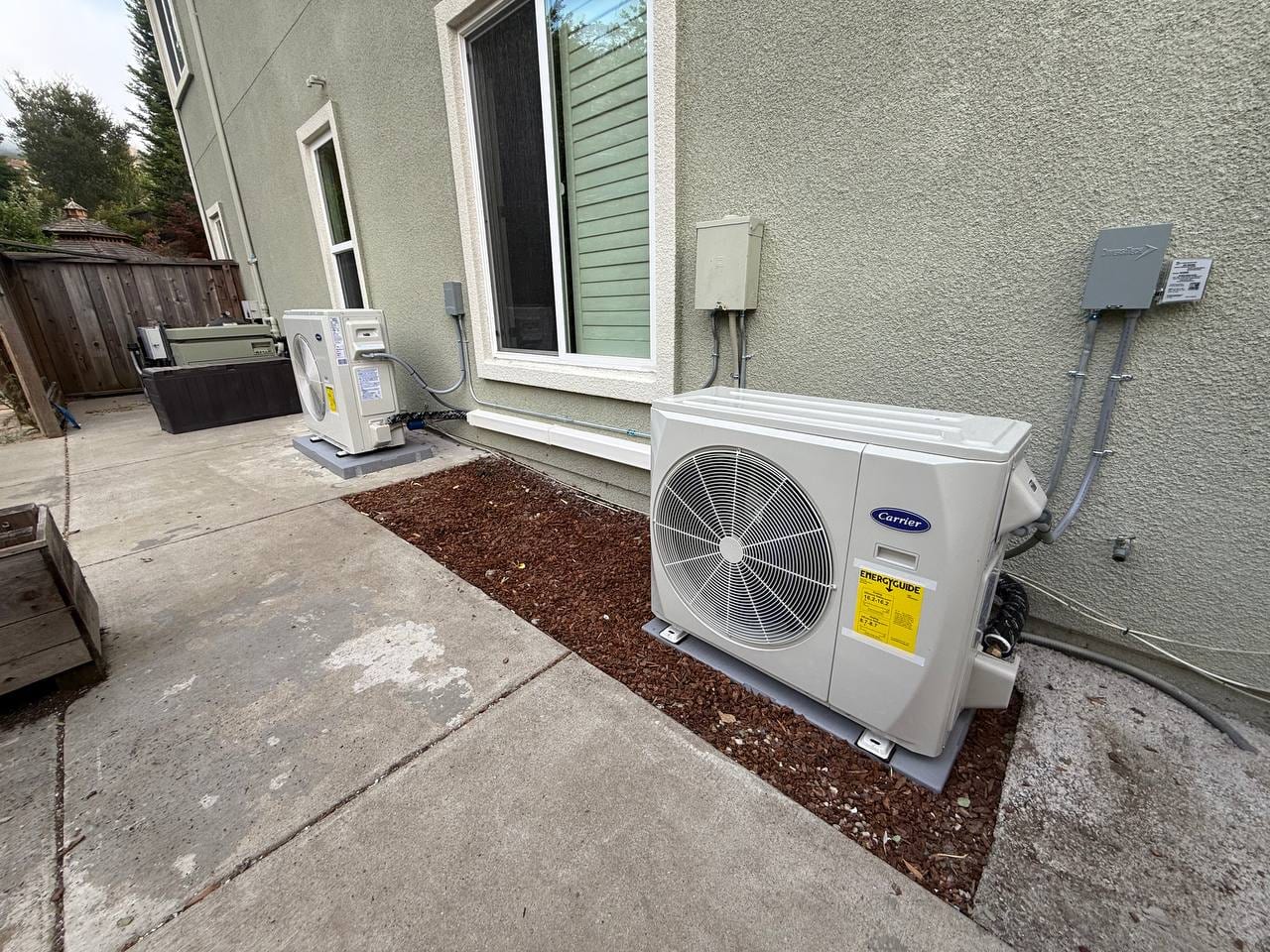
Two Carrier 19 SEER heat pumps carried the job, a 3-ton on the downstairs zone and a 4-ton upstairs. Each got a matched indoor air handler, factory-charged on R-454B. We pulled new refrigerant linesets rather than reuse the R-22 copper. We ran line-set covers over the outdoor runs because the original copper had been left bare against the stucco, and we set both condensers on new composite pads leveled on compacted gravel.
Each zone got a Google Nest 4th-generation thermostat, and this is where the configuration matters more than the hardware. We set heat-pump-aware staging at install so the system leans on the compressor and does not jump to resistance backup on a mild evening. Skip that step and the homeowner pays for electric strip heat they did not need. We also updated the high-voltage disconnects on both condensers and added surge protection.
The detail that made it stick
A two-system install reads like “do one, then do the other.” It is not. The disconnects, the refrigerant lines, and the thermostat wiring for both zones share the same chase through the wall. Touch one and you are working inside both.
So we staged it as a single coordinated pass. Both old units came out the same morning. Both new condensers went onto their pads by the afternoon, with the lineset and electrical work running as one operation instead of two separate trips. That dropped the customer’s no-cooling window from a likely two days to one afternoon, and it kept the wall openings to a single open-and-close instead of two rounds of patch and paint. If you are collecting bids on a multi-system job, ask whether it is staged as one pass or two visits. You will see the difference in the wall finish and in how long you sit without cooling.
How it held up
Both systems came up that same evening, set for heat-pump-priority operation. The real test was the following week when temperatures hit the high 90s. Both zones held setpoint, and neither unit had to stage up to its top compressor speed. That tells me the 19 SEER capacity is sized comfortably for the load and not stretched thin.
The equipment carries a 10-year parts warranty, plus a labor warranty (2 years standard, extended to 10 years with our maintenance plan), on our installation, subject to your contract terms, plus the Carrier factory warranty.
If your system is short-cycling, running R-22, or you’re just not sure whether a heat pump swap pencils out for your house, call us. We’ll size it, run the rebate numbers for your territory, and give you a straight answer on whether the job makes sense before you commit to anything. We’ll get you on the schedule fast, often same or next day when we can.