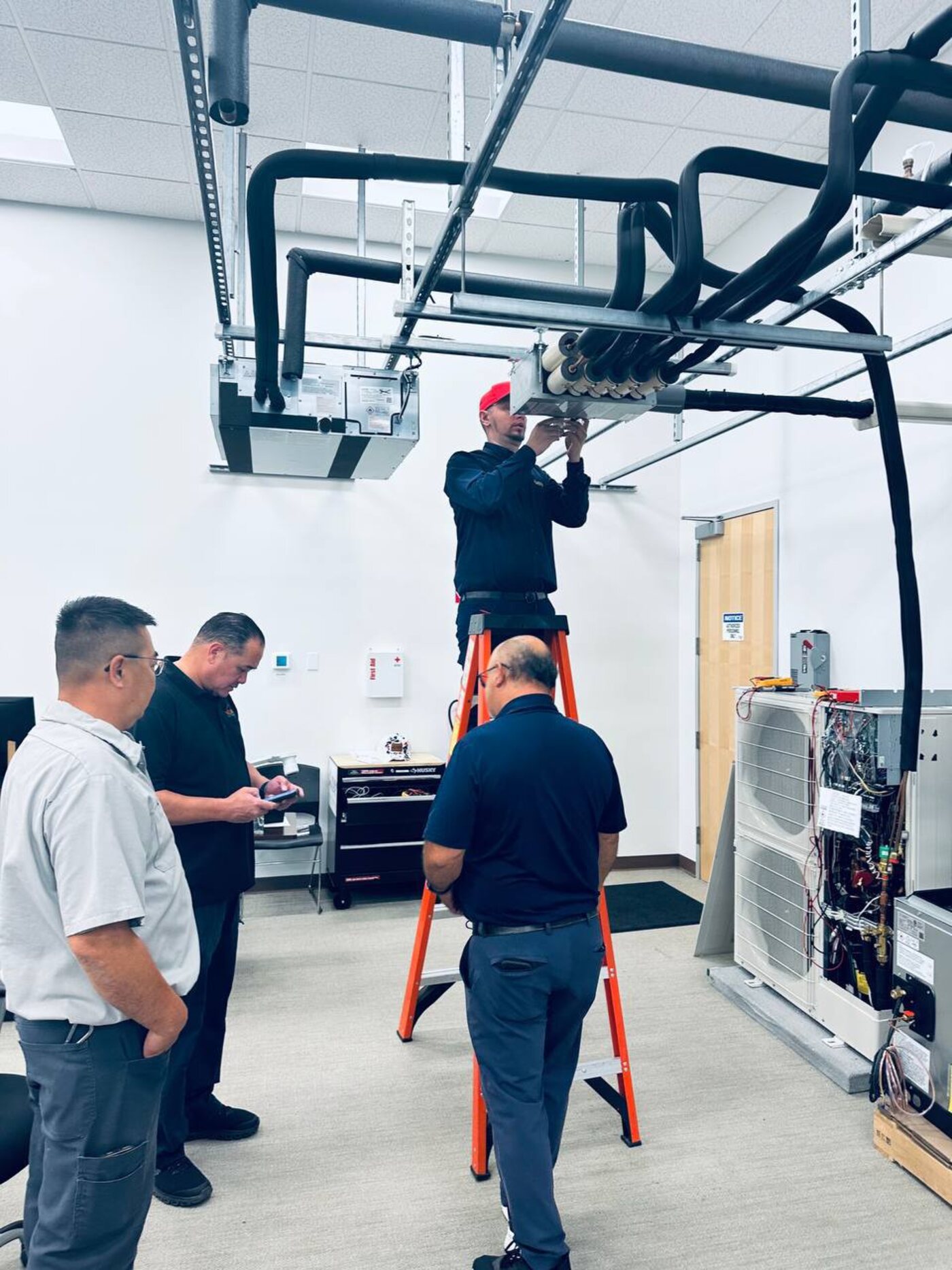
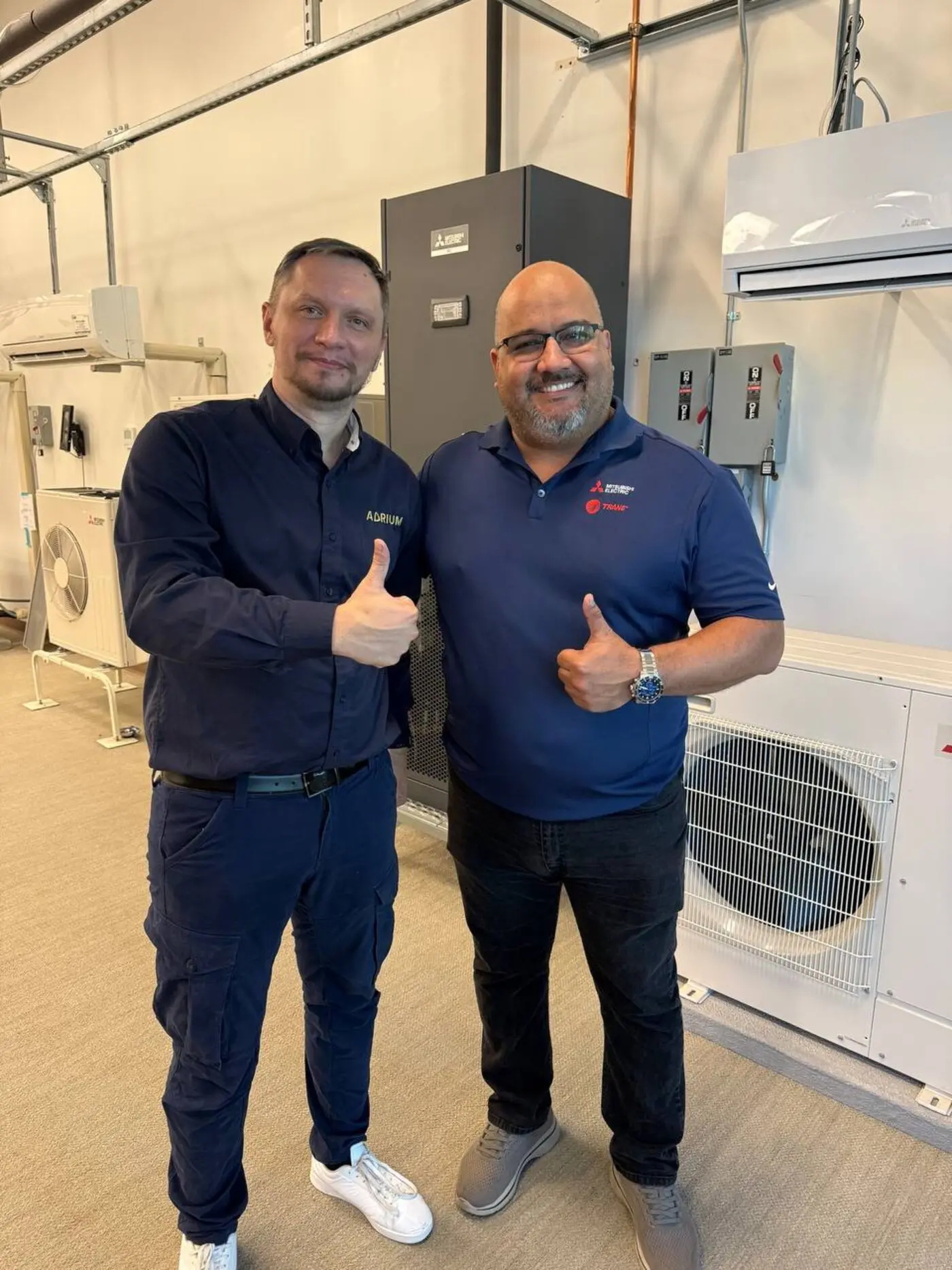
Last week our owner, Andrew Kuznetsov, was in a Los Angeles classroom and shop bay instead of out on Bay Area calls. He spent it at the Mitsubishi Electric factory training center finishing the Advanced M- and P-Series Service course. The certificate is dated June 24, 2026. It builds on the M- and P-Series Essentials class he completed back in May.
I want to be straight about what that means and what it doesn’t, because there’s a lot of loose talk in this trade about certifications.
What the training was
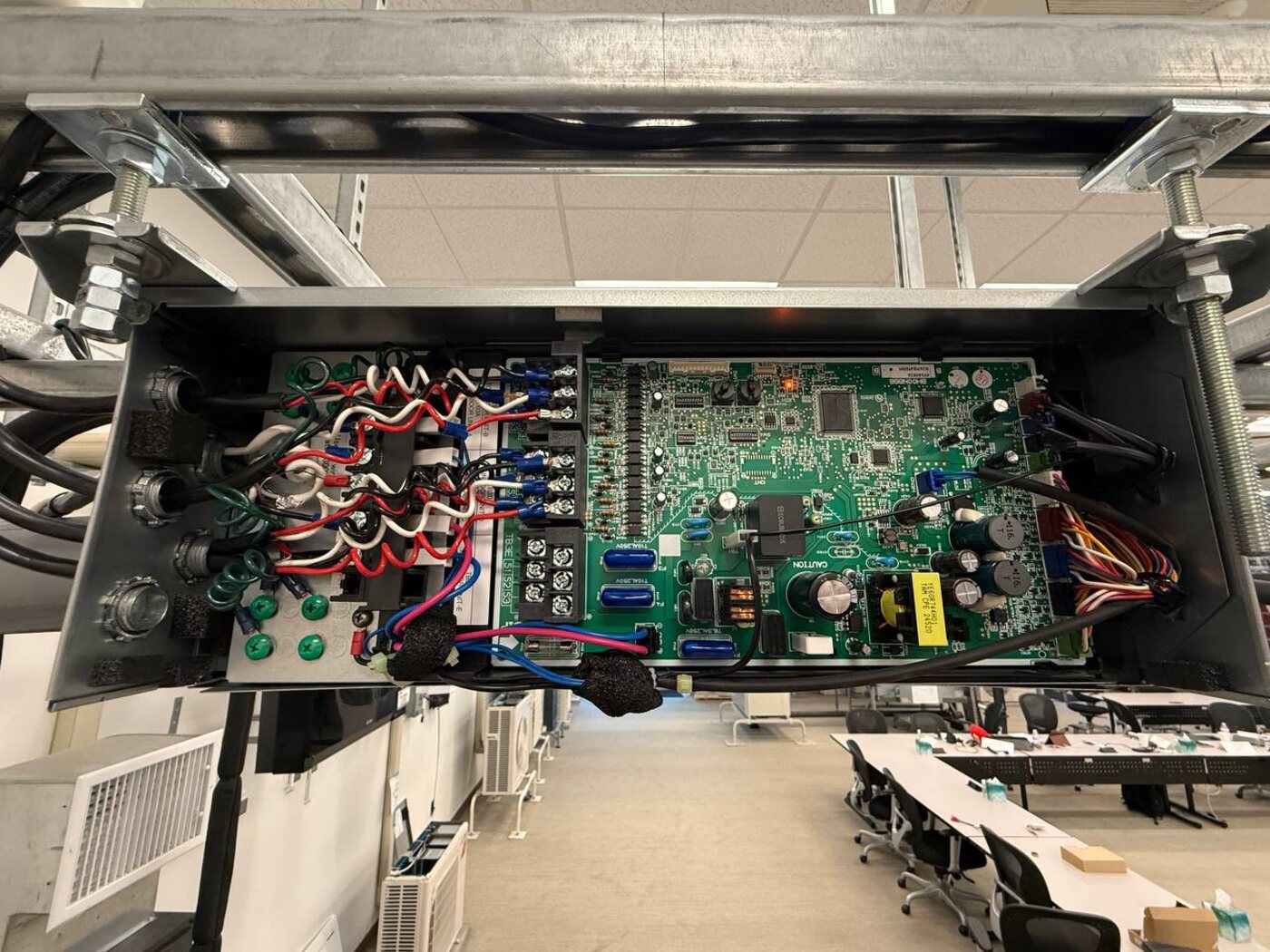
This wasn’t a webinar. It was hands-on time with the actual hardware: inverter control boards, multi-zone branch boxes, and ceiling cassettes pulled apart on the bench. The Essentials course in May covered the fundamentals of how M-Series and P-Series systems are built and how they’re supposed to run. The Advanced course went deeper into service and diagnosis, the part that matters when a system is acting up and you have to figure out why.
If you’ve owned a Mitsubishi ductless system, you know they’re not like an old furnace and a single-stage condenser. They’re inverter-driven. The compressor and fans ramp up and down instead of just clicking on and off, the boards are doing real computation, and a multi-zone setup routes refrigerant through a branch box to each indoor head. There’s more going on, which means there’s more that can go wrong in ways that aren’t obvious from the outside.
Why factory training changes the diagnosis
Here’s the honest difference between a trained Mitsubishi tech and someone winging it.
When one of these systems faults, it tells you something. The board logs fault codes and holds onto data about what the sensors, the compressor, and the electronics were doing when the problem hit. A tech who knows the platform can read that, follow it back to the real cause, and fix the right thing the first time.
A tech who doesn’t know the platform tends to guess. They start swapping parts, a board here, a sensor there, billing you for each one until the symptom goes away. That’s expensive, it’s slow, and sometimes it never actually solves the underlying problem because the replaced part was never the issue.
Reading fault codes instead of guessing is the whole point of the training. It’s the difference between “we think it’s the board” and “the code and the readings point to this specific failure, here’s what it costs to fix.”
The same goes for the cold-weather behavior. Mitsubishi’s Hyper-Heat (H2i) systems are designed to keep putting out heat when it’s genuinely cold out, and they run defrost cycles and modulate in ways that can look like a fault if you don’t understand them. We’ve seen people get talked into a repair for something that was just the system doing exactly what it’s built to do. Knowing normal behavior is half of knowing when something’s actually broken.
What we are, and what we’re not
We are factory-trained on Mitsubishi M- and P-Series. That’s a real, documented thing, and we’re proud of it.
Update, October 2026: ADRIUM is now a Mitsubishi Electric Diamond Contractor. Diamond Contractor is a separate Mitsubishi Electric program with its own requirements, and we earned it after this training. As a Mitsubishi Electric Diamond Contractor, ADRIUM registers your M-Series or P-Series system for the Mitsubishi Electric 12-year parts and 12-year compressor limited warranty (the MSZ-HM, WR, HX and WX wall-mounted series top out at 10 years), plus a 2-year workmanship warranty. If you ever see us claim elite, authorized, or preferred status beyond that, call us on it.
That matters because the words get thrown around carelessly. “Certified,” “authorized,” “factory” all start to blur together in advertising. So, plainly: we hold Mitsubishi factory training certificates (Essentials and Advanced M- and P-Series Service). We are also a Mitsubishi Electric Diamond Contractor. Those are two different things and we keep them separate.
What we work on
The training covered the equipment we actually see in Bay Area homes:
- M-Series single-zone ductless mini-splits
- MXZ multi-zone systems with branch-box distribution
- P-Series equipment
- Hyper-Heat (H2i) cold-climate heat pumps
- Ceiling cassettes and concealed-duct air handlers
Whether your Mitsubishi system needs a diagnosis, a repair, or you’re thinking about a new install, this is the equipment we know.
How we handle a service call
Nothing fancy here, just how we run it.
A diagnostic visit is $99, and we credit that toward the repair if you go ahead with us. You get a written estimate before any work starts, so you decide with the number in front of you. We register Mitsubishi Electric M-Series and P-Series systems for the 12-year limited warranty on parts and compressor (the MSZ-HM, WR, HX and WX wall-mounted series top out at 10 years). Our labor coverage is 2 years.
ADRIUM Service Solutions is based in San Ramon. Andrew started the company in 2021, we’re licensed under CSLB #1136642, and we’re EPA 608 certified for refrigerant work. Our HVAC work runs through our Bay Area HVAC Service division.
If your Mitsubishi mini-split is throwing a code, short-cycling, not heating the way it should, or you just want someone who actually knows the platform to look at it, give us a call. We’ll read the system, tell you what’s really going on, and put the price in writing first.