
An ice maker that quit is one of the common appliance calls we get across the Bay Area. A handful of them come down to something simple you can rule out in a few minutes. Once you’re past those, it’s component work, and that’s where a tech saves you money compared to guessing at parts.
Start With the Quick Checks
Rule out the obvious before assuming the worst. These four account for a big share of the no-ice calls we run.
The shut-off arm or switch is off. Most ice makers have a wire arm that swings up to stop production when the bin is full. It gets bumped off constantly, especially when someone reaches into the freezer. Make sure it’s down. If your unit has a power switch instead, confirm it’s on.
The water filter is overdue. A clogged filter chokes the flow the ice maker needs. Filters are rated for roughly six months. If you can’t remember the last swap, that’s a likely culprit.
The water line is frozen. The thin fill tube that feeds the ice maker can freeze solid, usually because the freezer is running too cold or airflow is restricted. A frozen line stops water completely. If you suspect this, it’s worth a call, because a recurring frozen line points to a temperature or airflow problem that needs diagnosing at the source.
The freezer is too warm. Ice makers need the freezer around 0 to 5 degrees Fahrenheit to cycle. If it’s drifted up to 15 or 20 degrees, the harvest never triggers. Check the setting and make sure the door seals fully and nothing is blocking the vents.
If one of those was the problem, give the unit 12 to 24 hours before you judge the fix. The fill-freeze-harvest cycle is slow. Most units drop a fresh batch within a day.
When It’s a Component
Once the quick checks come up clean, you’re into part territory. These are the failures we see often:
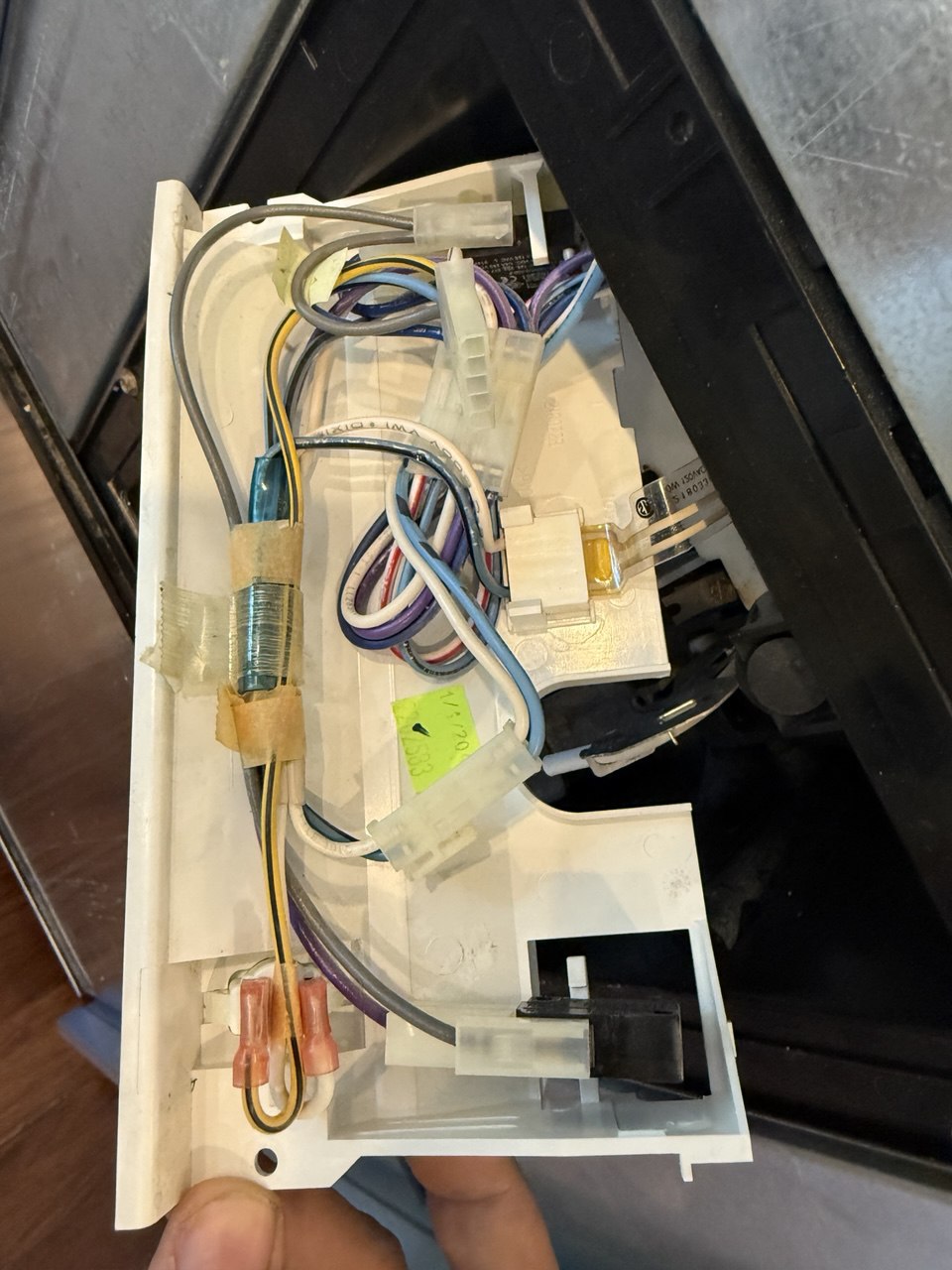
Water inlet valve. This electrically controlled valve opens to let water into the ice maker. When it fails, you get no fill, weak fill, or a slow drip into the freezer. Diagnosing it means checking voltage and resistance at the solenoid, which requires a meter and the right know-how to read the result safely.
Ice maker module or motor. The module runs the harvest cycle, ejects the cubes, and signals for the next fill. A dead module produces nothing even when water supply and temperature are both fine. It’s a defined replacement part, but getting to it means disassembling the ice maker cavity.
Thermostat or sensor. If the unit can’t confirm the ice is frozen, it never ejects. Misreads show up as no harvest or as the maker dumping water into the tray before it freezes solid.
Control board. Less common, and the last thing we check because it’s the priciest component and the rarest cause.
A Water Inlet Valve, On Camera
When to Call Us
If you’ve run the four checks and still no ice after 24 hours, the problem is electrical or mechanical. Testing a valve means live voltage. Replacing a module means opening the ice maker cavity. Order the wrong part and you’re out the cost with the problem still there. That’s the pattern we see when people try to DIY past the quick checks.
Our diagnostic is $99, credited toward the repair when you book it. You get a written estimate before we touch anything beyond the diagnosis. We work across the Bay Area and get you on the schedule fast, often same or next day when we can.
We also run brand-specific ice maker calls regularly. If you’re on a particular make, these go deeper: GE ice makers, Samsung ice makers, LG ice makers, and Frigidaire ice makers. For the broader unit, our refrigeration repair page covers everything we service.
For restaurants and cafes: a freestanding or under-counter commercial ice machine is a different animal with its own diagnostics. That work lives on our commercial ice machine repair page.
Get It Fixed
Call ADRIUM Service Solutions at (925) 999-4095 or email welcome@adriumservice.com. We’ve been servicing appliances across the Bay Area since 2021. You can also book through our contact page.
FAQ
Why did my ice maker suddenly stop making ice? Usually a frozen water line, the shut-off arm flipped off, an overdue filter, or a freezer running too warm to cycle. Check the arm and the filter first.
How long before it works again after a fix? Give it 12 to 24 hours. The fill-freeze-harvest cycle is slow, and most units drop a fresh batch within a day.
Repair the module or replace the fridge? If the refrigerator is under 10 years old and otherwise healthy, repairing just the ice maker is almost always the better call.