A freezer that stops freezing rarely dies all at once. Most of the time it keeps running, the light comes on, the compressor hums, but the ice cream goes soft and the meat starts to thaw. That “running but warm” state is the most common freezer call we get across the Bay Area, and the cause depends a lot on which kind of freezer you own.
Chest, Upright, and Deep: They Fail Differently
A chest freezer is the simplest. One compressor, one set of coils, a manual-defrost interior, and a lid gasket. When it stops freezing, the problem is almost always mechanical: the seal, the coils, the thermostat, or the sealed system.
An upright freezer is usually frost-free, which means it has a defrost heater, a defrost thermostat, and a timer or control board that runs a melt cycle every several hours. That extra system gives you more things that can fail, and a stuck defrost cycle is a frequent cause of a slowly warming upright.
A deep freezer is just a chest or upright sized for bulk storage. It fails the same ways, but because so many of them live in hot garages, dirty condenser coils take them down faster in summer.
What to Check Before You Call
These are the first things our techs ask about. Rule them out in five minutes.
-
The seal. Close the lid or door on a dollar bill. If it slides out with no drag, the gasket is worn and warm air is leaking in. That’s a repair call.
-
The condenser coils. Pull the unit out and look at the back or underside. Coils packed with dust and pet hair can’t shed heat, so the freezer loses capacity. Vacuum them off and give it 24 hours to recover.
-
Airflow. On an upright, make sure food isn’t jammed against the rear vents. Blocked vents starve the upper shelves of cold air.
-
The plug and breaker. Confirm it’s on its own outlet and not sharing a circuit that keeps tripping. A freezer cycling on a marginal circuit can mimic a real failure.
-
The thermostat setting. Sounds obvious, but a bumped dial in a garage or a kid who turned it down happens more than you’d think.
If all of that checks out and it’s still warm after a day, something deeper has failed and it needs a tech.
When to Call (and What a Tech Does)
Some failures aren’t safe or practical to chase at home:
-
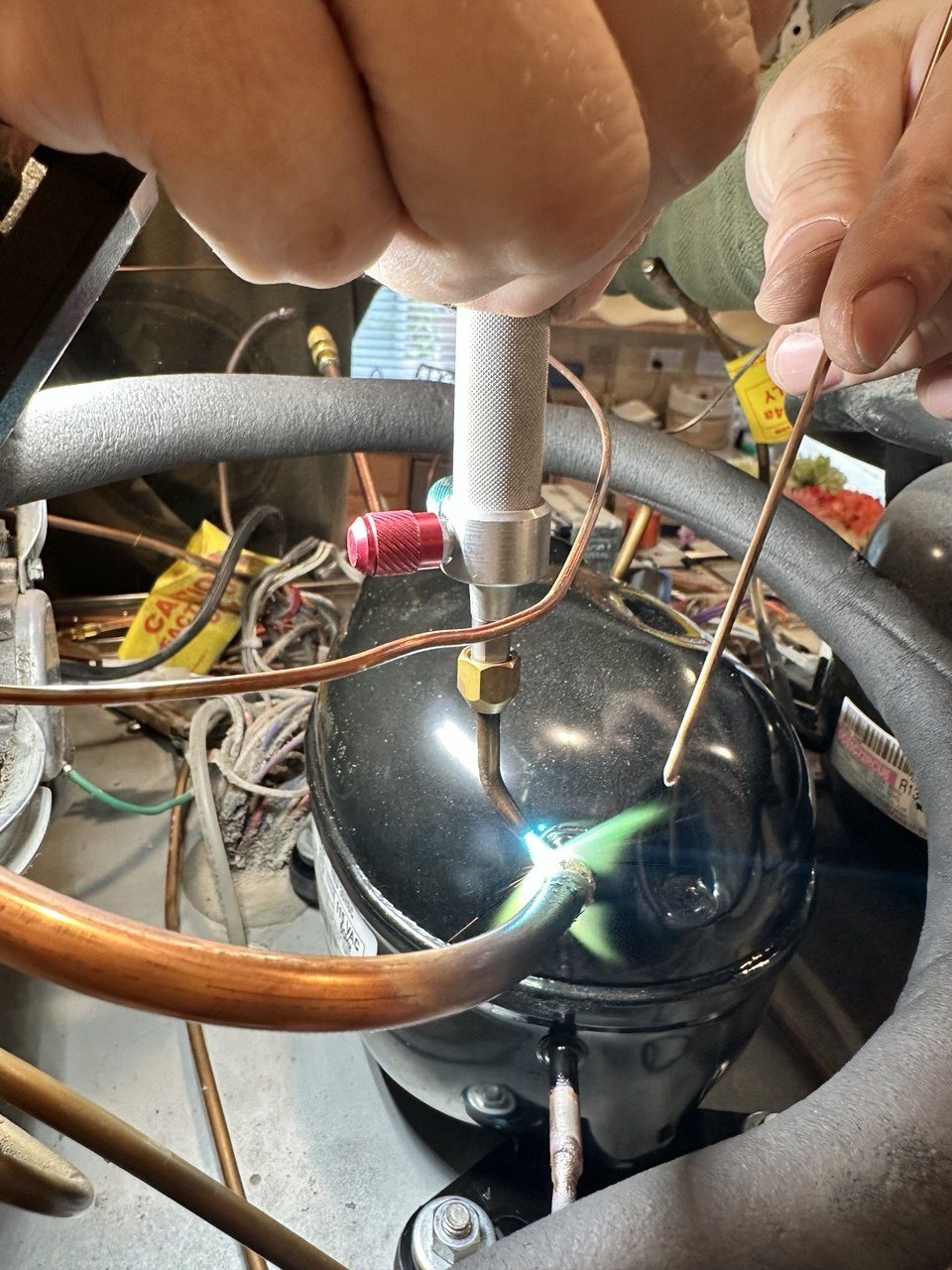
The compressor is hot but the freezer is warm. That points to a start relay, a sealed-system leak, or a failing compressor. Sealed-system work requires EPA-certified refrigerant handling (our techs carry EPA certification #1279674151528), specialized gauges, and a vacuum pump. Not a DIY job, and doing it wrong can make the repair cost double.
-
Frost building up unevenly, or a sheet of ice on the back wall of a frost-free upright. That’s a failed defrost heater or defrost thermostat. A tech has to remove the interior liner panels to access and test the circuit, then swap the component. It’s the kind of job that looks simple in a video and turns into a parts-order situation if you don’t know the model.
-
A burning smell or a compressor that clicks on and off every few seconds. Unplug it and call.
We’ll diagnose the exact cause, show you the part and its cost, and give you a written estimate before any wrench work. The diagnostic is $99, and we credit it to the repair when you book the job. If the unit is old and the fix is a sealed-system repair that costs more than half a replacement, we’ll tell you straight to replace it instead.
For more on the math behind that call, see our guide on repair or replace. If the freezer is part of a fridge-freezer combo that’s also failing, our refrigeration repair page covers sealed-system work in detail.
Call Us
ADRIUM has been fixing residential freezers across the Bay Area since 2021. Licensed (CSLB #1136642), BEAR-registered (#50788), BBB A+ rated. If your chest, upright, or deep freezer has gone warm, call (925) 999-4095 or email welcome@adriumservice.com and we’ll get you on the schedule fast, often same or next day when we can. You can also book a service visit here.
What Sealed-System Work Looks Like