
A burner that stays cold mid-dinner is one of the more common electric-range calls we get across the Bay Area. The problem is usually one of four parts, and a simple test narrows it down fast.
The Swap Test
Let the stove cool completely. Pull the dead coil straight out of its socket and plug a working coil of the same size into that same socket. Turn it on.
- If the good coil heats there, the original coil is the problem.
- If the good coil stays cold too, the fault is in the socket, the switch, or the wiring behind it.
That test tells you which direction the problem lies. What you do with that information is where it gets technical.
The Four Things That Kill a Burner
The coil element. Spills, age, and heat cycling all take a toll. A coil with a visible break, a blister, or a bubble in the sheath is done.
The receptacle (burner socket). This is the block the coil prongs slide into. Arcing and repeated heat cycling scorch the contacts. Browning, melted plastic, pitting, or corrosion in that socket are reasons to stop using the burner now. A burnt receptacle damages the coil and the wiring behind it, and the situation gets worse the longer it runs.
The infinite switch. The knob control that pulses the element on and off to hold temperature. If the burner only works on some settings, never gets fully hot, or the coil and socket both test clean, the switch is the likely culprit. Replacing it means disassembling the cooktop and working around 240-volt terminals.
The wiring or terminal block. Less common, but a loose or burnt connection behind the receptacle mimics a dead switch. Finding it requires a multimeter and knowing where to probe safely.
Is the Cycling Normal?
On low and medium settings, the infinite switch cycles the element on and off to average out the heat. That rhythmic pulsing is normal. It is only a fault when the burner does it on the highest setting or never reaches full heat.
Coil vs. Smooth Top
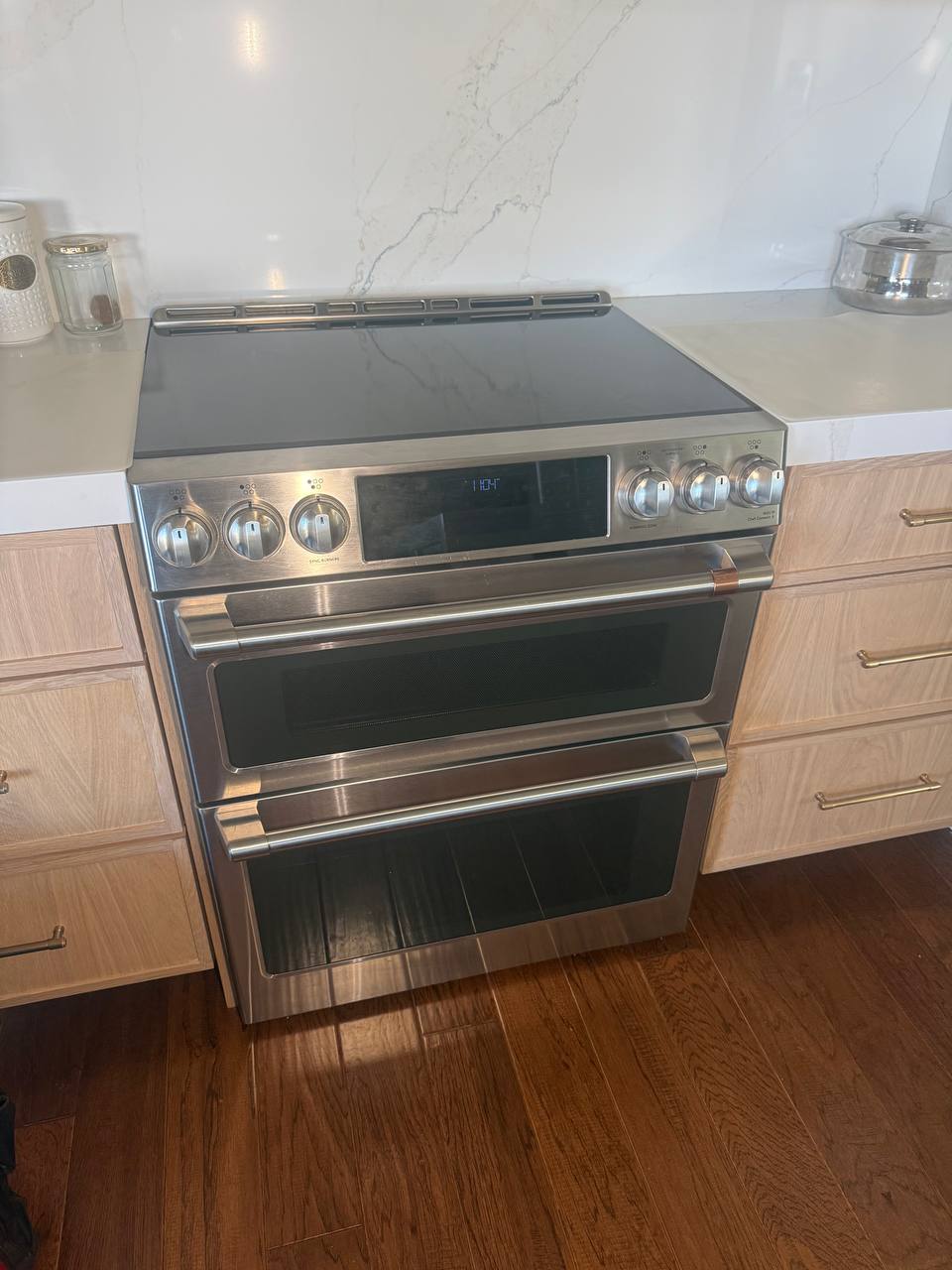
On a smooth-top radiant range the element sits under the glass, bolted to 240-volt terminals. Getting to it means lifting the glass. A failed radiant element, cracked glass, or a bad control board is always a pro job. For a broader look at range types and what their repairs involve, see our oven and stove repair guide.
When to Call Us
If the swap test shows the socket is dead, call. If you see any scorching or melting at the receptacle, stop using that burner and call. Anything involving the receptacle, the switch, the terminal block, or smooth-top elements means 240-volt wiring. Getting it wrong can damage insulation, trip breakers, or create a hazard that costs more to fix later. These are not jobs where guessing is a good plan.
Our cooking appliance repair service covers all of it. We diagnose the socket, switch, and wiring, give you a written estimate before any work starts, and fix it right. Call ADRIUM at (925) 999-4095 or email welcome@adriumservice.com. The $99 diagnostic is credited toward the repair when you book it. You can also reach us through our contact page.