Condition Assessment · Purchase Due Diligence

Baskin-Robbins
Union City

Refrigeration, walk-in freezer and rooftop HVAC

Prepared for Raheem Panjwani
32232 Dyer St, Union City, CA 94587
Inspection dates: October 14 and October 16, 2026

What matters most

01

Rooftop HVAC warrants a replacement assessment

HVAC 1 cools below expectations and does not heat. HVAC 2 starts in both modes, but damaged condenser fins and dirty filters prevent a satisfactory performance assessment. Consider replacement of both units after repair-versus-replacement review.

02

Walk-in enclosure needs specialist investigation

Heavy interior ice, wet line insulation and staining suggest air or moisture infiltration. Concealed panel damage remains suspected. Evaluate sealing, insulation and the enclosure before deciding whether repairs or a rebuild are needed.

03

Unit 7 needs priority temperature verification

Clean the condenser, replace the door gasket, then verify stabilized compartment and product temperatures with a calibrated probe.

Most appliance findings are maintenance-related: coil/filter cleaning, selected gasket replacement and consistent manual defrosting.

Inspection scope and evidence

October 14, 2026. Part 1: ten commercial appliances, comprising refrigeration equipment and one ice maker. Condition assessment and preventive maintenance inspection.

October 16, 2026. Part 2: walk-in freezer and rooftop equipment, including two HVAC package units. Roof access allowed inspection of the walk-in condensing unit and exposed refrigerant lines.

86
Original photographs
52
Appliance photos
20
Walk-in photos
8
HVAC 1 photos
6
HVAC 2 photos
Unit 01 · Turbo Air freezer Unit 02 · Oscartek display case Unit 03 · C. Nelson dipping cabinet Unit 04 · C. Nelson dipping cabinet Unit 05 · C. Nelson dipping cabinet Unit 06 · Manitowoc ice maker Unit 07 · Turbo Air undercounter Unit 08 · National upright freezer Unit 09 · IDW display refrigerator Unit 10 · True prep table Walk-in freezer Rooftop HVAC 1 Rooftop HVAC 2

Refrigeration and the ice maker

The appliances were generally in good condition and operational at the time of inspection. The observed issues were primarily maintenance-related. Cleaning is needed throughout the equipment, along with replacement of selected door gaskets and consistent defrost management for the dipping cabinets. The equipment’s condition suggests that maintenance has been performed, but its frequency appears insufficient.

Unit 7 requires high-priority cleaning, gasket replacement, and verification of actual compartment and product temperatures using a calibrated probe after stabilization. Unit 8 also requires interior lighting repair and identification and documentation of the refrigerant currently installed before future sealed-system service.

01
Part 1 · October 14, 2026

Unit 01: Turbo Air commercial freezer

Model TGF-72SDHSB-N-BR
MaintenanceOperating at inspection. Preventive maintenance required.

Inspection findings

The unit was operational at the time of inspection. The condenser coil was found contaminated with accumulated dust and debris despite the unit being equipped with a self-cleaning condenser system. Condenser contamination can restrict airflow, reduce heat transfer efficiency, increase compressor operating temperatures, and contribute to premature component failure.

Recommendations

  • Perform thorough condenser coil cleaning and verify proper airflow.
  • Include periodic condenser inspections in the preventive maintenance schedule, regardless of the self-cleaning feature.
Dust and debris at the condenser.
U01-05 · IMG_3253.jpegDust and debris at the condenser.
02
Part 1 · October 14, 2026

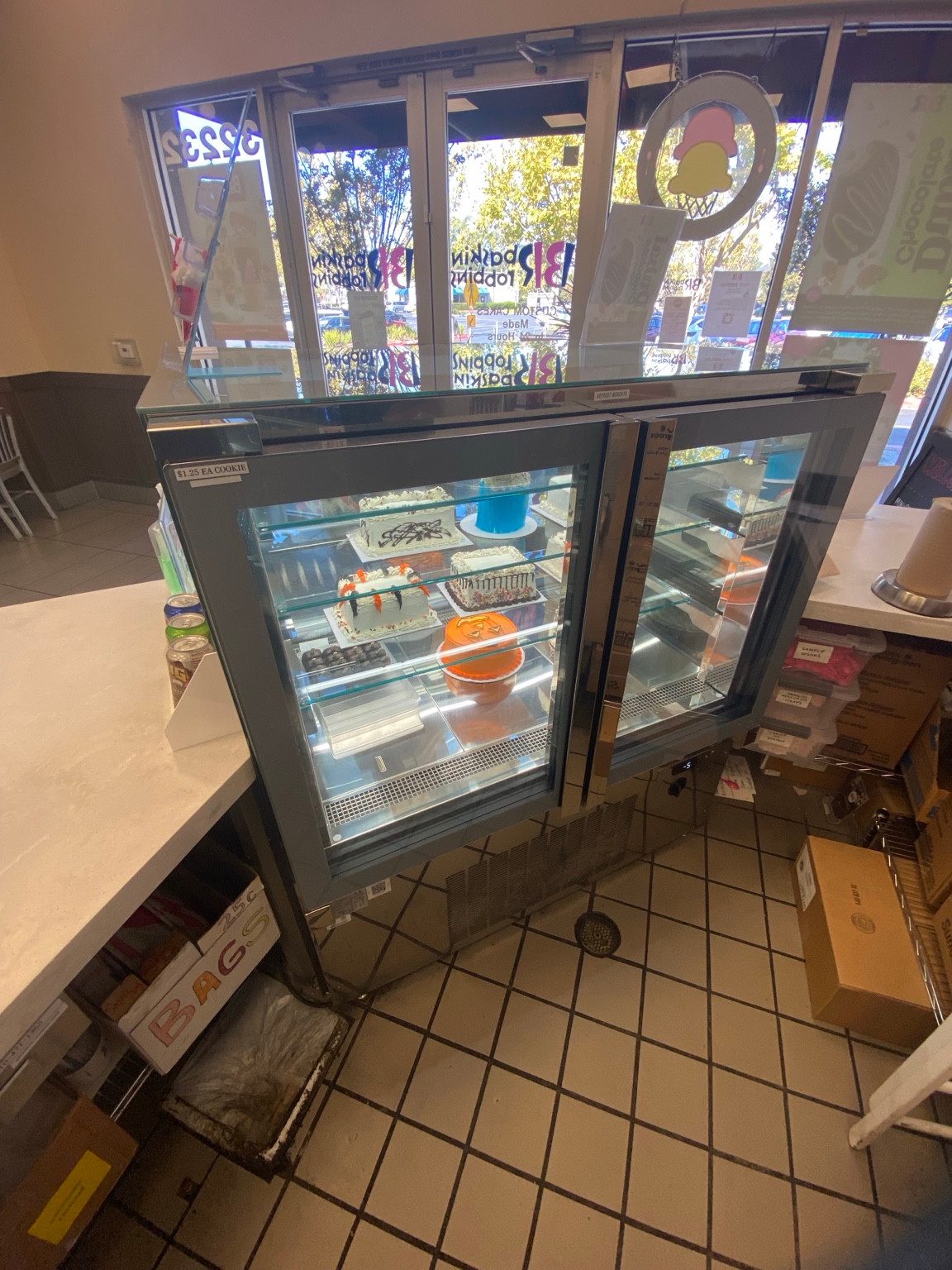
Unit 02: Oscartek display case

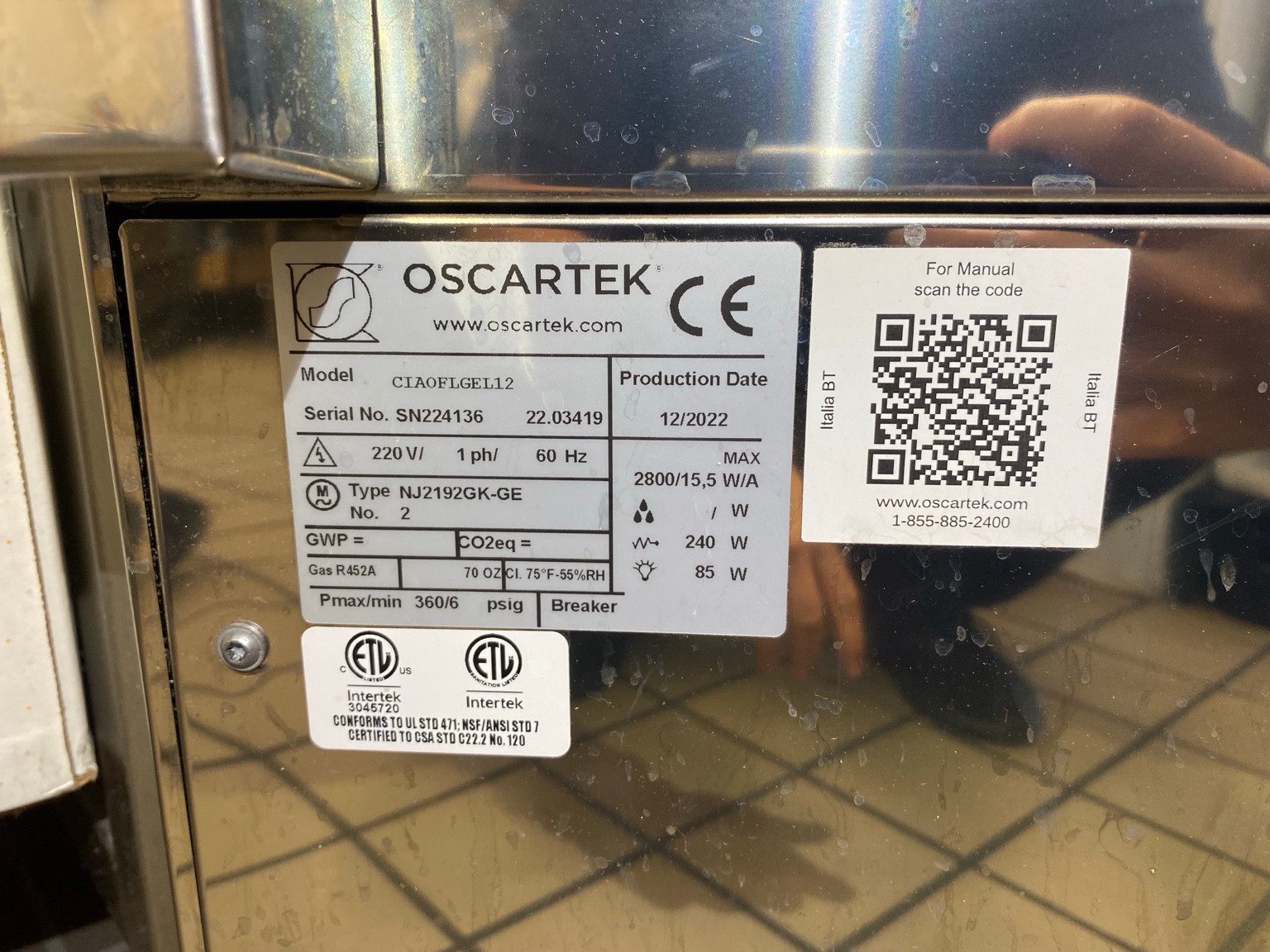
Model CIAOFLGEL12Serial SN224136R452A, 70 ozBuilt December 2022, about 3 years 10 months old
MaintenanceOperating at inspection. Door gasket replacement recommended.

Inspection findings

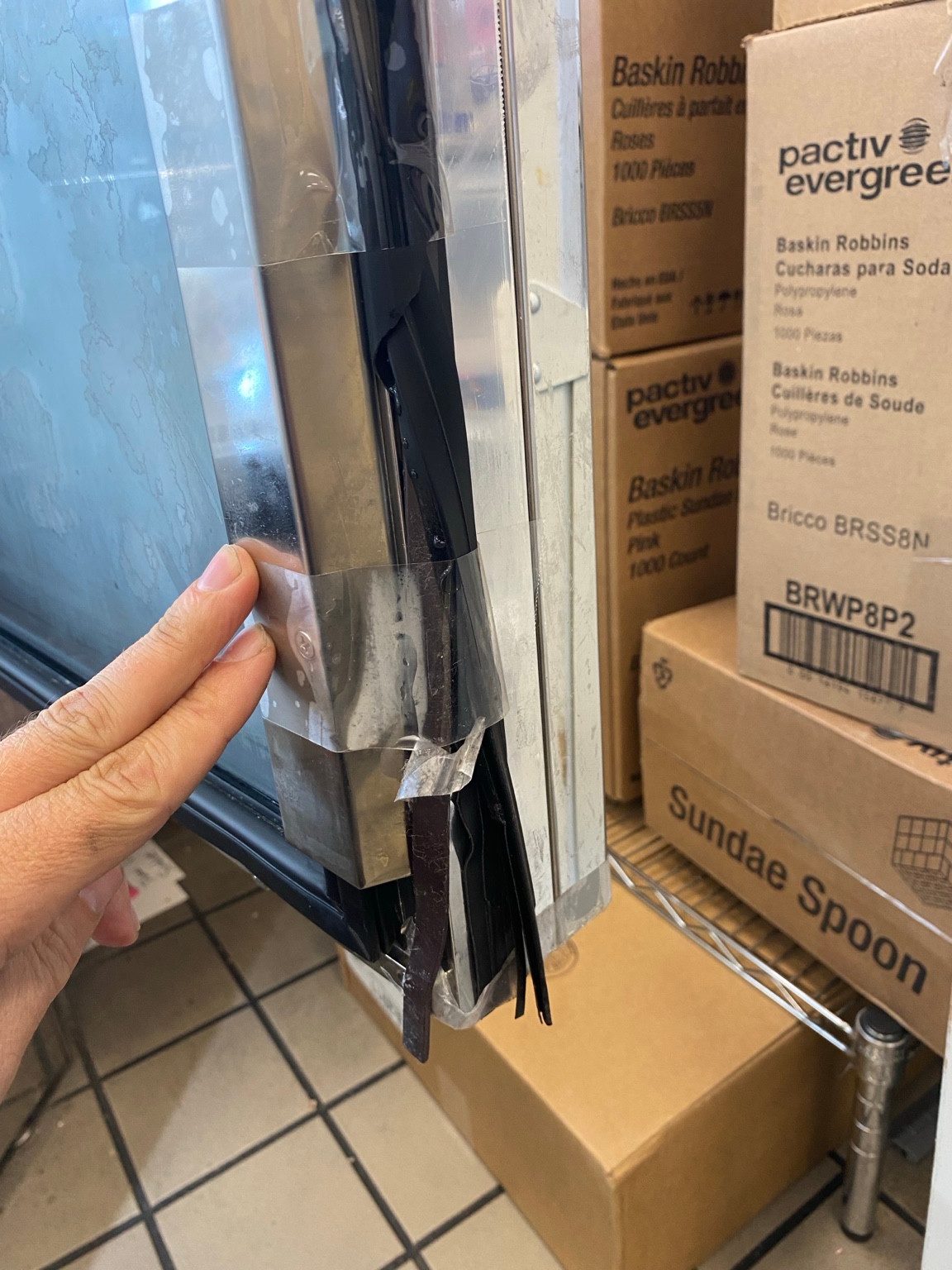
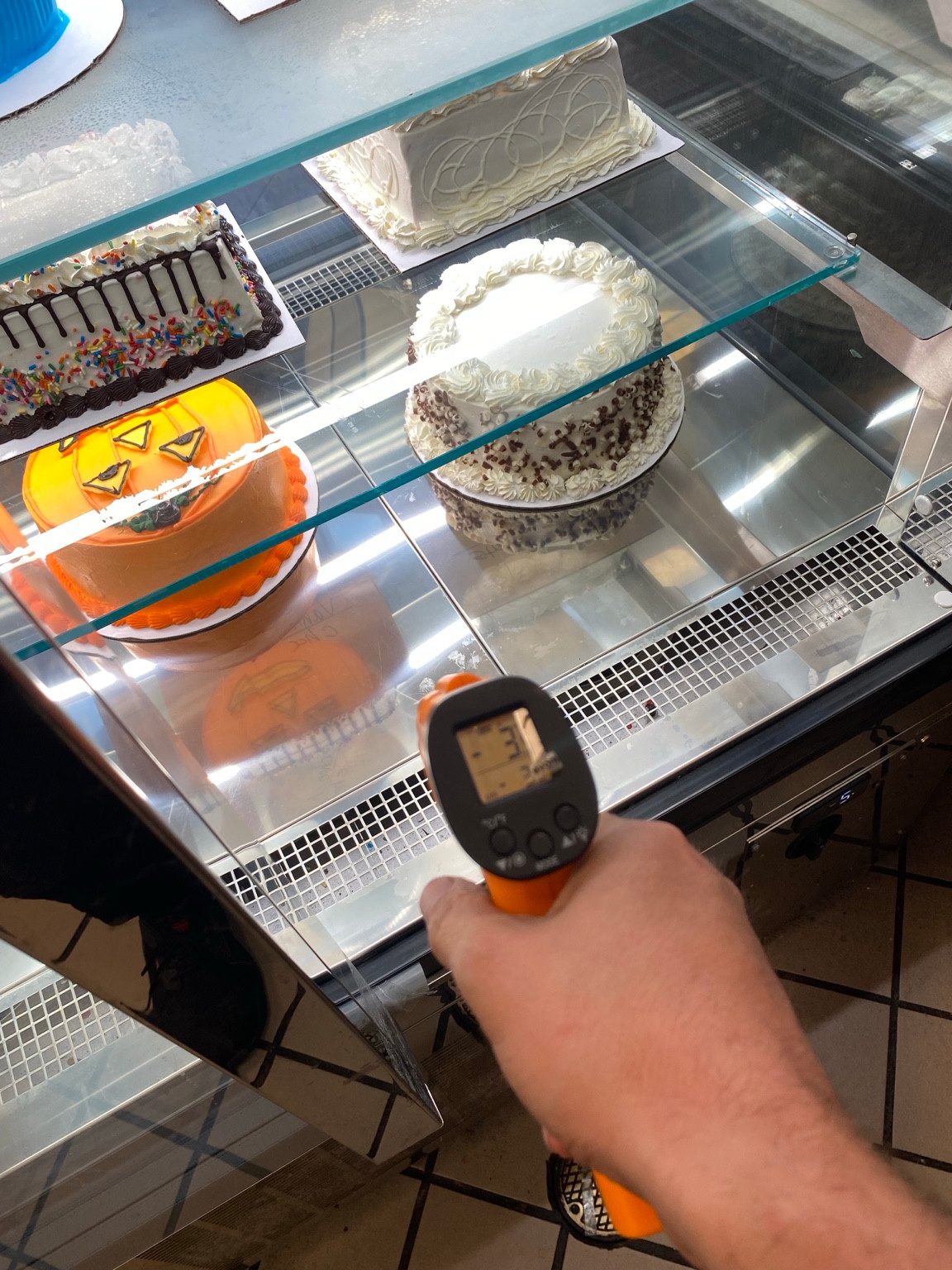
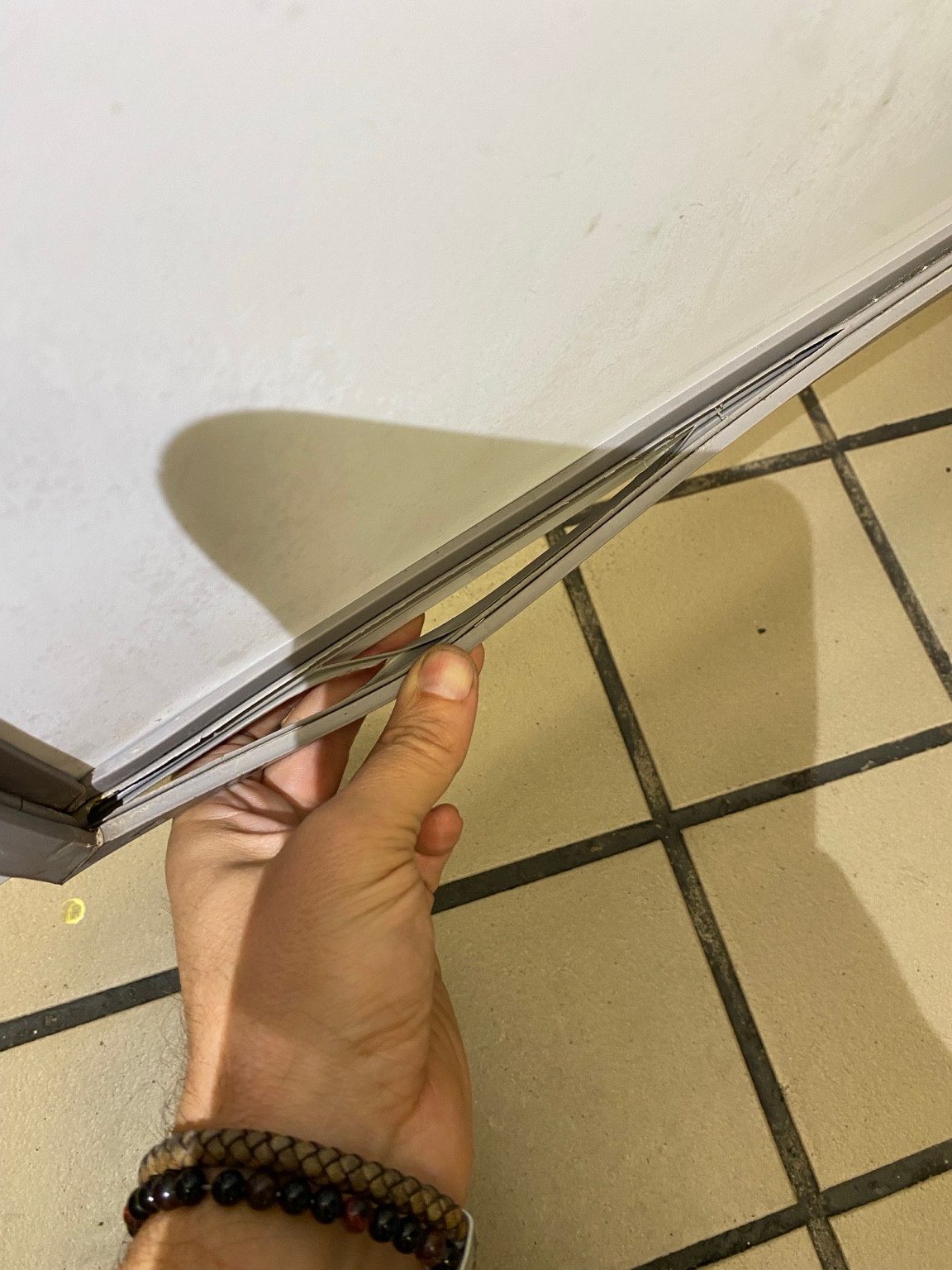
The refrigerated display case was operating during inspection. Physical deterioration and damage were identified on the door gasket assembly. A compromised gasket may allow warm, humid ambient air to enter the refrigerated compartment, increasing refrigeration load, condensation, and compressor runtime.

Recommendations

  • Replace the damaged door gasket assembly.
  • Verify proper door alignment, gasket contact, and sealing around the entire perimeter.
  • Monitor compartment temperature following replacement.
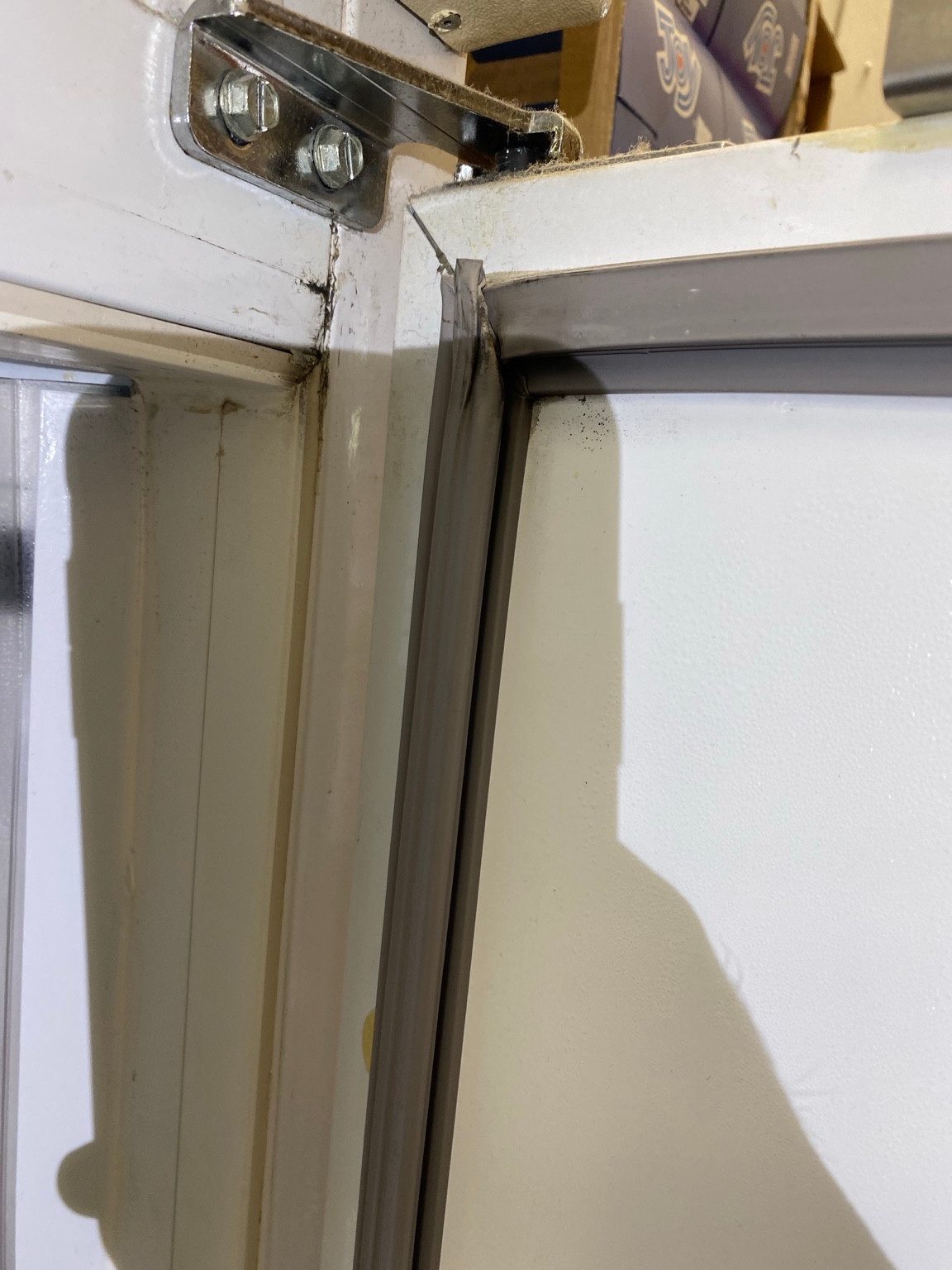
Damaged or displaced door gasket and tape.
U02-05 · IMG_3261.jpegDamaged or displaced door gasket and tape.
03
Part 1 · October 14, 2026

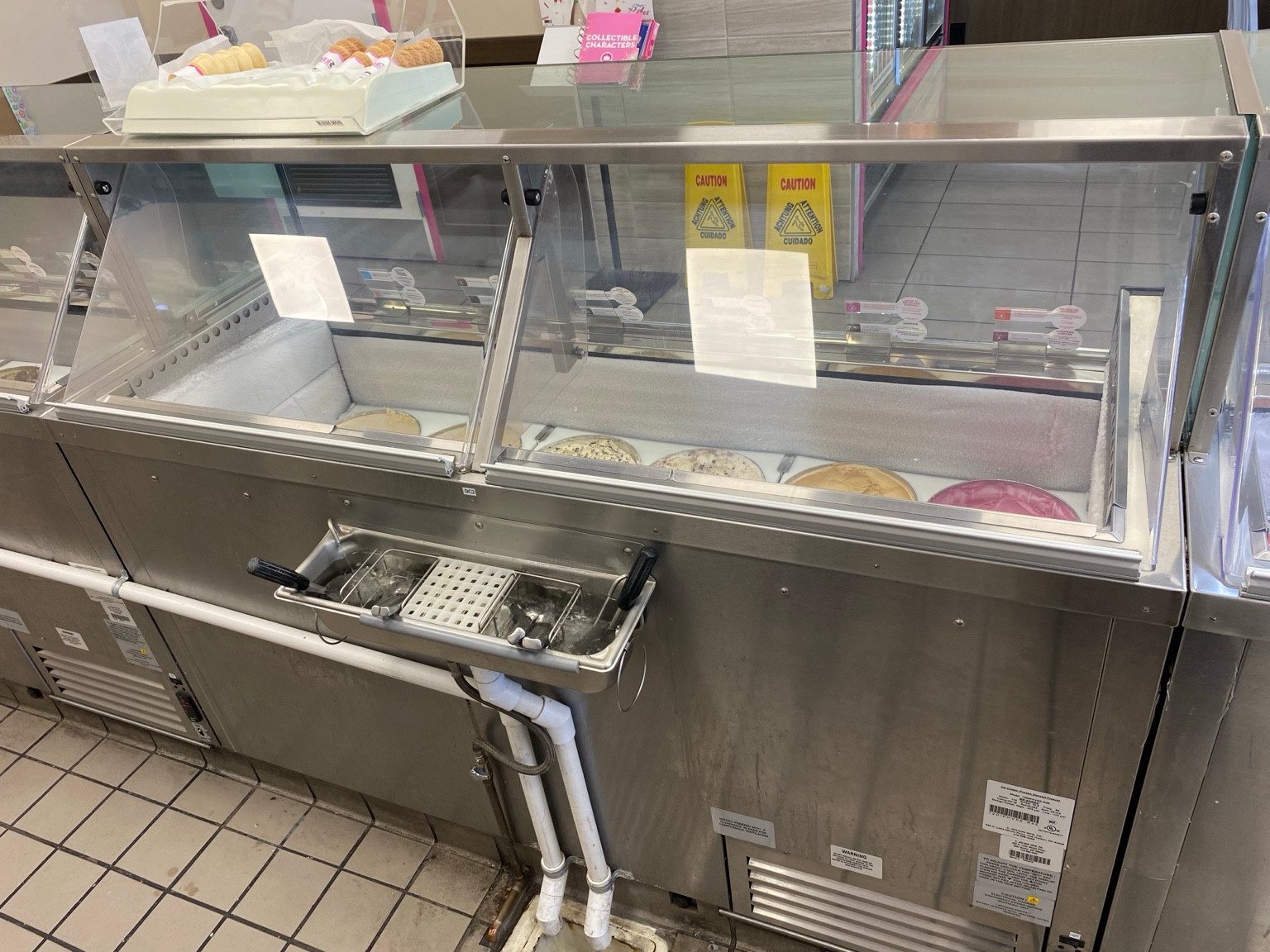
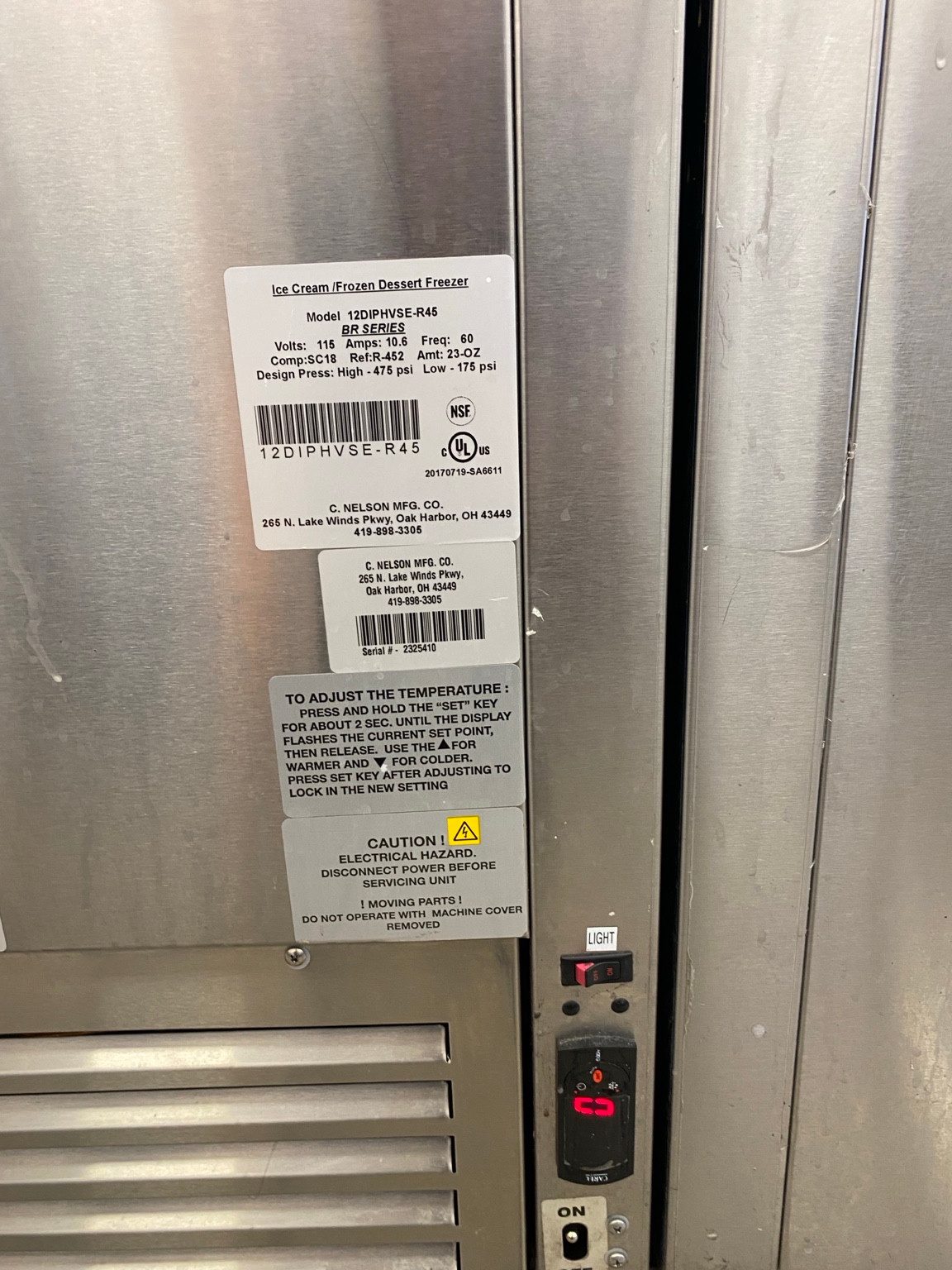
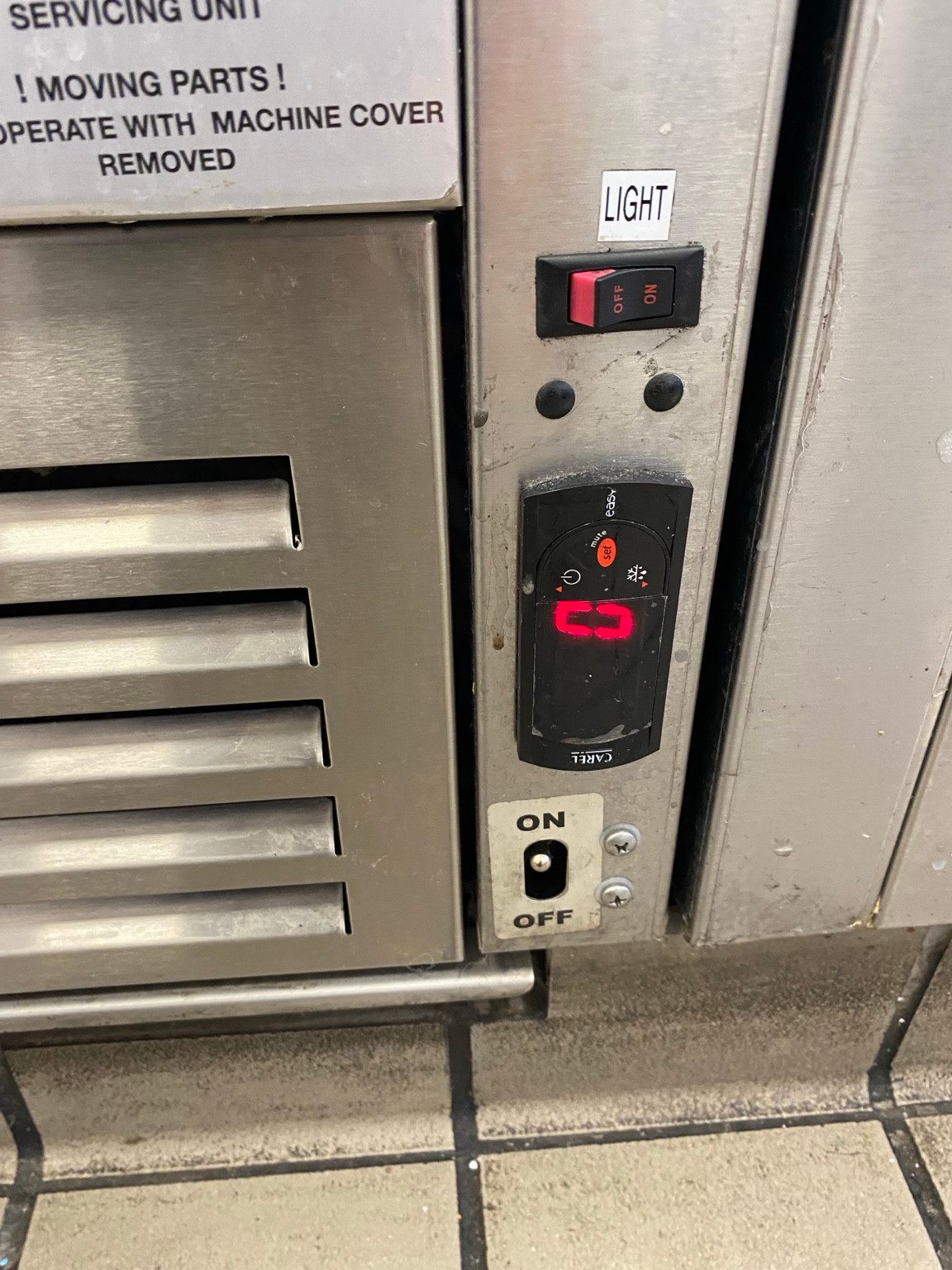
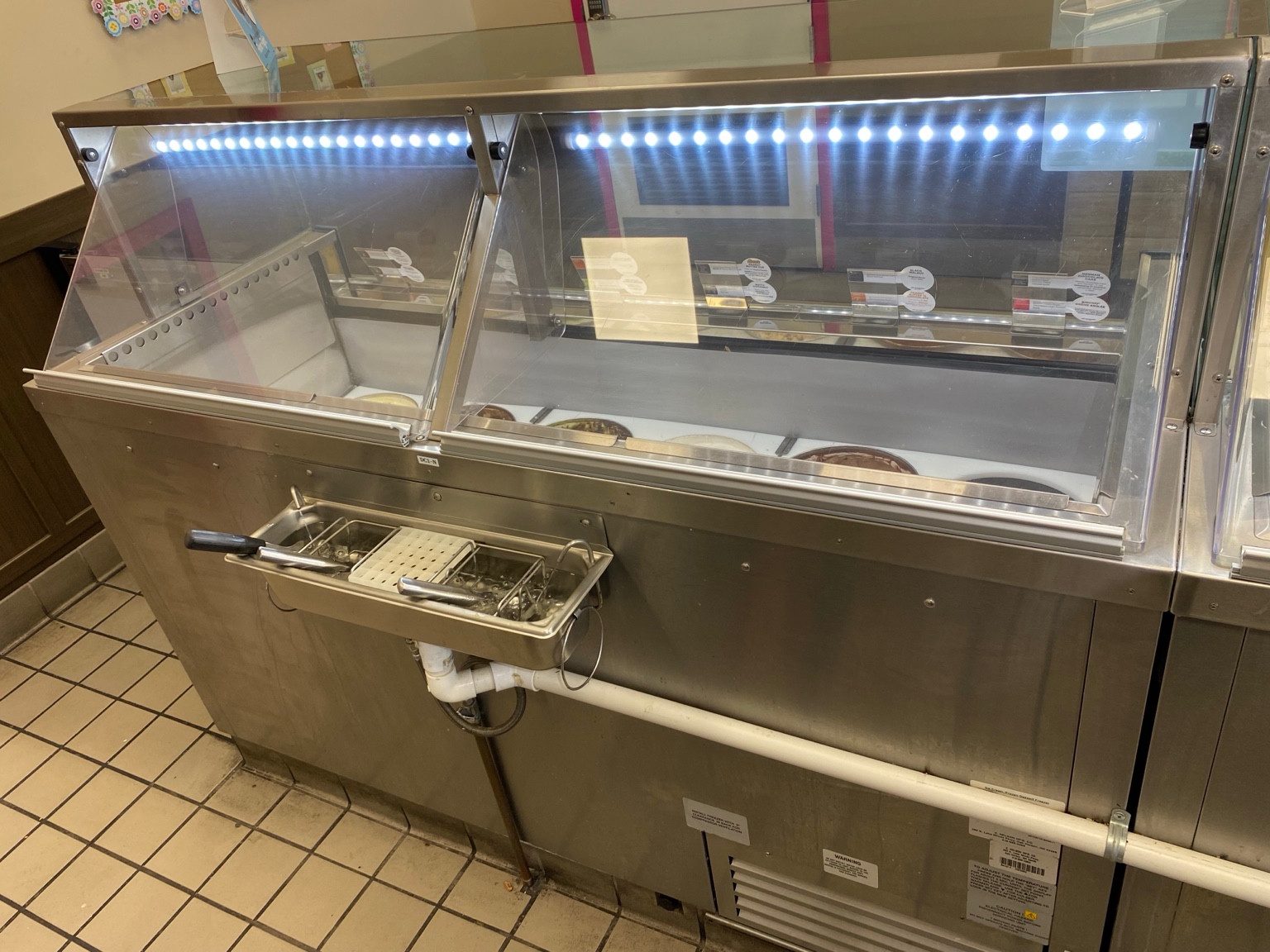
Unit 03: C. Nelson dipping cabinet

Model 12DIPHVSE-R45Serial 2325410R452A, 23 oz
MaintenanceOperating at inspection. Cleaning and defrost review recommended.

Inspection findings

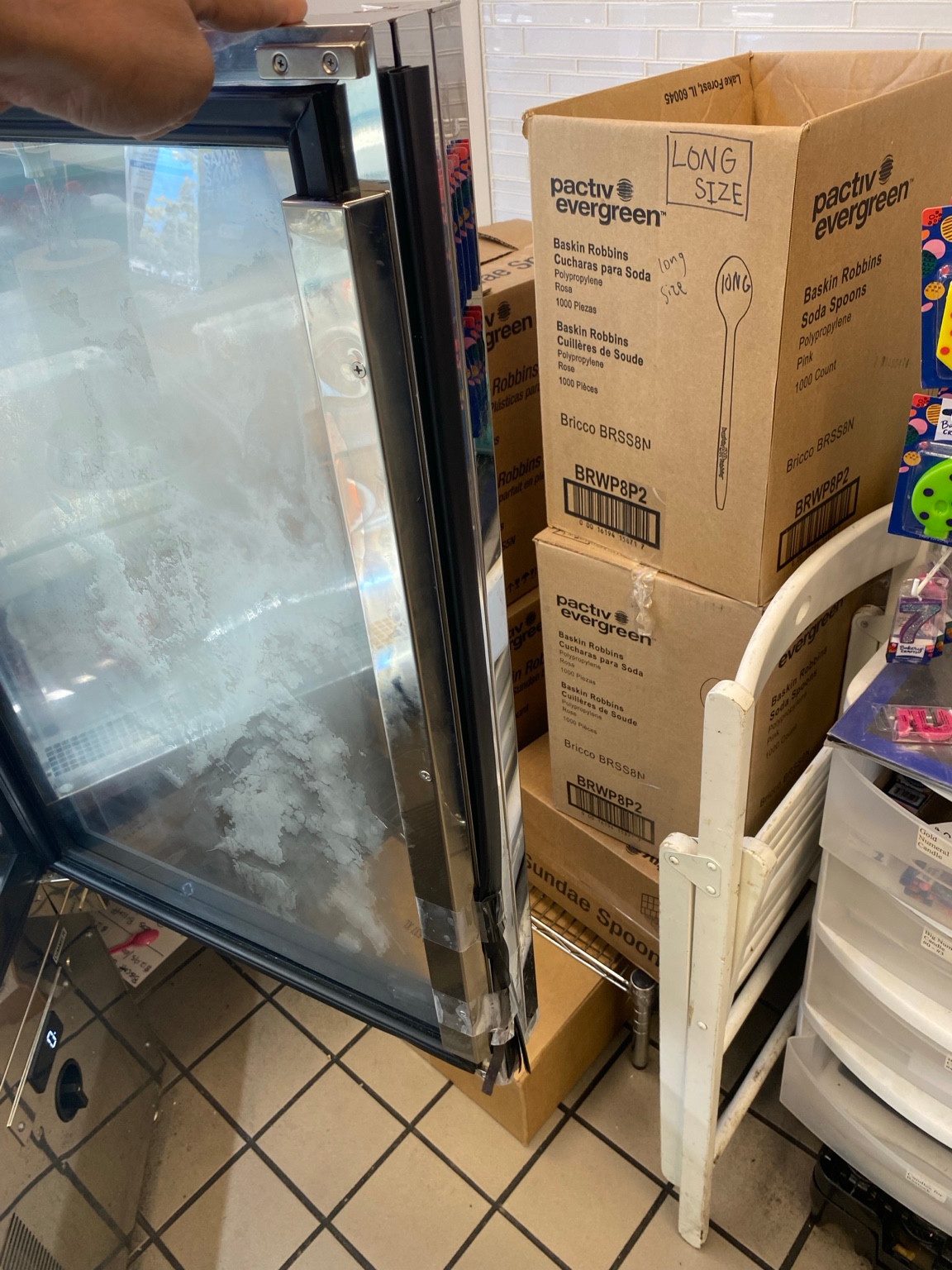
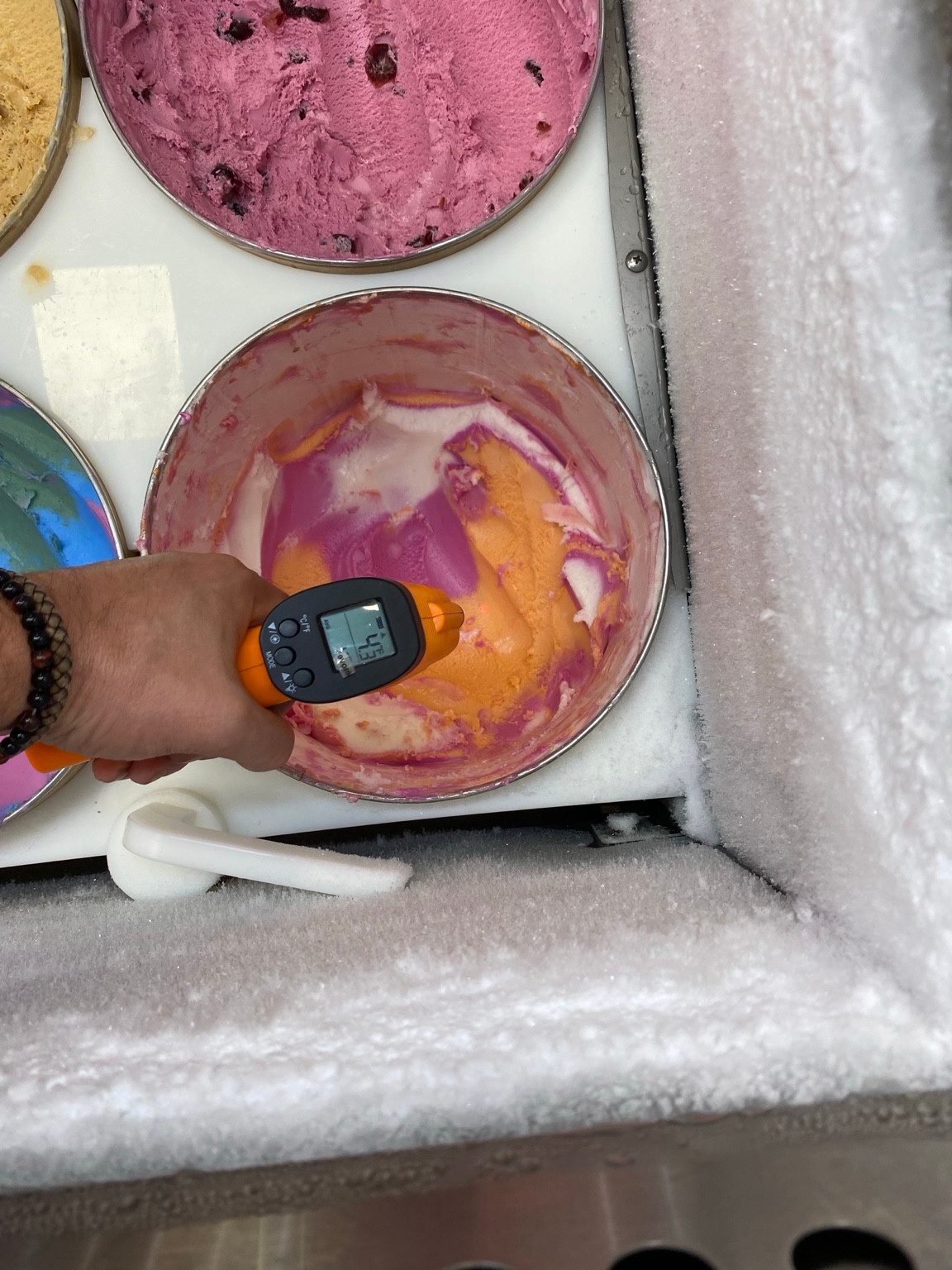
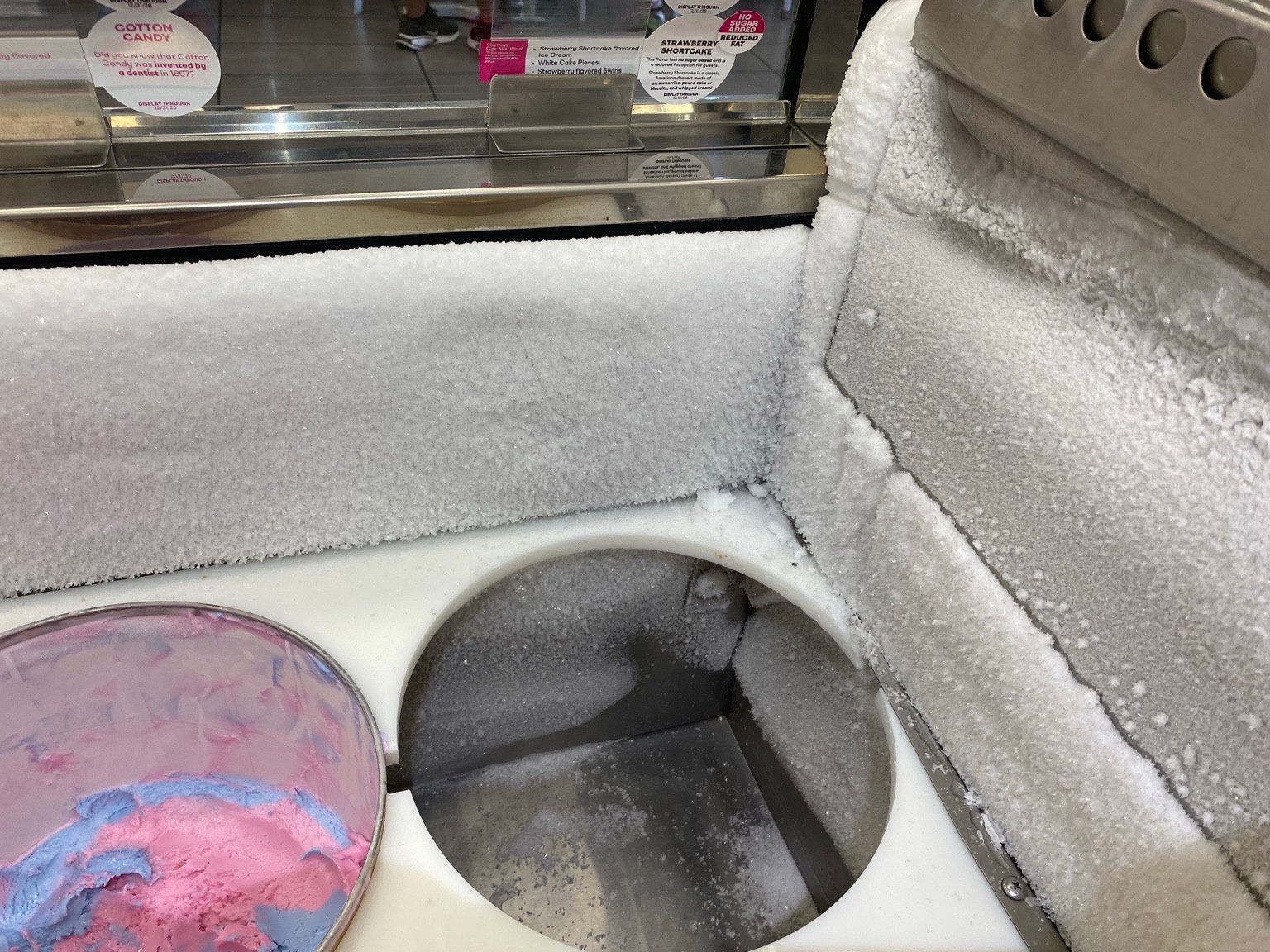
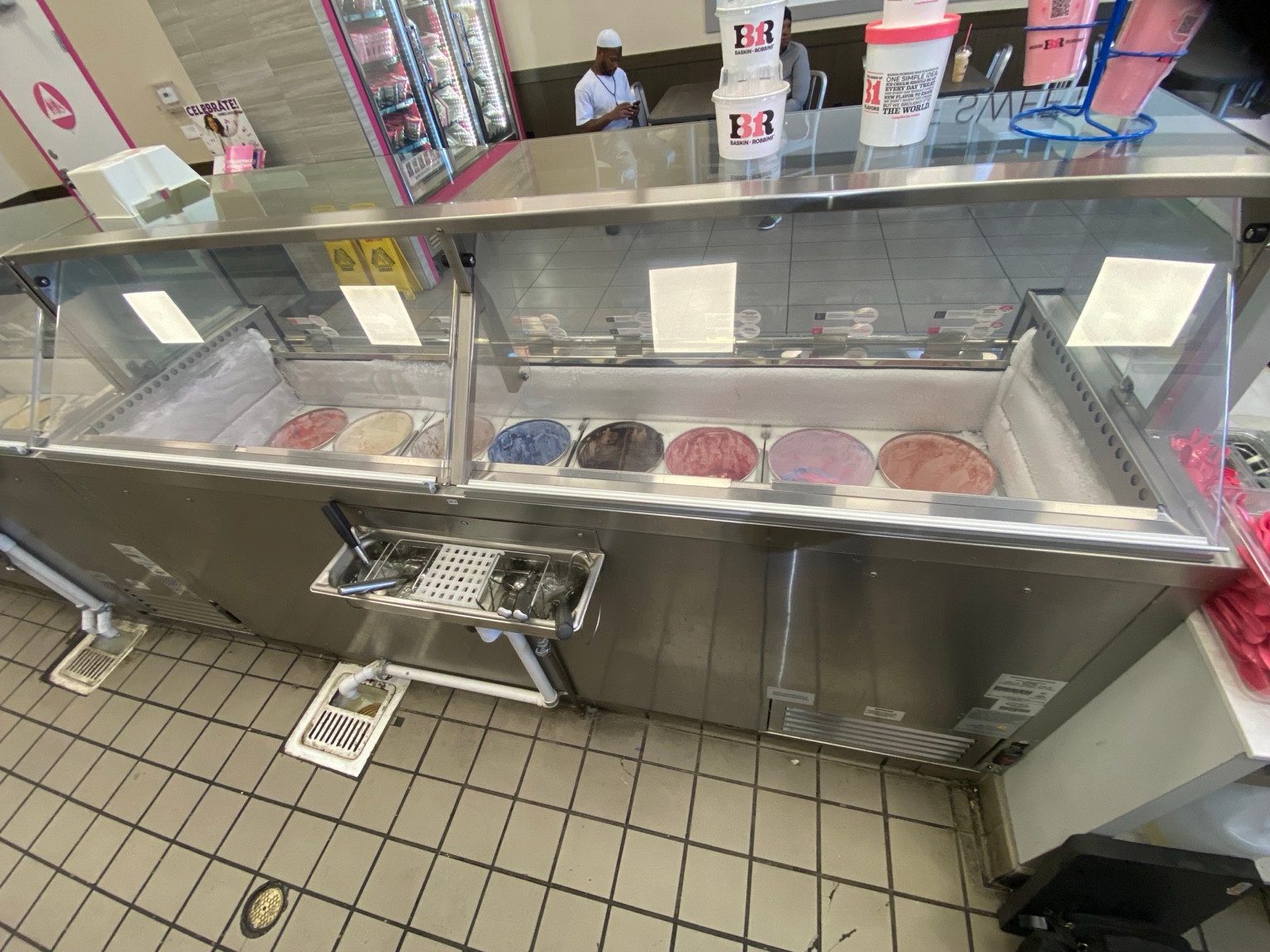
The freezer was operating at an acceptable observed temperature during inspection. Ice accumulation was identified on interior surfaces. The condenser coil also requires cleaning. Excessive ice accumulation may reduce usable storage space, interfere with normal operation, and increase refrigeration load.

Recommendations

  • Perform condenser cleaning and verify the existing manual defrost schedule with store personnel.
  • Establish consistent defrost procedures according to manufacturer recommendations and monitor ice accumulation between defrost cycles.
Ice accumulation along cabinet walls.
U03-06 · IMG_3293.jpegIce accumulation along cabinet walls.
04
Part 1 · October 14, 2026

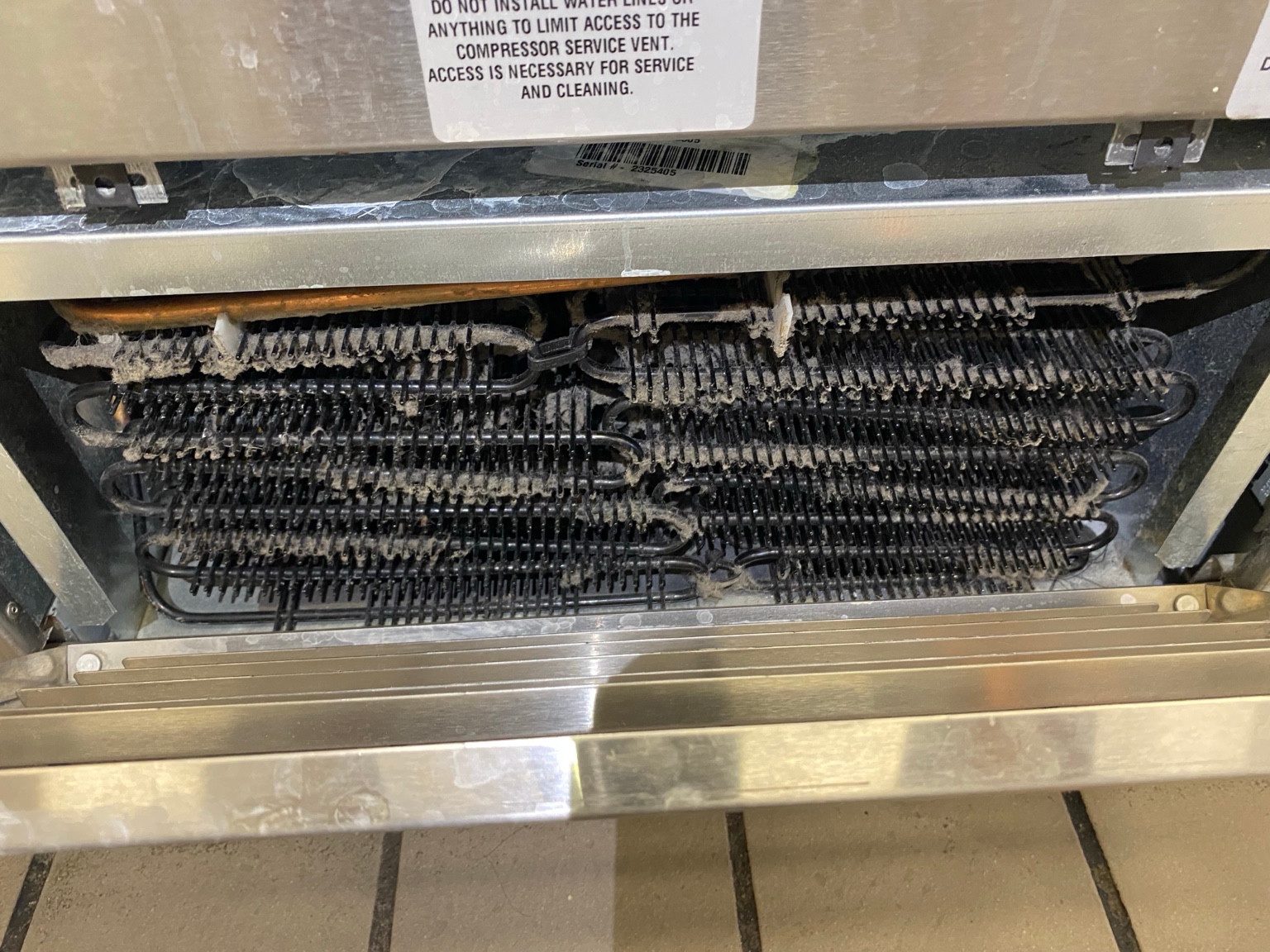
Unit 04: C. Nelson dipping cabinet

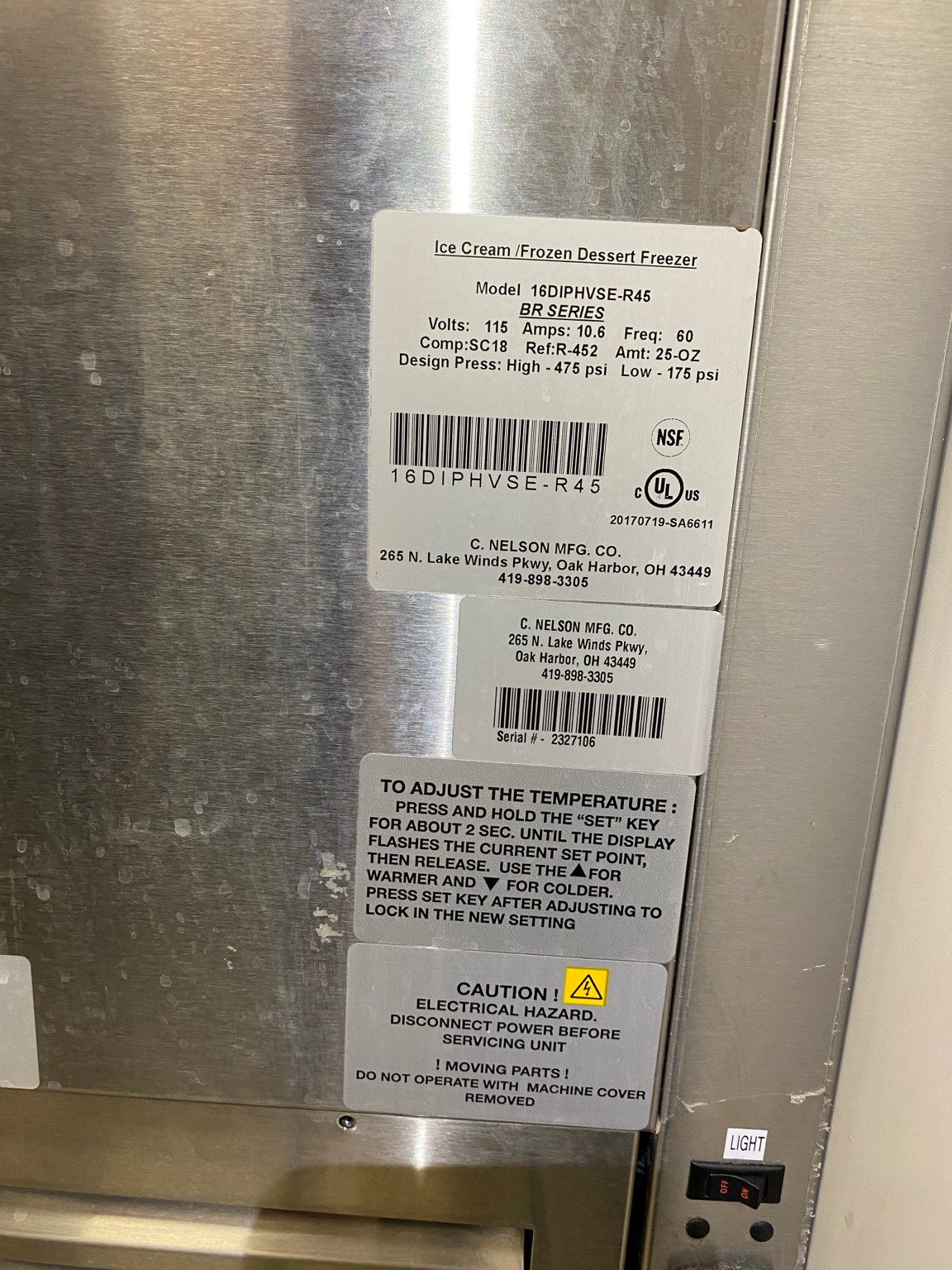
Model 16DIPHVSE-R45Serial 2327106R452A, 25 oz
MaintenanceOperating at inspection. Preventive maintenance required.

Inspection findings

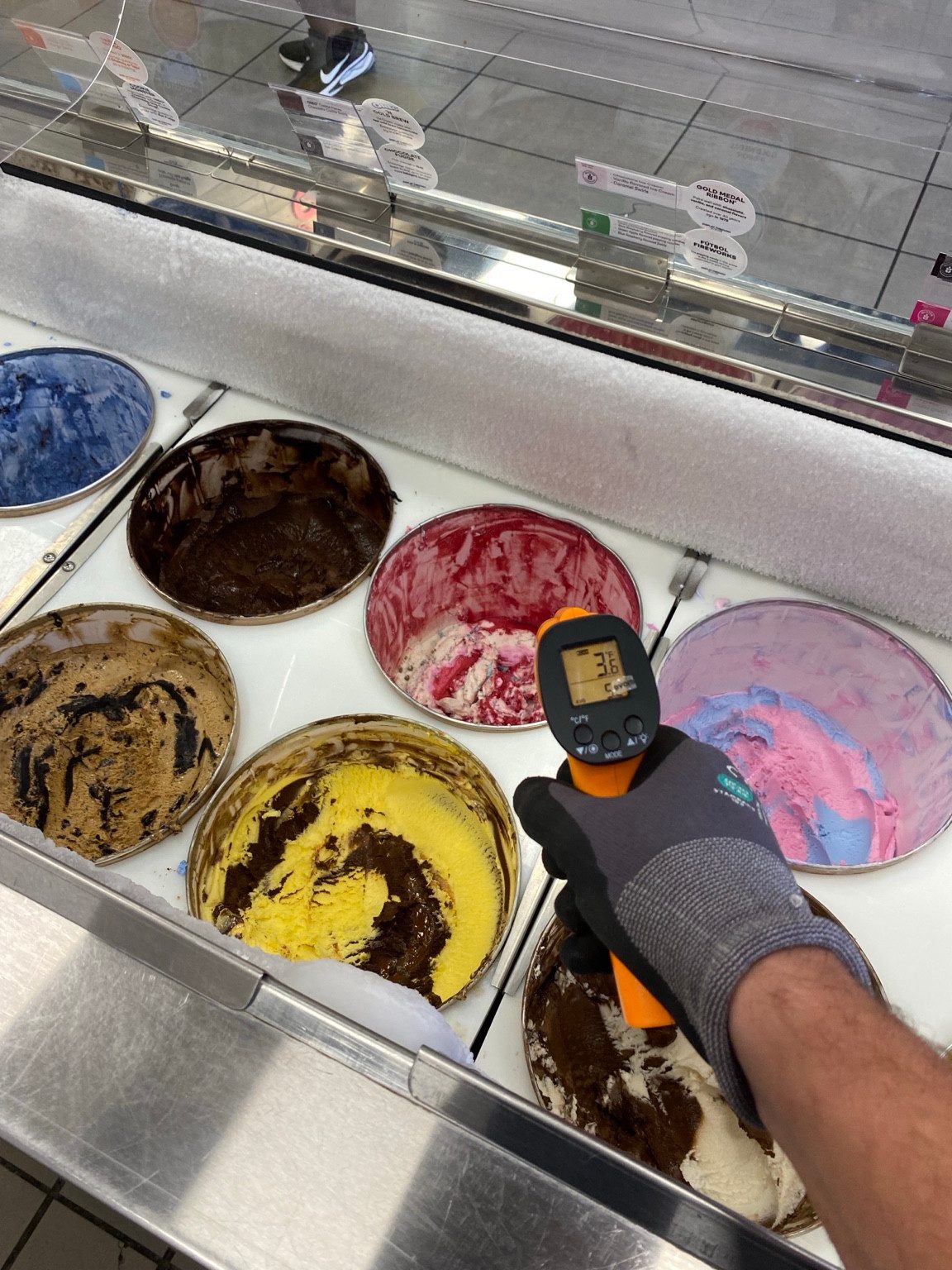
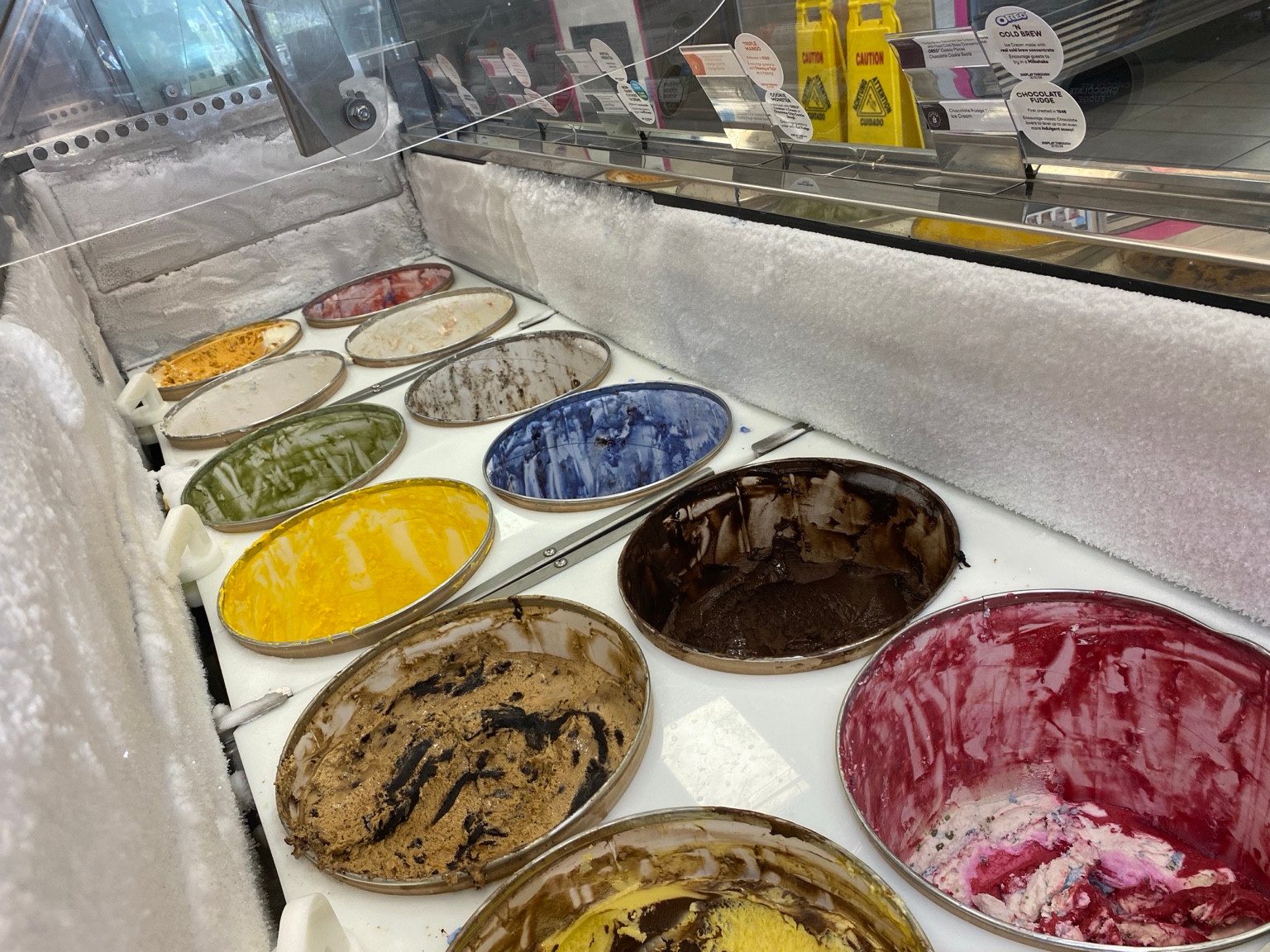
The ice cream dipping cabinet was operating at an acceptable observed temperature. Ice accumulation was present within the storage compartment. The condenser also requires cleaning to maintain efficient heat rejection and reduce compressor operating load.

Recommendations

  • Clean the condenser coil and verify the frequency and effectiveness of manual defrost procedures.
  • Monitor ice accumulation and temperature stability during normal operation.
Close view of ice at the tub opening.
U04-06 · IMG_3284.jpegClose view of ice at the tub opening.
05
Part 1 · October 14, 2026

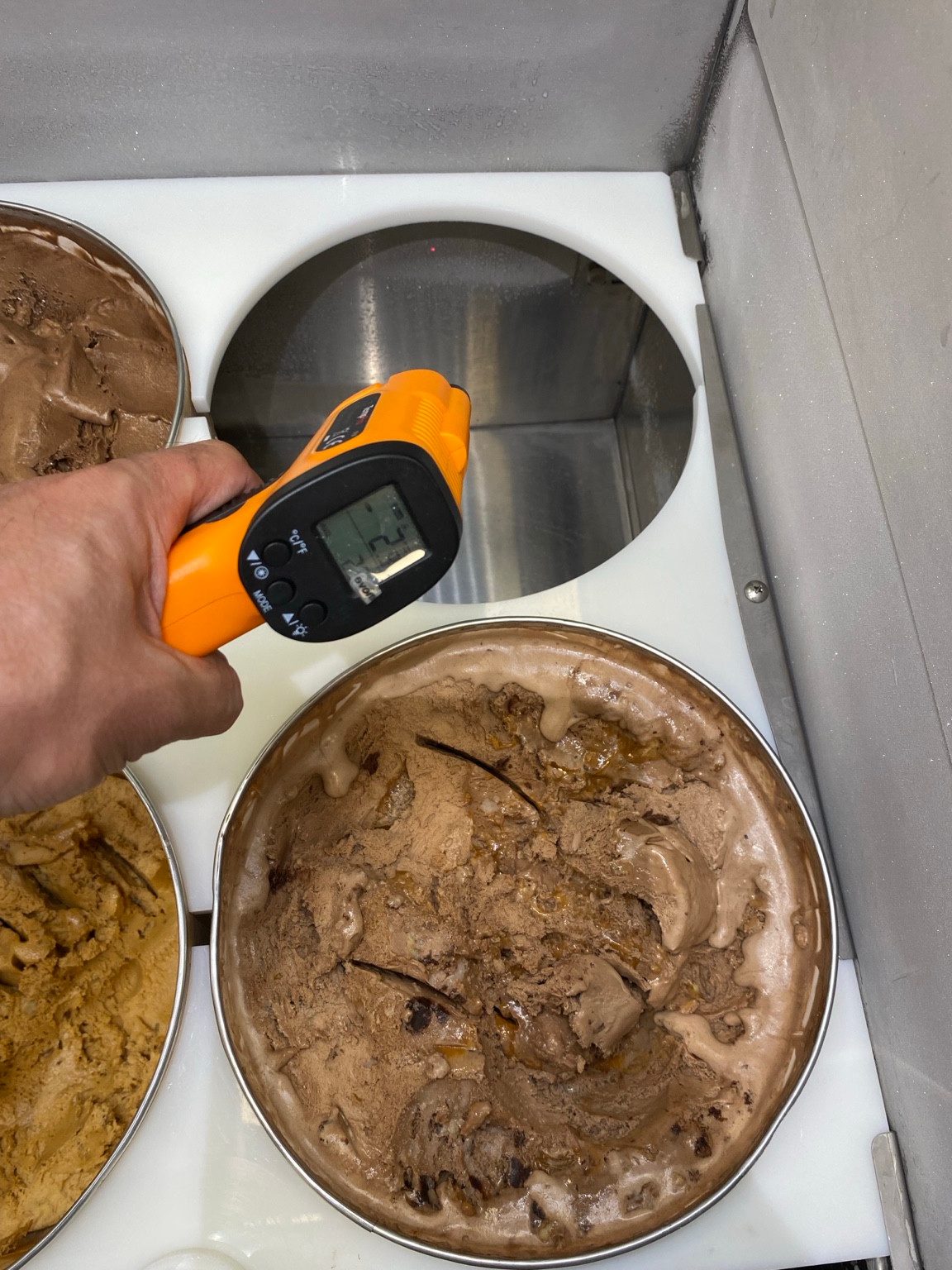
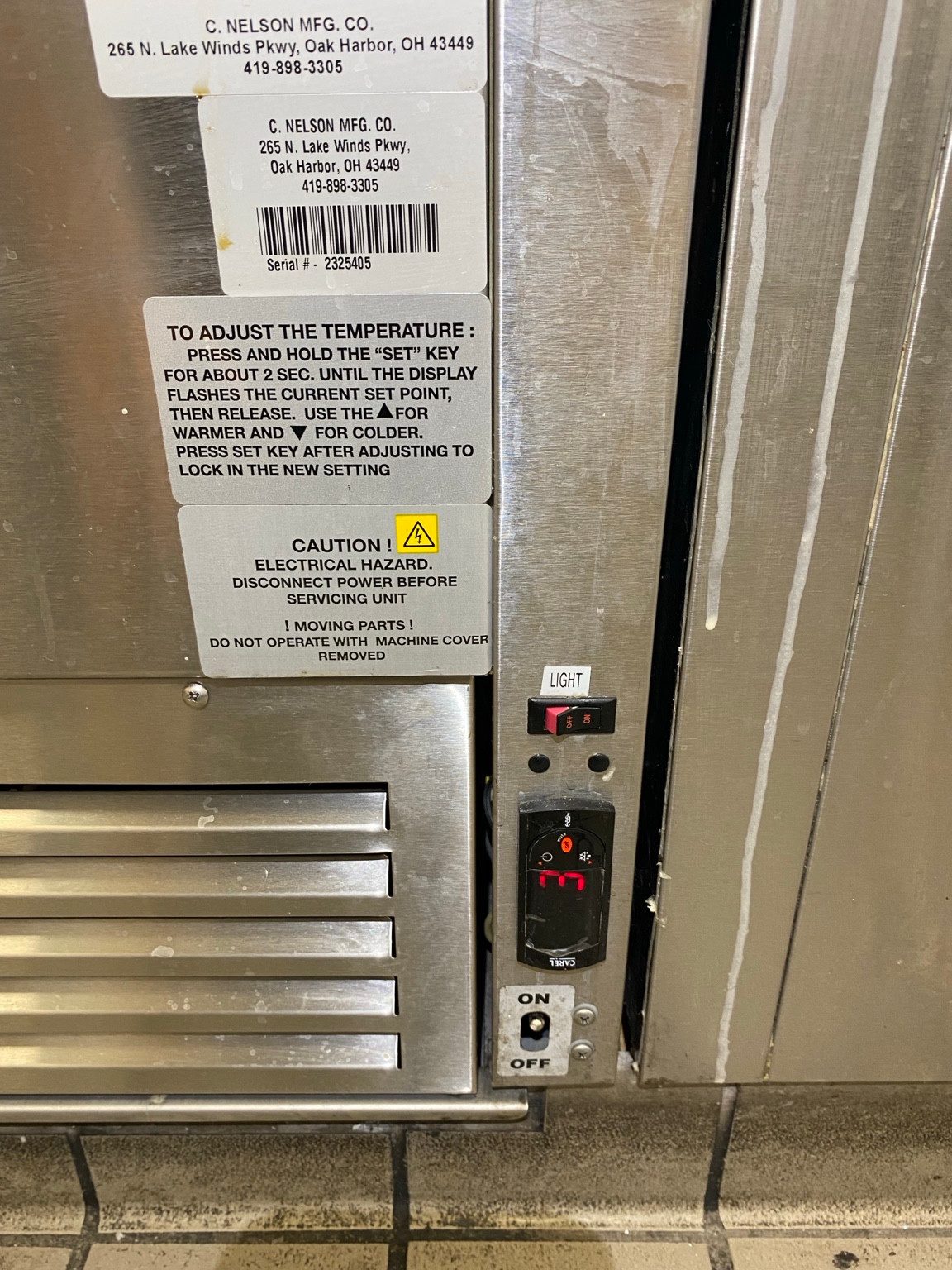
Unit 05: C. Nelson dipping cabinet

Model 12DIPHVSE-R45Serial 2325405
RoutineOperating at inspection. Routine maintenance recommended.

Inspection findings

The unit was operating during inspection. Store personnel reported that manual defrosting had been performed the previous night. Compared with the other dipping cabinets, this unit exhibited less ice accumulation, consistent with the reported recent defrosting. No additional operational defect was documented during this inspection.

Recommendations

  • Maintain a consistent manual defrost schedule and document defrost frequency for all dipping cabinets.
  • Continue monitoring ice accumulation and operating temperatures.
Cabinet with less ice after reported defrosting.
U05-01 · IMG_3295.jpegCabinet with less ice after reported defrosting.
06
Part 1 · October 14, 2026

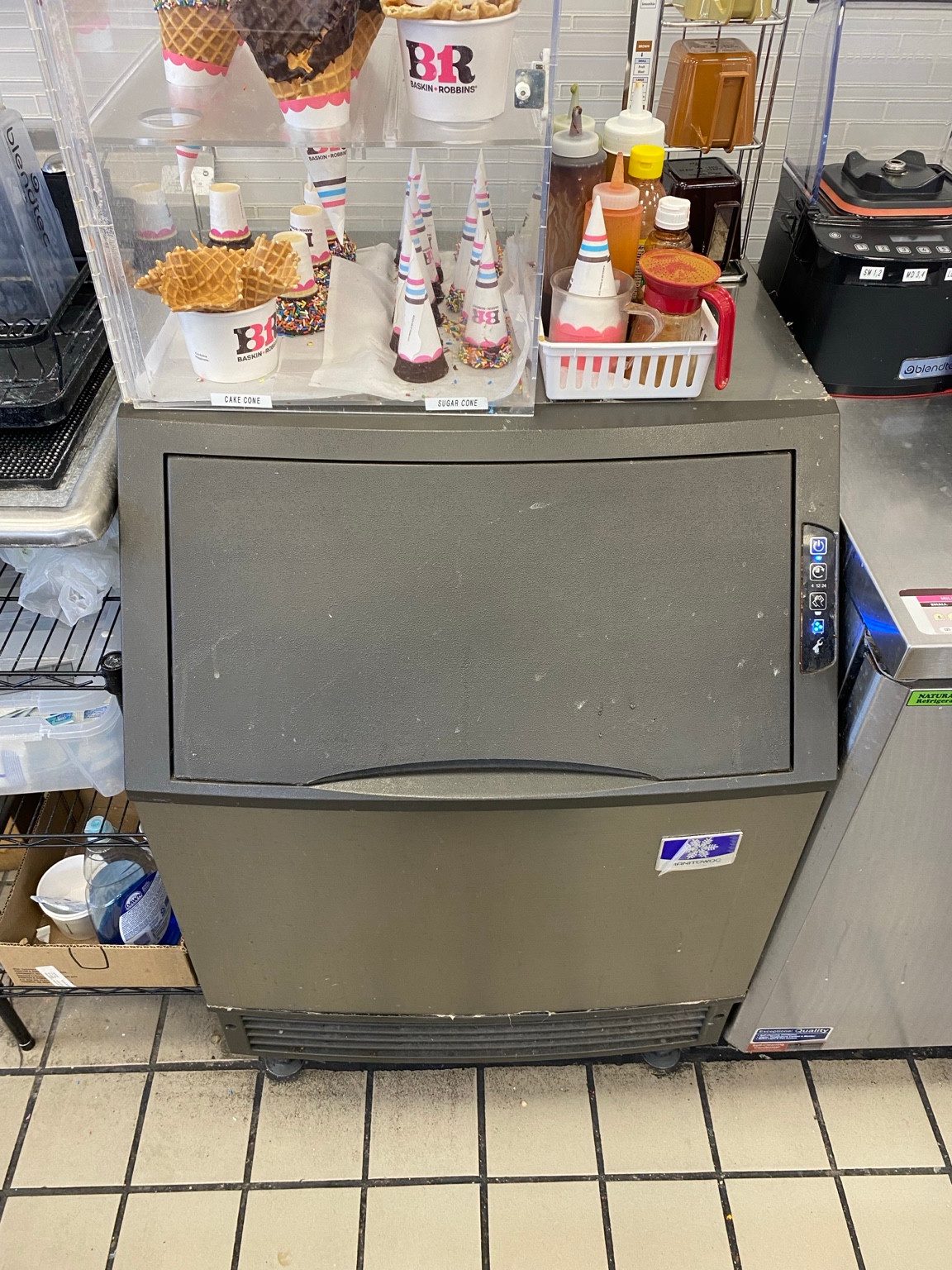
Unit 06: Manitowoc ice maker

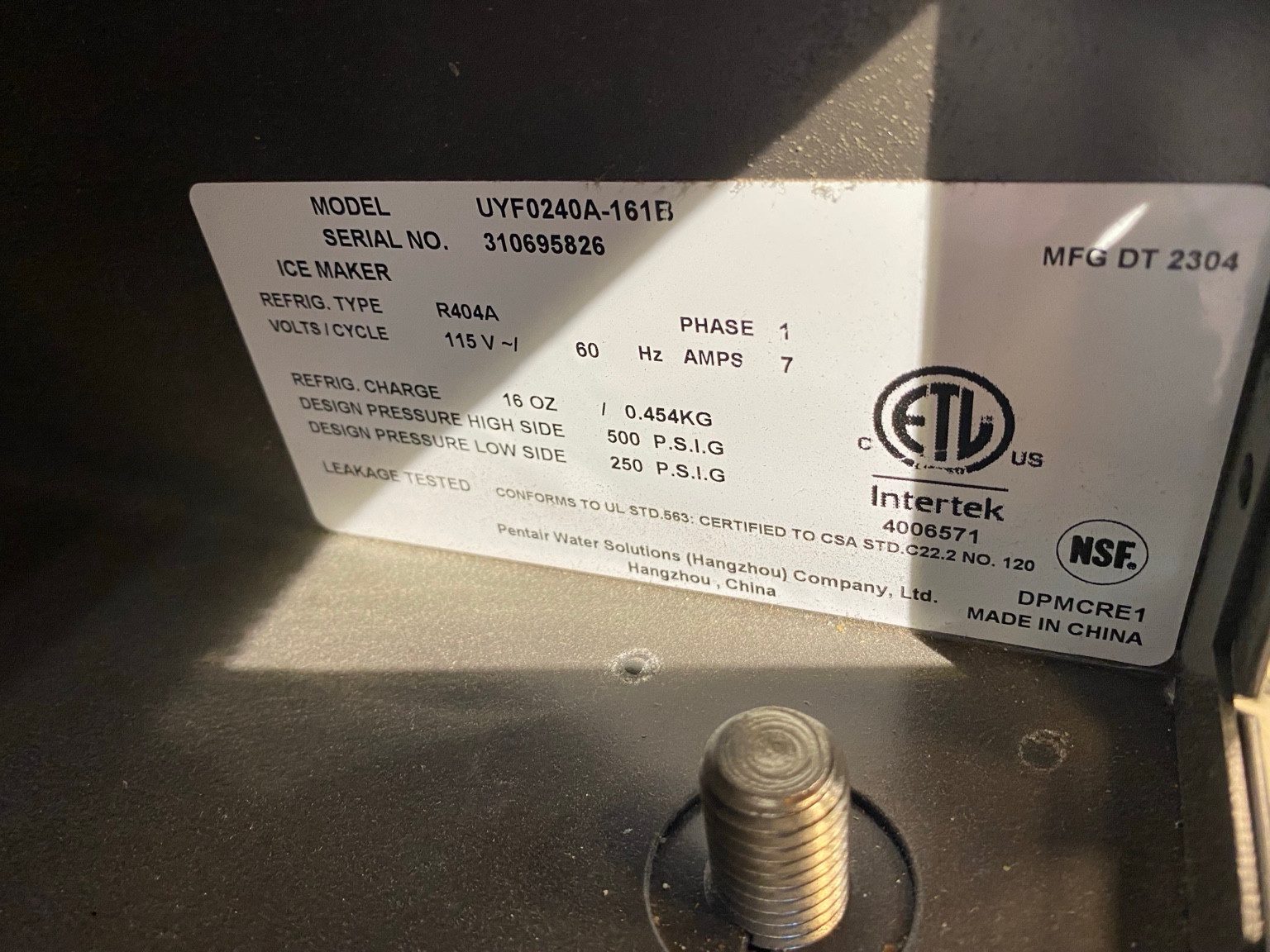
Model UYF0240A-161BSerial 310695826Factory R404A, 16 oz (0.454 kg)
MaintenanceCondenser filter cleaning and deep cleaning required.

Inspection findings

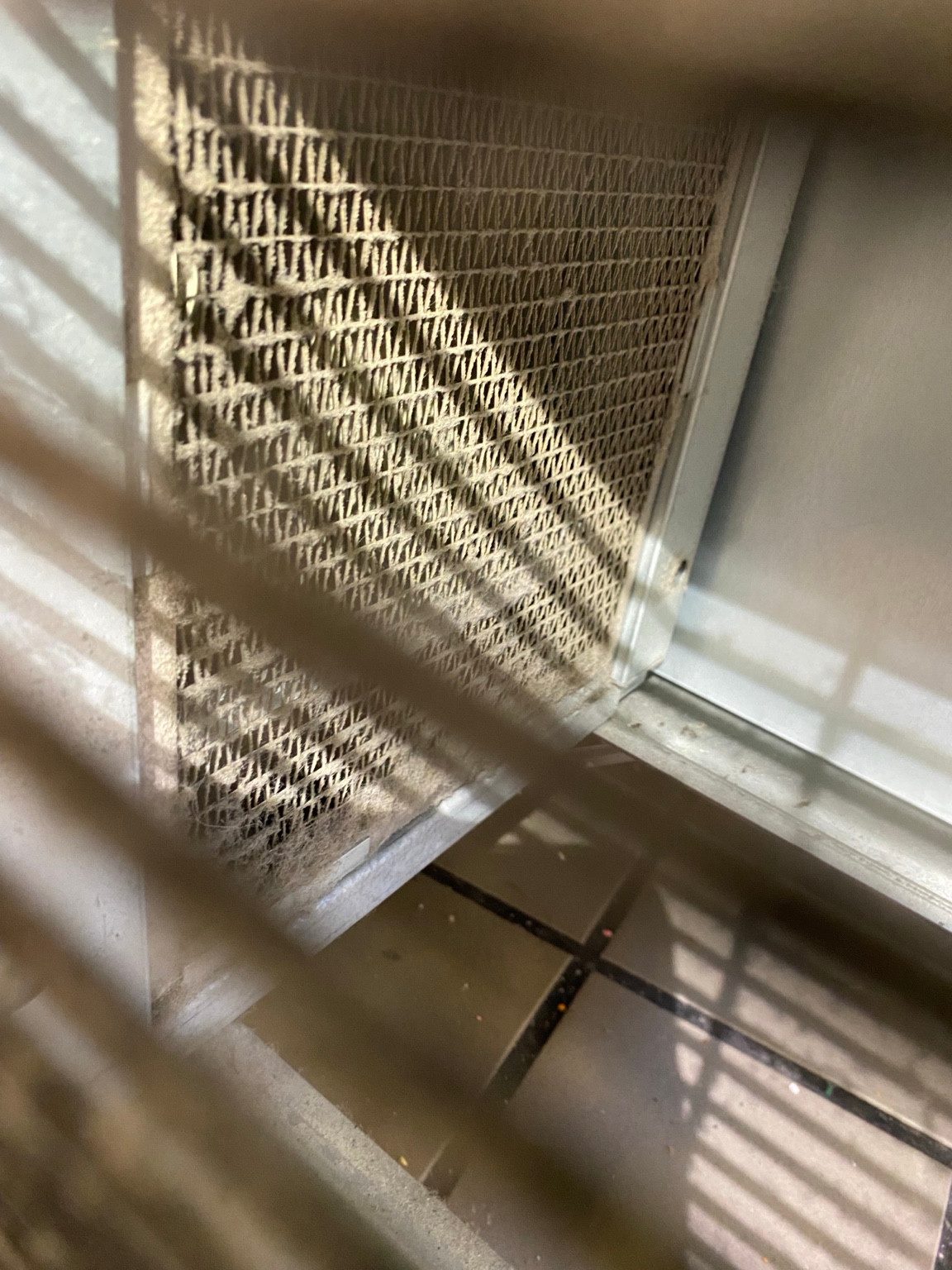
The condenser air filter was found heavily contaminated with accumulated dust and debris. Restricted condenser airflow may result in elevated condensing temperatures, reduced ice production efficiency, increased compressor workload, and possible high-pressure shutdowns. No additional operational defect was documented during this inspection.

Recommendations

  • Thoroughly clean the condenser air filter and inspect condenser airflow.
  • Establish a regular filter cleaning schedule appropriate for the operating environment.
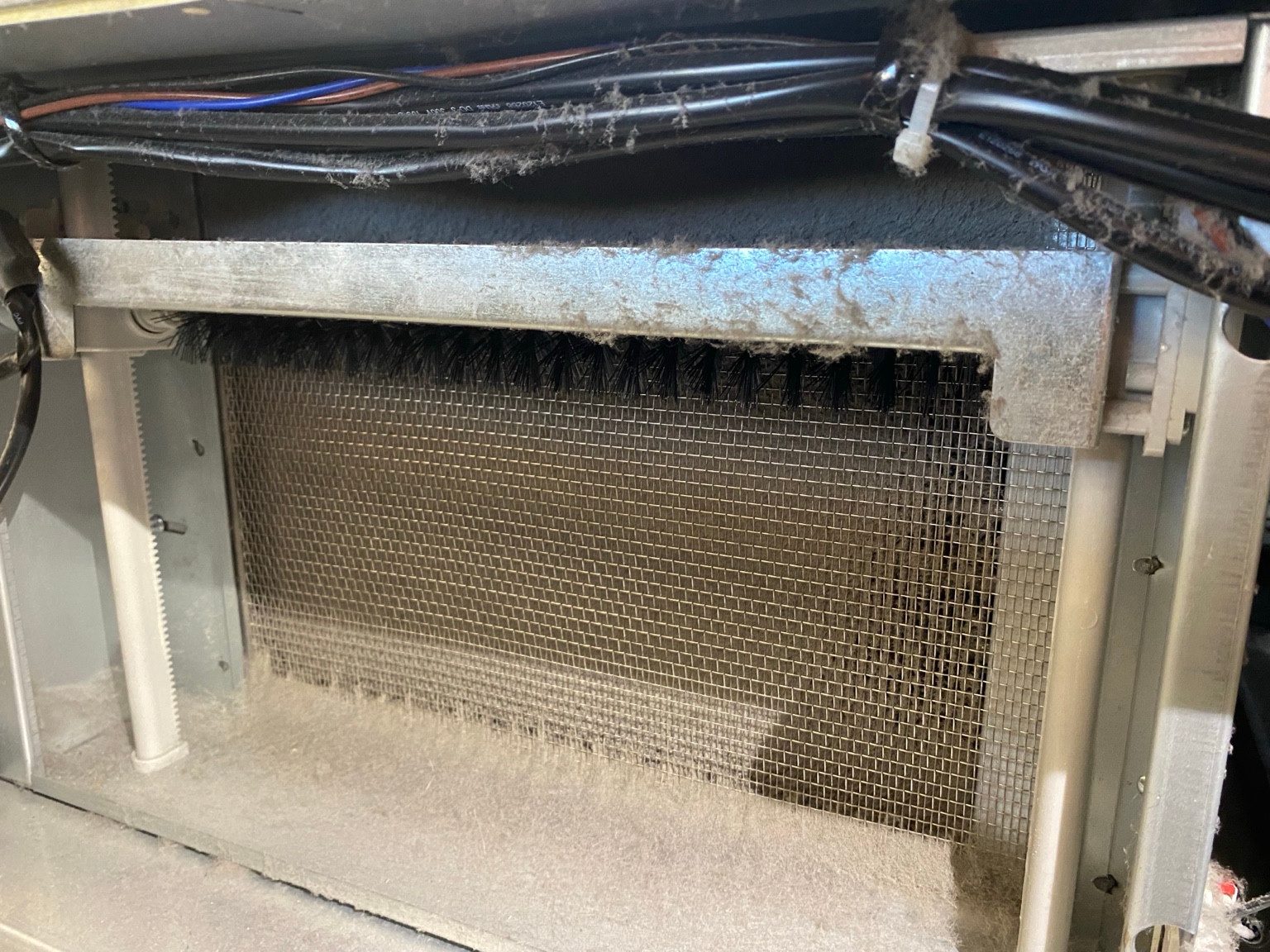
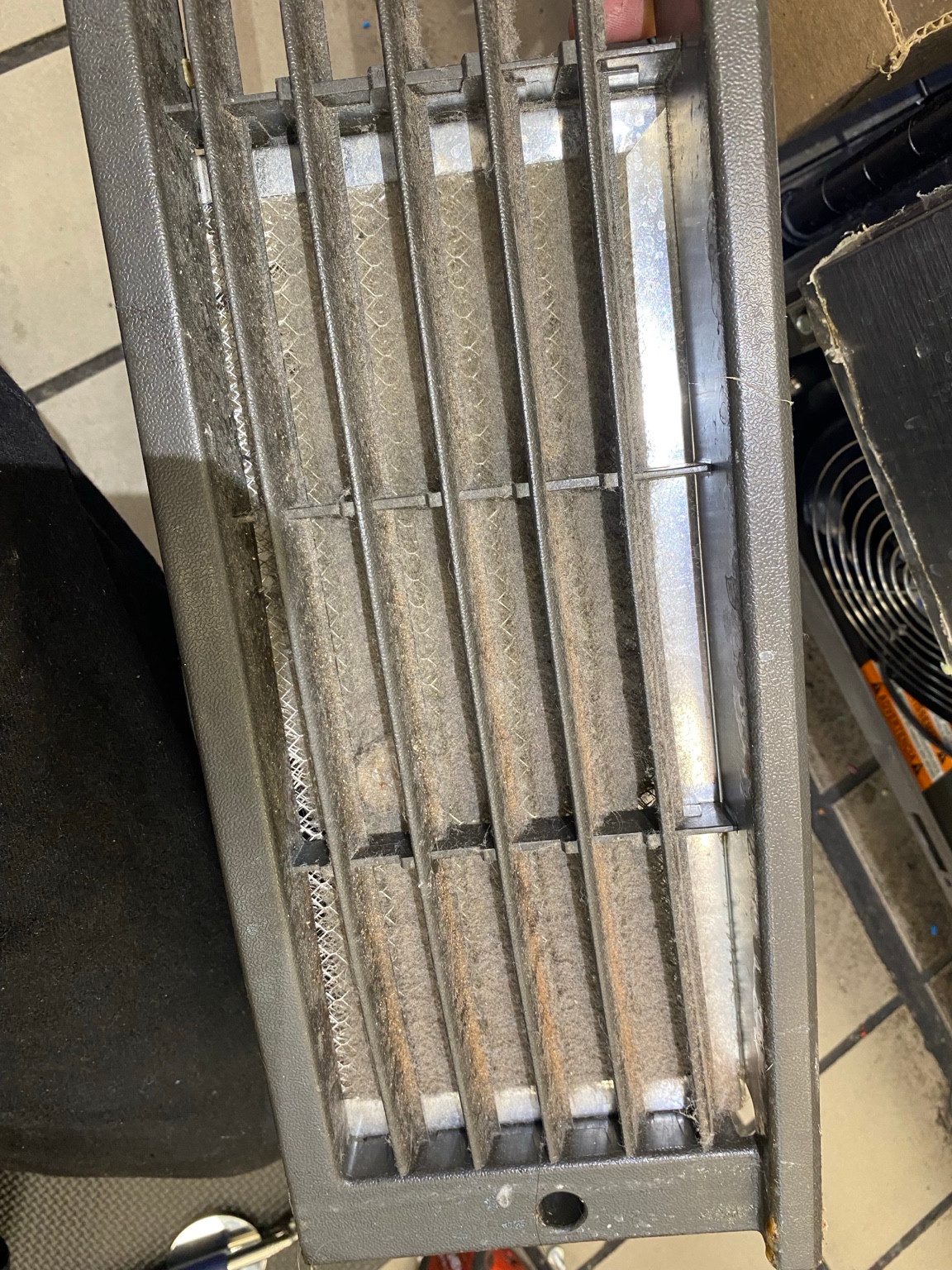
Heavily contaminated condenser air filter.
U06-03 · IMG_3304.jpegHeavily contaminated condenser air filter.
07
Part 1 · October 14, 2026

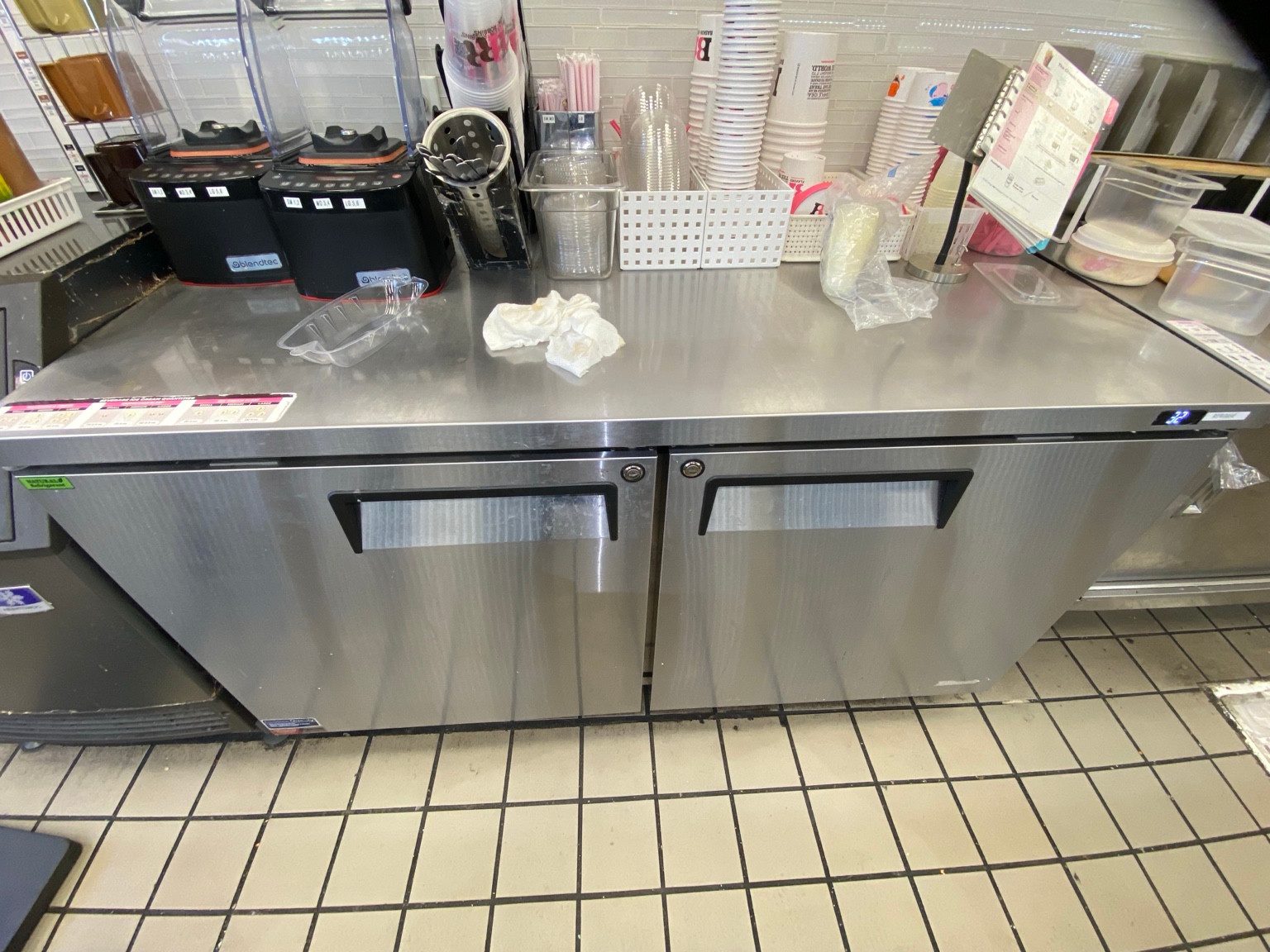
Unit 07: Turbo Air undercounter refrigerator

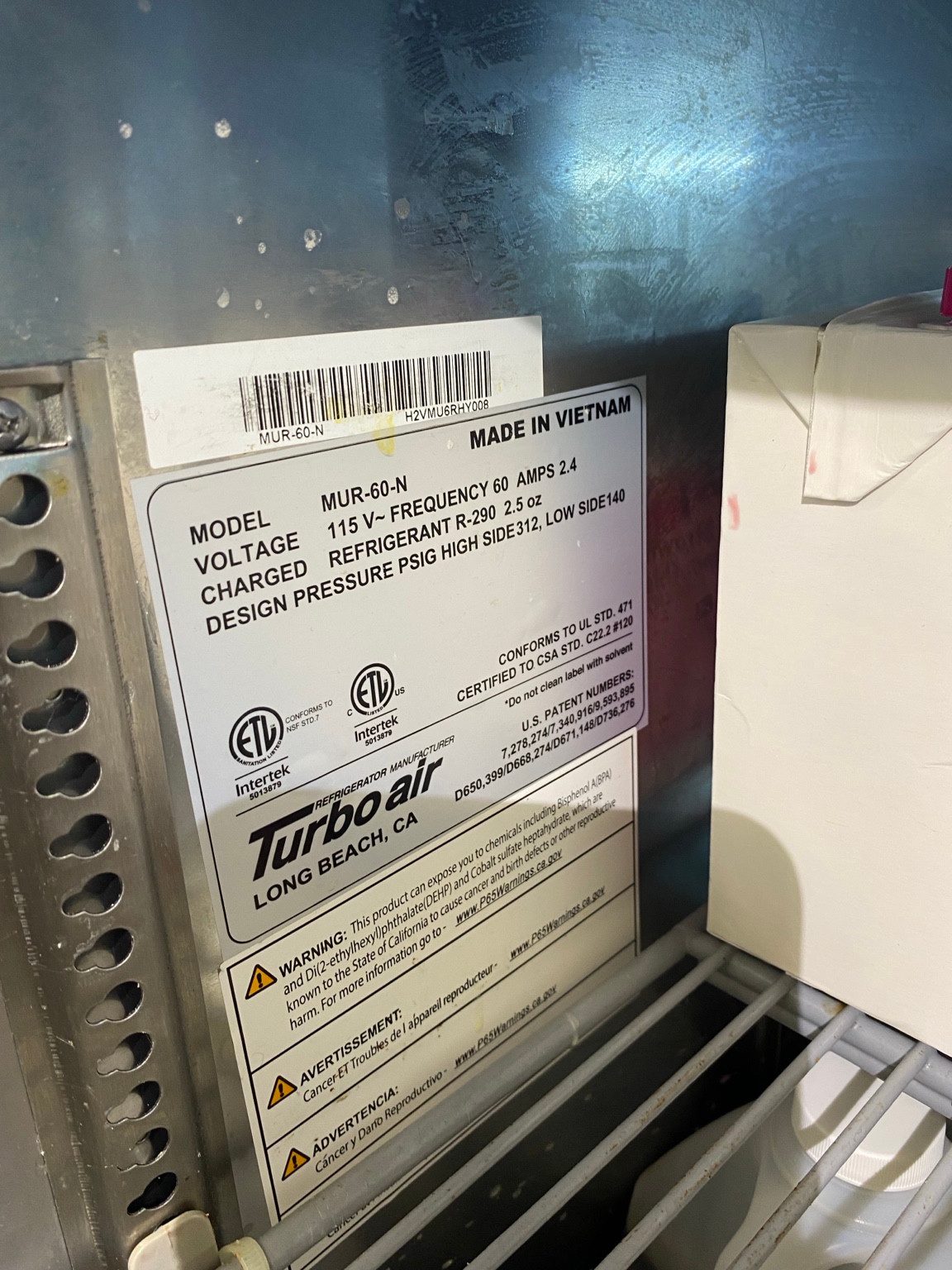
Model MUR-60-NSerial H2VMU6RHY008R290, 2.5 oz
PriorityHigh-priority maintenance. Temperature performance requires verification.

Inspection findings

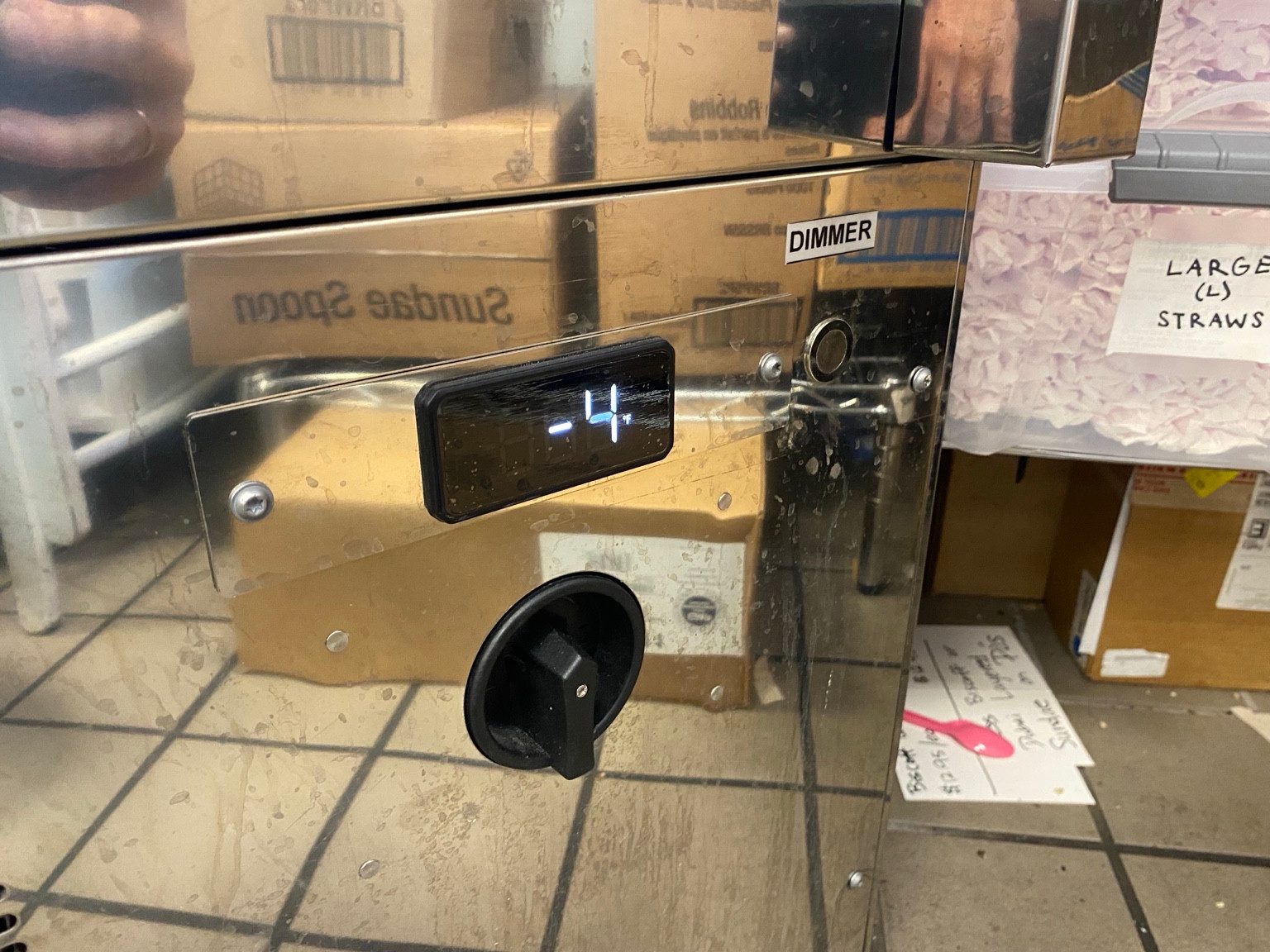
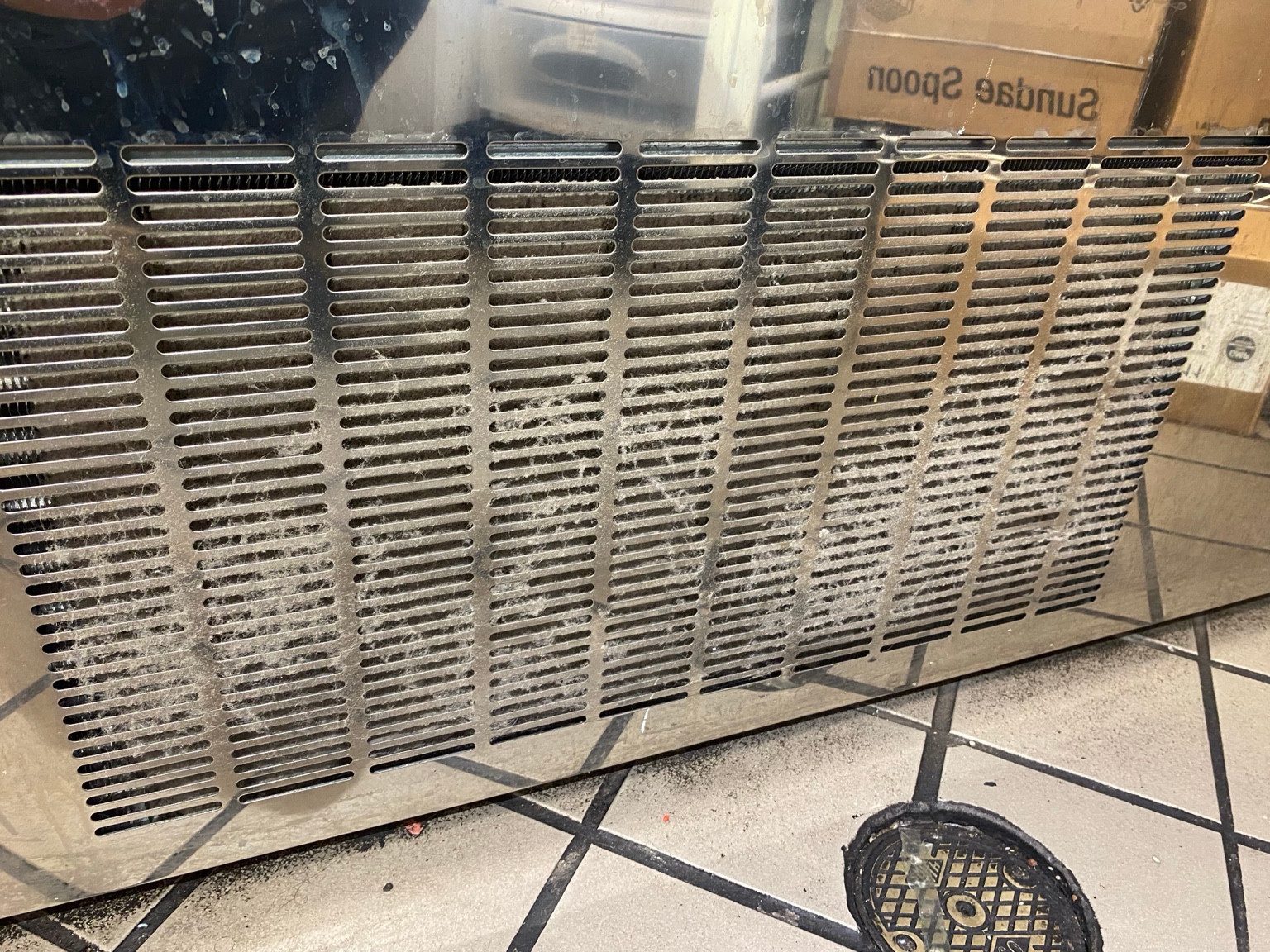
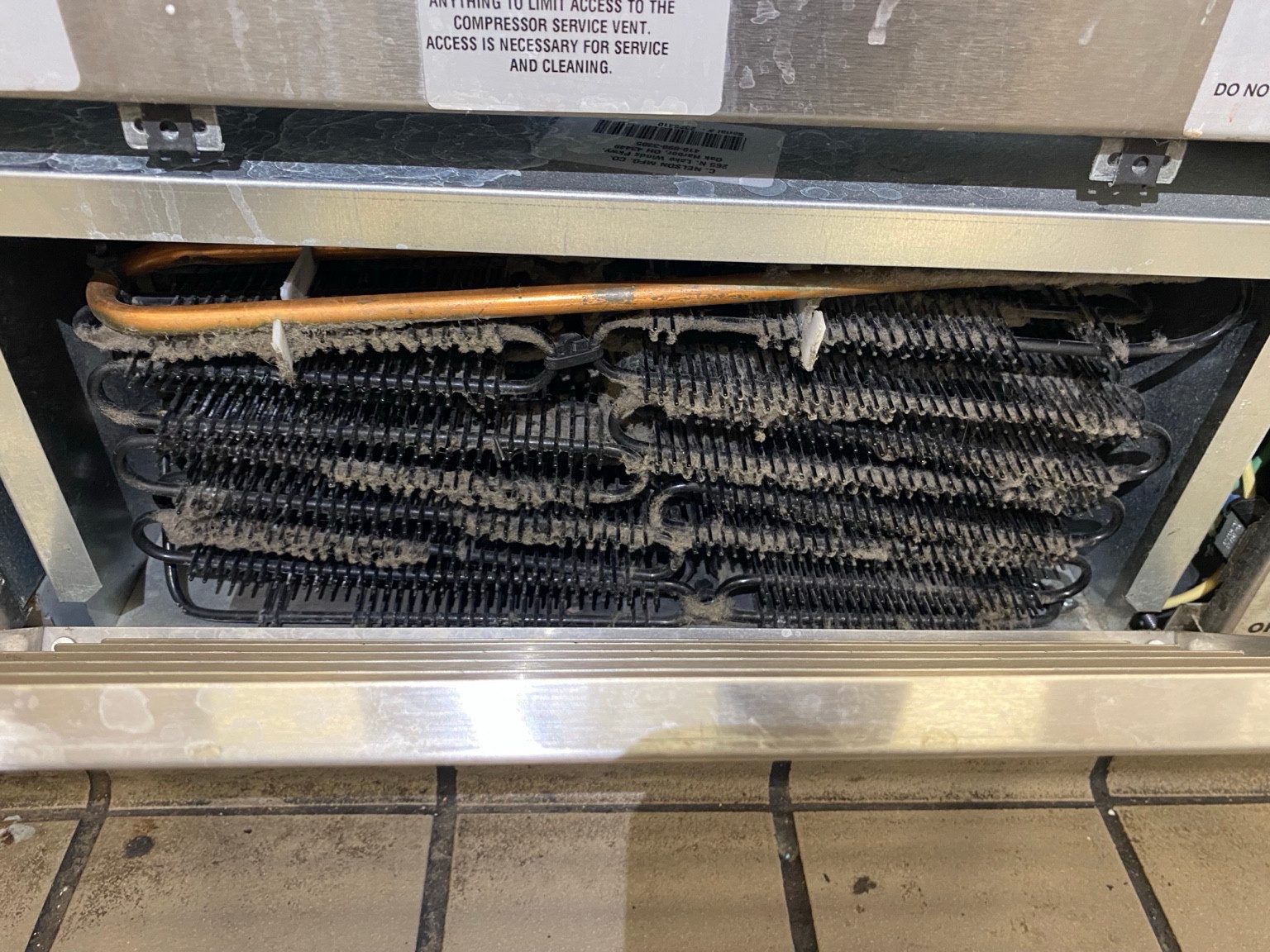
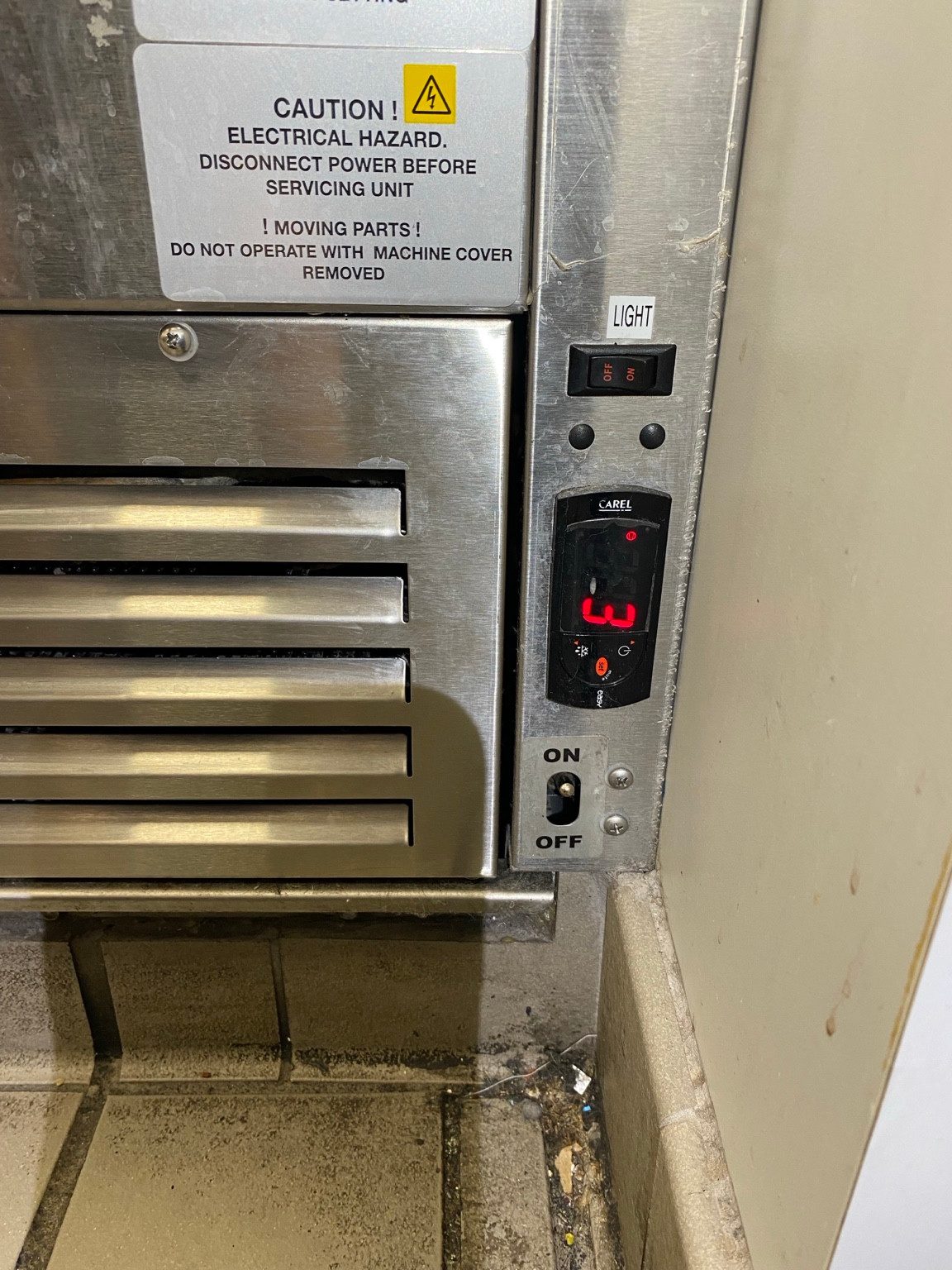
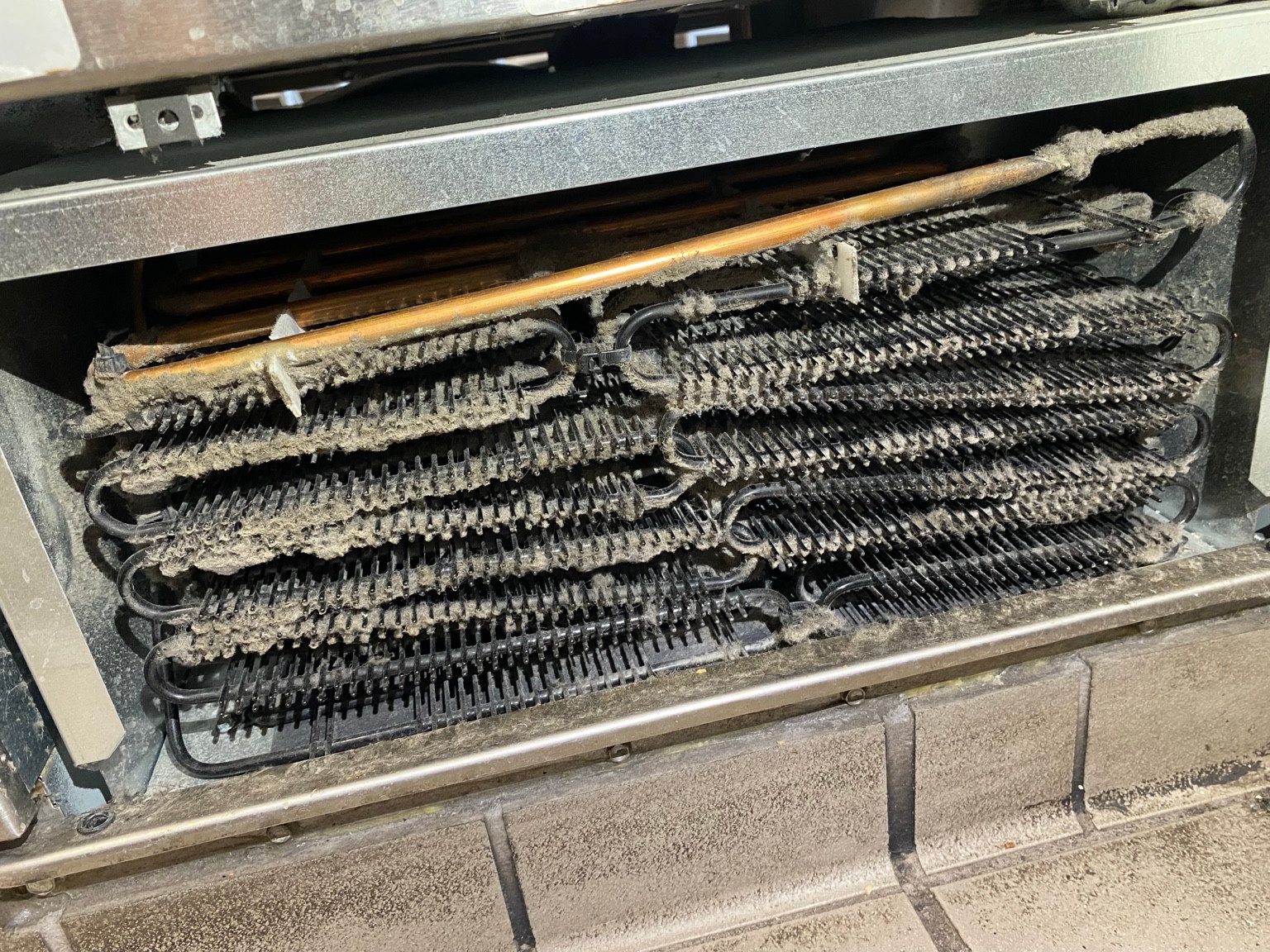
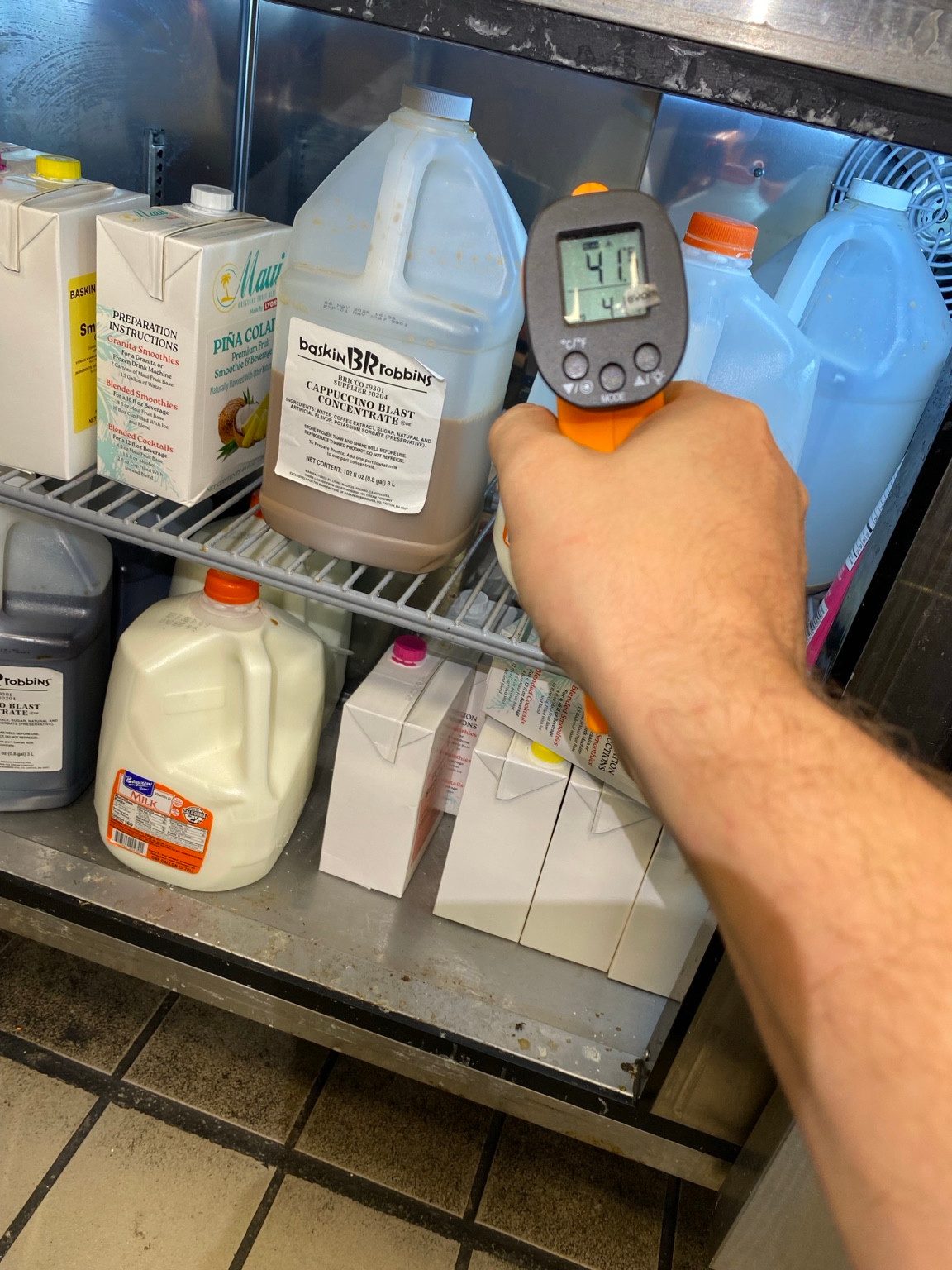
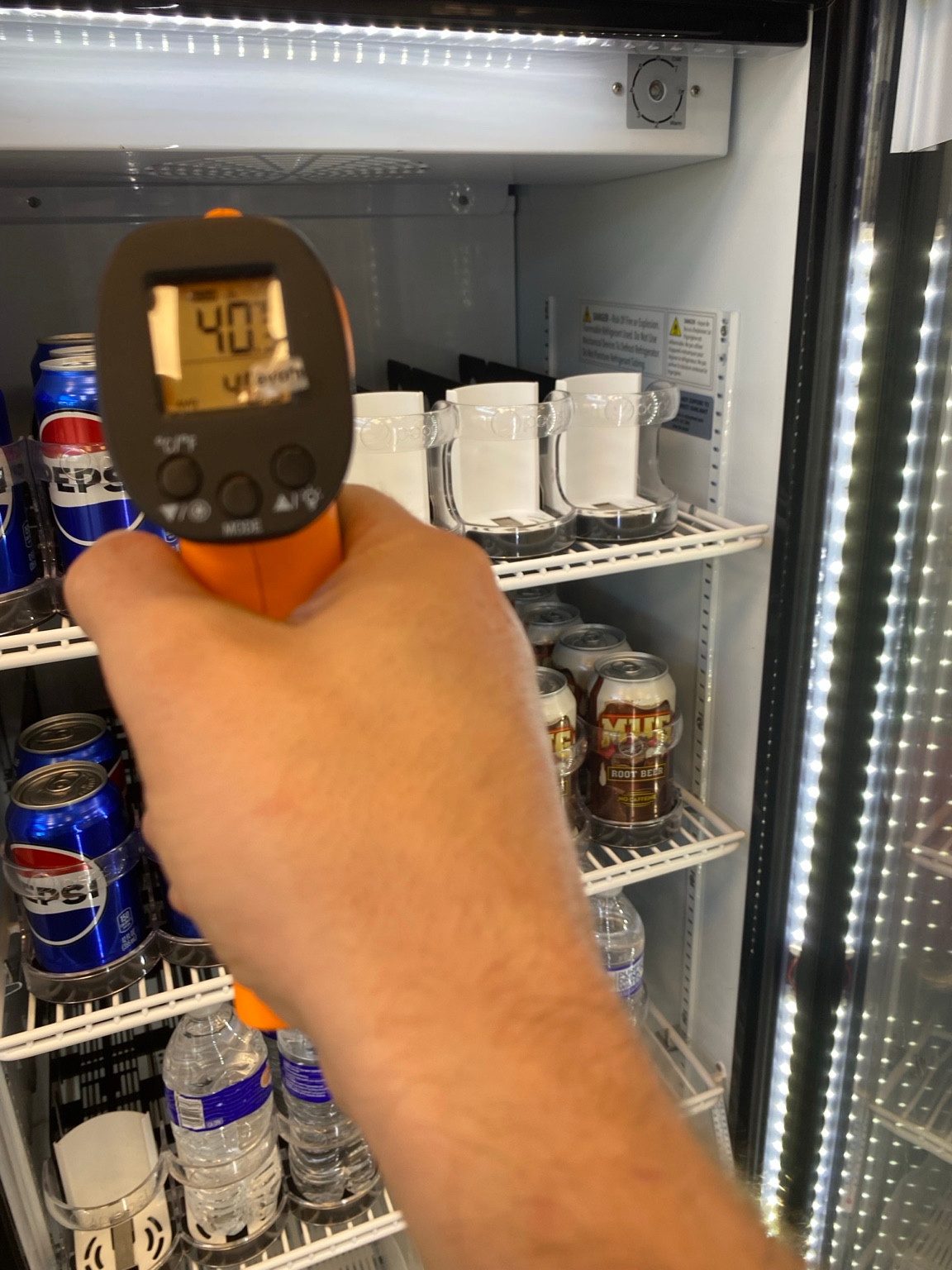
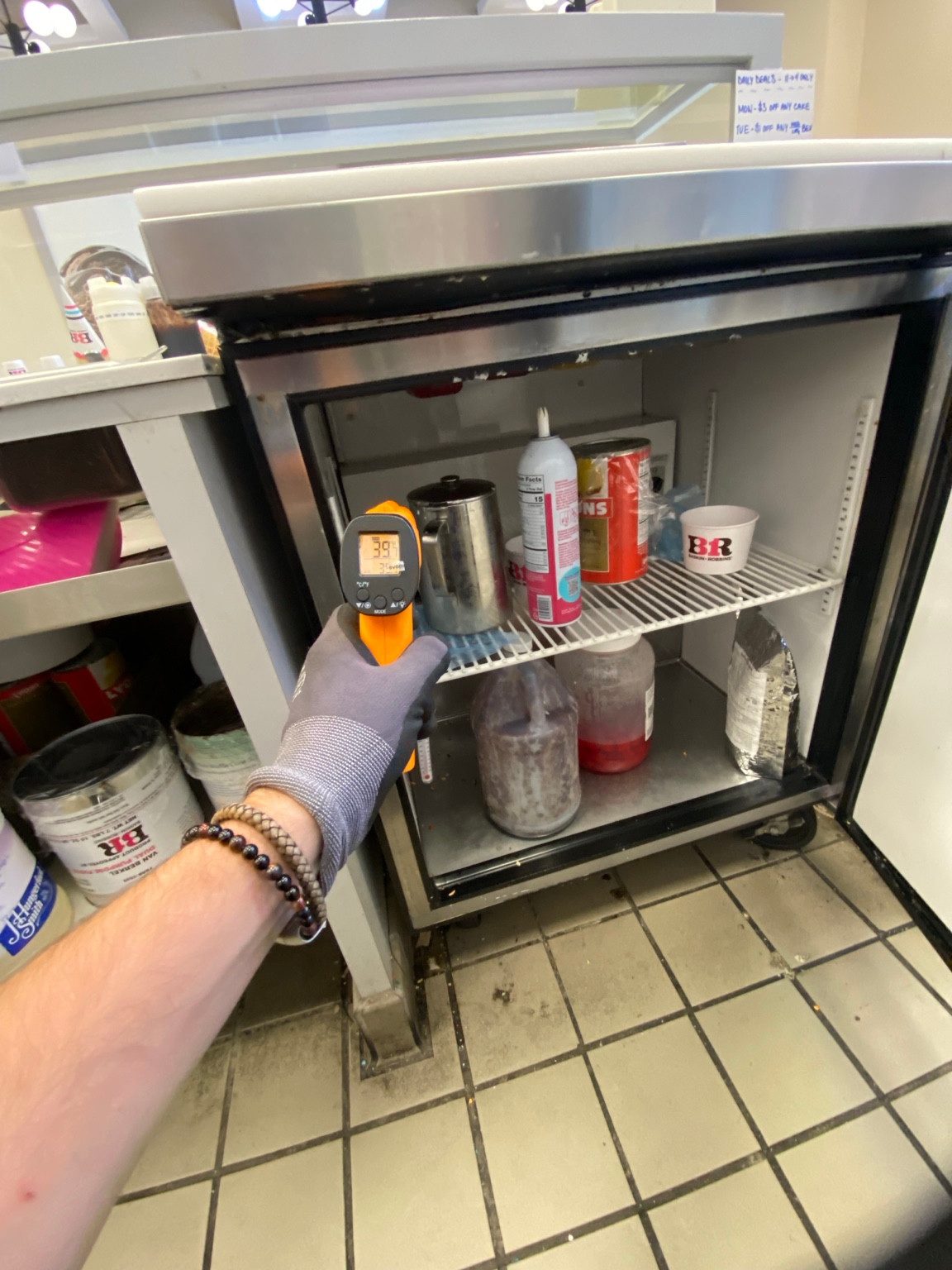
The refrigerator was operating during inspection; however, a discrepancy was observed between the controller temperature setting and the independent infrared surface measurement. Controller setpoint: 32°F. Infrared surface measurement: approximately 41.1°F. The condenser coil was found heavily contaminated with dust and debris. A damaged door gasket was also identified. Both conditions can contribute to reduced refrigeration efficiency, increased compressor runtime, and elevated compartment temperatures.

Recommendations

  • Perform thorough condenser coil cleaning.
  • Replace the damaged door gasket.
  • Verify actual compartment and product temperatures using an appropriate calibrated probe after allowing the unit to stabilize.
  • Perform additional refrigeration system diagnostics if temperatures remain outside acceptable operating limits.
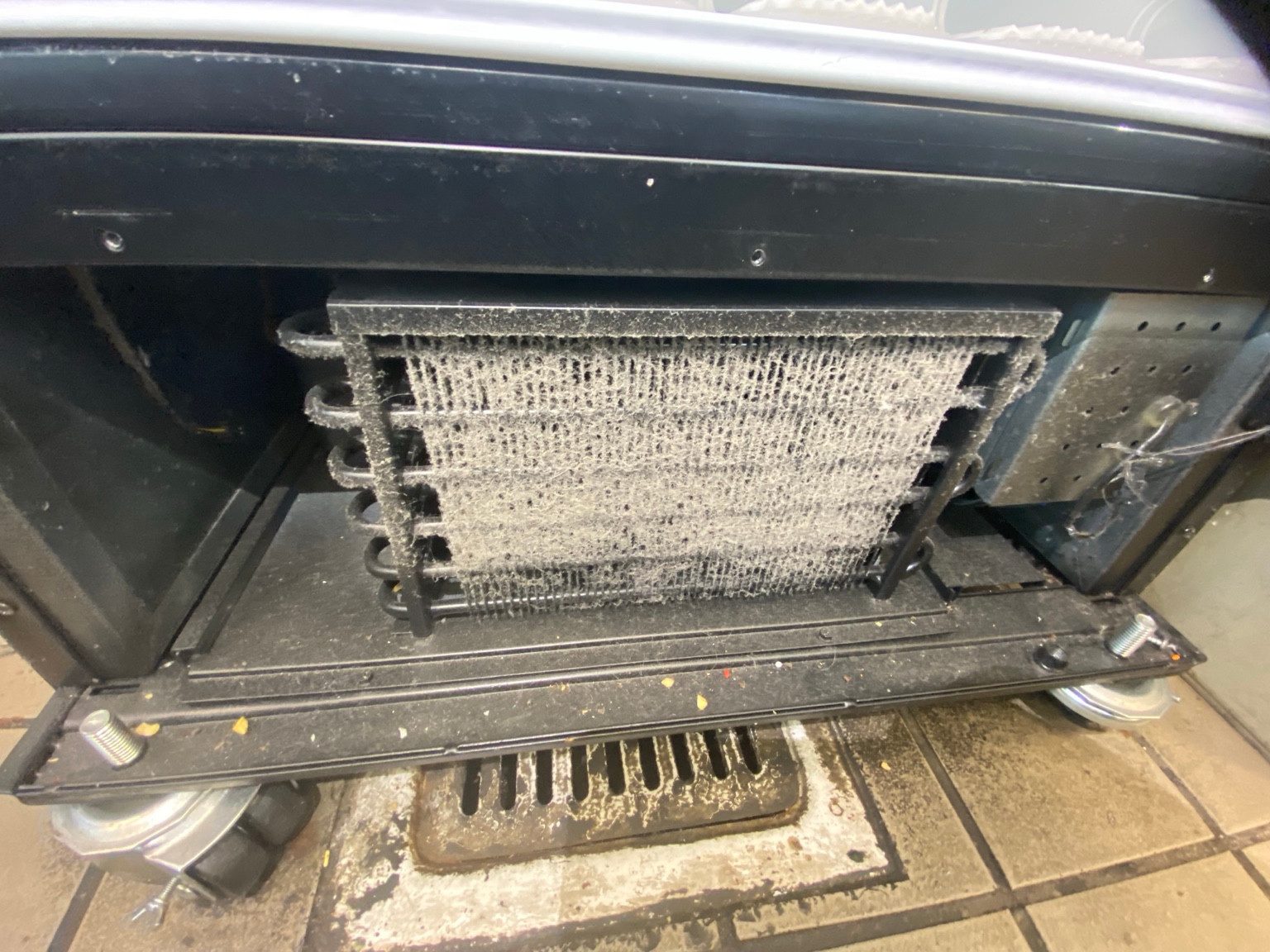
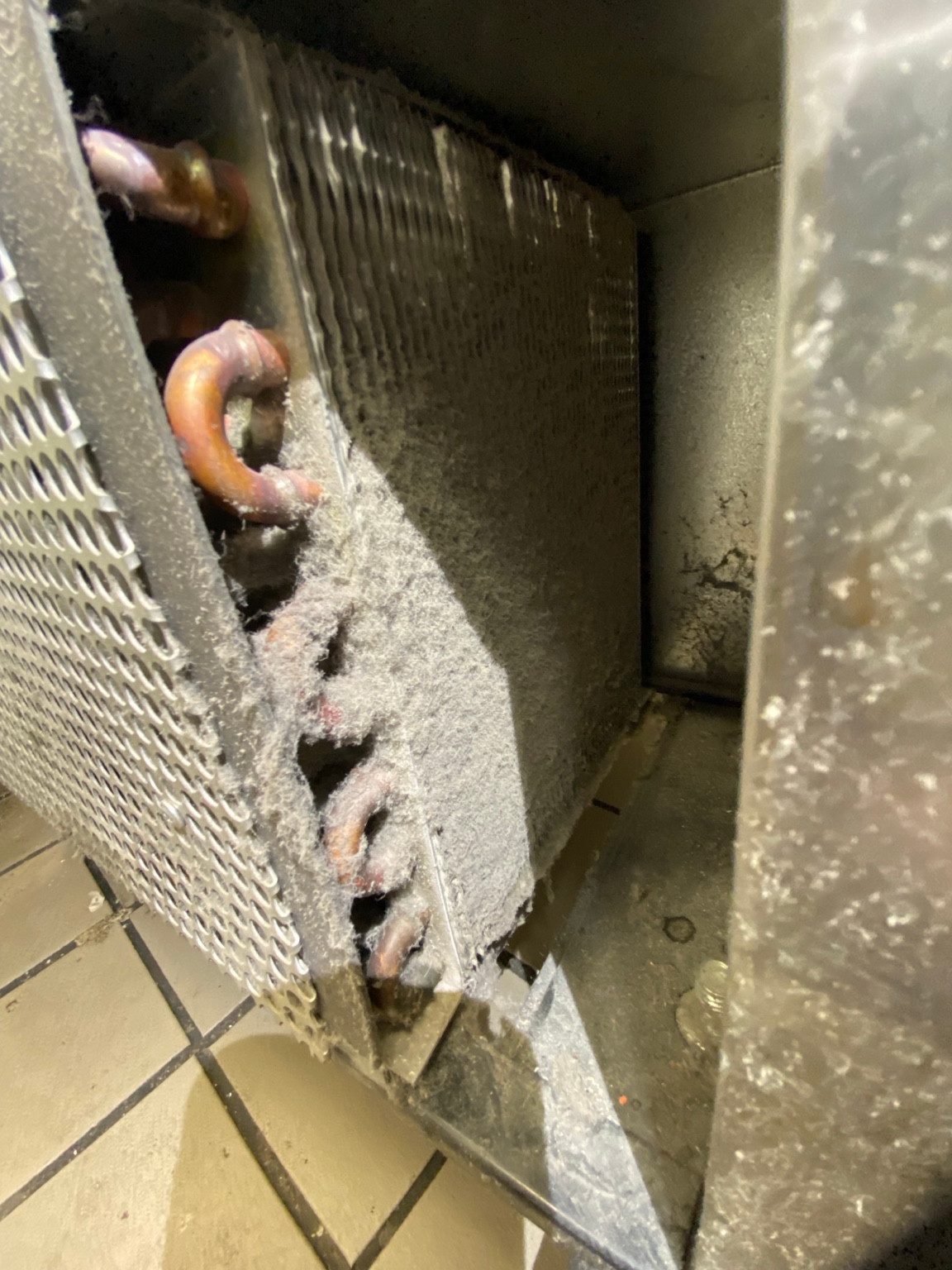
Heavily contaminated condenser coil.
U07-04 · IMG_3310.jpegHeavily contaminated condenser coil.
08
Part 1 · October 14, 2026

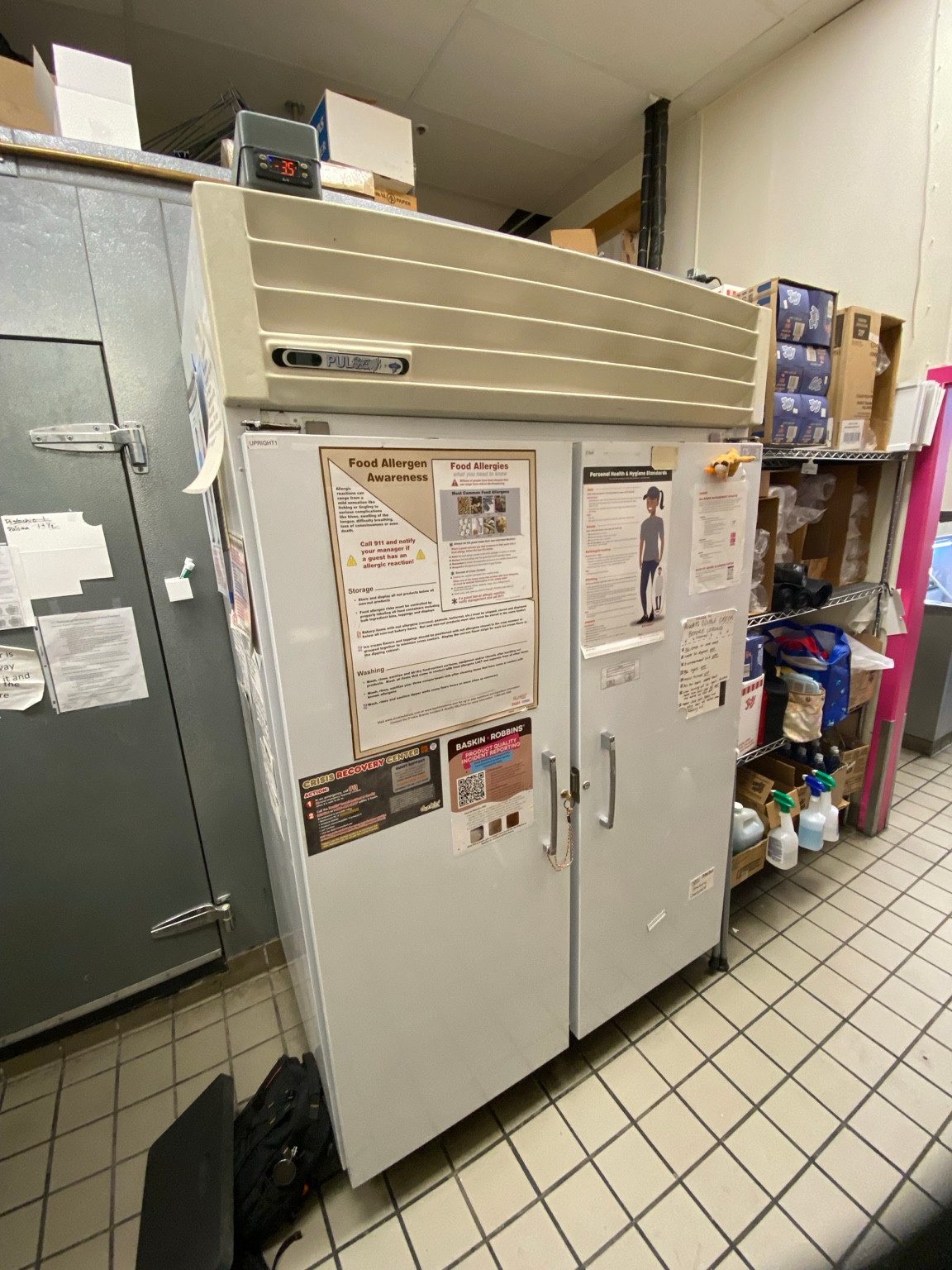
Unit 08: National Refrigeration upright freezer

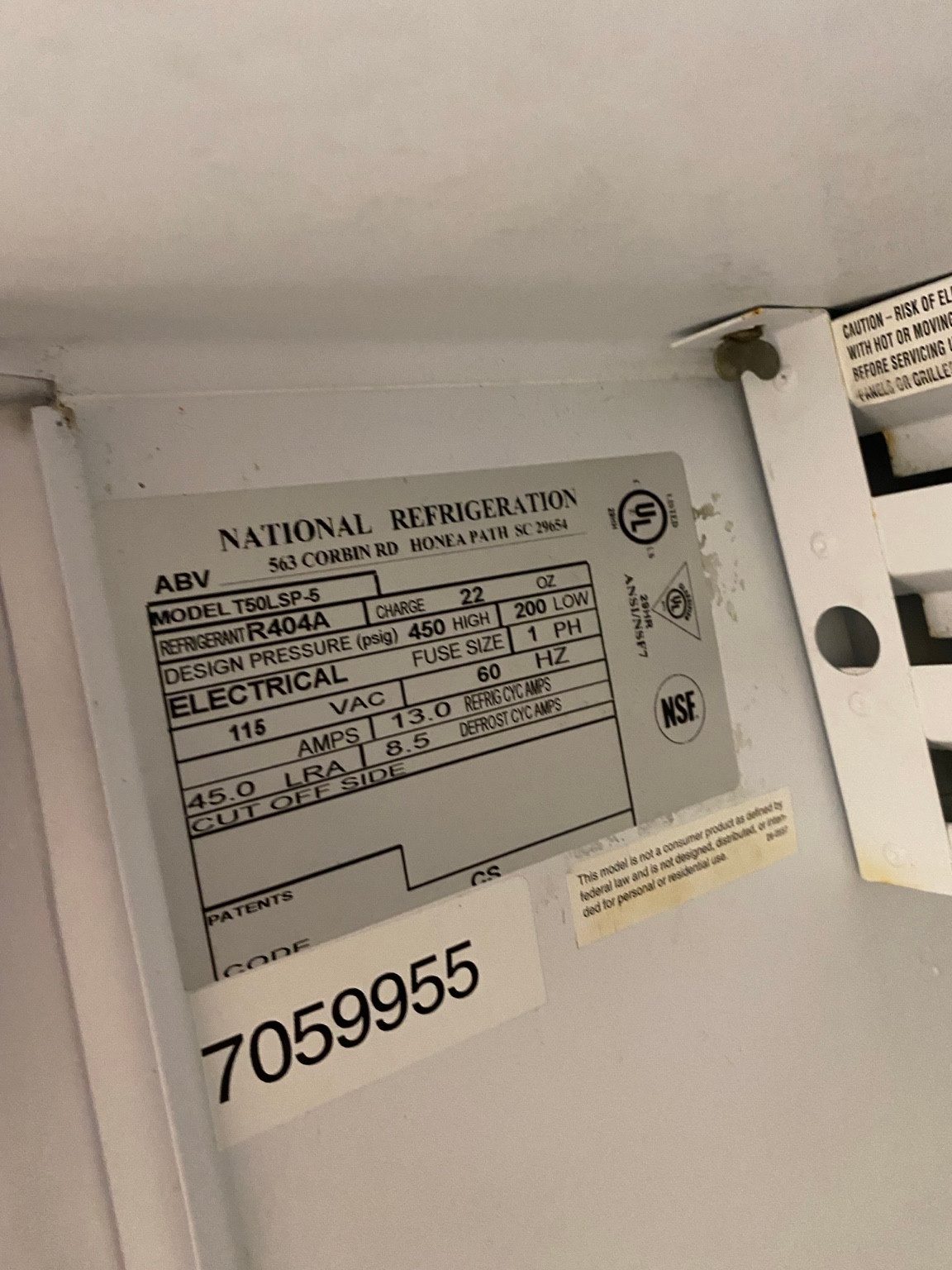
Model T50LSP-5Equipment ID 7059955Factory R404A, 22 oz
MaintenanceOperating at inspection. Gasket, lighting and documentation work.

Inspection findings

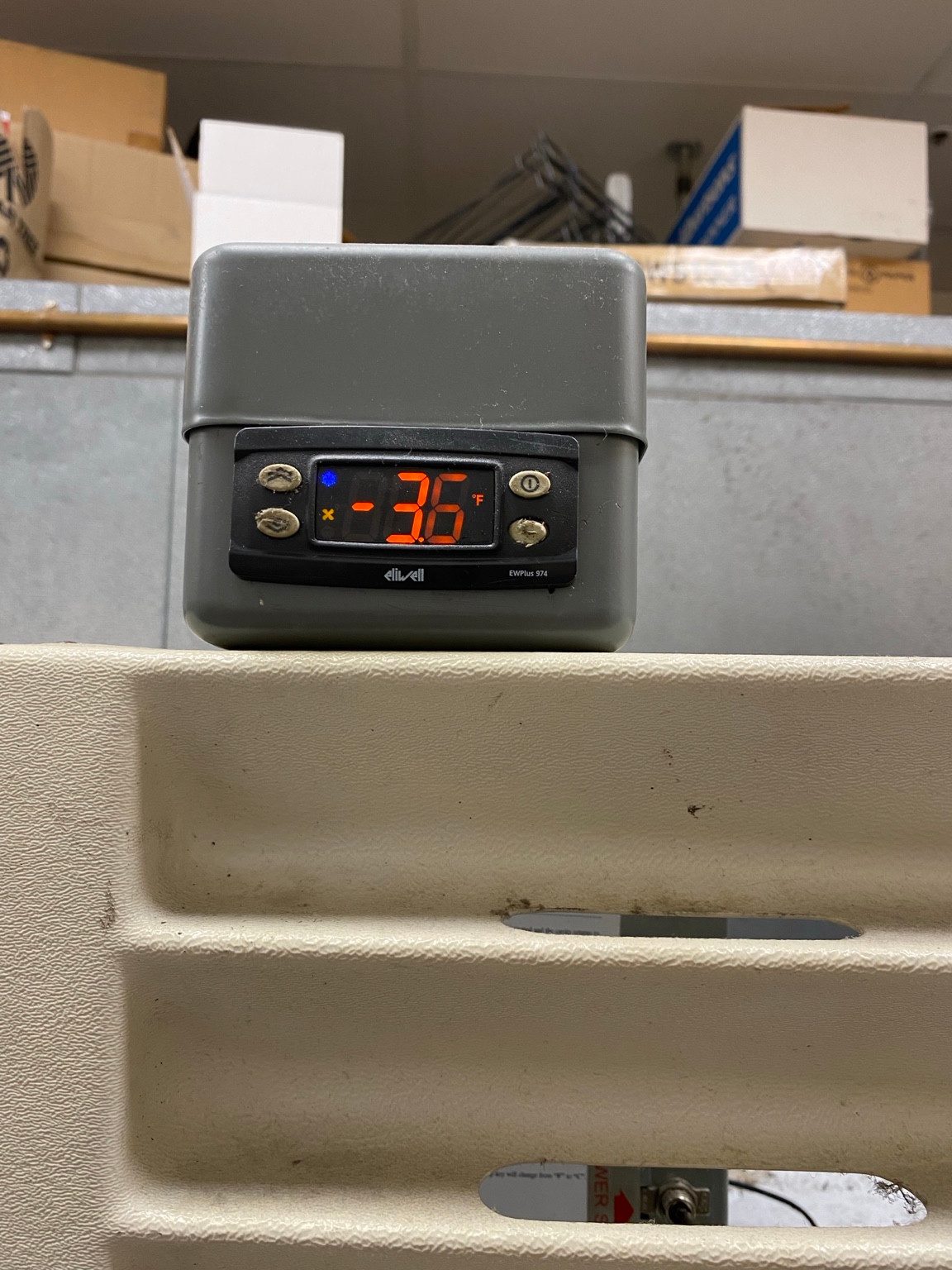
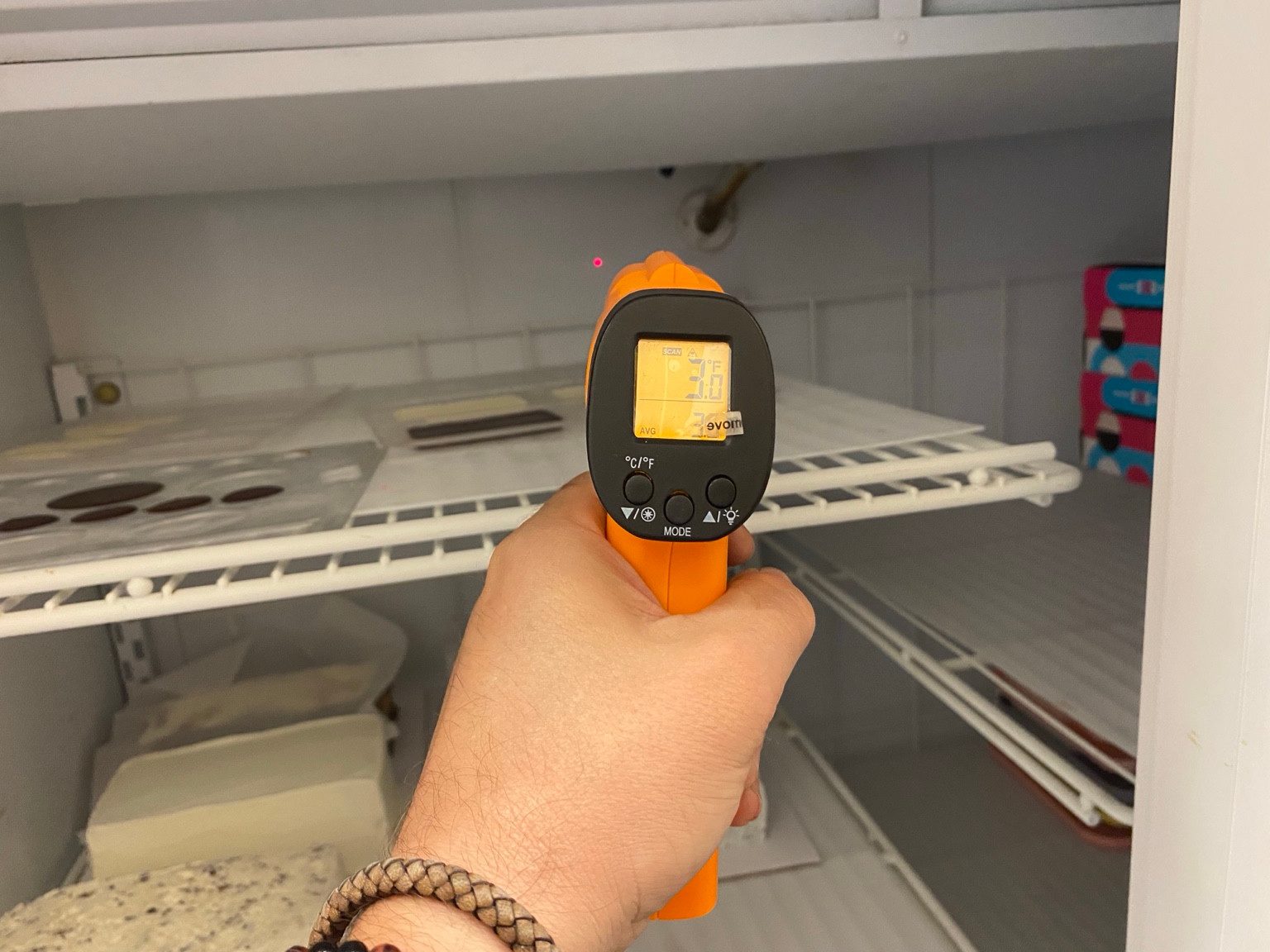
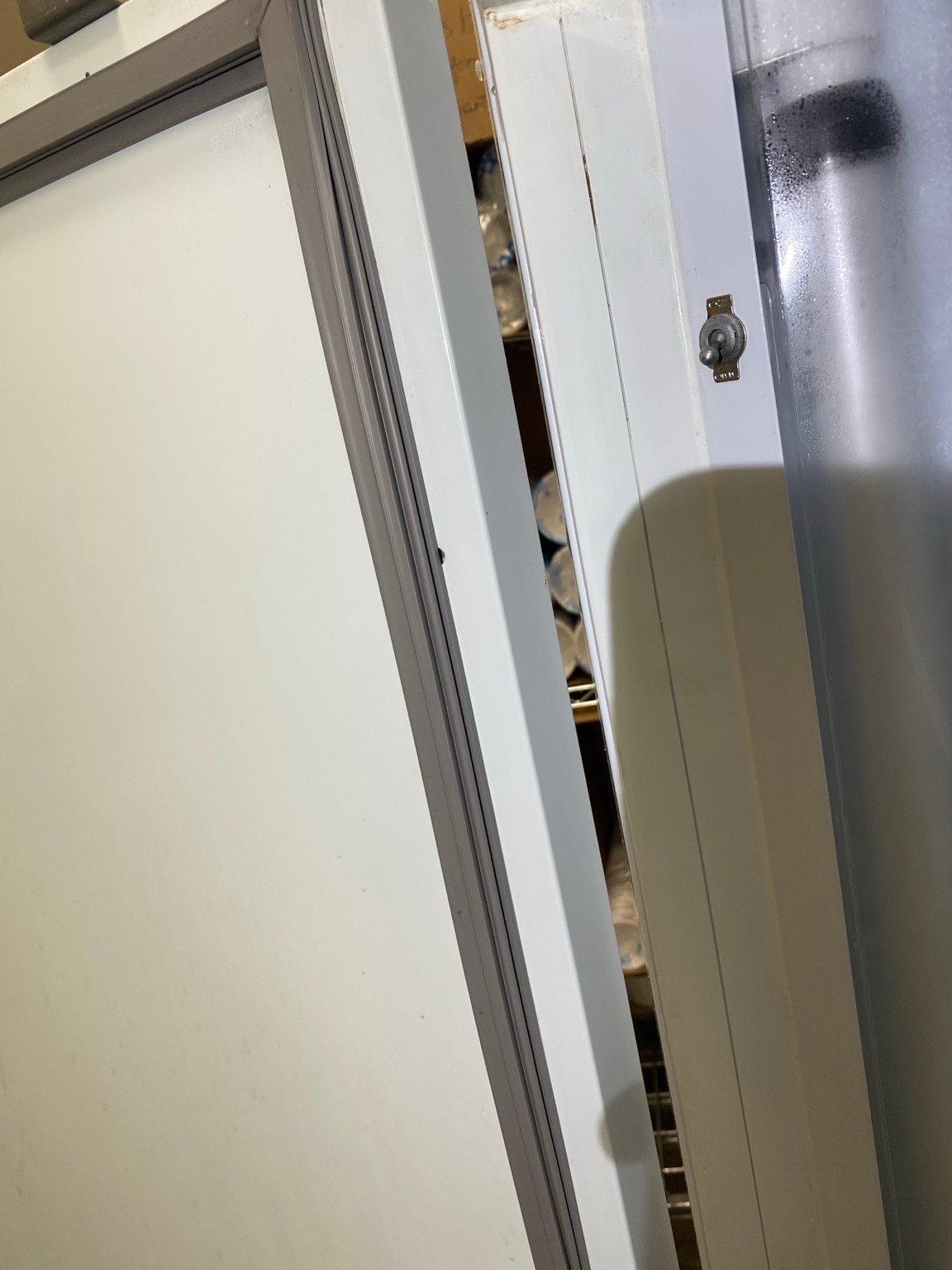
The freezer was operating and maintaining freezing temperatures during inspection. The refrigeration system had previously undergone modifications. The original compressor remains installed, while the factory temperature controller has been replaced with an aftermarket Eliwell EWPlus 974 controller. The refrigerant currently installed in the modified sealed system is not documented. Temperature observations: Controller display: approximately −3.6°F. Independent infrared surface measurement: approximately 3.0°F. Additional deficiencies identified during inspection include damaged door gaskets and inoperative interior lighting.

Recommendations

  • Replace damaged door gaskets to restore proper compartment sealing.
  • Diagnose and repair the interior lighting system.
  • Identify and document the refrigerant currently installed before performing any future sealed-system service.
  • Continue monitoring operating temperatures.
  • Based on observed operation, immediate sealed-system repair is not recommended without additional evidence of refrigeration performance problems.
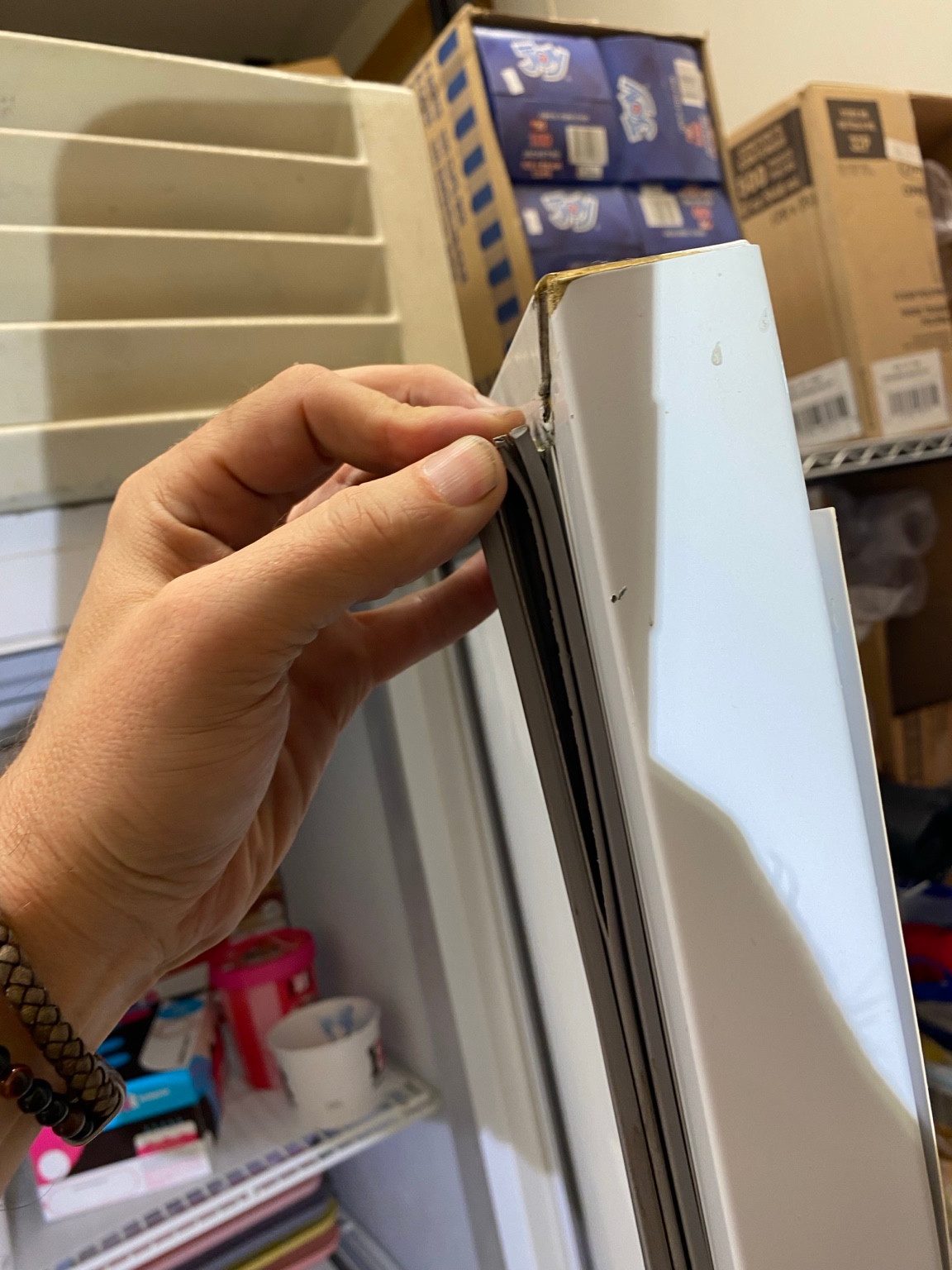
Separated or damaged lower door gasket.
U08-05 · IMG_3321.jpegSeparated or damaged lower door gasket.
09
Part 1 · October 14, 2026

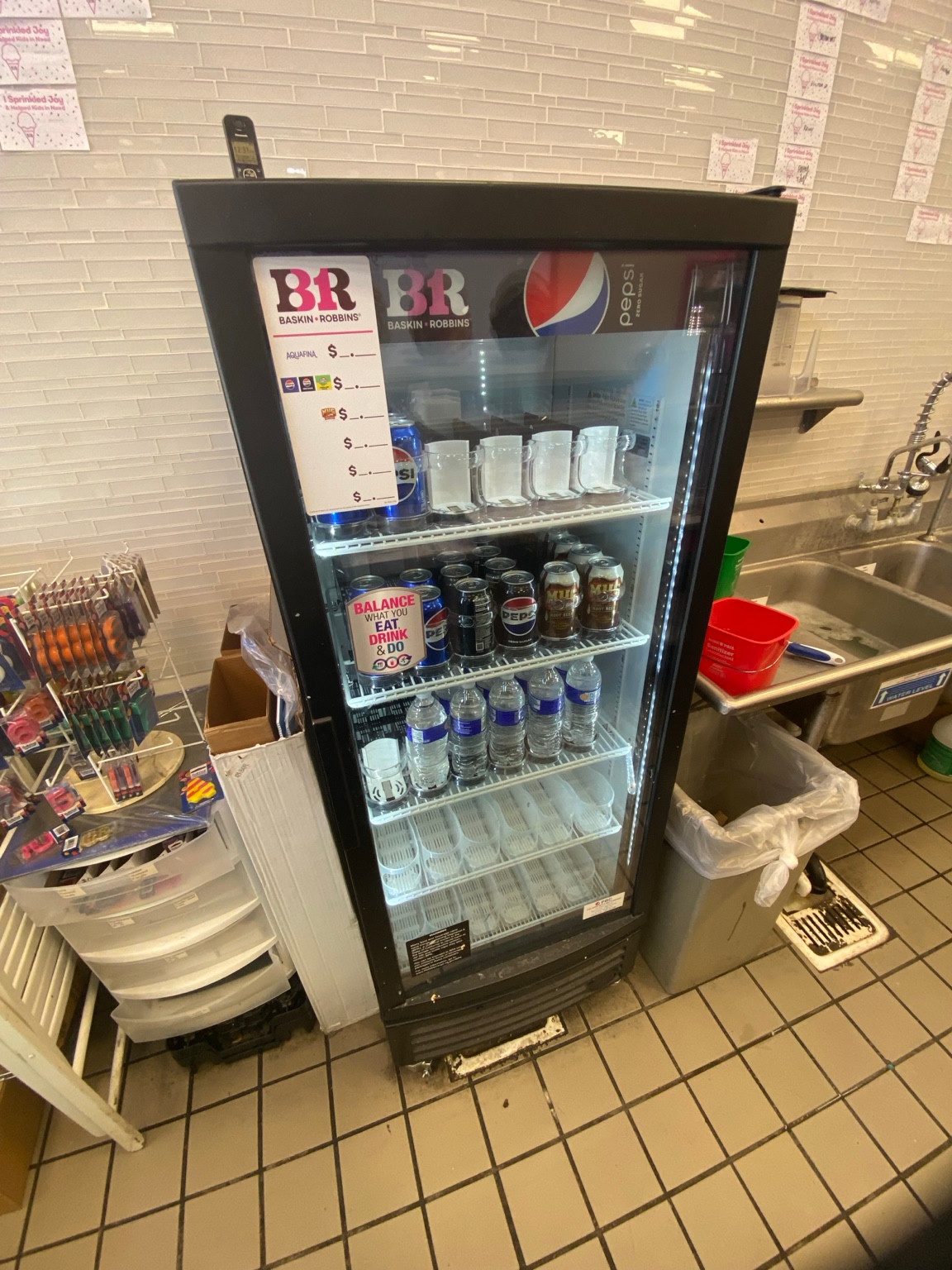
Unit 09: IDW display refrigerator

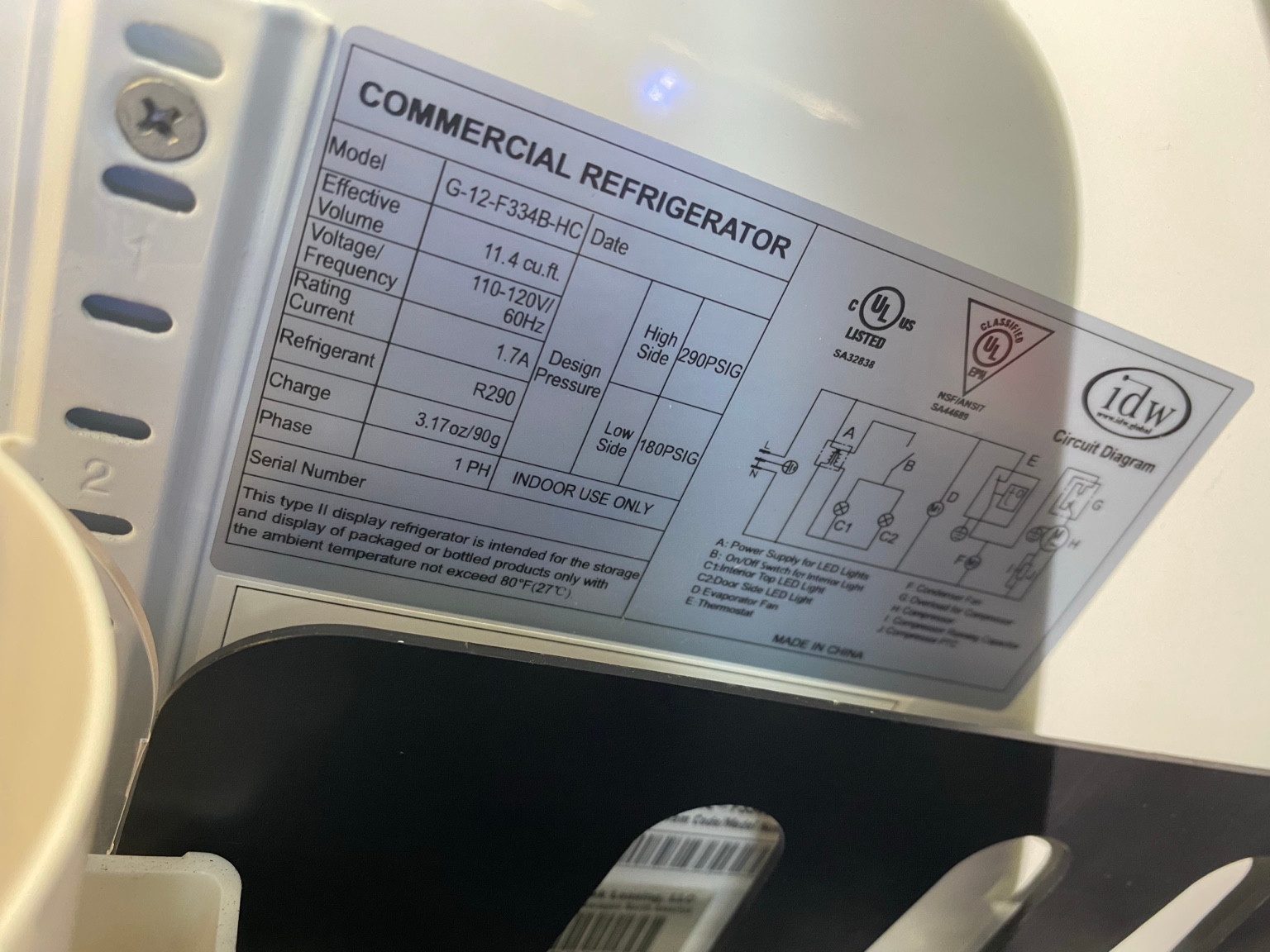
Model G-12-F334B-HCR290, 90 g (3.17 oz)
MaintenanceOperating at inspection. Condenser cleaning required.

Inspection findings

The unit was operational during inspection. Significant dust accumulation was observed on the condenser coil, restricting effective heat rejection. Continued operation with a contaminated condenser can increase condensing pressure, compressor workload, energy consumption, and the risk of overheating.

Recommendations

  • Perform thorough condenser coil cleaning.
  • Inspect condenser fan operation and airflow, and verify temperature stability following maintenance.
Condenser dust and debris.
U09-04 · IMG_3266.jpegCondenser dust and debris.
10
Part 1 · October 14, 2026

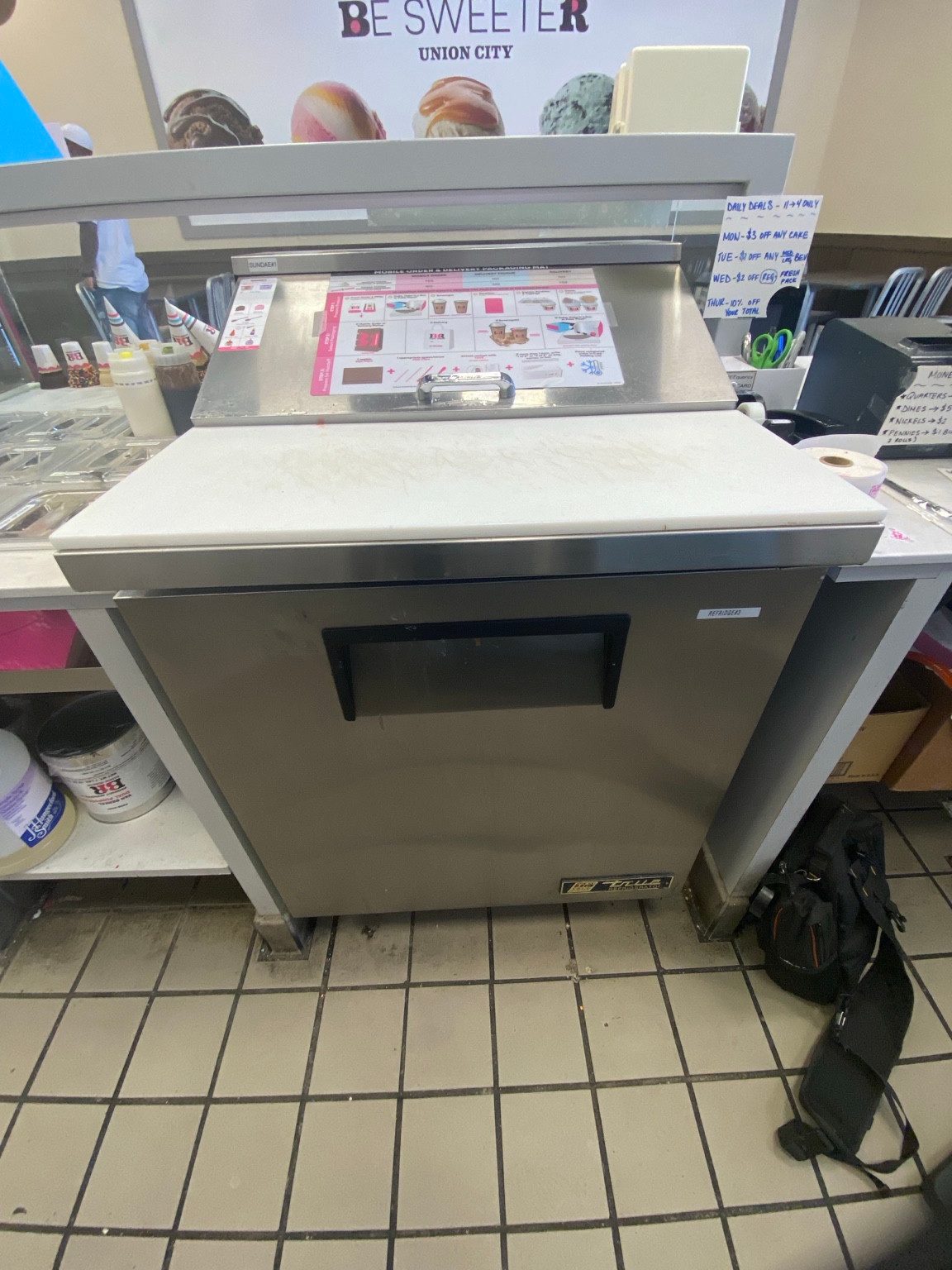
Unit 10: True sandwich/salad prep table

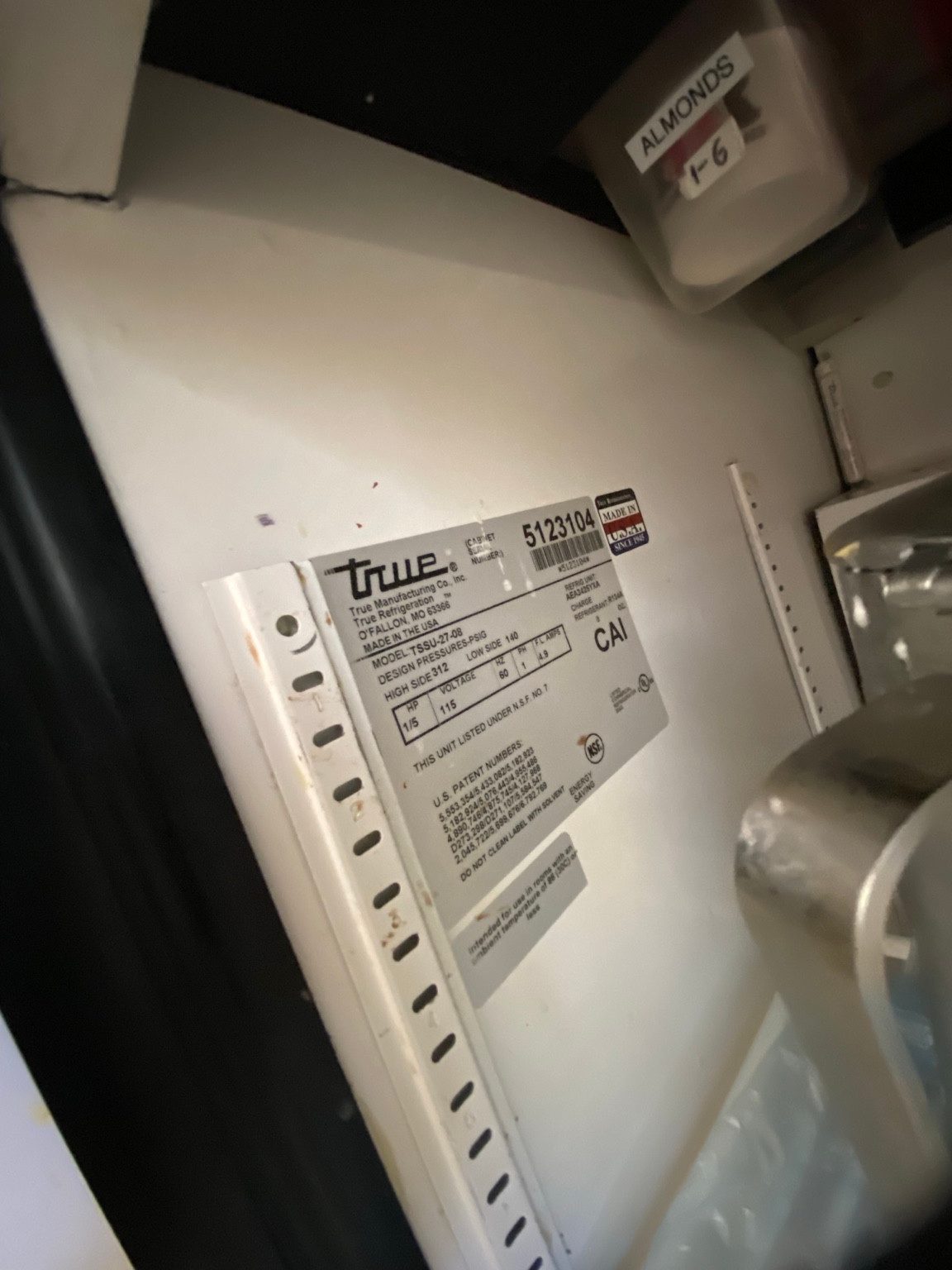
Model TSSU-27-08Serial 5123104R134a
MaintenanceOperating at inspection. Preventive condenser cleaning required.

Inspection findings

The refrigeration unit was operating normally during inspection. No significant mechanical or cooling performance issues were identified. The condenser coil requires cleaning due to accumulated dust and debris, which may restrict airflow and reduce heat transfer efficiency over time.

Recommendations

  • Perform condenser coil cleaning to restore proper airflow, maintain cooling efficiency, and prevent potential compressor overheating and premature component failure.
Dust and debris at the condenser.
U10-04 · IMG_3271(1).jpegDust and debris at the condenser.

Walk-in freezer and rooftop HVAC

WI
Part 2 · October 16, 2026

Walk-in freezer

Indoor evaporator BOHN LET090BKNor-Lake badge on enclosure

Overall System Condition

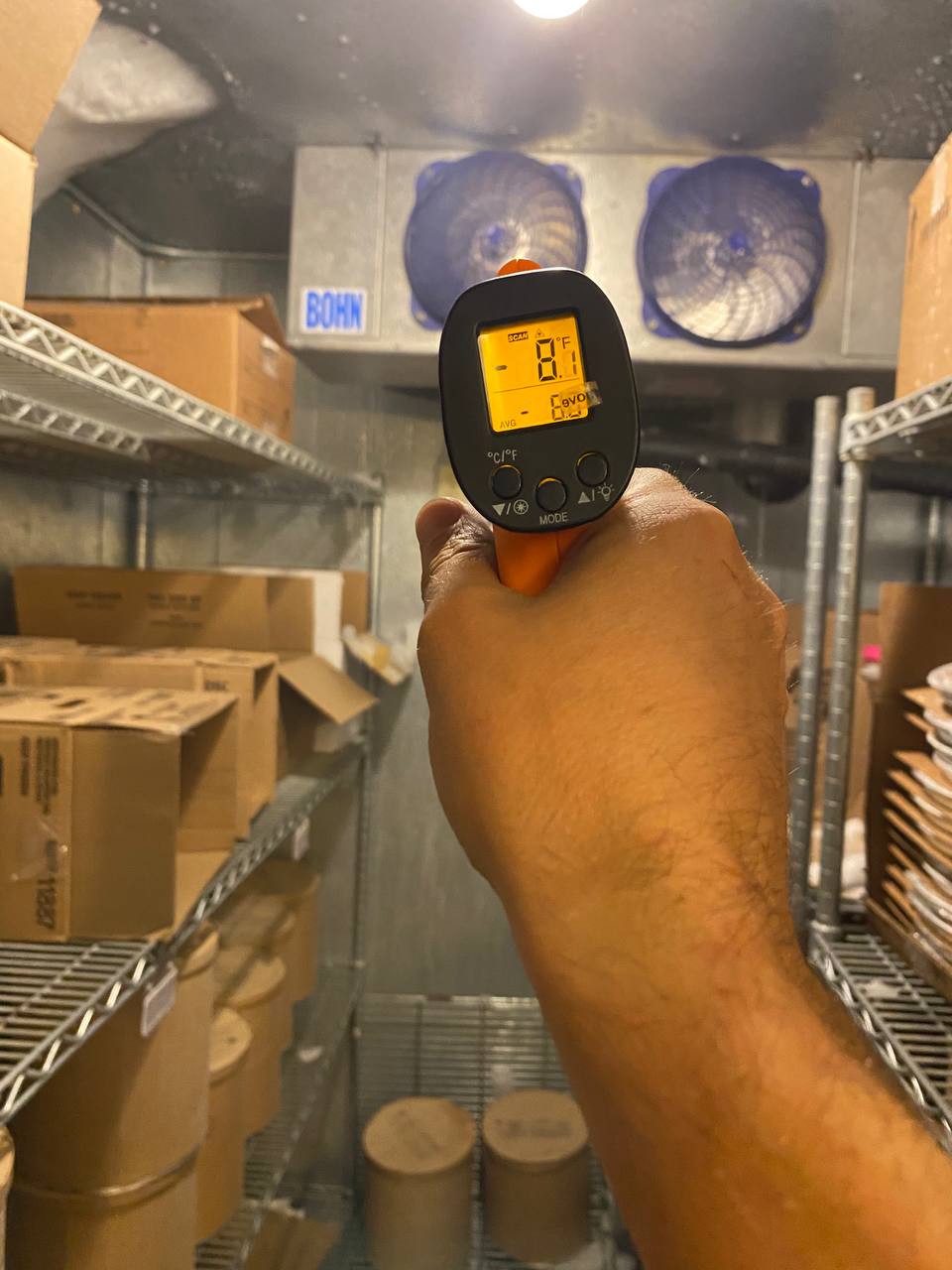
The system was operating during inspection. An infrared surface reading of approximately -8°F was recorded.

However, several potentially serious conditions were identified that may affect long-term system reliability, energy efficiency, and the condition of the freezer enclosure.

Inspection Findings

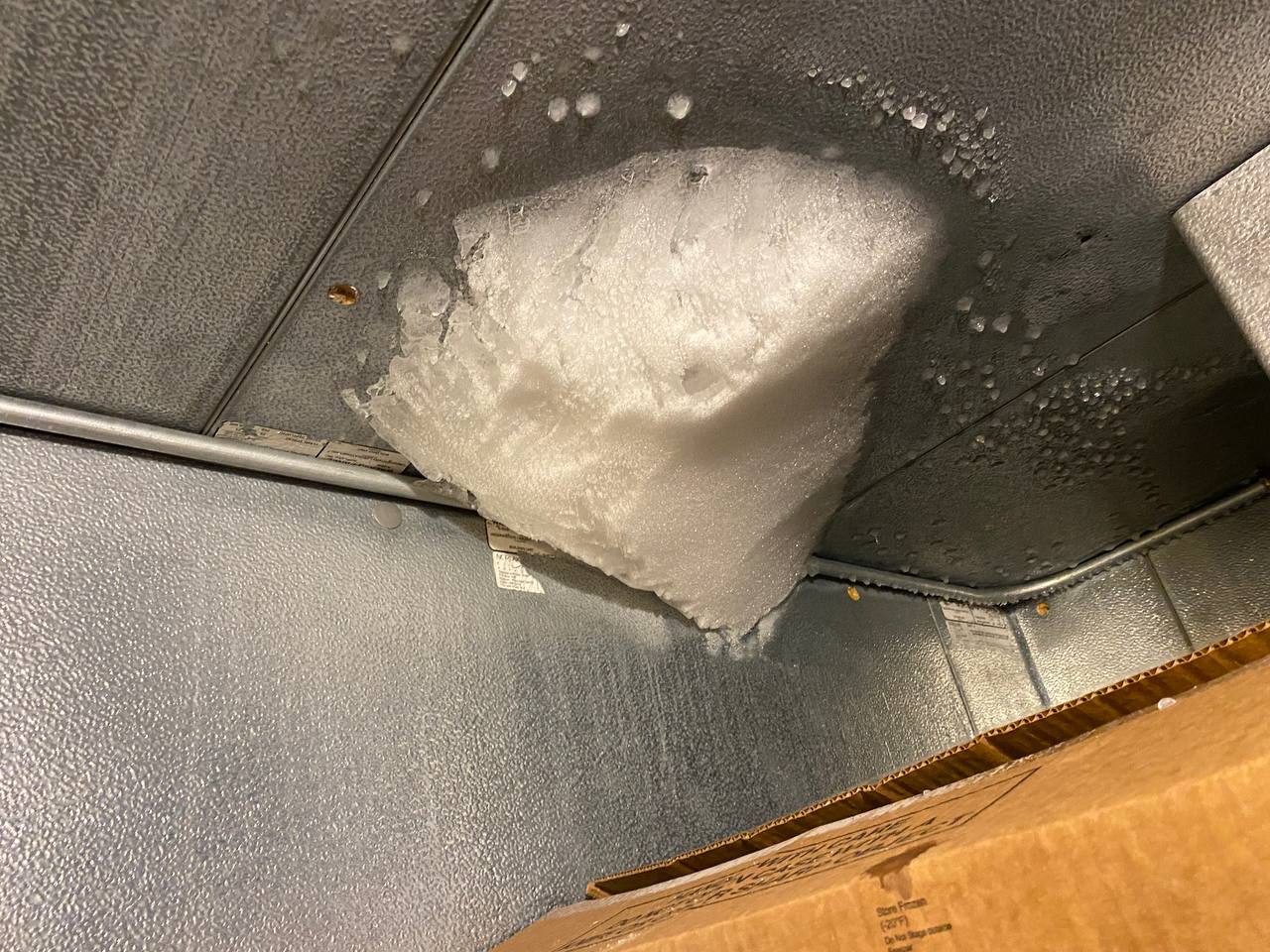
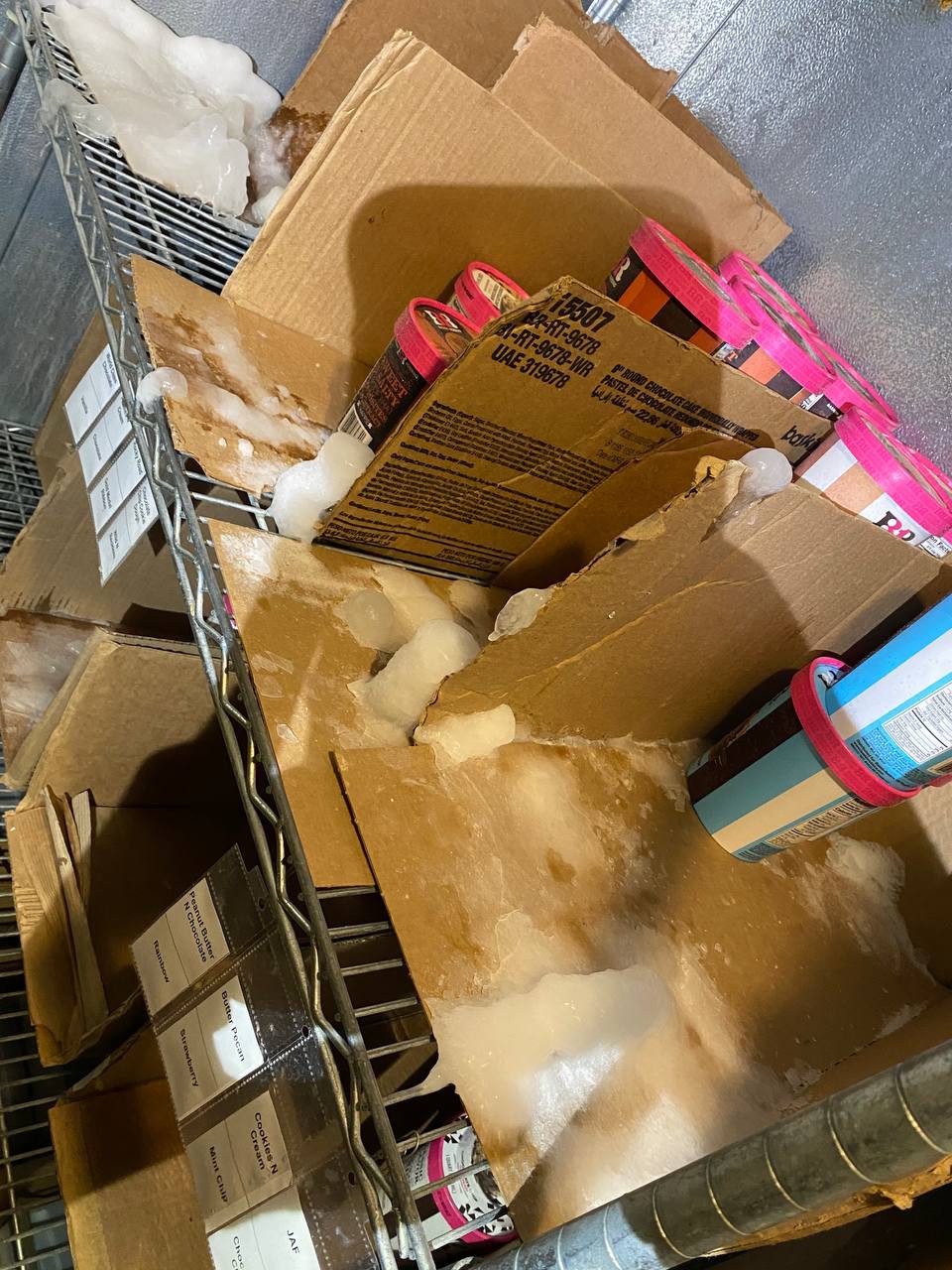
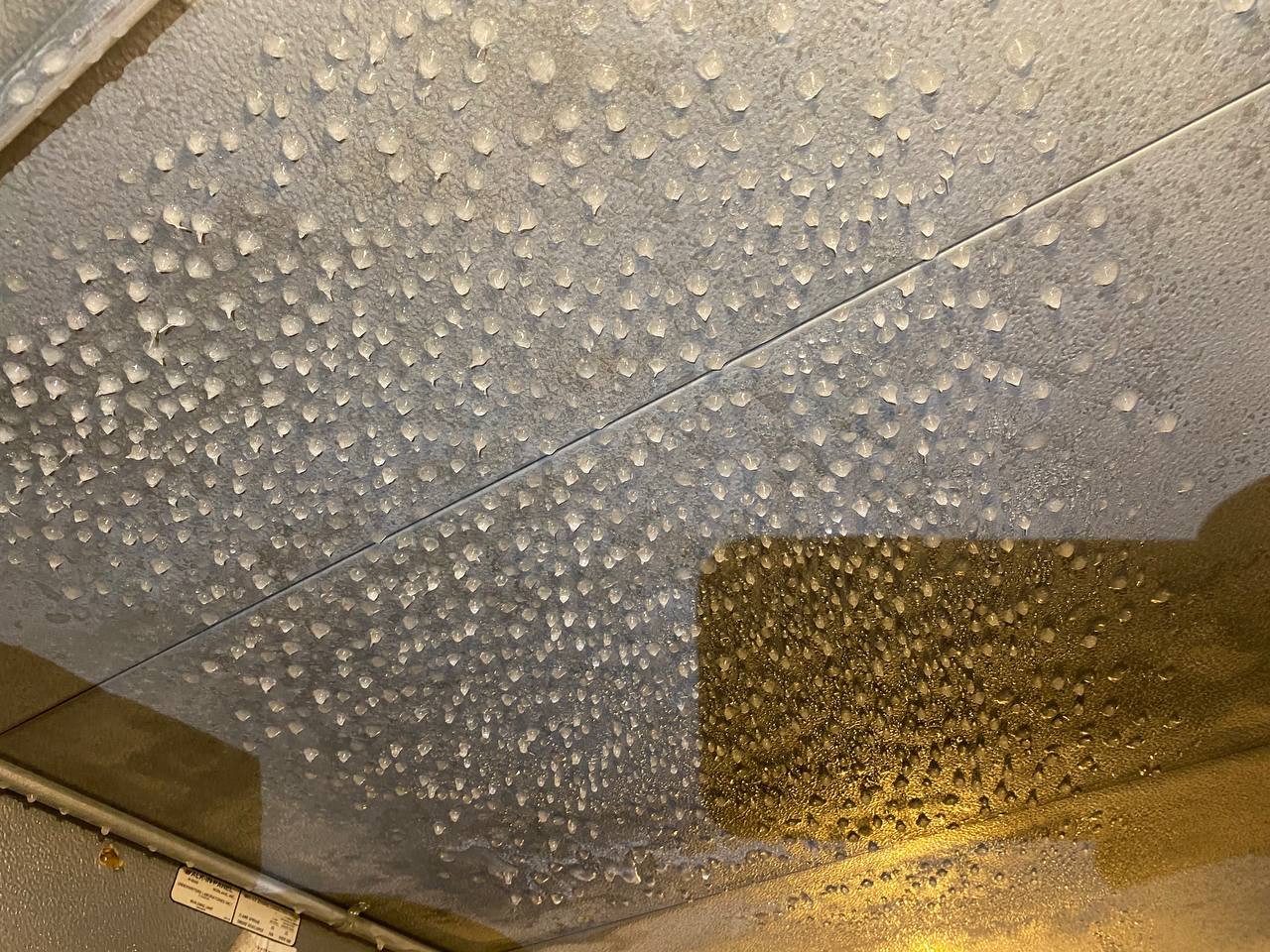
1Excessive Ice Accumulation and Moisture Intrusion

Significant ice accumulation was observed on the ceiling, surrounding surfaces, and shelving, primarily near the evaporator area, gradually decreasing farther away.

The evaporator itself appeared relatively free of excessive ice buildup.

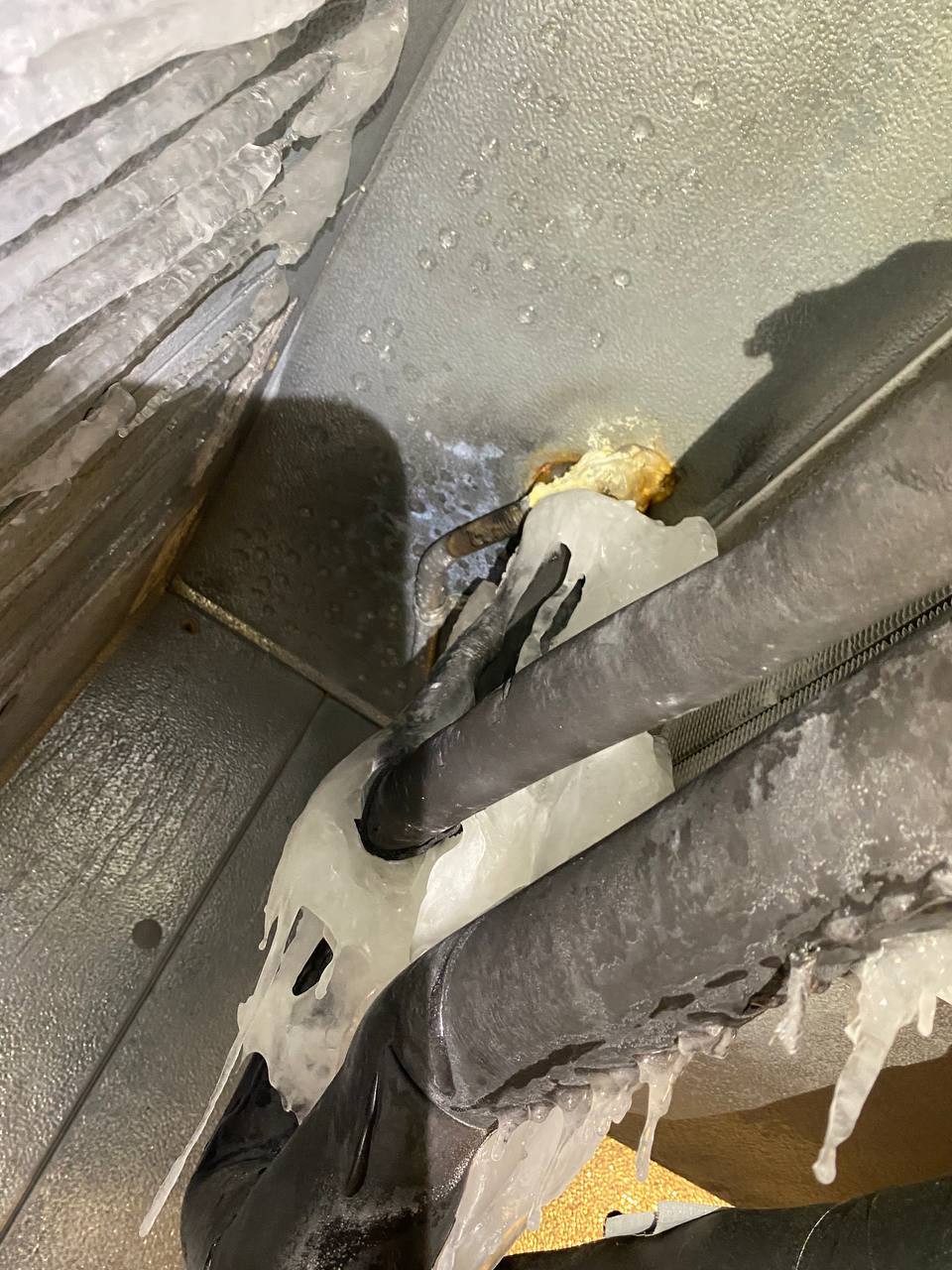
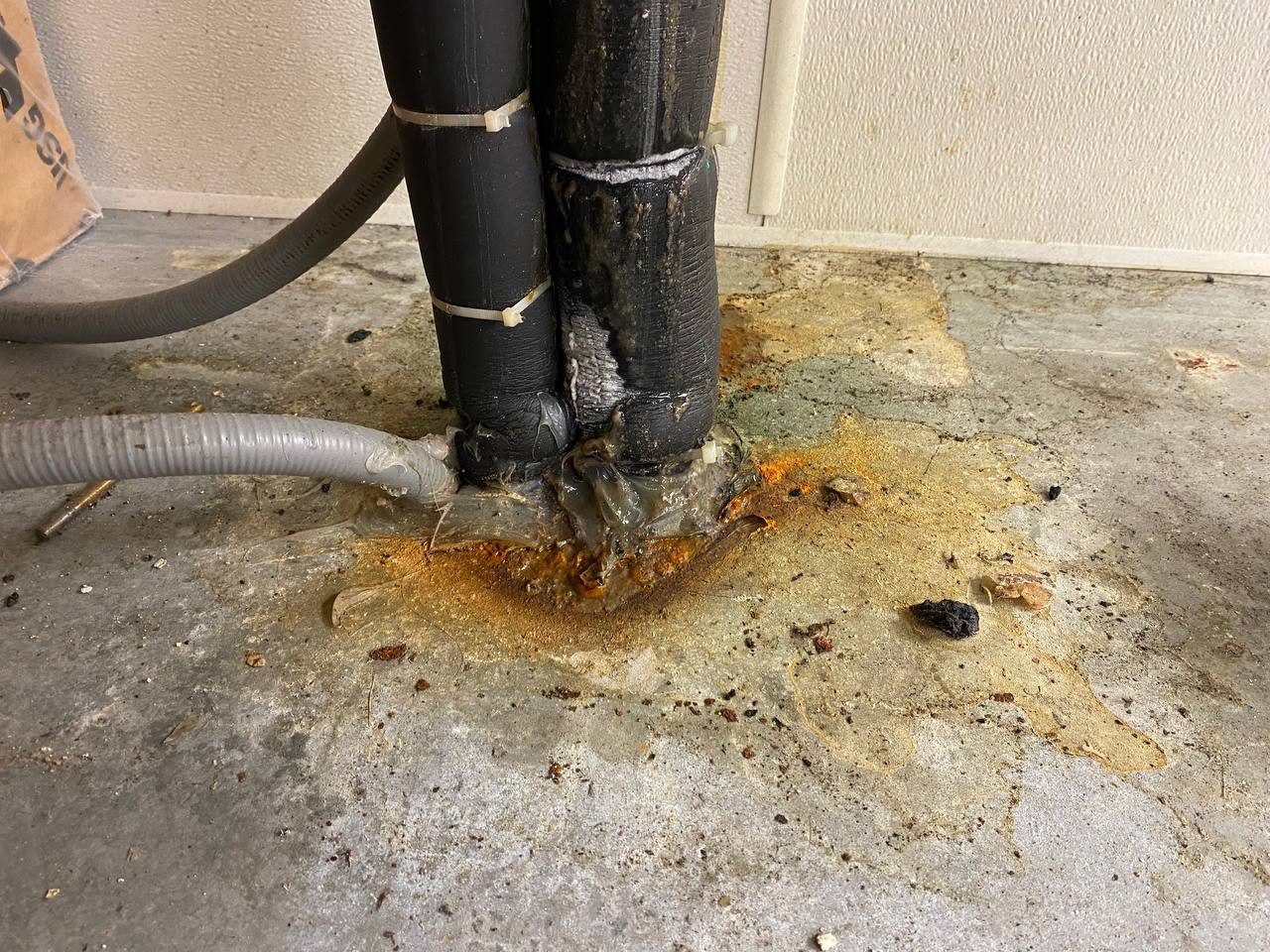
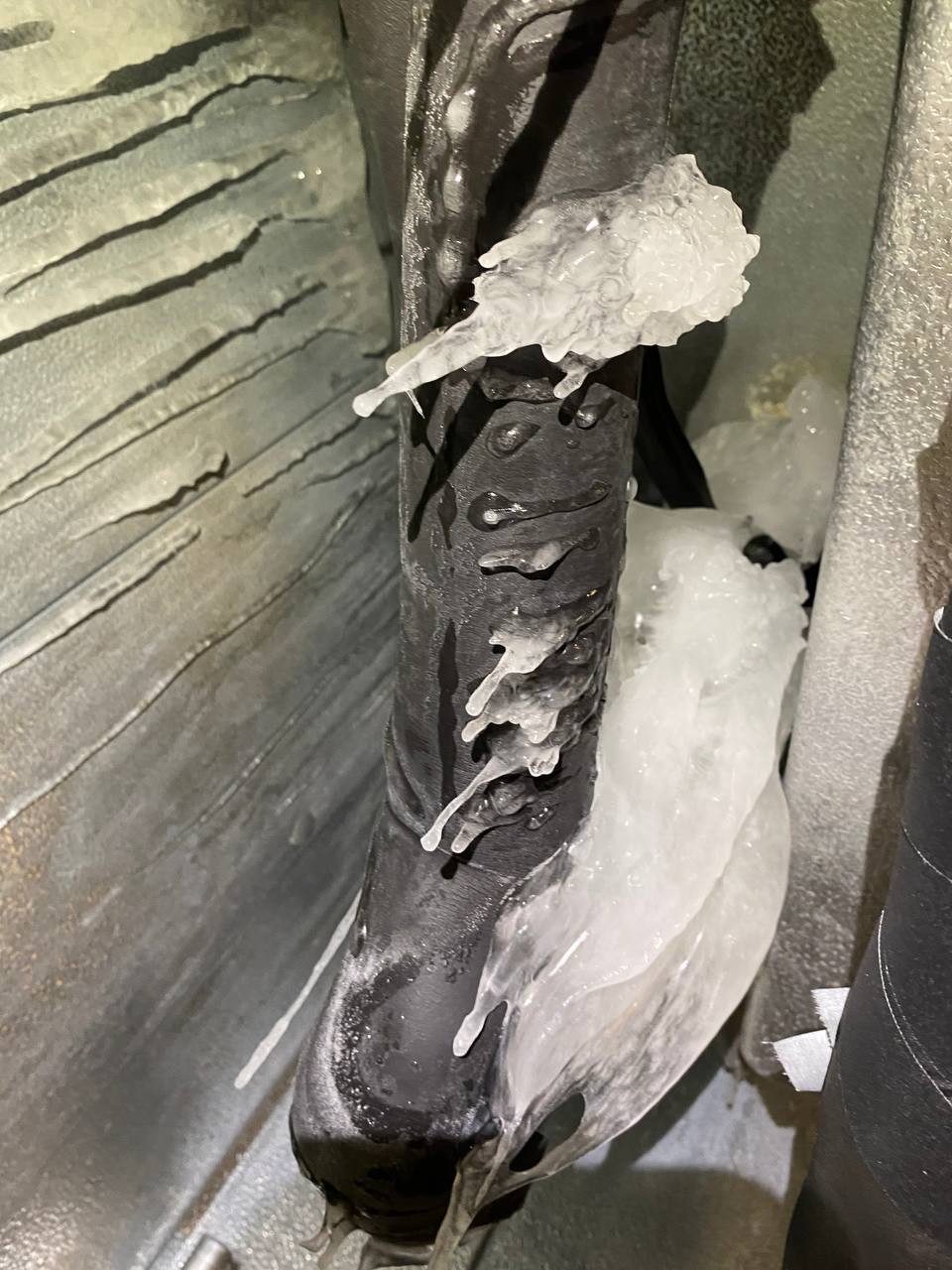
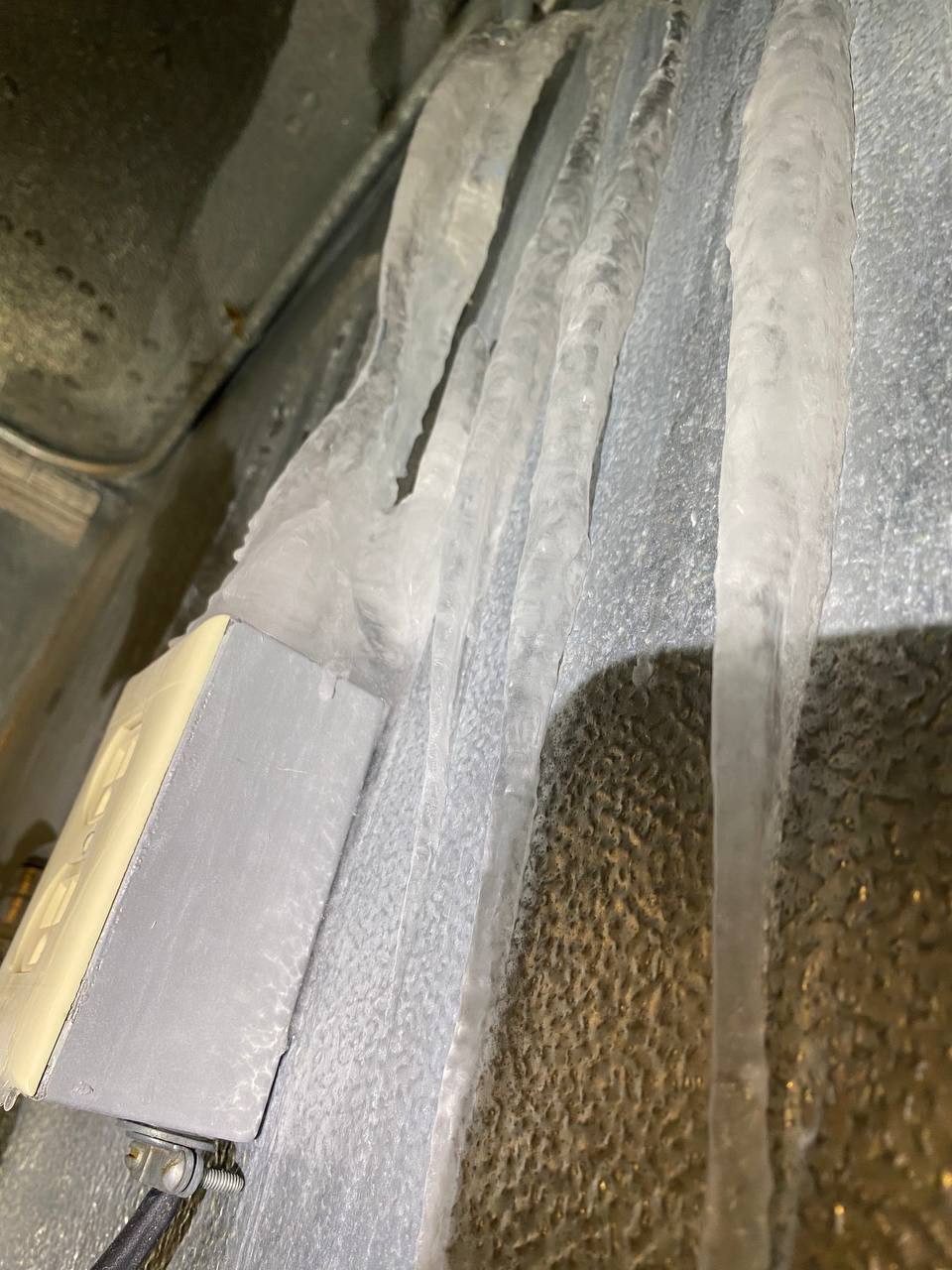
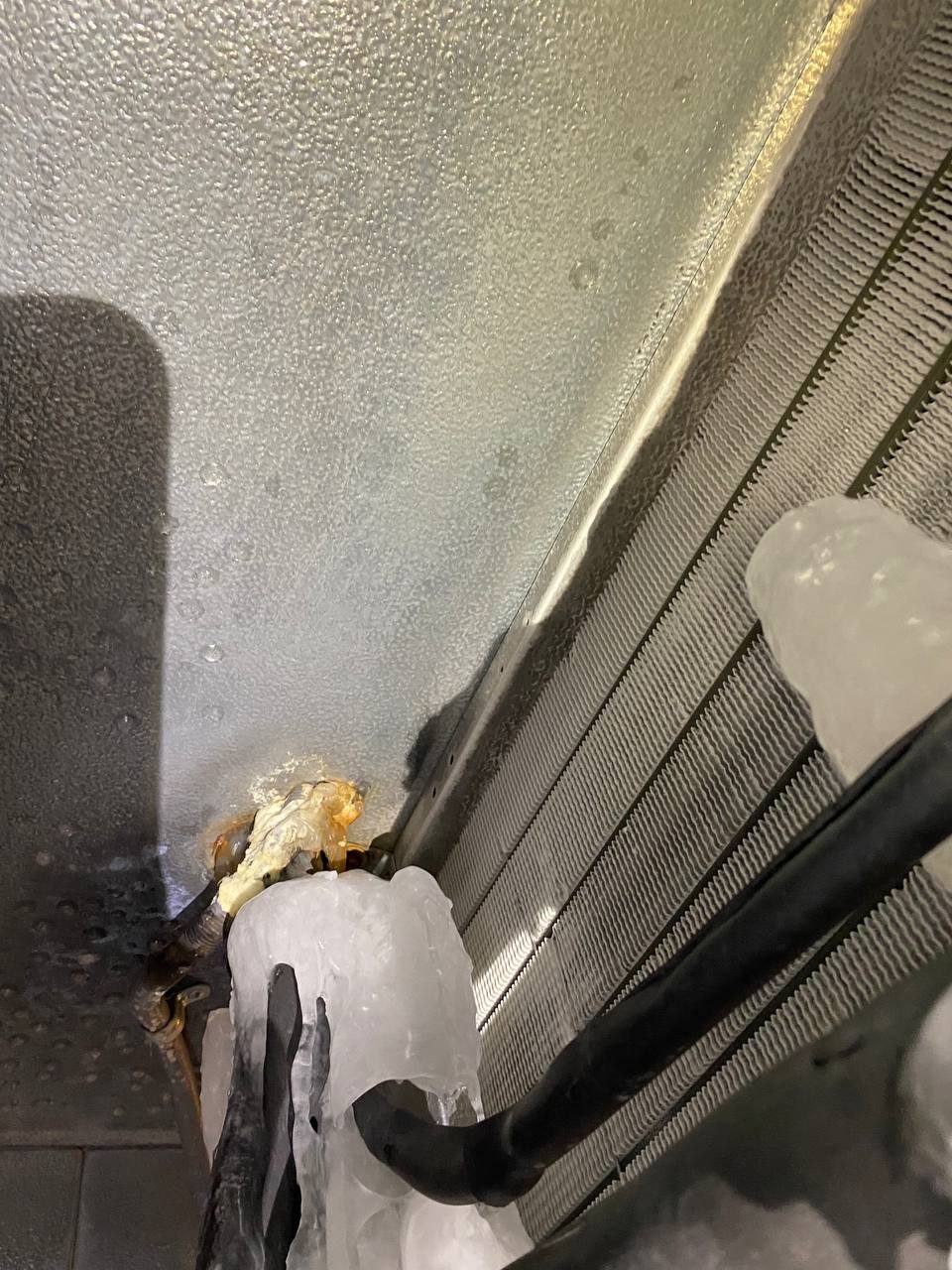
Water stains and corrosion were observed around the refrigerant line penetration through the freezer ceiling. The insulation surrounding the refrigerant lines was found to be wet.

These conditions suggest ongoing moisture intrusion and possible deterioration of the enclosure’s vapor barrier and thermal insulation.

2Refrigerant Line Insulation Deficiencies

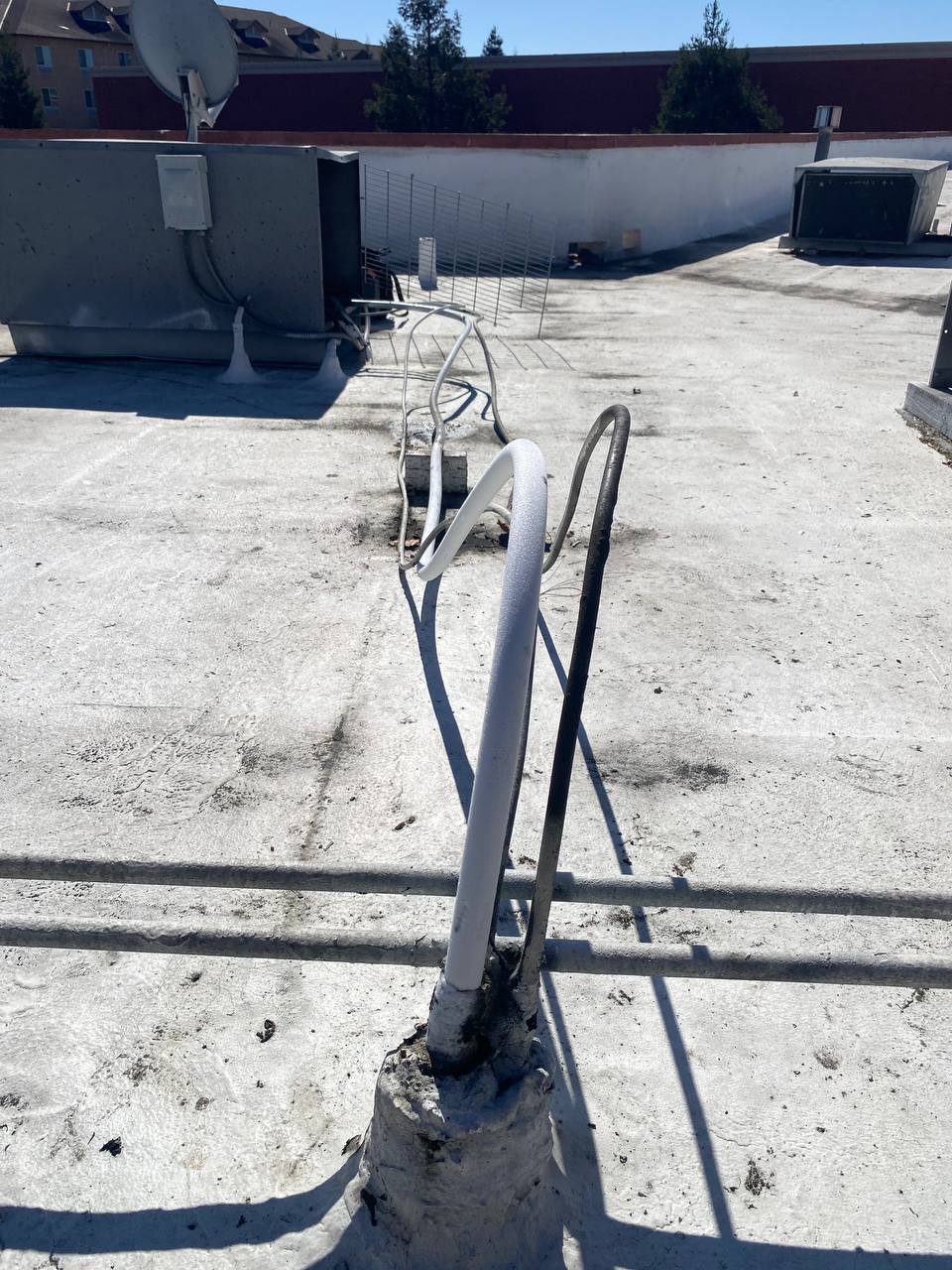
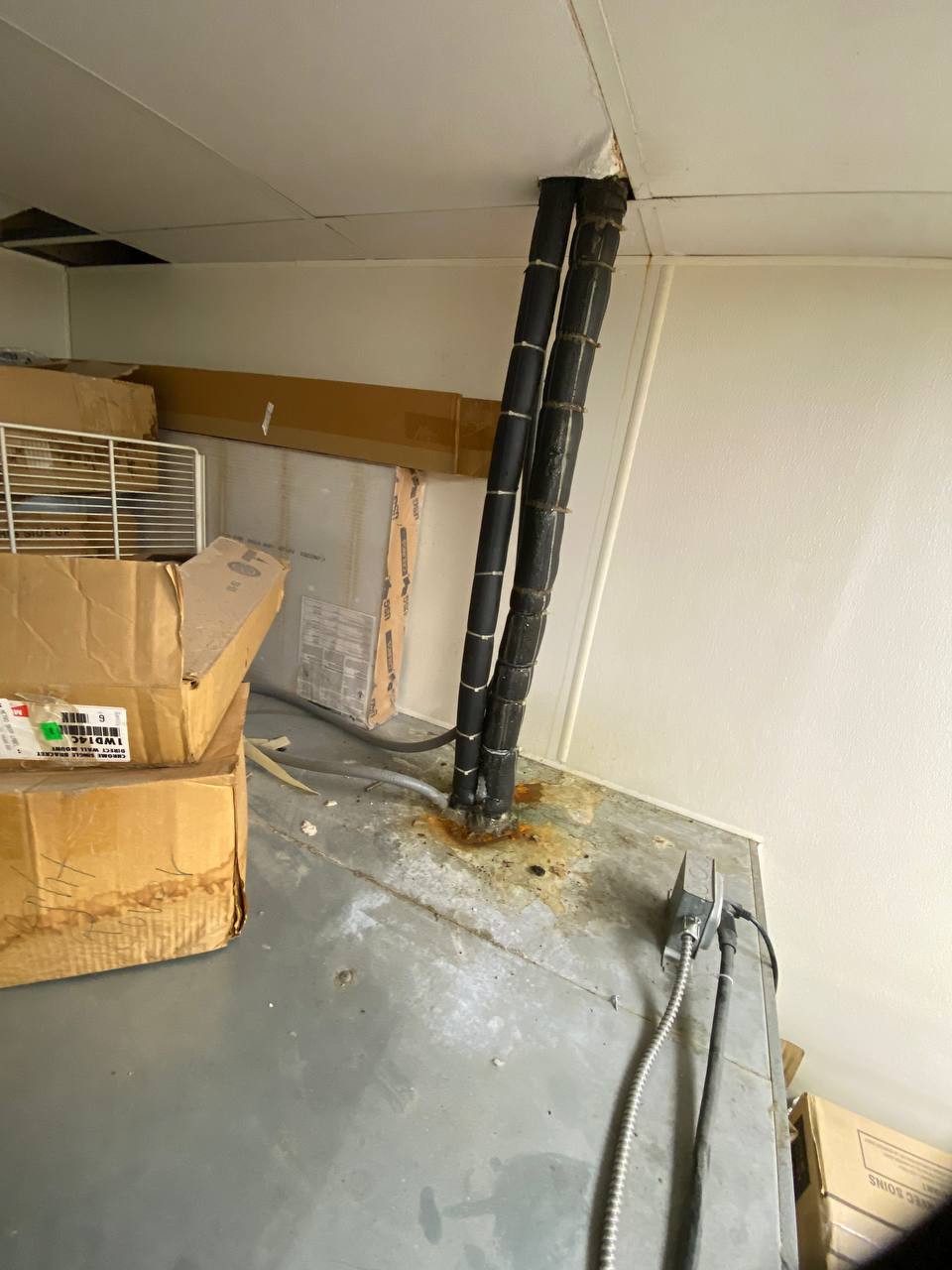
Approximately 13 feet of the suction line between the roof penetration and outdoor condensing unit is exposed without thermal insulation.

Significant frost accumulation was observed along portions of this line, including sections within the condensing unit where insulation is present.

This condition contributes to unwanted heat gain, condensation, and reduced system efficiency.

3Potential Freezer Enclosure Insulation Damage

Moisture penetration and deterioration of concealed ceiling-panel insulation are suspected. Further evaluation may identify panel repairs or replacement.

If confirmed, this condition may result in progressive insulation deterioration, increased thermal load, continued ice formation, and eventual damage requiring replacement of affected enclosure sections.

4Outdoor Condensing Unit Condition

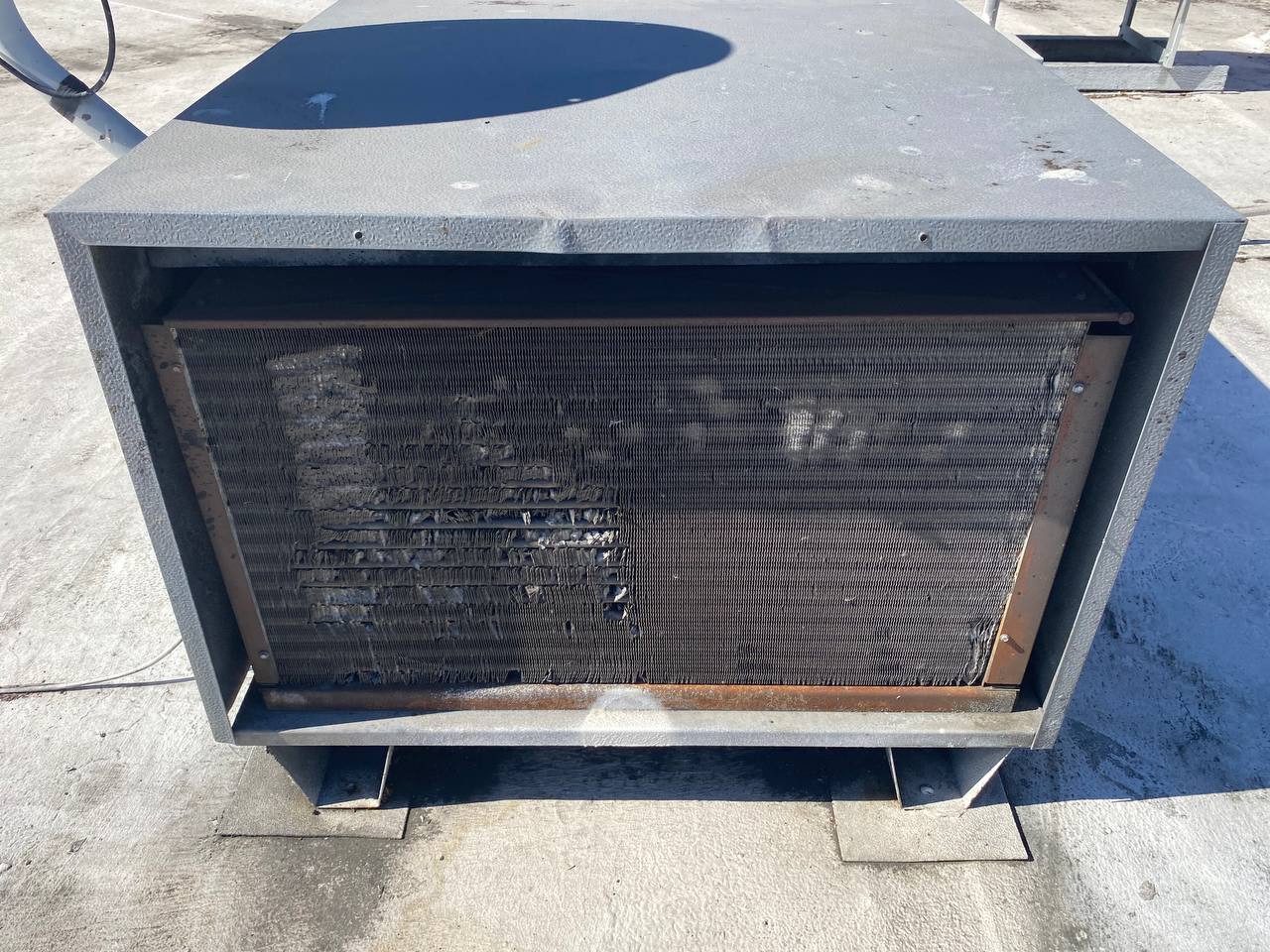
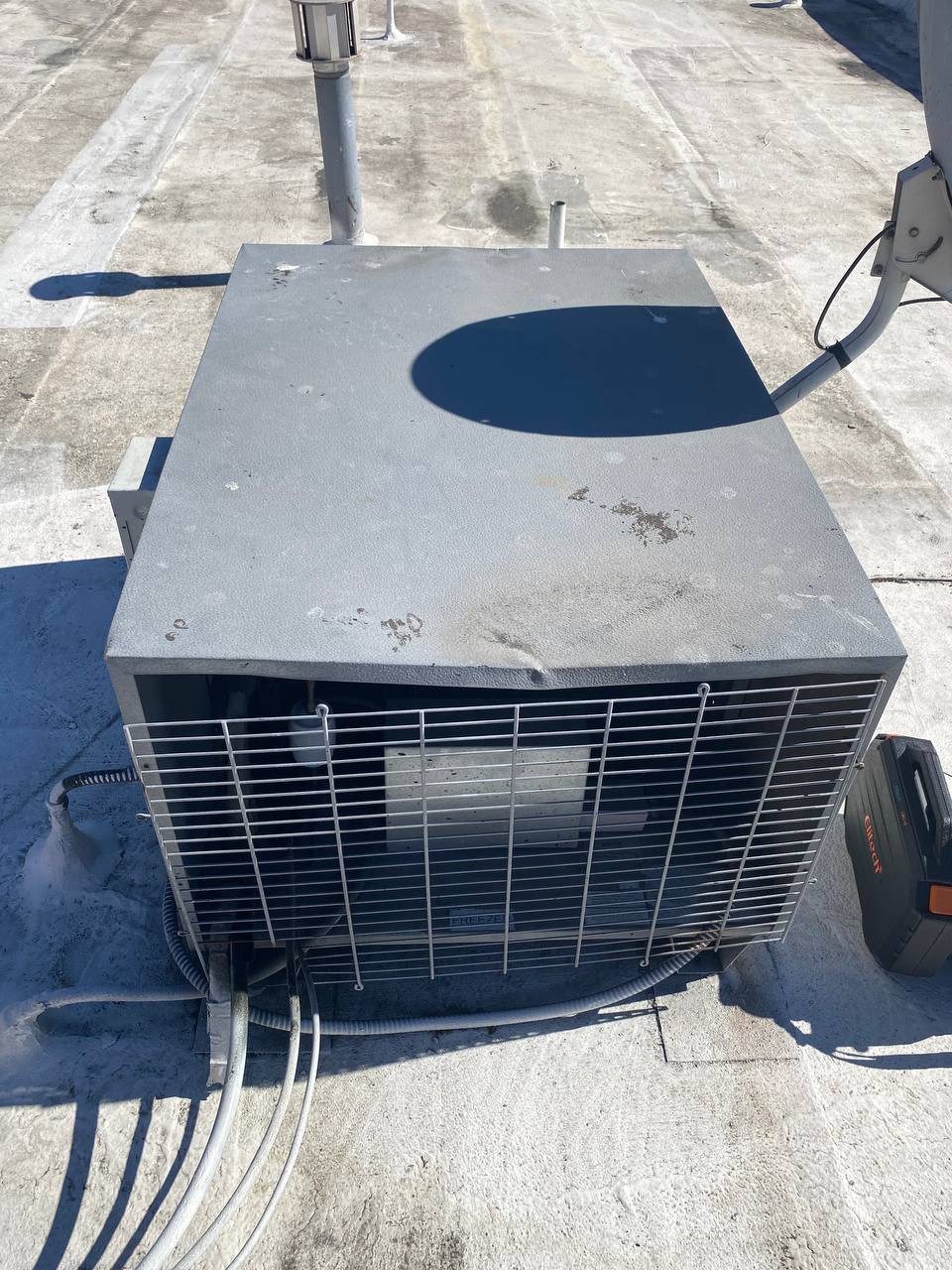
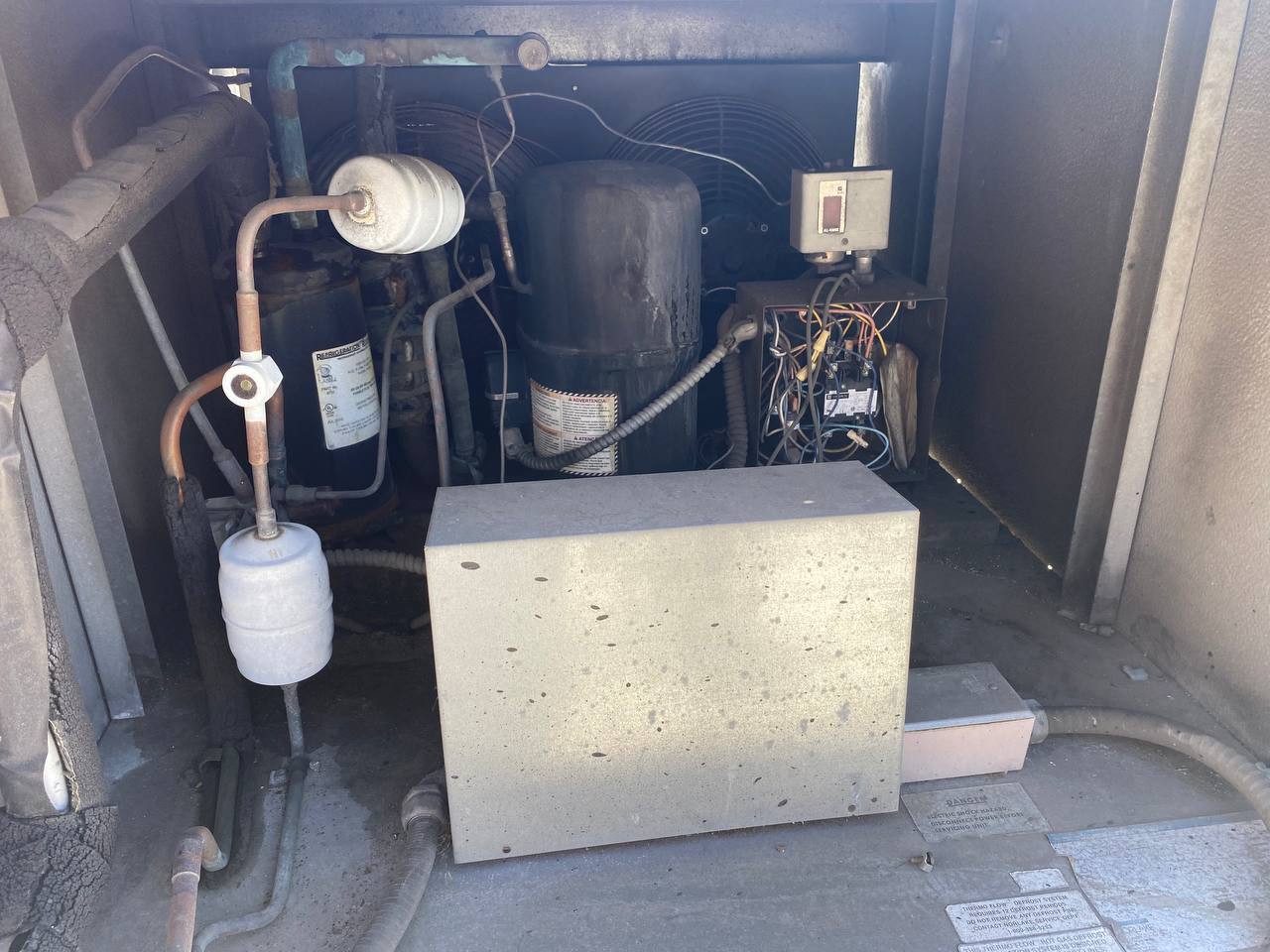
The condenser coil exhibits significant mechanical damage to its fins, potentially restricting airflow and reducing heat rejection efficiency.

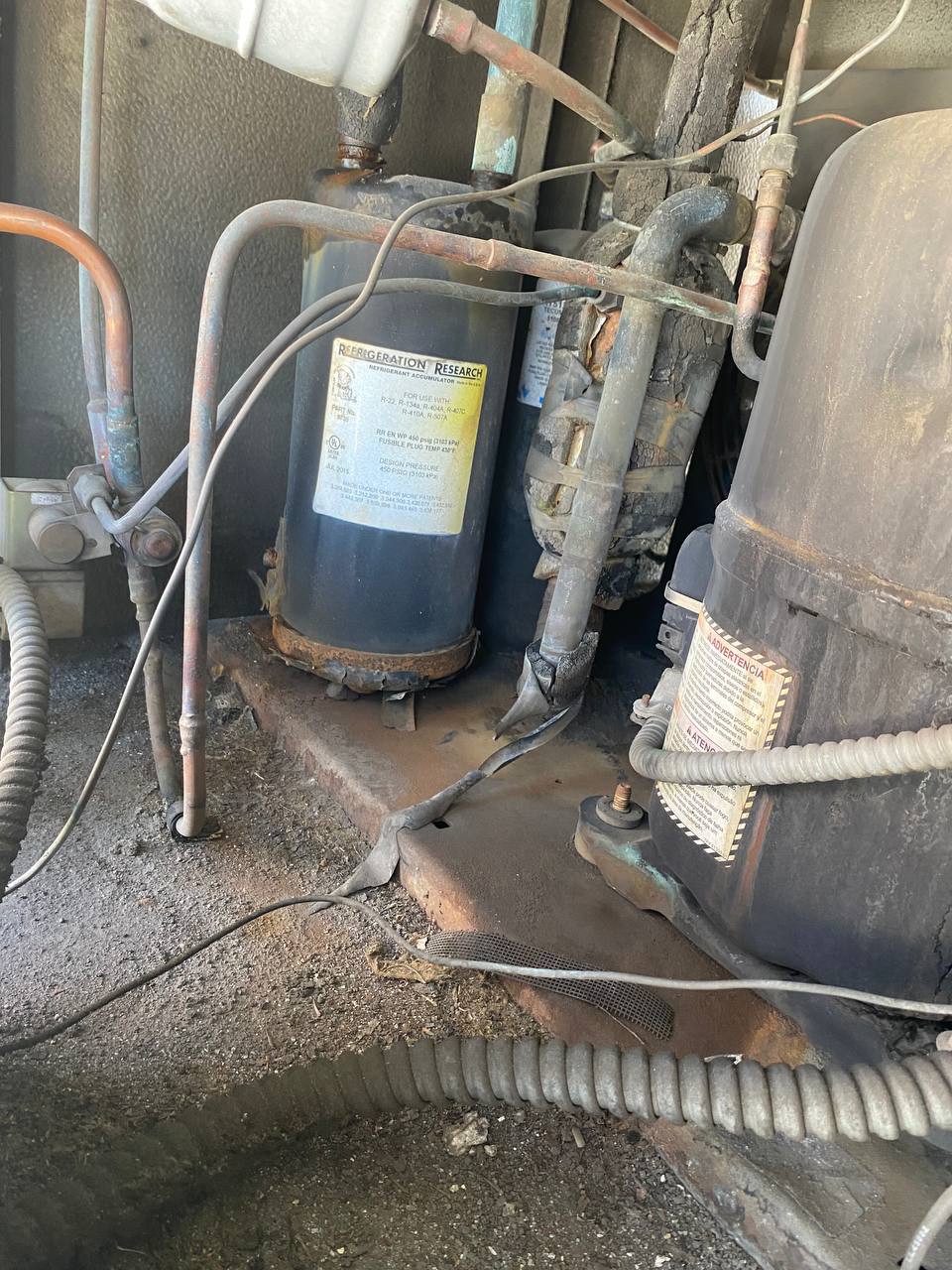
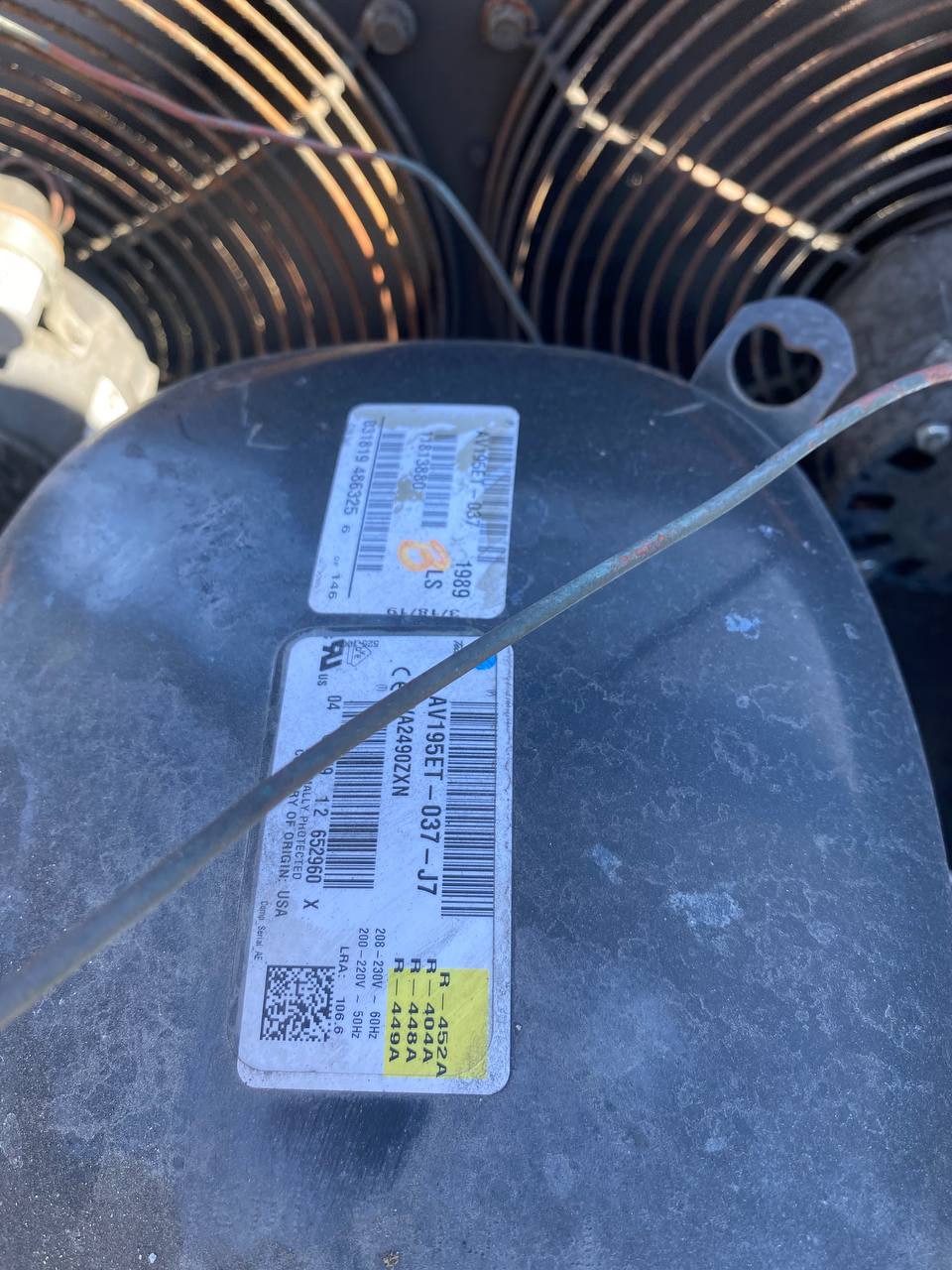
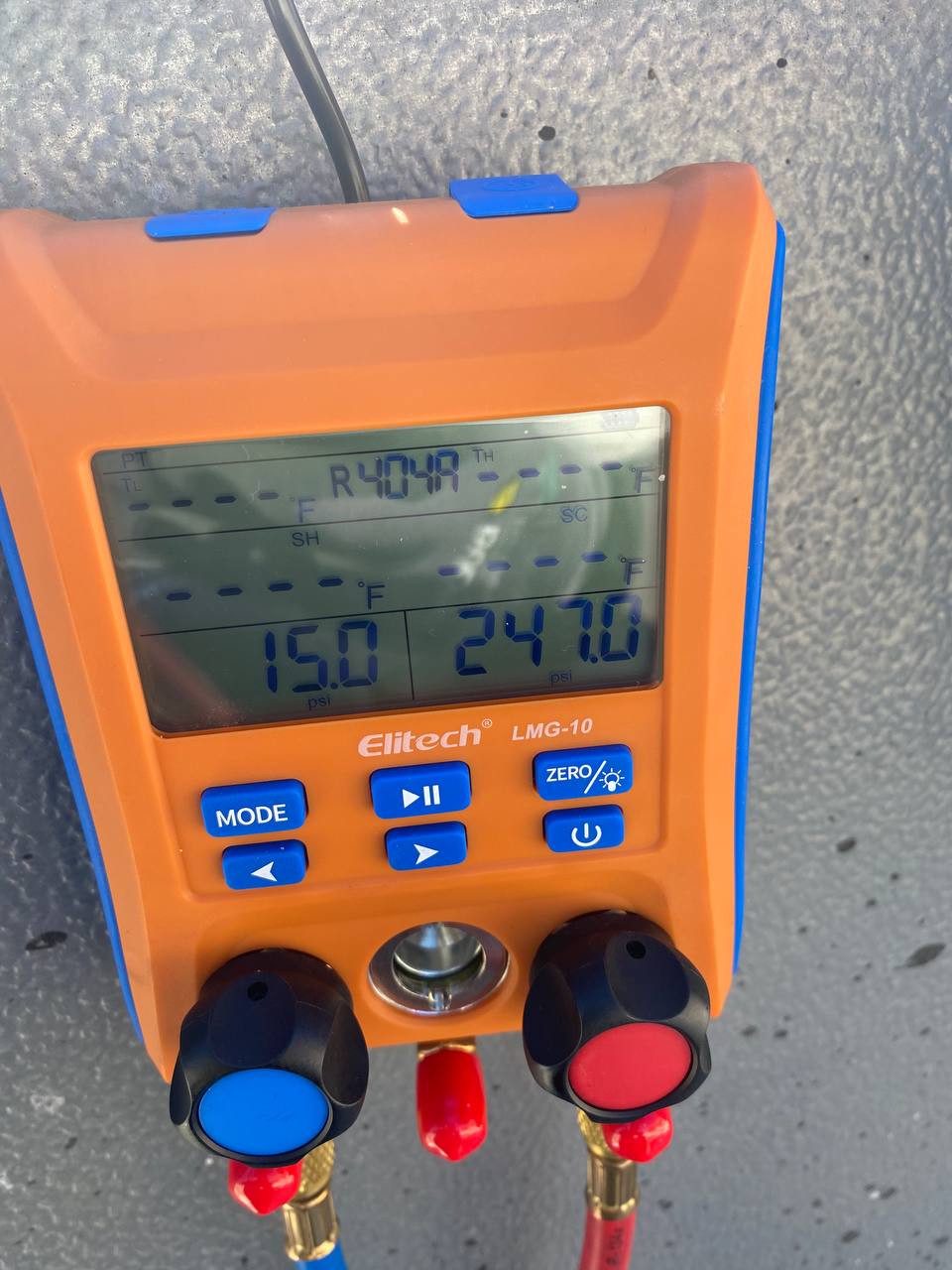
Operating pressures were recorded at approximately 15 PSI suction and 247 PSI discharge. The installed refrigerant type is not documented on the equipment.

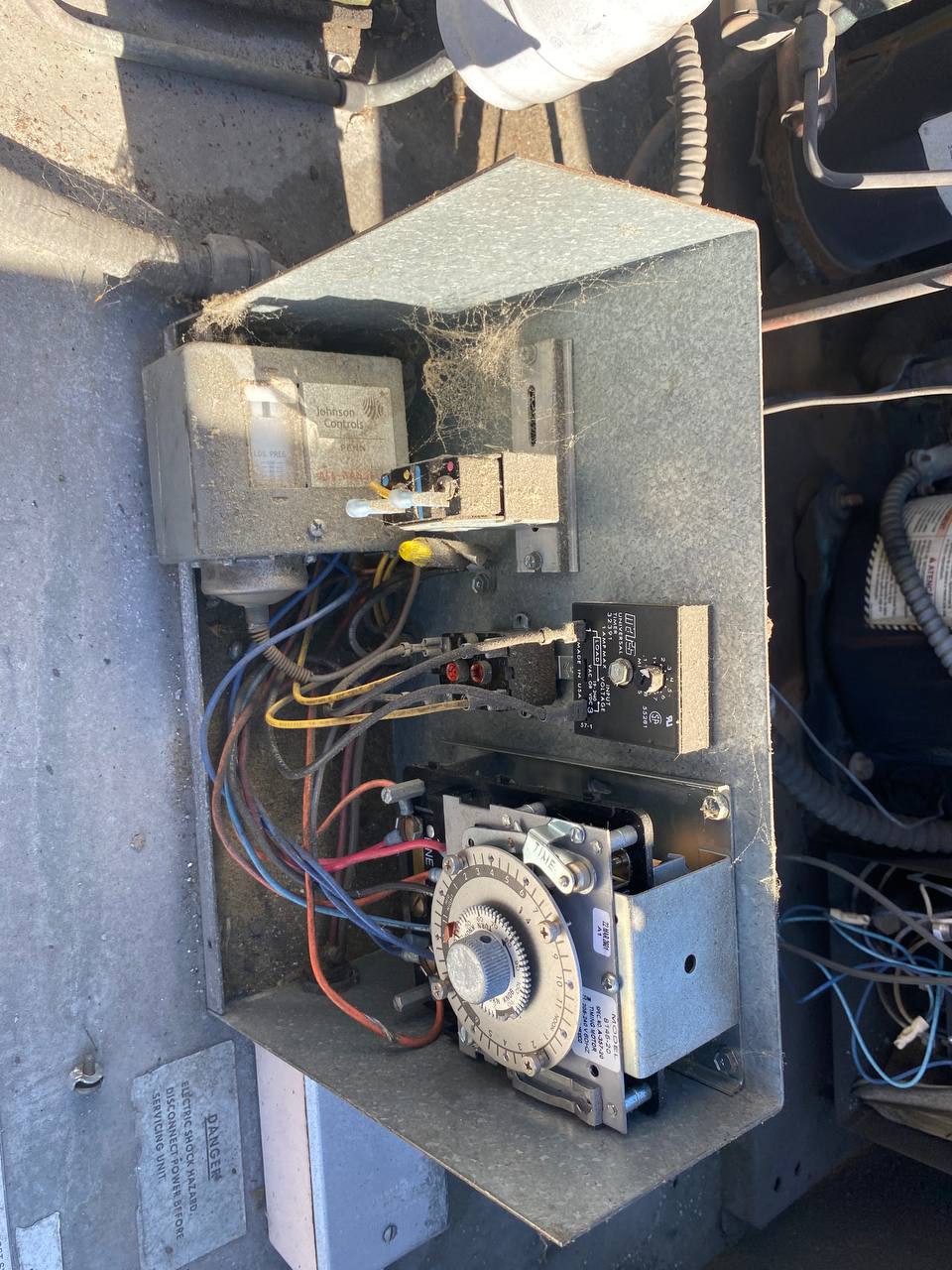
The compressor operated continuously throughout the approximately 1.5-hour observation period. The operating cycle and defrost control sequence require further evaluation.

Two filter-driers were also observed installed in series.

Conclusion and Recommendations

Although the refrigeration system was operating during inspection, the identified conditions indicate potentially significant deficiencies involving refrigerant line insulation, moisture control, and freezer enclosure integrity.

Further investigation is strongly recommended to determine the extent of moisture penetration, evaluate the condition of the ceiling insulation and vapor barrier, and identify the underlying causes of excessive ice formation.

Recommended follow-up includes

  • Restore proper suction line insulation.
  • Inspect and seal refrigerant line penetrations and affected ceiling joints.
  • Evaluate the freezer ceiling panels for internal moisture contamination and insulation deterioration.
  • Verify defrost operation and refrigeration system cycling.
  • Assess condenser coil damage and determine whether repair or replacement is necessary.
  • Confirm the refrigerant type before performing any refrigerant-related service.

Important: Additional evaluation may identify the need for panel repairs or replacement.

Continued operation without addressing these conditions may result in progressive deterioration, increased energy consumption, additional ice accumulation, and potentially more extensive and costly repairs.

Ice at line penetration.
WI-04 · IMG_2900.jpegIce at line penetration.
Staining at penetration.
WI-11 · IMG_2907.jpegStaining at penetration.
Exposed suction line.
WI-16 · IMG_2912.jpegExposed suction line.
Damaged condenser fins.
WI-17 · IMG_2913.jpegDamaged condenser fins.
H1
Part 2 · October 16, 2026

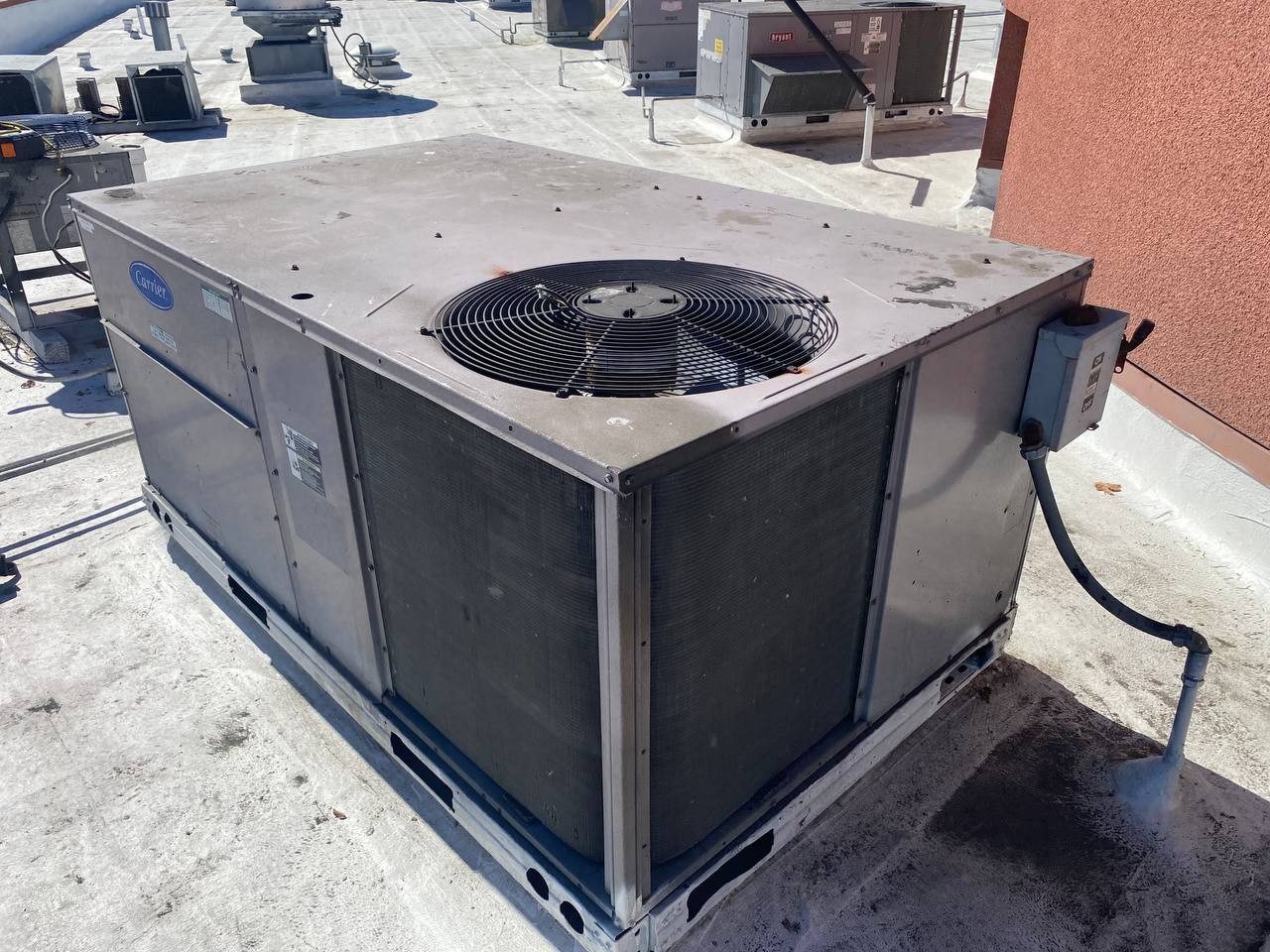
Rooftop HVAC 1 · main customer area

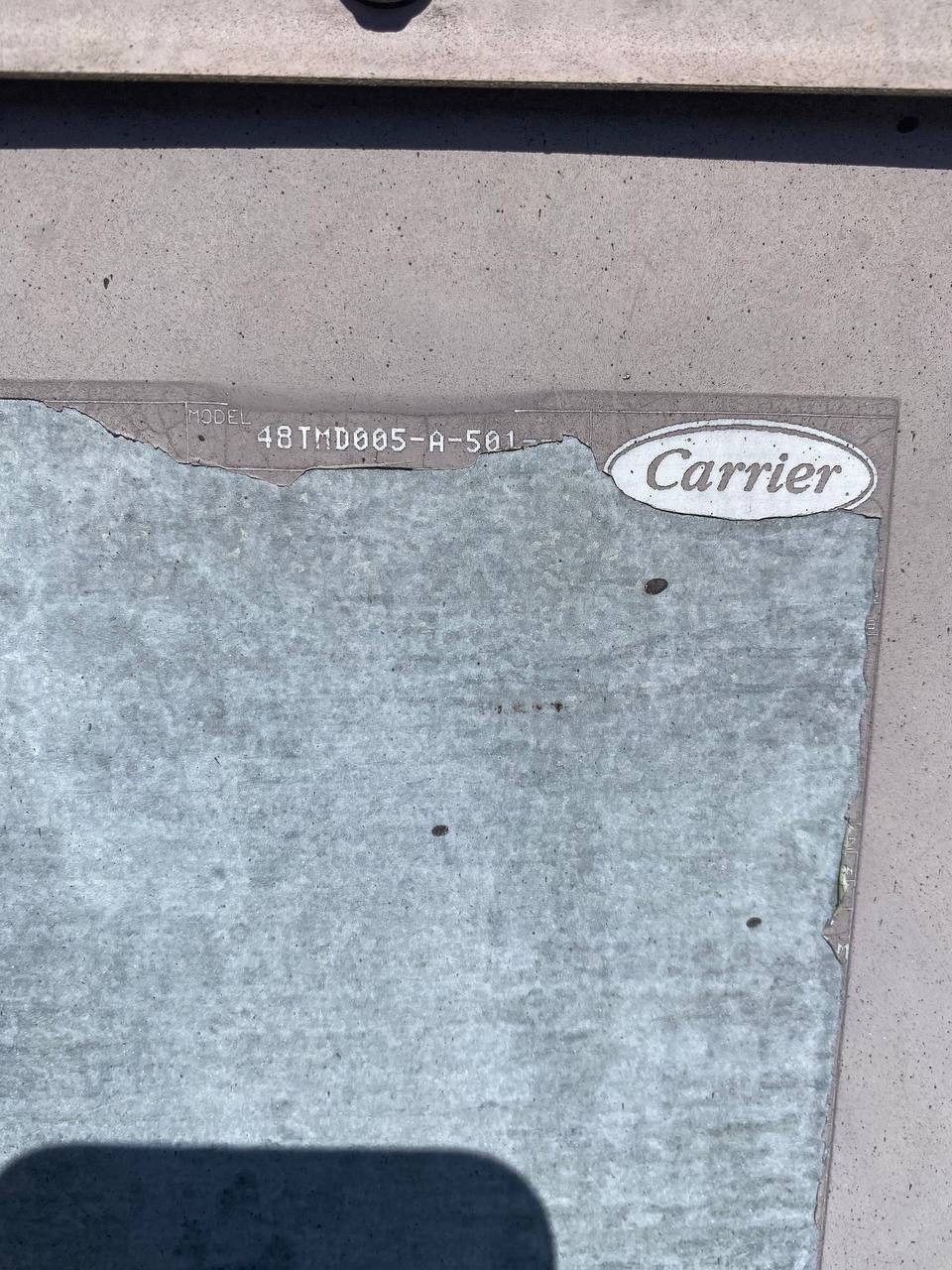
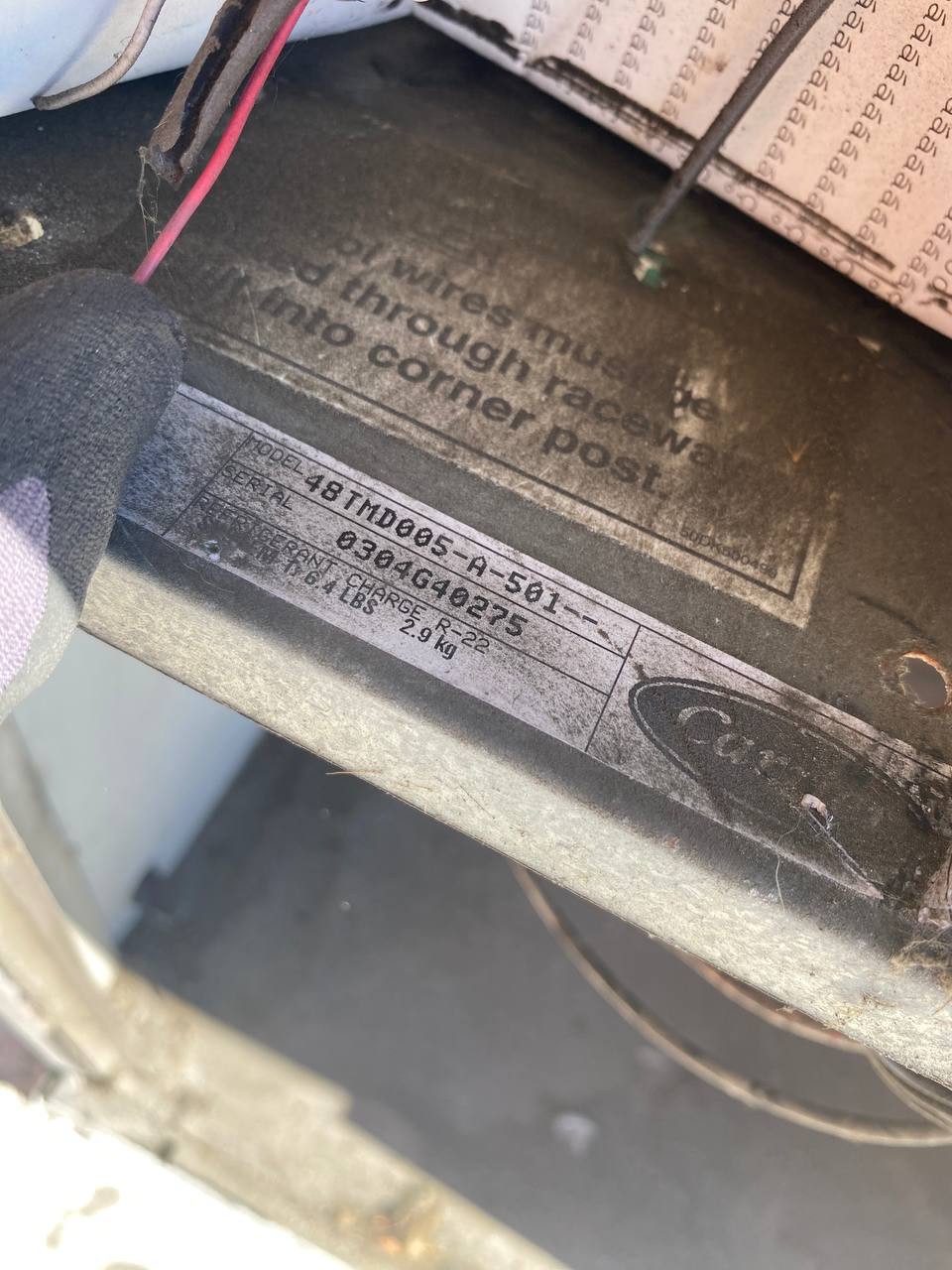
Carrier 48TMD005-A-501Serial 0304G40875Factory R22, 6.4 lb (2.9 kg)

Overall System Condition

The unit responds to thermostat commands and operates in cooling mode. However, cooling performance is below expectations, and the heating function is currently inoperative.

Although the equipment shows evidence of periodic maintenance, several conditions were identified that require corrective action and further evaluation.

Inspection Findings

1Reduced Cooling Performance

The condenser coil shows significant contamination, potentially restricting airflow and reducing heat rejection efficiency.

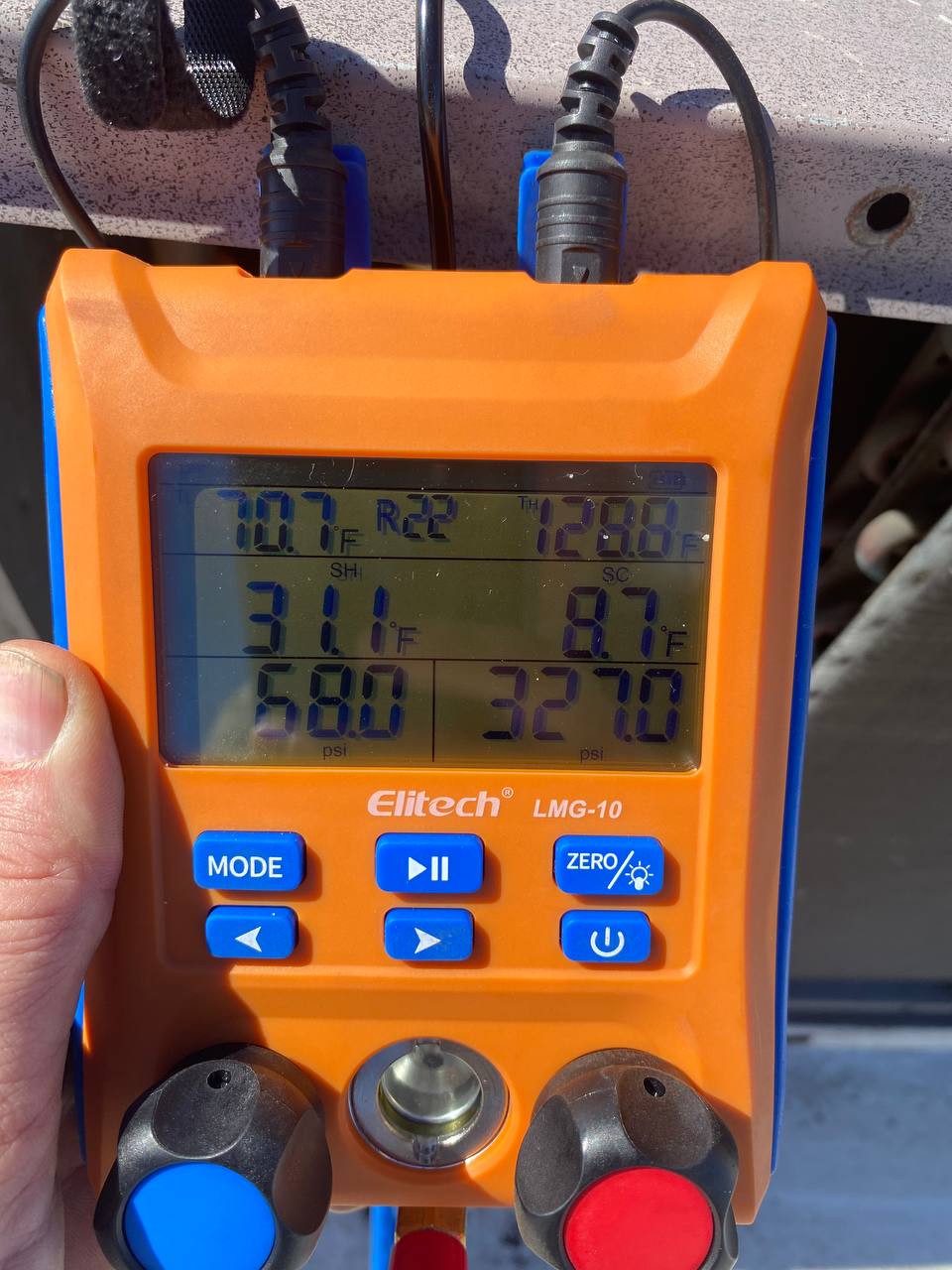
Operating measurements recorded approximately 68 PSI suction pressure, 327 PSI discharge pressure, 31.1°F superheat, and 8.7°F subcooling.

The elevated discharge pressure and superheat indicate that additional evaluation of the refrigeration system is necessary.

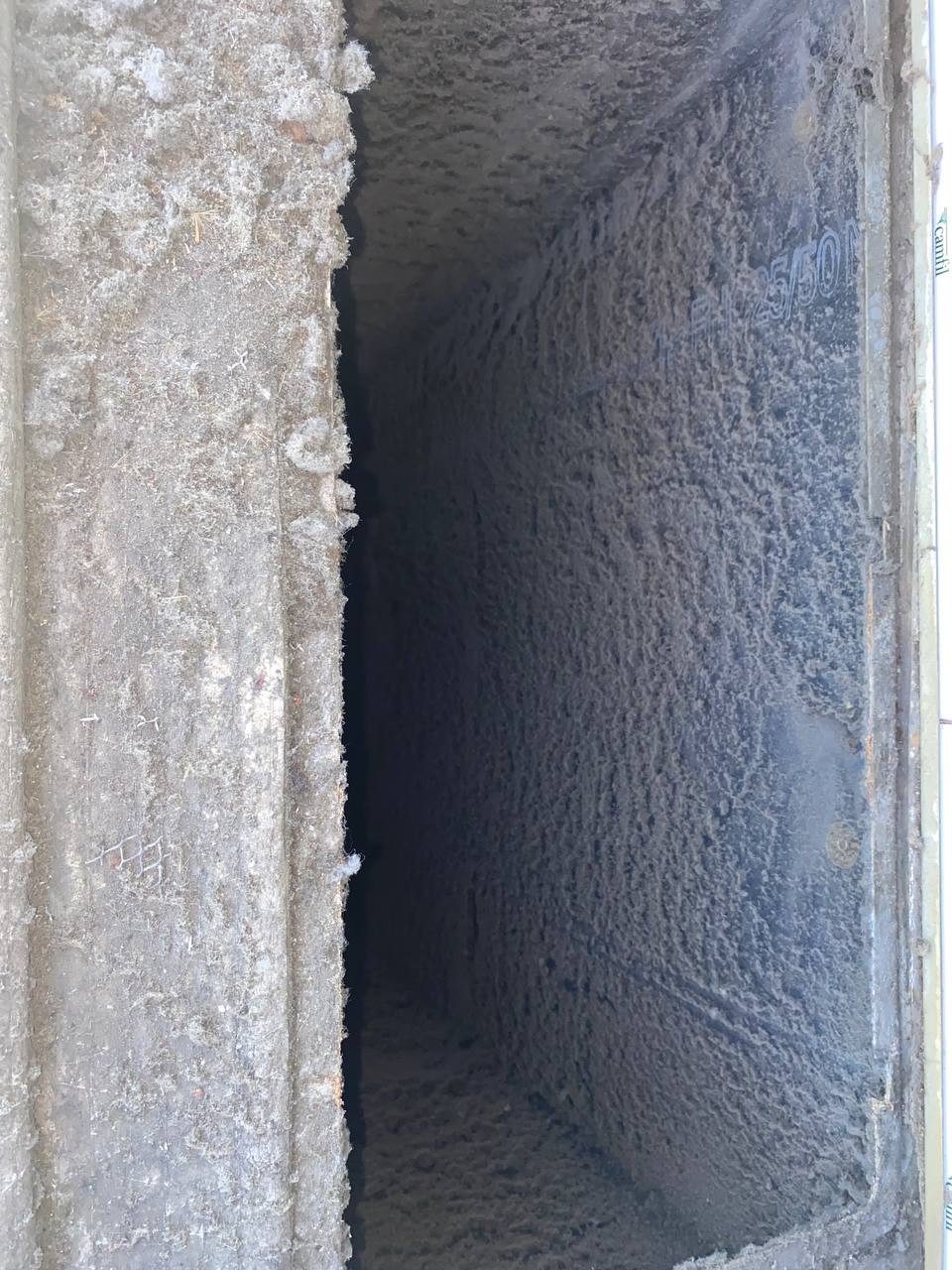
2Air Distribution System Contamination

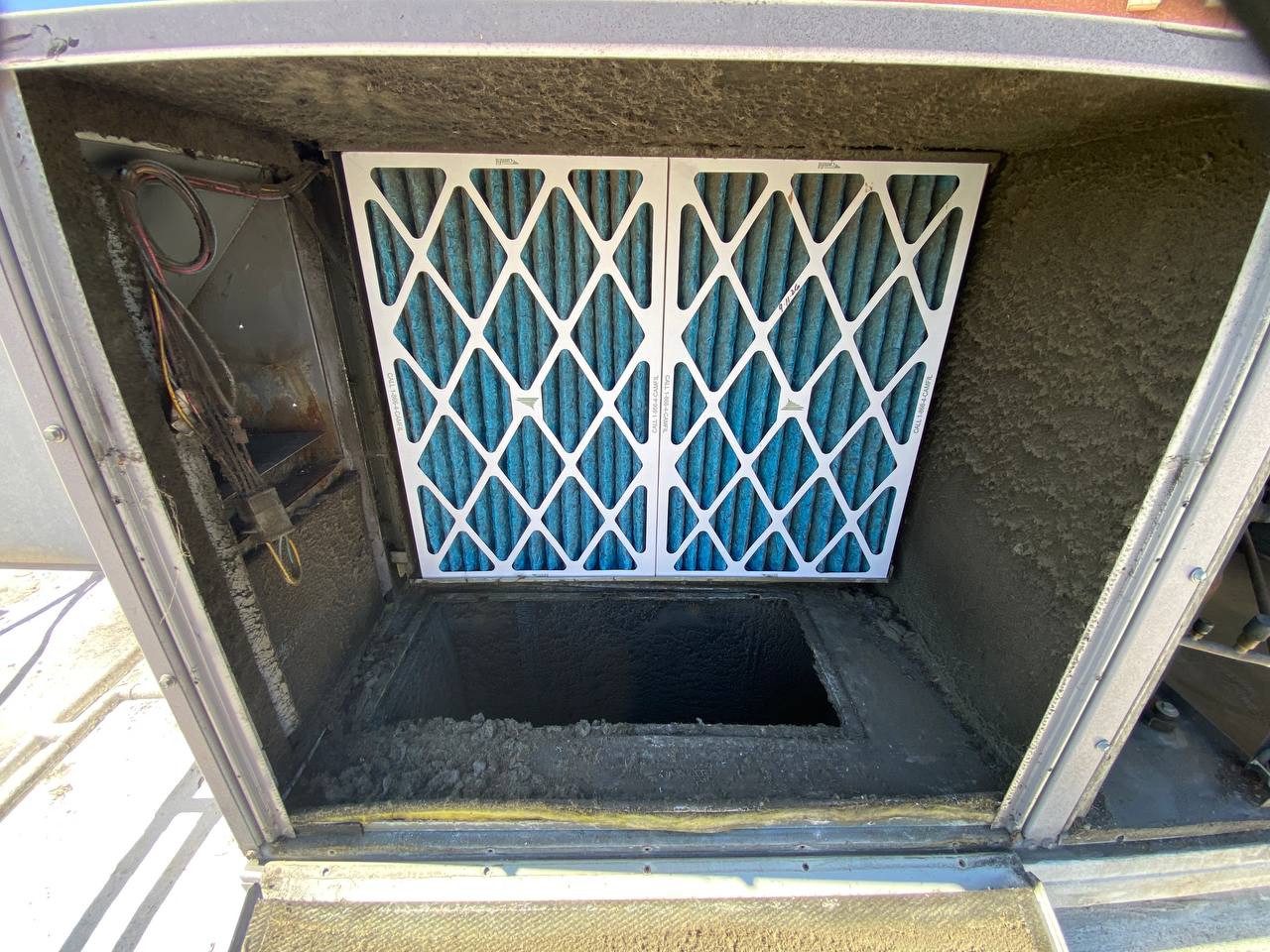
The air filters were found in relatively clean condition. However, significant dust and debris accumulation was observed within the accessible air ducts and internal air passages.

Cleaning and further inspection of the air distribution system are recommended.

3Heating System Failure

The unit does not provide heating when requested through the thermostat.

Additional diagnostic testing is required to identify the failed component or control issue and establish the necessary repair scope.

4Equipment Age and Refrigerant Considerations

The unit is an older R-22 refrigeration system. U.S. production and import of new R-22 ended in 2020; existing equipment may still be serviced using reclaimed, recycled, or previously produced R-22. Refrigerant availability and cost should be confirmed when evaluating future refrigerant-related repairs.
Conclusion and Recommendations

The unit remains operational in cooling mode but is not performing at its expected capacity. The heating system is currently nonfunctional.

Recommended next steps

  1. Perform a thorough condenser coil cleaning.
  2. Reevaluate cooling performance, operating pressures, superheat, subcooling, and supply/return air temperature differential after cleaning.
  3. Inspect and clean contaminated internal air passages and evaluate the ductwork.
  4. Perform additional heating system diagnostics to determine the cause of failure.
  5. Evaluate the overall condition and remaining service life of the equipment before proceeding with major repairs.
Important: Condenser coil cleaning is recommended as the initial corrective measure. Additional refrigeration system repairs may be necessary depending on the results of follow-up testing.

Manifold readings.
H1-05 · IMG_2925.jpegManifold readings.
Dust in air passage.
H1-07 · IMG_2923.jpegDust in air passage.
H2
Part 2 · October 16, 2026

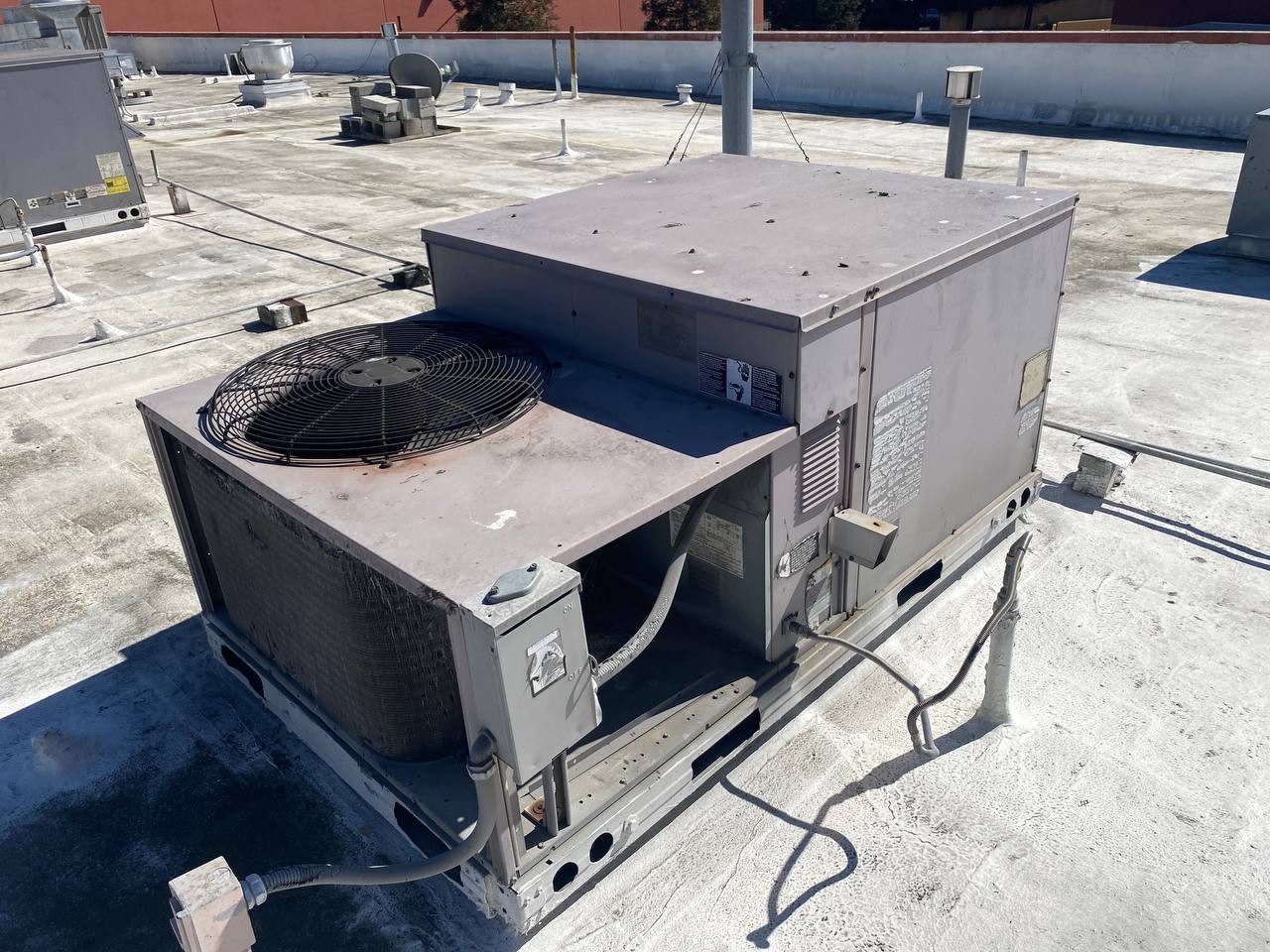
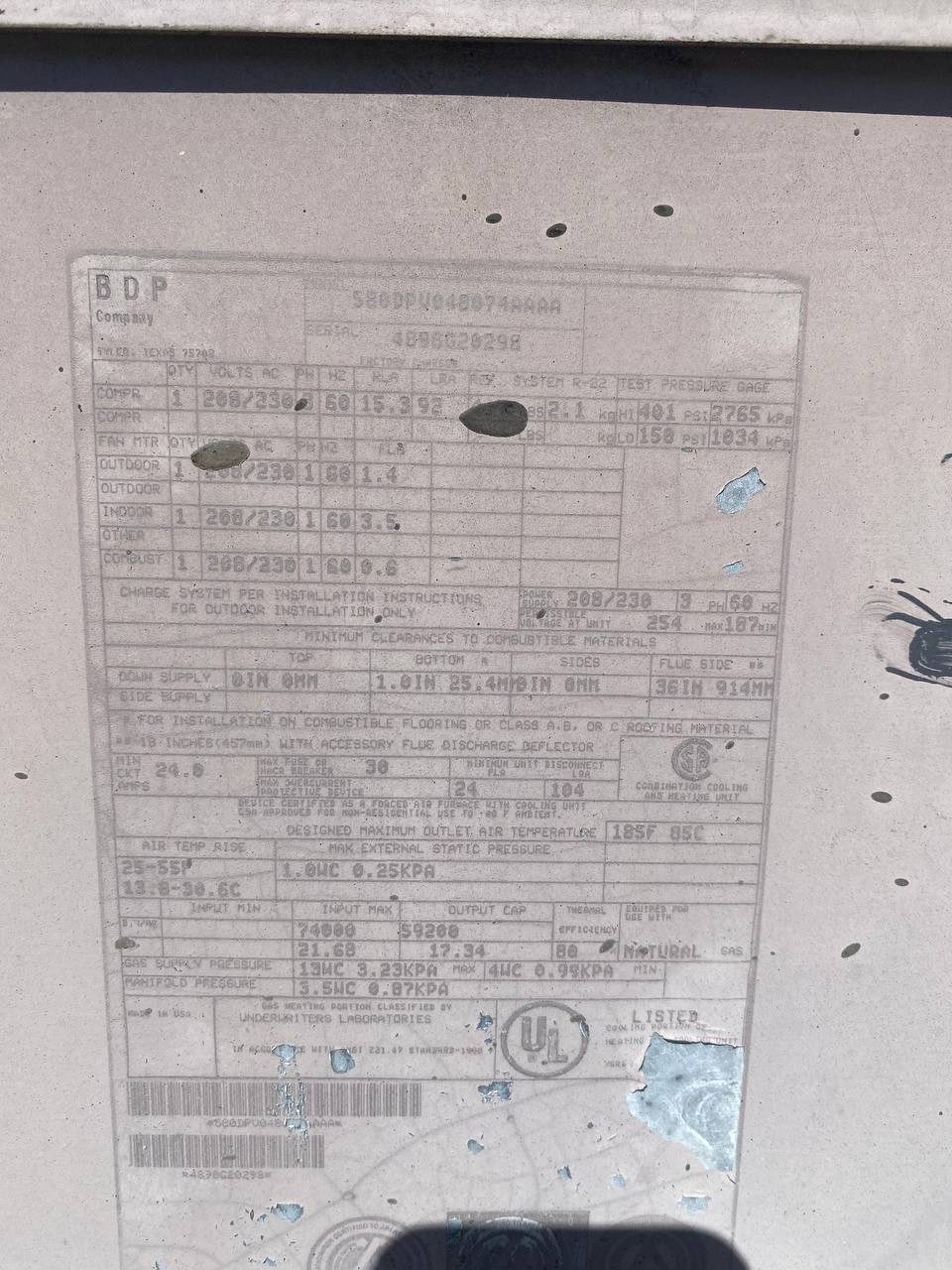
Rooftop HVAC 2 · storage / back-of-house

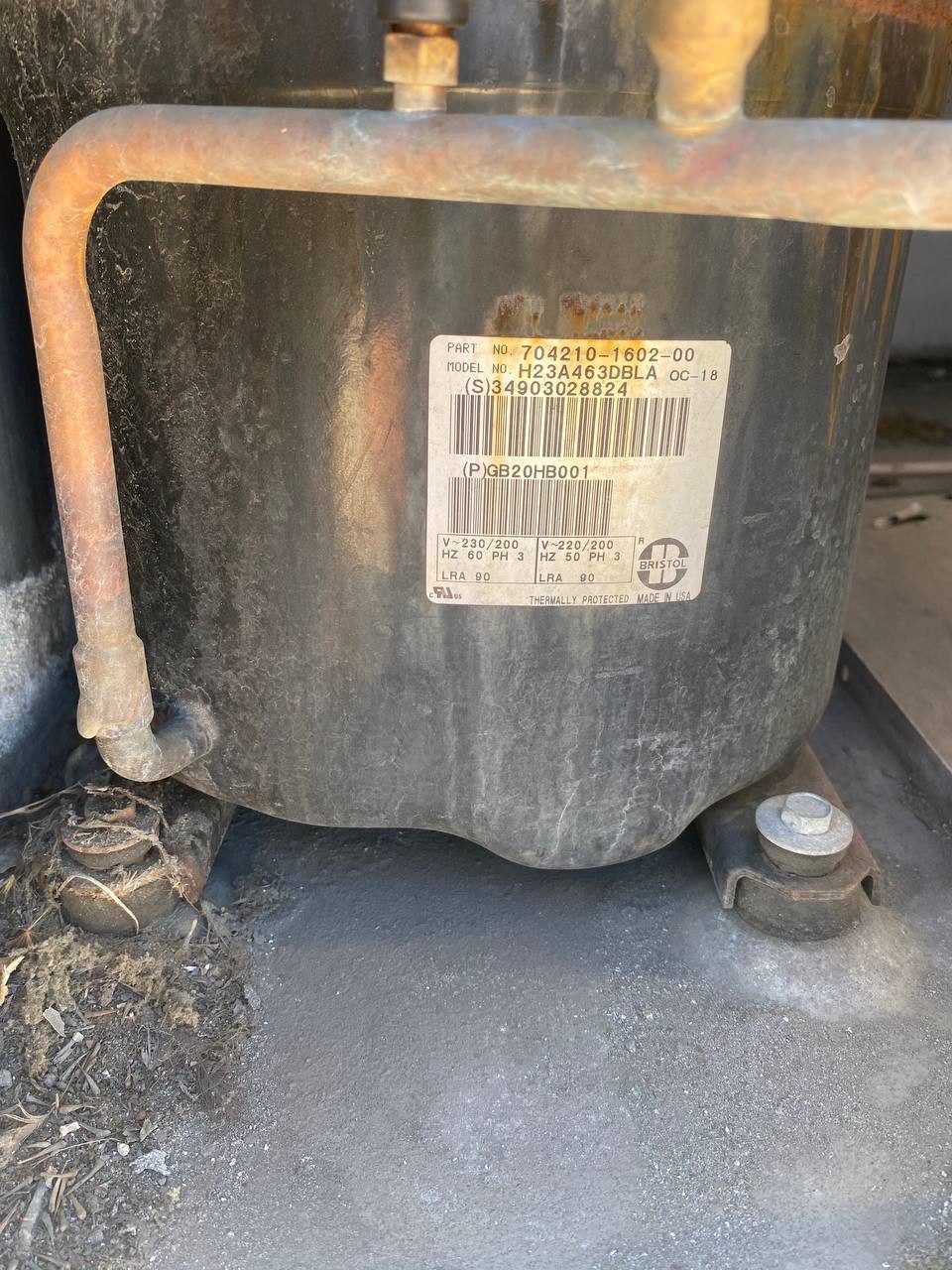
BDP Company nameplateFactory R22 visible

Inspection Findings

At the time of inspection, the unit was completely disconnected from electrical power. After power was restored, the system successfully started and responded to both heating and cooling commands.

However, several significant issues were identified:

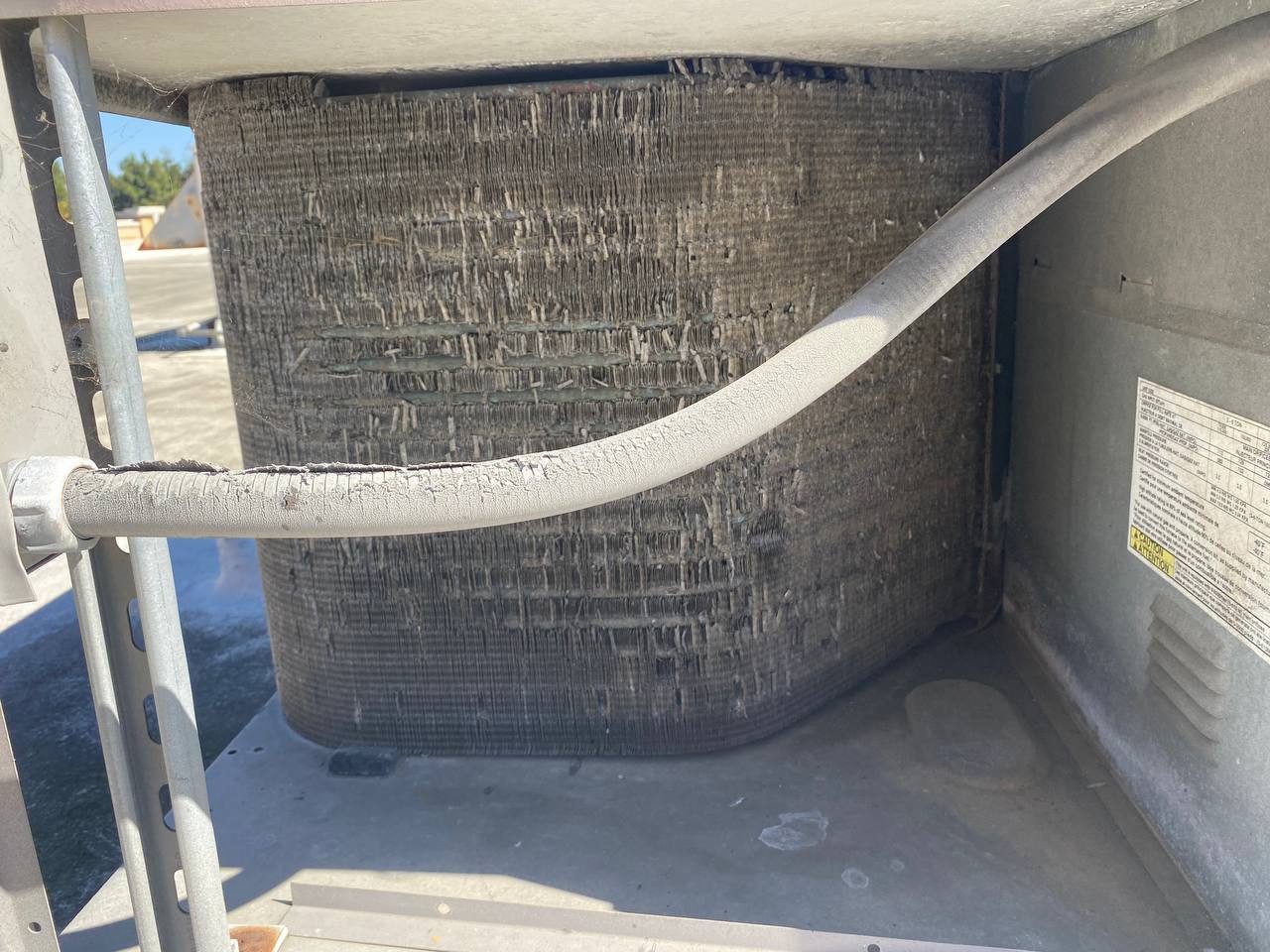
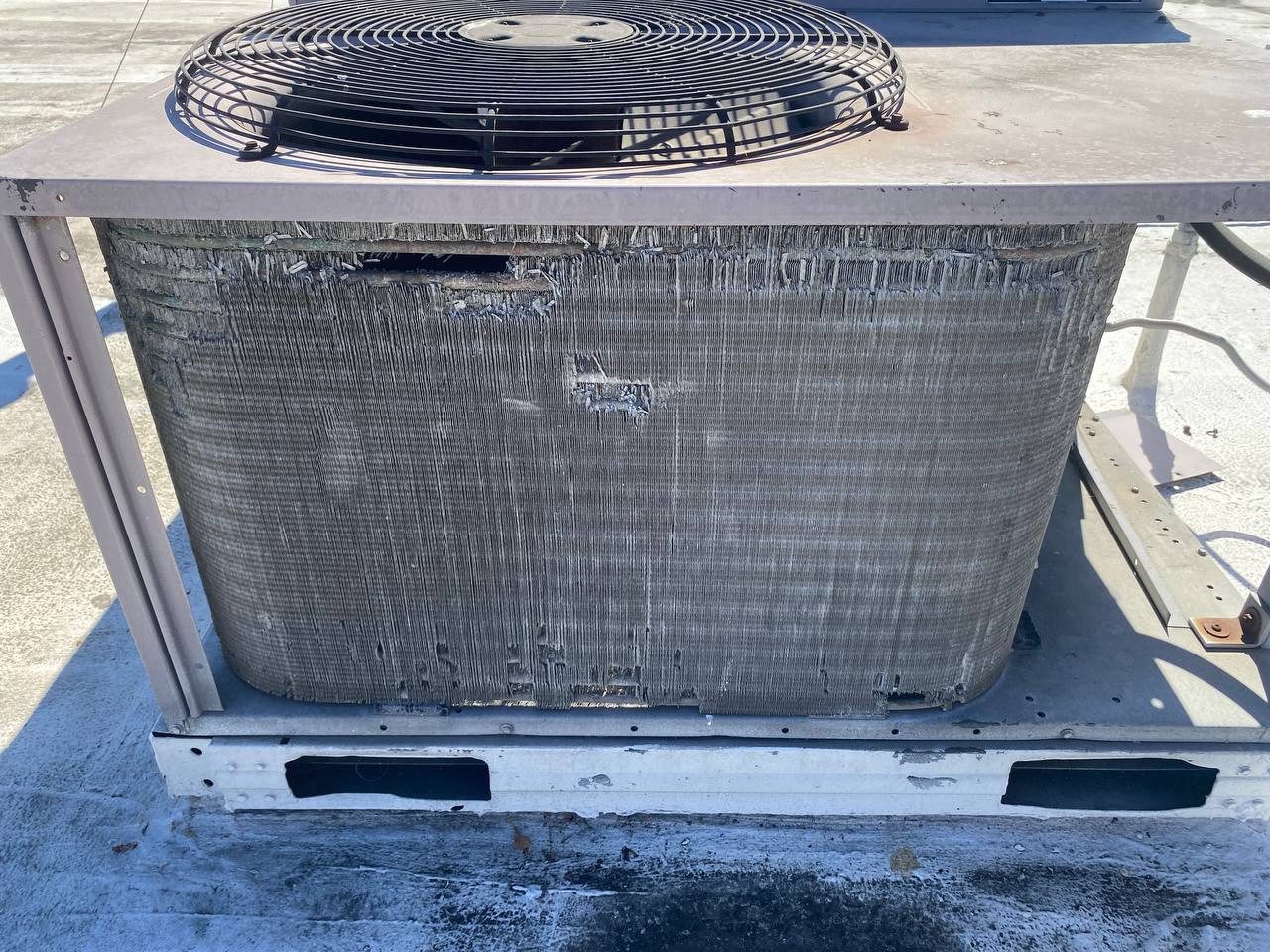
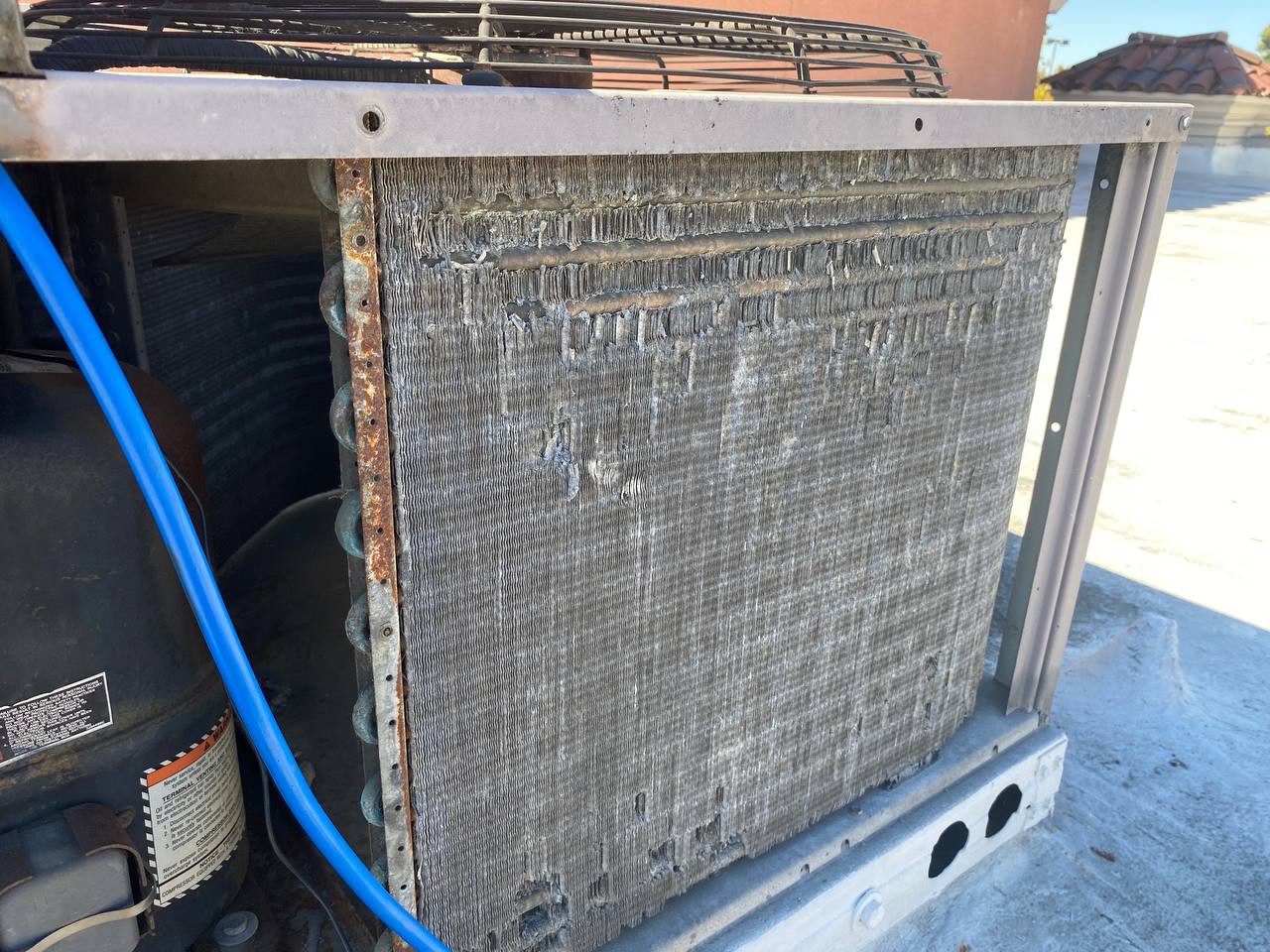
  • Condenser Coil Damage: Extensive mechanical damage and deformation of the condenser coil fins were observed, restricting airflow and reducing heat transfer efficiency. This condition may result in elevated operating pressures, compressor overheating, reduced cooling capacity, and premature compressor failure.
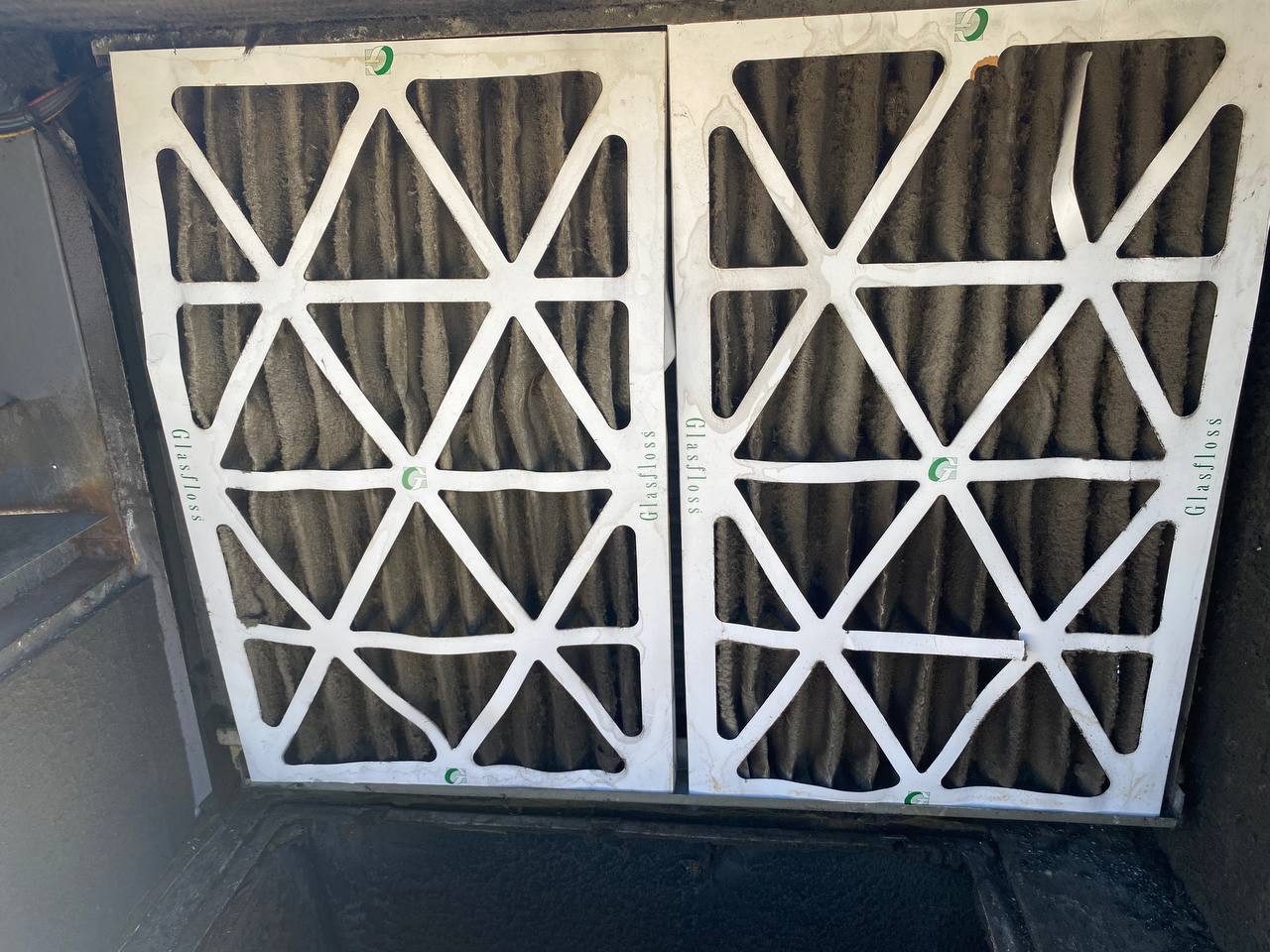
  • Air Filters: The return air filters were heavily contaminated, significantly restricting airflow through the system.

Recommendations

  1. Replace all contaminated air filters to restore proper airflow.
  2. Evaluate the feasibility of condenser coil restoration. Due to the extent of physical damage, condenser coil replacement may be necessary.
  3. After correcting airflow restrictions, perform comprehensive operational testing, including refrigerant pressures, temperature differential, and overall system performance.
  4. Determine whether additional repairs are required based on the results.

Conclusion

After power was restored, the unit started and responded to heating and cooling commands. However, significant condenser coil damage and severely restricted airflow present potential risks to system reliability, efficiency, and compressor longevity.

Further corrective work and evaluation are strongly recommended before the system can be considered to be operating satisfactorily.

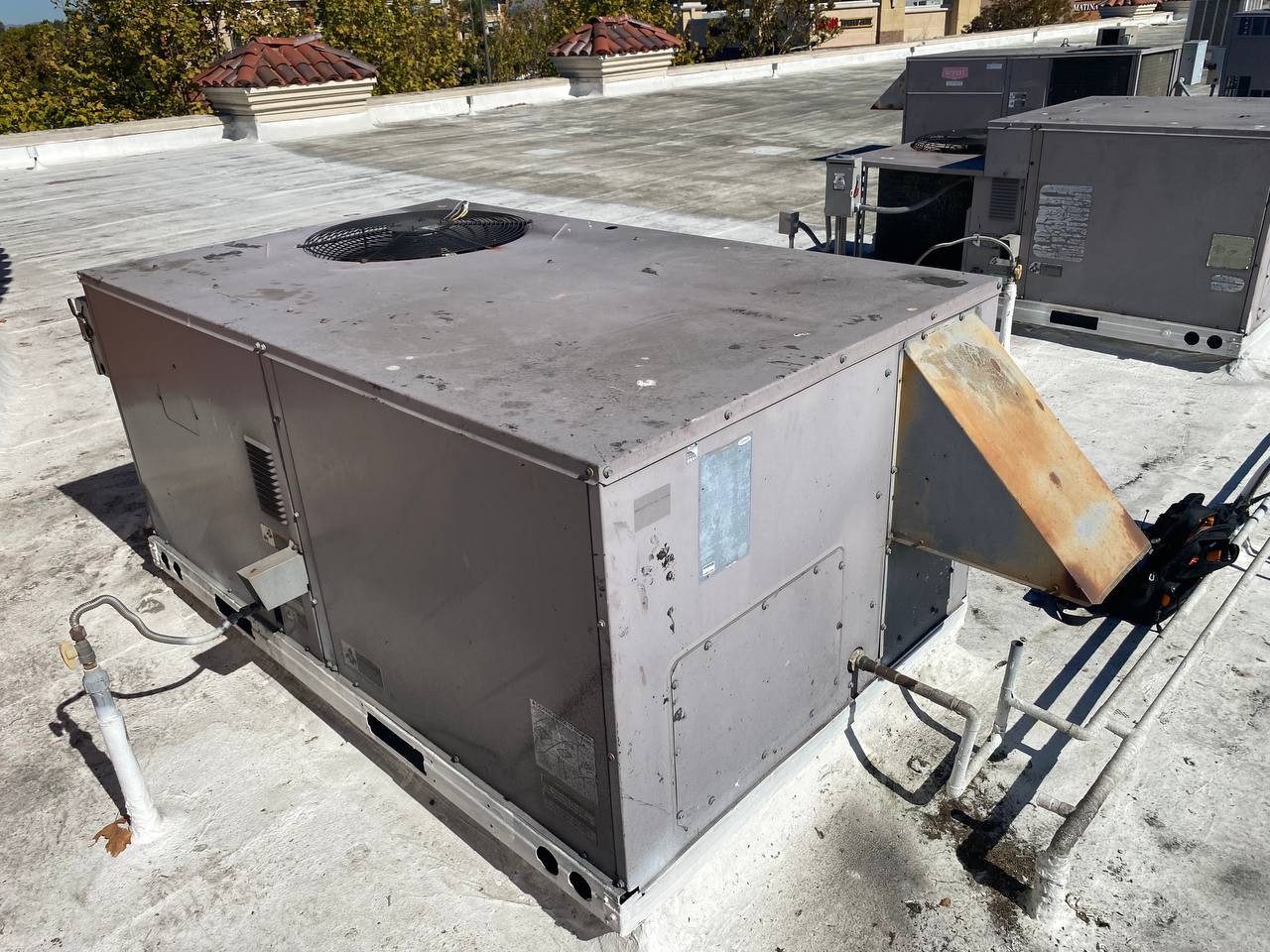
Condenser fin damage.
H2-03 · IMG_2928.jpegCondenser fin damage.
Dirty return filters.
H2-05 · IMG_2931.jpegDirty return filters.
Recommended sequence of work

Priority

Unit 7 temperature verification

Condenser cleaning and gasket replacement, followed by stabilized calibrated air/product measurements. Further diagnostics depend on those results.
Priority

Walk-in enclosure and refrigeration review

Engage an enclosure specialist. Restore line insulation, review moisture paths, verify defrost/cycling and assess coil damage. Confirm refrigerant identity before service.

Capital review

Both rooftop package units

Consider replacing both units. Compare written replacement proposals against a repair scope established after cleaning, airflow correction and further diagnostics.

Scheduled maintenance

Appliance cleaning and targeted repairs

Clean condensers and the ice-maker filter. Replace affected gaskets on Units 2, 7 and 8. Repair Unit 8 lighting and document its refrigerant. Establish consistent dipping-cabinet defrosting.

Obtain written, equipment-specific quotations after scope confirmation.

Overall assessment and recommended next steps

The most significant concerns involve the rooftop HVAC systems and the walk-in freezer enclosure. Replacement of both rooftop package units should be considered in light of their observed condition and operating deficiencies. Further diagnostics and a repair-versus-replacement assessment are recommended before committing to major repairs or replacement.

The walk-in freezer requires specialist evaluation of suspected air and moisture infiltration, refrigerant-line penetrations, and enclosure insulation. Air-leak and sealing repairs may be needed. Depending on the findings, more extensive enclosure repairs or a rebuild may be appropriate.

Temperature monitoring

We recommend continuous temperature monitoring for all refrigeration equipment, with automatic alerts for temperature fluctuations. Two ways to set it up:

A

Management only

An off-the-shelf YoLink system. Store management installs the sensors, sees the temperatures and receives the alerts directly.

B

Management and service provider

A custom system built by ADRIUM. Management and our service team both have access, with automatic notifications and integration into our service dashboard, so a temperature problem reaches a technician as soon as it starts.

Service availability and scope

ADRIUM can provide preventive and corrective maintenance for the commercial appliances. Rooftop HVAC replacement can be offered through the Bay Area HVAC Service department. Walk-in enclosure air-leak repairs and rebuilding are outside our service scope and should be handled by a qualified specialist. Please contact us if you would like to discuss the available appliance, HVAC, or monitoring services.

Prefer a file? The full report with every photograph is available as a PDF.

Download the PDF

Talk to us